
Homework Answers
Add Answer to:
Question 38 2.5 pts Using the activity series, predict if the following reaction will occur, and...
1. Based on the activity series, which reaction below will not occur? a. Mg (s) +...
1. Based on the activity series, which reaction below will not occur? a. Mg (s) + 2HCl (aq) ---> MgCl2 (aq) + H2 (g) b. 2Ag (s) + 2HNO3 (aq) ---> 2AgNO3 (aq) + H2 (g) c. 2Ni (s) + H2SO4 (aq) ---> Ni2SO4 (aq) + H2 (g) 2. A gaseous carbon-hydrogen compound is found to have the empirical formula CH2. A 4.6 gram sample is found to occupy 4 L at 1 atm pressure and 27 degrees C. The...
Given the following information about the activity series, predict whether the given reaction will occur or...
 Given the following information about the activity series, predict whether the given reaction will occur or not. write a balanced equation. Cu <H2 <Sn Fe<zn<Mg Cu(s) + SnCl2(aq) -- 02 Multiple Choice No reaction will occur Culs SnCl2lad CuCl(ac) Snila Culs SnCiladi+CuCilac Srls < Prev 60 of 60 Co search Next O Beli mer 3 & 4 * 5 6 7 00 9 O E R. Y U u O P
Using the Activity Series in your textbook, predict if a chemical reaction will occur when the...
 Using the Activity Series in your textbook, predict if a chemical reaction will occur when the following metals and ionic solutions are combined. If a reaction occurs, complete a balanced chemical equation (including physical states) for the reaction. 2. a. Na (s) + NiCl2 (aq)-→ b. Fe (s) + AgNO3 (aq) → c. Zn (s) + CaBr2 (aq) → Chemistry 145 Lab 5 Fall 2016 TI THE HAYDEN-McNEIL STUDENT LAB NOTEBOOK Note: Insert Divi Under Cop
6. Based on the activity series, which single displacement reaction will not occur? Mg(s) + 2HCl(aq)...
 6. Based on the activity series, which single displacement reaction will not occur? Mg(s) + 2HCl(aq) - MgCl2 (aq) + H2(g) SnBr2 (aq) + Zn (s) --- ZnBrz (aq) + Sn (s) Mg(s) + ZnCl2 (aq) --- MgCl, (aq) + Zn (s) Zn (s) + 2HNO, (aq) + 2AGNO, (aq) + H2 (8) SnBrz (aq) + Cu(s) -- CuBr2 (aq) + Sn (s) Question 7 1 pts 7. Based on the definition of oxidation and reduction, which of the following...
11. For the following reactions, use the Activity Series of Metals to determine if a reaction will occur and if so, what the products will be. If no reaction will occur, write NR for the product....
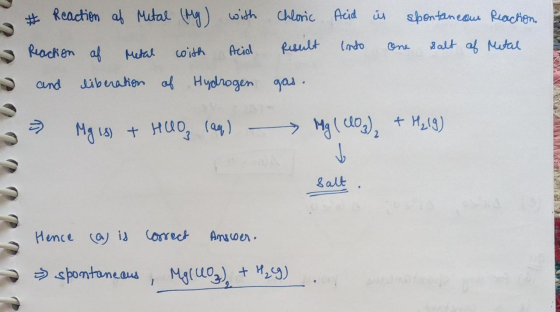
 11. For the following reactions, use the Activity Series of Metals to determine if a reaction will occur and if so, what the products will be. If no reaction will occur, write NR for the product. Ca (s) + Cd(NO:)2 (aq) - Mg (s) + HNOs (aq) Complete, balance, and identify the reaction type for each of the following equations Type 13. Zn (s)+ Cu(NO,)2 (aq) 14 Ba(NO) (aq)MgSO: (aq) 15. H2SO (aq)+NaOH (aq) > 16. Cu(OH): (s)+HCIO (aq) 17....
(6 pts.) Using Hess’s Law and the values for Standard Enthalpies of Formation from the table...
(6 pts.) Using Hess’s Law and the values for Standard Enthalpies of Formation from the table provided, calculate the enthalpy of reaction ΔH°rxn (in kJ) for each of the following reactions: Standard Enthalpies of Formation substance ΔHf° in kJ/mol Mg(s) 0 MgO(s) -601.6 HCl(aq) -167.2 MgCl2(aq) -801.2 H2(g) 0 H2O(l) -285.8 Reaction #1: Mg (s) + 2HCl (aq) è MgCl2 (aq) + H2 (g) Reaction #2: MgO (s) + 2HCl (aq) è MgCl2 (aq) + H2O (l) 2. (4 pts.)...
2. (6 pts) Using the activity series, predict which of the following reactions will occur and,...
 2. (6 pts) Using the activity series, predict which of the following reactions will occur and, in those cases, write balanced equations (otherwise, write "no reaction"). a) Potassium with water b) Gold with hydrochloric acid c) Aluminum with nitric acid
Using the activity series, predict whether the following reactions would be expected to proceed spontaneously. Cu...
 Using the activity series, predict whether the following reactions would be expected to proceed spontaneously. Cu (*) + 2Ag (aq) → Cu²+ (aq) + 2Ag (6) a.) Will proceed spontaneously b.) will not proceed spontaneously Using the activity series, predict whether the following reactions would be expected to proceed spontaneously. Mg (6) + Fe2+ → Mg²+ (aq) + Fe (3) (aq) a.) Will proceed spontaneously b.) will not proceed spontaneously Using the activity series, predict whether the following reactions would...
q7 Using the activity series, predict whether a reaction occurs or no reaction occurs for each...
 q7
Using the activity series, predict whether a reaction occurs or no reaction occurs for each of the following single-replacement reactions: a) Cu(NO3)2(aq) + Ni(s) - [Select] b) Au(s) + H2SO4(aq) — [ Select] c) FeSO4(aq) + Ag(s) – [Select Using the activity series, predict whether a reaction occurs or no reaction occurs for each of the following single-replacement reactions: a) Cu(NO3)2(aq) + Ni(s) - [Select] [Select] Reaction Occurs No Reaction b) Au(s) + H2SO4(aq) → [ Select] c) FeSO4(aq)...
q7
Using the activity series, predict whether a reaction occurs or no reaction occurs for each of the following single-replacement reactions: a) Cu(NO3)2(aq) + Ni(s) - [Select] b) Au(s) + H2SO4(aq) — [ Select] c) FeSO4(aq) + Ag(s) – [Select Using the activity series, predict whether a reaction occurs or no reaction occurs for each of the following single-replacement reactions: a) Cu(NO3)2(aq) + Ni(s) - [Select] [Select] Reaction Occurs No Reaction b) Au(s) + H2SO4(aq) → [ Select] c) FeSO4(aq)...
Question 171 pts Predict the products for the following set of reactants, including physical states, or...
Question 171 pts Predict the products for the following set of reactants, including physical states, or indicate "No Reaction" (and do not indicate the aqueous products) when appropriate: Na2CO3(aq) + AgNO3(aq) → Group of answer choices NaNO3(s) NaNO3(aq) Ag2CO3(s) Ag2CO3(aq) CO2(g) CO2(aq) No Reaction Flag this Question Question 181 pts Predict the products for the following set of reactants, including physical states, or indicate "No Reaction" (and do not indicate the aqueous products) when appropriate: Na2CO3(aq) + BaCl2(aq) → Group...
 Given the following information about the activity series, predict whether the given reaction will occur or not. write a balanced equation. Cu <H2 <Sn Fe<zn<Mg Cu(s) + SnCl2(aq) -- 02 Multiple Choice No reaction will occur Culs SnCl2lad CuCl(ac) Snila Culs SnCiladi+CuCilac Srls < Prev 60 of 60 Co search Next O Beli mer 3 & 4 * 5 6 7 00 9 O E R. Y U u O P
 Using the Activity Series in your textbook, predict if a chemical reaction will occur when the following metals and ionic solutions are combined. If a reaction occurs, complete a balanced chemical equation (including physical states) for the reaction. 2. a. Na (s) + NiCl2 (aq)-→ b. Fe (s) + AgNO3 (aq) → c. Zn (s) + CaBr2 (aq) → Chemistry 145 Lab 5 Fall 2016 TI THE HAYDEN-McNEIL STUDENT LAB NOTEBOOK Note: Insert Divi Under Cop
 6. Based on the activity series, which single displacement reaction will not occur? Mg(s) + 2HCl(aq) - MgCl2 (aq) + H2(g) SnBr2 (aq) + Zn (s) --- ZnBrz (aq) + Sn (s) Mg(s) + ZnCl2 (aq) --- MgCl, (aq) + Zn (s) Zn (s) + 2HNO, (aq) + 2AGNO, (aq) + H2 (8) SnBrz (aq) + Cu(s) -- CuBr2 (aq) + Sn (s) Question 7 1 pts 7. Based on the definition of oxidation and reduction, which of the following...
 11. For the following reactions, use the Activity Series of Metals to determine if a reaction will occur and if so, what the products will be. If no reaction will occur, write NR for the product. Ca (s) + Cd(NO:)2 (aq) - Mg (s) + HNOs (aq) Complete, balance, and identify the reaction type for each of the following equations Type 13. Zn (s)+ Cu(NO,)2 (aq) 14 Ba(NO) (aq)MgSO: (aq) 15. H2SO (aq)+NaOH (aq) > 16. Cu(OH): (s)+HCIO (aq) 17....
 2. (6 pts) Using the activity series, predict which of the following reactions will occur and, in those cases, write balanced equations (otherwise, write "no reaction"). a) Potassium with water b) Gold with hydrochloric acid c) Aluminum with nitric acid
 Using the activity series, predict whether the following reactions would be expected to proceed spontaneously. Cu (*) + 2Ag (aq) → Cu²+ (aq) + 2Ag (6) a.) Will proceed spontaneously b.) will not proceed spontaneously Using the activity series, predict whether the following reactions would be expected to proceed spontaneously. Mg (6) + Fe2+ → Mg²+ (aq) + Fe (3) (aq) a.) Will proceed spontaneously b.) will not proceed spontaneously Using the activity series, predict whether the following reactions would...
 q7
Using the activity series, predict whether a reaction occurs or no reaction occurs for each of the following single-replacement reactions: a) Cu(NO3)2(aq) + Ni(s) - [Select] b) Au(s) + H2SO4(aq) — [ Select] c) FeSO4(aq) + Ag(s) – [Select Using the activity series, predict whether a reaction occurs or no reaction occurs for each of the following single-replacement reactions: a) Cu(NO3)2(aq) + Ni(s) - [Select] [Select] Reaction Occurs No Reaction b) Au(s) + H2SO4(aq) → [ Select] c) FeSO4(aq)...
q7
Using the activity series, predict whether a reaction occurs or no reaction occurs for each of the following single-replacement reactions: a) Cu(NO3)2(aq) + Ni(s) - [Select] b) Au(s) + H2SO4(aq) — [ Select] c) FeSO4(aq) + Ag(s) – [Select Using the activity series, predict whether a reaction occurs or no reaction occurs for each of the following single-replacement reactions: a) Cu(NO3)2(aq) + Ni(s) - [Select] [Select] Reaction Occurs No Reaction b) Au(s) + H2SO4(aq) → [ Select] c) FeSO4(aq)...
Most questions answered within 3 hours.
-
Where is the error in this code sequence?
String s1 = "Hello";
String s2 = "ello";...
asked 10 months ago -
Financial data for Joel de Paris, Inc., for last year
follow:
Joel de Paris, Inc.
Balance...
asked 10 months ago -
Consider this reaction:
Al2(SO4)3 (aq)+ BaCl3
(aq) Al2Cl6 (aq)- +
3BaSO4(s) . What is the...
asked 10 months ago -
Suppose that Savneet is considering increasing her
recent random sample from 20 car rentals to 40...
asked 10 months ago -
Trucks arrive at an unloading terminal at an average rate of 120
per hour.
Trucks arrive...
asked 10 months ago -
Why are methanol and ethanol completely soluble in water while
octanol is not very little soluble....
asked 10 months ago -
A facilities manager at a university reads in a research report
that the mean amount of...
asked 10 months ago -
When the CuSO4 is rehydrated by adding water to the anhydrous
compound, is this an endothermic...
asked 10 months ago -
A ray of sunlight is passing from diamond into crown glass; the
angle of incidence is...
asked 10 months ago -
A block of mass 0.249 kg is placed on top of a light, vertical
spring of...
asked 10 months ago -
how do the kidneys compensate in the presences of acidosis
a) trigger hyperventilate
b) reserve acid...
asked 10 months ago -
Question 501 pts
The rental rate of capital to the firm increases. Which of the
following...
asked 10 months ago