
PLEASE SHOW ALL IN BETWEEN STEPS
Homework Answers
 0
0 0
0
 0
0 0
0 0
0
Add Answer to:
PLEASE SHOW ALL IN BETWEEN STEPS
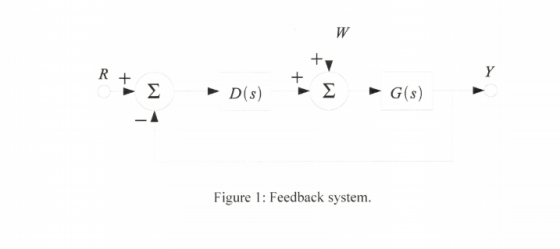
Figure 1: Feedback system. Problem 5. In Fig. I. D(s)=_...
PLEASE SHOW ALL STEPS AND IN BETWEEN STEPS THANK YOU Problem 3. In Fig. 1, G(s)-...
 PLEASE SHOW ALL STEPS AND IN BETWEEN STEPS
THANK YOU
Problem 3. In Fig. 1, G(s)- results in a PM (phase margin) of 40° s-K is a constant. Find the value o s(s+4 and Dl
PLEASE SHOW ALL STEPS AND IN BETWEEN STEPS
THANK YOU
Problem 3. In Fig. 1, G(s)- results in a PM (phase margin) of 40° s-K is a constant. Find the value o s(s+4 and Dl
I . (30%) For the system shown in Fig. 3 with Ge K, Gr. 1/[s (s...
 I . (30%) For the system shown in Fig. 3 with Ge K, Gr. 1/[s (s +2), H l + ks, determine the values of K and k such that the system has a damping ratio of 0.7 and undamped natural frequency of 5 rad/sec. Then obtain the settling time in the unit-s response. Controller PlantC Fig. 3 - _ I IFI
steps R(s) E(s) C(s) G(s) FIGURE P9.1 FIGURE P9.2 9. Consider the unity feedback system shown...
 steps
R(s) E(s) C(s) G(s) FIGURE P9.1 FIGURE P9.2 9. Consider the unity feedback system shown in Figure P9.1 with [Section: 9.3] K G(s) (s+4)3 a. Find the location of the dominant poles to yield a 1.6 second settling time and an overshoot of 25%. b. If a compensator with a zero at -1 is used to achieve the conditions of Part a, what must the angular contribution of the compensator pole be? c. Find the location of the compensator...
steps
R(s) E(s) C(s) G(s) FIGURE P9.1 FIGURE P9.2 9. Consider the unity feedback system shown in Figure P9.1 with [Section: 9.3] K G(s) (s+4)3 a. Find the location of the dominant poles to yield a 1.6 second settling time and an overshoot of 25%. b. If a compensator with a zero at -1 is used to achieve the conditions of Part a, what must the angular contribution of the compensator pole be? c. Find the location of the compensator...
Please show all work Problem 4 A feedback system has the closed-loop transfer function given below....
 Please show all work
Problem 4 A feedback system has the closed-loop transfer function given below. Calculate the percent overshoot, rise time and settling time with a 2% criterion, for the closed-loop response. 2500 Get (s) - s + 15) (s2 +10s+49)
Please show all work
Problem 4 A feedback system has the closed-loop transfer function given below. Calculate the percent overshoot, rise time and settling time with a 2% criterion, for the closed-loop response. 2500 Get (s) - s + 15) (s2 +10s+49)
Lag Compensator Design Using Root-Locus 2. Consider the unity feedback system in Figure 1 for G(s...
 Lag Compensator Design Using Root-Locus 2. Consider the unity feedback system in Figure 1 for G(s)- s(s+3(s6) Design a lag compensation to meet the following specifications The step response settling time is to be less than 5 sec. . The step response overshoot is to be less than 17% . The steady-state error to a unit ramp input must not exceed 10%. Dynamic specifications (overshoot and settling time) can be met using proportional feedback, but a lag compensator is needed...
Please solve with detailed steps (NO MATLAB Solution).Thanks in advance 13. Consider the unity feedback system...
 Please solve with detailed steps (NO MATLAB
Solution).Thanks in advance
13. Consider the unity feedback system of Figure P9.1 with K G(s) s(s +20)(s +40) The system is operating at 20% overshoot. Design a compensator to decrease the settling time by a factor of 2 without affecting the percent overshoot and do the following: (Section: 9.3] a. Evaluate the uncompensated system's dominant poles, gain, and settling time. b. Evaluate the compensated system's dominant poles and settling time. c. Evaluate the...
Please solve with detailed steps (NO MATLAB
Solution).Thanks in advance
13. Consider the unity feedback system of Figure P9.1 with K G(s) s(s +20)(s +40) The system is operating at 20% overshoot. Design a compensator to decrease the settling time by a factor of 2 without affecting the percent overshoot and do the following: (Section: 9.3] a. Evaluate the uncompensated system's dominant poles, gain, and settling time. b. Evaluate the compensated system's dominant poles and settling time. c. Evaluate the...
Question three The figure below shows a unit step response of a second order system. From...
 Question three The figure below shows a unit step response of a second order system. From the graph of response find: 1- The rise timet, 2- The peak timet, 3- The maximum overshoot Mp 4- The damped natural frequency w 5. The transfer function. Hence find the damping ratio ζ and the natural frequency ah-Find also the transfer function of the system. r 4 02 15 25 35 45 Question Four For the control system shown in the figure below,...
K and consider a PI s+4 A unity feedback system has an open loop transfer function G(s) [4] S+a controller Ge(s) S Sele...
 K and consider a PI s+4 A unity feedback system has an open loop transfer function G(s) [4] S+a controller Ge(s) S Select the values of K and a to achieve a) (i) Peak overshoot of about 20% (ii) Settling time (2% bases) ~ 1 sec b) For the values of K and a found in part (a), calculate the unit ramp input steady state error
K and consider a PI s+4 A unity feedback system has an open loop...
K and consider a PI s+4 A unity feedback system has an open loop transfer function G(s) [4] S+a controller Ge(s) S Select the values of K and a to achieve a) (i) Peak overshoot of about 20% (ii) Settling time (2% bases) ~ 1 sec b) For the values of K and a found in part (a), calculate the unit ramp input steady state error
K and consider a PI s+4 A unity feedback system has an open loop...
SS10. The unity-feedback system of Figure P11.1 with K (s +4) G (s) (s 2) (s 5) (s +12) is operat...
 SS10. The unity-feedback system of Figure P11.1 with K (s +4) G (s) (s 2) (s 5) (s +12) is operating with 20% overshoot. [Section: 114] a. Find the settling time. b. Find Kp c. Find the phase margin and the phase-margin frequency d. Using frequency response techniques, design a compensator that will yield a threefold improvement in Kp and a twofold reduction in settling time while keeping the overshoot at 20%.
SS10. The unity-feedback system of Figure P11.1 with...
SS10. The unity-feedback system of Figure P11.1 with K (s +4) G (s) (s 2) (s 5) (s +12) is operating with 20% overshoot. [Section: 114] a. Find the settling time. b. Find Kp c. Find the phase margin and the phase-margin frequency d. Using frequency response techniques, design a compensator that will yield a threefold improvement in Kp and a twofold reduction in settling time while keeping the overshoot at 20%.
SS10. The unity-feedback system of Figure P11.1 with...
I8. Consider the unity feedback system of Figure P9.1 with G(s) s +3)(s +5) . Show...
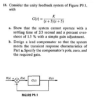 I8. Consider the unity feedback system of Figure P9.1 with G(s) s +3)(s +5) . Show that the system cannot operate with a settling time of 2/3 second and a percent over- shoot of 1.5 % with a simple gain adjustment. b. Design a lead compensator so that the system meets the transient response characteristics of Part a.Specify the compensator's pole, zero, and the required gain. R) Cu) FIGURE P9.1
 PLEASE SHOW ALL STEPS AND IN BETWEEN STEPS
THANK YOU
Problem 3. In Fig. 1, G(s)- results in a PM (phase margin) of 40° s-K is a constant. Find the value o s(s+4 and Dl
PLEASE SHOW ALL STEPS AND IN BETWEEN STEPS
THANK YOU
Problem 3. In Fig. 1, G(s)- results in a PM (phase margin) of 40° s-K is a constant. Find the value o s(s+4 and Dl
 I . (30%) For the system shown in Fig. 3 with Ge K, Gr. 1/[s (s +2), H l + ks, determine the values of K and k such that the system has a damping ratio of 0.7 and undamped natural frequency of 5 rad/sec. Then obtain the settling time in the unit-s response. Controller PlantC Fig. 3 - _ I IFI
 steps
R(s) E(s) C(s) G(s) FIGURE P9.1 FIGURE P9.2 9. Consider the unity feedback system shown in Figure P9.1 with [Section: 9.3] K G(s) (s+4)3 a. Find the location of the dominant poles to yield a 1.6 second settling time and an overshoot of 25%. b. If a compensator with a zero at -1 is used to achieve the conditions of Part a, what must the angular contribution of the compensator pole be? c. Find the location of the compensator...
steps
R(s) E(s) C(s) G(s) FIGURE P9.1 FIGURE P9.2 9. Consider the unity feedback system shown in Figure P9.1 with [Section: 9.3] K G(s) (s+4)3 a. Find the location of the dominant poles to yield a 1.6 second settling time and an overshoot of 25%. b. If a compensator with a zero at -1 is used to achieve the conditions of Part a, what must the angular contribution of the compensator pole be? c. Find the location of the compensator...
 Please show all work
Problem 4 A feedback system has the closed-loop transfer function given below. Calculate the percent overshoot, rise time and settling time with a 2% criterion, for the closed-loop response. 2500 Get (s) - s + 15) (s2 +10s+49)
Please show all work
Problem 4 A feedback system has the closed-loop transfer function given below. Calculate the percent overshoot, rise time and settling time with a 2% criterion, for the closed-loop response. 2500 Get (s) - s + 15) (s2 +10s+49)
 Lag Compensator Design Using Root-Locus 2. Consider the unity feedback system in Figure 1 for G(s)- s(s+3(s6) Design a lag compensation to meet the following specifications The step response settling time is to be less than 5 sec. . The step response overshoot is to be less than 17% . The steady-state error to a unit ramp input must not exceed 10%. Dynamic specifications (overshoot and settling time) can be met using proportional feedback, but a lag compensator is needed...
 Please solve with detailed steps (NO MATLAB
Solution).Thanks in advance
13. Consider the unity feedback system of Figure P9.1 with K G(s) s(s +20)(s +40) The system is operating at 20% overshoot. Design a compensator to decrease the settling time by a factor of 2 without affecting the percent overshoot and do the following: (Section: 9.3] a. Evaluate the uncompensated system's dominant poles, gain, and settling time. b. Evaluate the compensated system's dominant poles and settling time. c. Evaluate the...
Please solve with detailed steps (NO MATLAB
Solution).Thanks in advance
13. Consider the unity feedback system of Figure P9.1 with K G(s) s(s +20)(s +40) The system is operating at 20% overshoot. Design a compensator to decrease the settling time by a factor of 2 without affecting the percent overshoot and do the following: (Section: 9.3] a. Evaluate the uncompensated system's dominant poles, gain, and settling time. b. Evaluate the compensated system's dominant poles and settling time. c. Evaluate the...
 Question three The figure below shows a unit step response of a second order system. From the graph of response find: 1- The rise timet, 2- The peak timet, 3- The maximum overshoot Mp 4- The damped natural frequency w 5. The transfer function. Hence find the damping ratio ζ and the natural frequency ah-Find also the transfer function of the system. r 4 02 15 25 35 45 Question Four For the control system shown in the figure below,...
 K and consider a PI s+4 A unity feedback system has an open loop transfer function G(s) [4] S+a controller Ge(s) S Select the values of K and a to achieve a) (i) Peak overshoot of about 20% (ii) Settling time (2% bases) ~ 1 sec b) For the values of K and a found in part (a), calculate the unit ramp input steady state error
K and consider a PI s+4 A unity feedback system has an open loop...
K and consider a PI s+4 A unity feedback system has an open loop transfer function G(s) [4] S+a controller Ge(s) S Select the values of K and a to achieve a) (i) Peak overshoot of about 20% (ii) Settling time (2% bases) ~ 1 sec b) For the values of K and a found in part (a), calculate the unit ramp input steady state error
K and consider a PI s+4 A unity feedback system has an open loop...
 SS10. The unity-feedback system of Figure P11.1 with K (s +4) G (s) (s 2) (s 5) (s +12) is operating with 20% overshoot. [Section: 114] a. Find the settling time. b. Find Kp c. Find the phase margin and the phase-margin frequency d. Using frequency response techniques, design a compensator that will yield a threefold improvement in Kp and a twofold reduction in settling time while keeping the overshoot at 20%.
SS10. The unity-feedback system of Figure P11.1 with...
SS10. The unity-feedback system of Figure P11.1 with K (s +4) G (s) (s 2) (s 5) (s +12) is operating with 20% overshoot. [Section: 114] a. Find the settling time. b. Find Kp c. Find the phase margin and the phase-margin frequency d. Using frequency response techniques, design a compensator that will yield a threefold improvement in Kp and a twofold reduction in settling time while keeping the overshoot at 20%.
SS10. The unity-feedback system of Figure P11.1 with...
 I8. Consider the unity feedback system of Figure P9.1 with G(s) s +3)(s +5) . Show that the system cannot operate with a settling time of 2/3 second and a percent over- shoot of 1.5 % with a simple gain adjustment. b. Design a lead compensator so that the system meets the transient response characteristics of Part a.Specify the compensator's pole, zero, and the required gain. R) Cu) FIGURE P9.1
Most questions answered within 3 hours.
-
Where is the error in this code sequence?
String s1 = "Hello";
String s2 = "ello";...
asked 10 months ago -
Financial data for Joel de Paris, Inc., for last year
follow:
Joel de Paris, Inc.
Balance...
asked 10 months ago -
Consider this reaction:
Al2(SO4)3 (aq)+ BaCl3
(aq) Al2Cl6 (aq)- +
3BaSO4(s) . What is the...
asked 10 months ago -
Suppose that Savneet is considering increasing her
recent random sample from 20 car rentals to 40...
asked 10 months ago -
Trucks arrive at an unloading terminal at an average rate of 120
per hour.
Trucks arrive...
asked 10 months ago -
Why are methanol and ethanol completely soluble in water while
octanol is not very little soluble....
asked 10 months ago -
A facilities manager at a university reads in a research report
that the mean amount of...
asked 10 months ago -
When the CuSO4 is rehydrated by adding water to the anhydrous
compound, is this an endothermic...
asked 10 months ago -
A ray of sunlight is passing from diamond into crown glass; the
angle of incidence is...
asked 10 months ago -
A block of mass 0.249 kg is placed on top of a light, vertical
spring of...
asked 10 months ago -
how do the kidneys compensate in the presences of acidosis
a) trigger hyperventilate
b) reserve acid...
asked 10 months ago -
Question 501 pts
The rental rate of capital to the firm increases. Which of the
following...
asked 10 months ago