
Homework Answers
![at JL ATitl 윽 [.lt).7,m] 汚. 가 , d k Tilt on bothide, ue](http://img.homeworklib.com/questions/4ed5c230-9ee9-11eb-82c8-07ca74dccfbe.png?x-oss-process=image/resize,w_560)
Add Answer to:
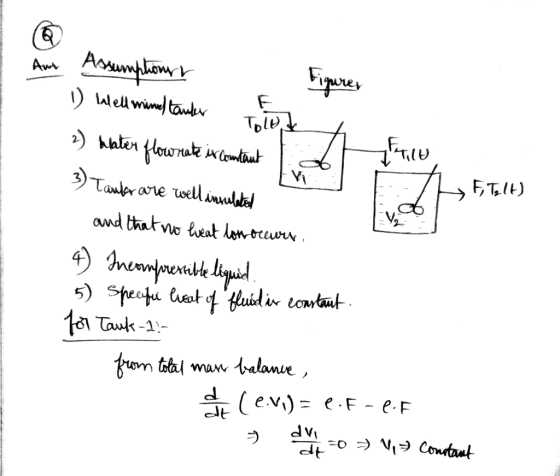
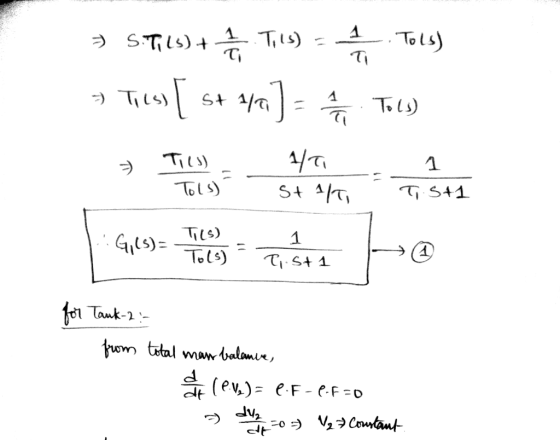
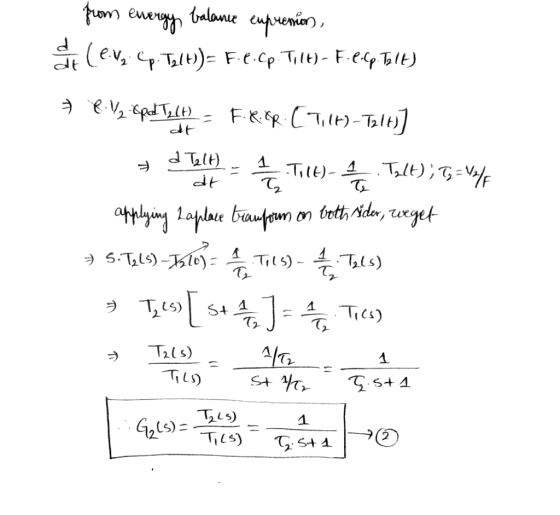
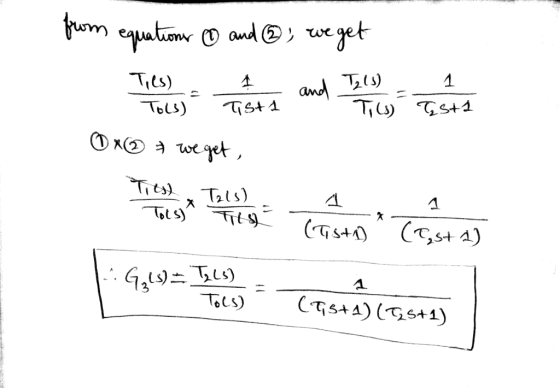
Consider the two well mixed tanks shown below. Assume water is flowing at a constant rate...
(1 point) Consider two interconnected tanks as shown in the figure above. Tank 1 initial contains 10 L (liters) of water and 355 g of salt, while tank 2 initially contains 90 L of water and 345 g of...
 (1 point) Consider two interconnected tanks as shown in the figure above. Tank 1 initial contains 10 L (liters) of water and 355 g of salt, while tank 2 initially contains 90 L of water and 345 g of salt. Water containing 40 g/L of salt is poured into tank1 at a rate of 4 L/min while the mixture flowing into tank 2 contains a salt concentration of 20 g/L of salt and is flowing at the rate of 1...
DIFFERENTIAL EQUATIONS WEBWORK PROBLEM If you can't read the picture: Consider two interconnected tanks as shown in...
 DIFFERENTIAL EQUATIONS WEBWORK PROBLEM
If you can't read the picture:
Consider two interconnected tanks as shown in the figure above.
Tank 1 initial contains 10 L (liters) of water and 215 g of salt,
while tank 2 initially contains 90 L of water and 355 g of salt.
Water containing 50 g/L of salt is poured into tank1 at a rate of 4
L/min while the mixture flowing into tank 2 contains a salt
concentration of 45 g/L of salt...
DIFFERENTIAL EQUATIONS WEBWORK PROBLEM
If you can't read the picture:
Consider two interconnected tanks as shown in the figure above.
Tank 1 initial contains 10 L (liters) of water and 215 g of salt,
while tank 2 initially contains 90 L of water and 355 g of salt.
Water containing 50 g/L of salt is poured into tank1 at a rate of 4
L/min while the mixture flowing into tank 2 contains a salt
concentration of 45 g/L of salt...
Consider two brine tanks. Tank Ti is filled with 30 gal pure water, and tank T2...
 Consider two brine tanks. Tank Ti is filled with 30 gal pure water, and tank T2 with 10 gal water containing 4 lb salt. • Ti is filled with 3 gal/min water containing 3 lb/gal salt. • 11 gal/min well-mixed solution flows out of Tj into T2 • 8 gal/min well-mixed solution flows out of T2 into Ti. • Finally, 3 gal/min well-mixed solution is leaving T2. Let yi(t) be the amount of salt (in lb) in tank Ti after...
5. (30 points) Initially, two large tanks A and B each hold 50 gallons of brine. The well-mixed l...
 5. (30 points) Initially, two large tanks A and B each hold 50 gallons of brine. The well-mixed liquid is pumped between the tanks as shown below. Use the information on the figure to construct a mathematical model for the number of pounds of salt x, (t) and x2(t) at time t in the tanks A and B pure water 3 gal/min mixture I gal/min 50 gal mixture mixture 4 gal/min 3 gal/min Solve the system subject to the initial...
(1 point) Consider two interconnected tanks as shown in the figure above. Tank 1 insal contains...
 (1 point) Consider two interconnected tanks as shown in the figure above. Tank 1 insal contains 100 Lters) of water and 345 g of sat, while tank 2 initally contains 90 L of water and 225 g of sait Water containing 25 gL of salt is poured into tank1 at a rate of 3.5 Lmin while the midure flowing into tank 2 contains a salt concentration of 35 gL of salt and is flouing at the rate of 2.5 Limin....
please do 1,2,3 Consider two tanks in series. Water flows into the first tank at a rate controlled by a control v...
 please do 1,2,3
Consider two tanks in series. Water flows into the first tank at a rate controlled by a control valve. The height of water in each tank is measured by a transducer at the bottom of the tank. The time constant for these transducers is 5 msec. These heights are sent to a Pl controller that outputs a voltage to the control valve. (You may assume the control ler simply outputs a flowrate.) The flowrate out of each...
please do 1,2,3
Consider two tanks in series. Water flows into the first tank at a rate controlled by a control valve. The height of water in each tank is measured by a transducer at the bottom of the tank. The time constant for these transducers is 5 msec. These heights are sent to a Pl controller that outputs a voltage to the control valve. (You may assume the control ler simply outputs a flowrate.) The flowrate out of each...
Section 7.1 Introduction First Order Systems: Problem 5 Previous Problem Probiem List Next Problem (1 poing) Consider two interconnected tanks as shown in the figure above. Tank 1 Initial contain...
 Section 7.1 Introduction First Order Systems: Problem 5 Previous Problem Probiem List Next Problem (1 poing) Consider two interconnected tanks as shown in the figure above. Tank 1 Initial contains 10 L Olters) of water and 170 g of salt. while tank 2 Initiaily contains 60 L of water and 445 g of salt. Water containing 25 g'L of salt is poured into tank1 at a rate of 4 U/min while the mixture flowing into tank 2 contains a salt...
Question 15 As shown, water (15 °C) is flowing from a tank through a tube and...
 Question 15 As shown, water (15 °C) is flowing from a tank through a tube and then discharging to ambient. The tube has an ID of 12 mm, a length of L = 6 m, and the resistance coefficient is f = 0.015. The water level is H = 4 m. (a) Find the exit velocity in m/s. (b) Find the discharge in L/s. Assume that the only head loss occurs in the tube. H2O (a) v = m/s (b)...
Consider two brine tanks connected as shown in figure I below. Tank 1 contains xit) pounds...
 Consider two brine tanks connected as shown in figure I below. Tank 1 contains xit) pounds of salt in 100 wal of brine and tank 2 contains vit) pounds of salt in 200 gal of brine. The brine in each tank is kept uniform by stirring, and brine is pumped from each tank to the other at the rates indicated in figure 1. In addition, fresh water flows into tank 1 at 20 gal/min, and the brine in tank 2...
A fluid of constant density (p) at 40 °F (T) is flowing into an initially empty cylindrical tank of radius 10 ft. The cy...
A fluid of constant density (p) at 40 °F (T) is flowing into an initially empty cylindrical tank of radius 10 ft. The cylindrical vešsel is jacketed and heated with saturated steam (T) at 212 °F.The steam jacket does not cover either the top or bottom of the tank. The heat capacity of liquid (Cp liquid is near to that of water. The vessel is well stirred and the heat resistance of the jacket is negligible as are the heat...
 (1 point) Consider two interconnected tanks as shown in the figure above. Tank 1 initial contains 10 L (liters) of water and 355 g of salt, while tank 2 initially contains 90 L of water and 345 g of salt. Water containing 40 g/L of salt is poured into tank1 at a rate of 4 L/min while the mixture flowing into tank 2 contains a salt concentration of 20 g/L of salt and is flowing at the rate of 1...
 DIFFERENTIAL EQUATIONS WEBWORK PROBLEM
If you can't read the picture:
Consider two interconnected tanks as shown in the figure above.
Tank 1 initial contains 10 L (liters) of water and 215 g of salt,
while tank 2 initially contains 90 L of water and 355 g of salt.
Water containing 50 g/L of salt is poured into tank1 at a rate of 4
L/min while the mixture flowing into tank 2 contains a salt
concentration of 45 g/L of salt...
DIFFERENTIAL EQUATIONS WEBWORK PROBLEM
If you can't read the picture:
Consider two interconnected tanks as shown in the figure above.
Tank 1 initial contains 10 L (liters) of water and 215 g of salt,
while tank 2 initially contains 90 L of water and 355 g of salt.
Water containing 50 g/L of salt is poured into tank1 at a rate of 4
L/min while the mixture flowing into tank 2 contains a salt
concentration of 45 g/L of salt...
 Consider two brine tanks. Tank Ti is filled with 30 gal pure water, and tank T2 with 10 gal water containing 4 lb salt. • Ti is filled with 3 gal/min water containing 3 lb/gal salt. • 11 gal/min well-mixed solution flows out of Tj into T2 • 8 gal/min well-mixed solution flows out of T2 into Ti. • Finally, 3 gal/min well-mixed solution is leaving T2. Let yi(t) be the amount of salt (in lb) in tank Ti after...
 5. (30 points) Initially, two large tanks A and B each hold 50 gallons of brine. The well-mixed liquid is pumped between the tanks as shown below. Use the information on the figure to construct a mathematical model for the number of pounds of salt x, (t) and x2(t) at time t in the tanks A and B pure water 3 gal/min mixture I gal/min 50 gal mixture mixture 4 gal/min 3 gal/min Solve the system subject to the initial...
 (1 point) Consider two interconnected tanks as shown in the figure above. Tank 1 insal contains 100 Lters) of water and 345 g of sat, while tank 2 initally contains 90 L of water and 225 g of sait Water containing 25 gL of salt is poured into tank1 at a rate of 3.5 Lmin while the midure flowing into tank 2 contains a salt concentration of 35 gL of salt and is flouing at the rate of 2.5 Limin....
 please do 1,2,3
Consider two tanks in series. Water flows into the first tank at a rate controlled by a control valve. The height of water in each tank is measured by a transducer at the bottom of the tank. The time constant for these transducers is 5 msec. These heights are sent to a Pl controller that outputs a voltage to the control valve. (You may assume the control ler simply outputs a flowrate.) The flowrate out of each...
please do 1,2,3
Consider two tanks in series. Water flows into the first tank at a rate controlled by a control valve. The height of water in each tank is measured by a transducer at the bottom of the tank. The time constant for these transducers is 5 msec. These heights are sent to a Pl controller that outputs a voltage to the control valve. (You may assume the control ler simply outputs a flowrate.) The flowrate out of each...
 Section 7.1 Introduction First Order Systems: Problem 5 Previous Problem Probiem List Next Problem (1 poing) Consider two interconnected tanks as shown in the figure above. Tank 1 Initial contains 10 L Olters) of water and 170 g of salt. while tank 2 Initiaily contains 60 L of water and 445 g of salt. Water containing 25 g'L of salt is poured into tank1 at a rate of 4 U/min while the mixture flowing into tank 2 contains a salt...
 Question 15 As shown, water (15 °C) is flowing from a tank through a tube and then discharging to ambient. The tube has an ID of 12 mm, a length of L = 6 m, and the resistance coefficient is f = 0.015. The water level is H = 4 m. (a) Find the exit velocity in m/s. (b) Find the discharge in L/s. Assume that the only head loss occurs in the tube. H2O (a) v = m/s (b)...
 Consider two brine tanks connected as shown in figure I below. Tank 1 contains xit) pounds of salt in 100 wal of brine and tank 2 contains vit) pounds of salt in 200 gal of brine. The brine in each tank is kept uniform by stirring, and brine is pumped from each tank to the other at the rates indicated in figure 1. In addition, fresh water flows into tank 1 at 20 gal/min, and the brine in tank 2...
Most questions answered within 3 hours.
-
Where is the error in this code sequence?
String s1 = "Hello";
String s2 = "ello";...
asked 10 months ago -
Financial data for Joel de Paris, Inc., for last year
follow:
Joel de Paris, Inc.
Balance...
asked 10 months ago -
Consider this reaction:
Al2(SO4)3 (aq)+ BaCl3
(aq) Al2Cl6 (aq)- +
3BaSO4(s) . What is the...
asked 10 months ago -
Suppose that Savneet is considering increasing her
recent random sample from 20 car rentals to 40...
asked 10 months ago -
Trucks arrive at an unloading terminal at an average rate of 120
per hour.
Trucks arrive...
asked 10 months ago -
Why are methanol and ethanol completely soluble in water while
octanol is not very little soluble....
asked 10 months ago -
A facilities manager at a university reads in a research report
that the mean amount of...
asked 10 months ago -
When the CuSO4 is rehydrated by adding water to the anhydrous
compound, is this an endothermic...
asked 10 months ago -
A ray of sunlight is passing from diamond into crown glass; the
angle of incidence is...
asked 10 months ago -
A block of mass 0.249 kg is placed on top of a light, vertical
spring of...
asked 10 months ago -
how do the kidneys compensate in the presences of acidosis
a) trigger hyperventilate
b) reserve acid...
asked 10 months ago -
Question 501 pts
The rental rate of capital to the firm increases. Which of the
following...
asked 10 months ago