Prove that each nonzero integer may be uniquely represented in the form
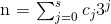
where  and each
  is equal to -1, 0, or 1.
Homework Answers
Add Answer to:
Prove that each nonzero integer may be uniquely represented in
the form
where
and each
is...
Use the Eisenstein Criterion to prove that if is a squarefree integer, then is irreducible in...
 Use the Eisenstein Criterion to prove that if
is a squarefree integer, then
is irreducible in
for every
. Conclude that there are irreducible polynomials in
of every degree
We were unable to transcribe this imageWe were unable to transcribe this imageWe were unable to transcribe this imageWe were unable to transcribe this imageWe were unable to transcribe this imageWe were unable to transcribe this image
Use the Eisenstein Criterion to prove that if
is a squarefree integer, then
is irreducible in
for every
. Conclude that there are irreducible polynomials in
of every degree
We were unable to transcribe this imageWe were unable to transcribe this imageWe were unable to transcribe this imageWe were unable to transcribe this imageWe were unable to transcribe this imageWe were unable to transcribe this image
a) Suppose we know that the series is convergent, where the sequence an is nonzero. Show...
 a) Suppose we know that the series
is convergent, where the sequence an is nonzero. Show
that the series
is divergent by applying the appropriate test.
b) Suppose we know that the series
is convergent, where the sequence cn consists of
exclusively positive terms. Show that the series
is convergent by applying the appropriate test.
We were unable to transcribe this imageX 1 in n=1 We were unable to transcribe this imageWe were unable to transcribe this image
a) Suppose we know that the series
is convergent, where the sequence an is nonzero. Show
that the series
is divergent by applying the appropriate test.
b) Suppose we know that the series
is convergent, where the sequence cn consists of
exclusively positive terms. Show that the series
is convergent by applying the appropriate test.
We were unable to transcribe this imageX 1 in n=1 We were unable to transcribe this imageWe were unable to transcribe this image
Use mathematical induction to prove summation formulae. Be sure to identify where you use the inductive...
 Use mathematical induction to prove summation formulae. Be sure
to identify where you use the inductive hypothesis.
Let
be the statement
for the positive integer
We were unable to transcribe this image13 + 23 + ... + n] = n(n +1) 2 +1), We were unable to transcribe this image
Use mathematical induction to prove summation formulae. Be sure
to identify where you use the inductive hypothesis.
Let
be the statement
for the positive integer
We were unable to transcribe this image13 + 23 + ... + n] = n(n +1) 2 +1), We were unable to transcribe this image
Prove that for every positive real (important: is not necessarily an integer), that . Hint: For...
 Prove that for every positive real (important: is not
necessarily an integer), that
.
Hint: For every , the function
is
strictly growing.
We were unable to transcribe this imageWe were unable to transcribe this imagebe(n") (n log, n) > 0 n
Prove that for every positive real (important: is not
necessarily an integer), that
.
Hint: For every , the function
is
strictly growing.
We were unable to transcribe this imageWe were unable to transcribe this imagebe(n") (n log, n) > 0 n
Prove the following Let with Then: i) if and only if where the double inequality means...
 Prove the following
Let
with
Then:
i)
if and only if
where the double inequality
means
and
ii) If
,
if and only if
.
-2, E ER We were unable to transcribe this imageWe were unable to transcribe this image-E <<E, We were unable to transcribe this imageWe were unable to transcribe this imageWe were unable to transcribe this imagea ER We were unable to transcribe this imageWe were unable to transcribe this image
Prove the following
Let
with
Then:
i)
if and only if
where the double inequality
means
and
ii) If
,
if and only if
.
-2, E ER We were unable to transcribe this imageWe were unable to transcribe this image-E <<E, We were unable to transcribe this imageWe were unable to transcribe this imageWe were unable to transcribe this imagea ER We were unable to transcribe this imageWe were unable to transcribe this image
Prove that if is mesurable then E is mesurable when and where is the complement of...
 Prove that if
is mesurable then E is mesurable when
and
where
is the complement of E
We were unable to transcribe this imageE CIR We were unable to transcribe this imageWe were unable to transcribe this image
Prove that if
is mesurable then E is mesurable when
and
where
is the complement of E
We were unable to transcribe this imageE CIR We were unable to transcribe this imageWe were unable to transcribe this image
Suppose is a directed graph represented by a adjacency lists. Divise a linear time algorithm that,...
 Suppose is a
directed graph represented by a adjacency lists. Divise a linear
time algorithm that, given such a , returns a list of all
the source vertices of . (Note, this list may
be empty.) Prove your algorithm runs in -time.
Hint: There is a simple solution that
does not involve any DFS’s or BFS’s.
G (V. E) We were unable to transcribe this imageWe were unable to transcribe this imageWe were unable to transcribe this image
Suppose is a
directed graph represented by a adjacency lists. Divise a linear
time algorithm that, given such a , returns a list of all
the source vertices of . (Note, this list may
be empty.) Prove your algorithm runs in -time.
Hint: There is a simple solution that
does not involve any DFS’s or BFS’s.
G (V. E) We were unable to transcribe this imageWe were unable to transcribe this imageWe were unable to transcribe this image
Let V be a finite-dimensional vector space and let T L(V) be an operator. In this problem you sh...
Let V be a finite-dimensional vector space and let T L(V) be an operator. In this problem you show that there is a nonzero polynomial such that p(T) = 0. (a) What is 0 in this context? A polynomial? A linear map? An element of V? (b) Define by . Prove that is a linear map. (c) Prove that if where V is infinite-dimensional and W is finite-dimensional, then S cannot be injective. (d) Use the preceding parts to prove...
1. Let and be subspaces of . Prove that is also a subspace of . We...
 1. Let and be subspaces of
. Prove
that is also a
subspace of .
We were unable to transcribe this imageWe were unable to transcribe this imageWe were unable to transcribe this imageWe were unable to transcribe this imageWe were unable to transcribe this image
1. Let and be subspaces of
. Prove
that is also a
subspace of .
We were unable to transcribe this imageWe were unable to transcribe this imageWe were unable to transcribe this imageWe were unable to transcribe this imageWe were unable to transcribe this image
(b) Use the identities above and the formula for the sum of a geometric series to prove that if n...
 (b) Use the identities above and the formula for the sum of a geometric series to prove that if n is an integer and je[1,2,..., n) then sin2 (2ntj/n) = n/2 t-1 so long as jメ1n/21, where Ir] is the greatest integer that is smaller than or equal to x. We were unable to transcribe this image
(b) Use the identities above and the formula for the sum of a geometric series to prove that if n is an integer...
(b) Use the identities above and the formula for the sum of a geometric series to prove that if n is an integer and je[1,2,..., n) then sin2 (2ntj/n) = n/2 t-1 so long as jメ1n/21, where Ir] is the greatest integer that is smaller than or equal to x. We were unable to transcribe this image
(b) Use the identities above and the formula for the sum of a geometric series to prove that if n is an integer...
 Use the Eisenstein Criterion to prove that if
is a squarefree integer, then
is irreducible in
for every
. Conclude that there are irreducible polynomials in
of every degree
We were unable to transcribe this imageWe were unable to transcribe this imageWe were unable to transcribe this imageWe were unable to transcribe this imageWe were unable to transcribe this imageWe were unable to transcribe this image
Use the Eisenstein Criterion to prove that if
is a squarefree integer, then
is irreducible in
for every
. Conclude that there are irreducible polynomials in
of every degree
We were unable to transcribe this imageWe were unable to transcribe this imageWe were unable to transcribe this imageWe were unable to transcribe this imageWe were unable to transcribe this imageWe were unable to transcribe this image
 a) Suppose we know that the series
is convergent, where the sequence an is nonzero. Show
that the series
is divergent by applying the appropriate test.
b) Suppose we know that the series
is convergent, where the sequence cn consists of
exclusively positive terms. Show that the series
is convergent by applying the appropriate test.
We were unable to transcribe this imageX 1 in n=1 We were unable to transcribe this imageWe were unable to transcribe this image
a) Suppose we know that the series
is convergent, where the sequence an is nonzero. Show
that the series
is divergent by applying the appropriate test.
b) Suppose we know that the series
is convergent, where the sequence cn consists of
exclusively positive terms. Show that the series
is convergent by applying the appropriate test.
We were unable to transcribe this imageX 1 in n=1 We were unable to transcribe this imageWe were unable to transcribe this image
 Use mathematical induction to prove summation formulae. Be sure
to identify where you use the inductive hypothesis.
Let
be the statement
for the positive integer
We were unable to transcribe this image13 + 23 + ... + n] = n(n +1) 2 +1), We were unable to transcribe this image
Use mathematical induction to prove summation formulae. Be sure
to identify where you use the inductive hypothesis.
Let
be the statement
for the positive integer
We were unable to transcribe this image13 + 23 + ... + n] = n(n +1) 2 +1), We were unable to transcribe this image
 Prove that for every positive real (important: is not
necessarily an integer), that
.
Hint: For every , the function
is
strictly growing.
We were unable to transcribe this imageWe were unable to transcribe this imagebe(n") (n log, n) > 0 n
Prove that for every positive real (important: is not
necessarily an integer), that
.
Hint: For every , the function
is
strictly growing.
We were unable to transcribe this imageWe were unable to transcribe this imagebe(n") (n log, n) > 0 n
 Prove the following
Let
with
Then:
i)
if and only if
where the double inequality
means
and
ii) If
,
if and only if
.
-2, E ER We were unable to transcribe this imageWe were unable to transcribe this image-E <<E, We were unable to transcribe this imageWe were unable to transcribe this imageWe were unable to transcribe this imagea ER We were unable to transcribe this imageWe were unable to transcribe this image
Prove the following
Let
with
Then:
i)
if and only if
where the double inequality
means
and
ii) If
,
if and only if
.
-2, E ER We were unable to transcribe this imageWe were unable to transcribe this image-E <<E, We were unable to transcribe this imageWe were unable to transcribe this imageWe were unable to transcribe this imagea ER We were unable to transcribe this imageWe were unable to transcribe this image
 Prove that if
is mesurable then E is mesurable when
and
where
is the complement of E
We were unable to transcribe this imageE CIR We were unable to transcribe this imageWe were unable to transcribe this image
Prove that if
is mesurable then E is mesurable when
and
where
is the complement of E
We were unable to transcribe this imageE CIR We were unable to transcribe this imageWe were unable to transcribe this image
 Suppose is a
directed graph represented by a adjacency lists. Divise a linear
time algorithm that, given such a , returns a list of all
the source vertices of . (Note, this list may
be empty.) Prove your algorithm runs in -time.
Hint: There is a simple solution that
does not involve any DFS’s or BFS’s.
G (V. E) We were unable to transcribe this imageWe were unable to transcribe this imageWe were unable to transcribe this image
Suppose is a
directed graph represented by a adjacency lists. Divise a linear
time algorithm that, given such a , returns a list of all
the source vertices of . (Note, this list may
be empty.) Prove your algorithm runs in -time.
Hint: There is a simple solution that
does not involve any DFS’s or BFS’s.
G (V. E) We were unable to transcribe this imageWe were unable to transcribe this imageWe were unable to transcribe this image
 1. Let and be subspaces of
. Prove
that is also a
subspace of .
We were unable to transcribe this imageWe were unable to transcribe this imageWe were unable to transcribe this imageWe were unable to transcribe this imageWe were unable to transcribe this image
1. Let and be subspaces of
. Prove
that is also a
subspace of .
We were unable to transcribe this imageWe were unable to transcribe this imageWe were unable to transcribe this imageWe were unable to transcribe this imageWe were unable to transcribe this image
 (b) Use the identities above and the formula for the sum of a geometric series to prove that if n is an integer and je[1,2,..., n) then sin2 (2ntj/n) = n/2 t-1 so long as jメ1n/21, where Ir] is the greatest integer that is smaller than or equal to x. We were unable to transcribe this image
(b) Use the identities above and the formula for the sum of a geometric series to prove that if n is an integer...
(b) Use the identities above and the formula for the sum of a geometric series to prove that if n is an integer and je[1,2,..., n) then sin2 (2ntj/n) = n/2 t-1 so long as jメ1n/21, where Ir] is the greatest integer that is smaller than or equal to x. We were unable to transcribe this image
(b) Use the identities above and the formula for the sum of a geometric series to prove that if n is an integer...
Most questions answered within 3 hours.
-
Where is the error in this code sequence?
String s1 = "Hello";
String s2 = "ello";...
asked 10 months ago -
Financial data for Joel de Paris, Inc., for last year
follow:
Joel de Paris, Inc.
Balance...
asked 10 months ago -
Consider this reaction:
Al2(SO4)3 (aq)+ BaCl3
(aq) Al2Cl6 (aq)- +
3BaSO4(s) . What is the...
asked 10 months ago -
Suppose that Savneet is considering increasing her
recent random sample from 20 car rentals to 40...
asked 10 months ago -
Trucks arrive at an unloading terminal at an average rate of 120
per hour.
Trucks arrive...
asked 10 months ago -
Why are methanol and ethanol completely soluble in water while
octanol is not very little soluble....
asked 10 months ago -
A facilities manager at a university reads in a research report
that the mean amount of...
asked 10 months ago -
When the CuSO4 is rehydrated by adding water to the anhydrous
compound, is this an endothermic...
asked 10 months ago -
A ray of sunlight is passing from diamond into crown glass; the
angle of incidence is...
asked 10 months ago -
A block of mass 0.249 kg is placed on top of a light, vertical
spring of...
asked 10 months ago -
how do the kidneys compensate in the presences of acidosis
a) trigger hyperventilate
b) reserve acid...
asked 10 months ago -
Question 501 pts
The rental rate of capital to the firm increases. Which of the
following...
asked 10 months ago