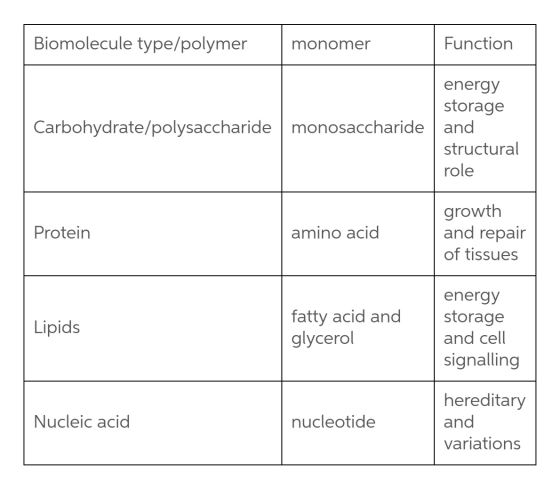
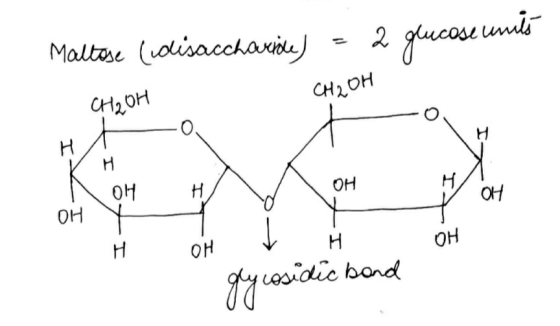
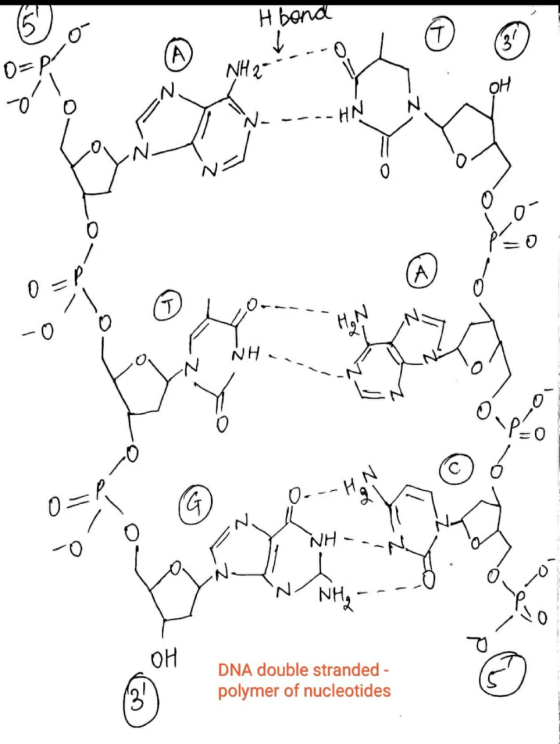
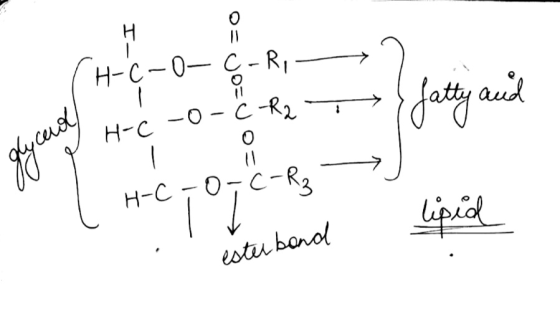
(a) define cofactor, coenzyme, and cosubstrate. (b) what are the types of biological polymers? name and...
Homework Answers
1.
Enzymes are biological catalyst which accelerate the rate of a biological reaction without being consumed in the reaction themselves. Most of the enzymes require an additional molecule to function. This additional molecule can be organic in nature and is known as coenzyme or inorganic in nature and is known as cofactor. These coenzyme and cofactor are together known as prosthetic group. An enzyme without prosthetic group is known as apoenzyme and with prosthetic group is known as holoenzyme. Cosubstrate is nothing but loosely attached coenzyme. Sometimes these two words are used interchangeably.
2.
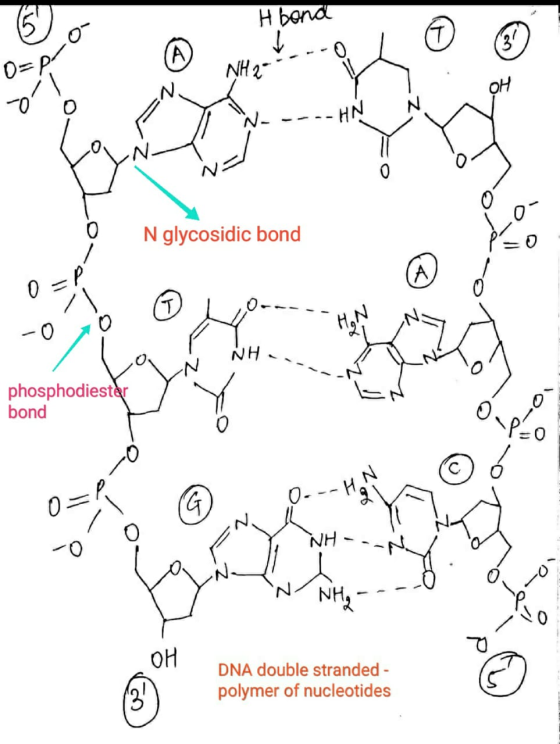
Please rate.
Add Answer to:
(a)
define cofactor, coenzyme, and cosubstrate.
(b) what are the types of biological polymers? name and...
2. Enzymes are important biological molecules and they act as catalysts for specific chemical reactions. Their...
 2. Enzymes are important biological molecules and they act as catalysts for specific chemical reactions. Their biological function is determined by their 3 dimensional shape and the functional groups present in the active site. (a) What are the main mechanisms by which an enzyme increase the rate of a reaction? (b) What is a cofactor in an enzyme mediated reaction? (c) Give the name of a cofactor (structure if possible) and indicate the type of reaction that it facilitates. 3....
Define FMS. What types of systems are FMS systems. Name and define how 3 are used...
Define FMS. What types of systems are FMS systems. Name and define how 3 are used in industry.
What are the different types of entrepreneurship? Explain at least four types. 2) Define a “gazelle” and...
What are the different types of entrepreneurship? Explain at least four types. 2) Define a “gazelle” and discuss ways in which gazelles can impact the economy. 3) Define and describe the Lean Start-up methodology. 4) Explain three major reasons why ventures fail. 5) List and explain each of the phases in the creative process. 6) Describe the “Immigrant mindset” and how it can impact entrepreneurship and ultimately the economy (Hint: Refer to the additional materials – especially the Harvard Business Review...
Pre-Laboratory Exercise 1. What are the three types of bonding? Define each type and the types of...
 Pre-Laboratory Exercise 1. What are the three types of bonding? Define each type and the types of atoms/elements involved. 2. Statethe rales for drawing Lewis Dot Sirncures. 3. Draw the Lewis Dot Structure for the following: CH20 a. How many and what type(s) of bonds (single, double, triple) are on the carbon? How many lone pair electrons are in the structure? What is the electron orientation? What is the shape of the molecule? What is the hybridization on the central...
Pre-Laboratory Exercise: 1. What are the three types of bonding? Define cach type and the types...
 Pre-Laboratory Exercise: 1. What are the three types of bonding? Define cach type and the types of atoms/elements involved 2. State the rules for drawing Lewis Dot Structures. 3. Draw the Lewis Dot Structure for the following: a. CH4 How many and what type(s) of bonds (single, double, triple) are on the carbon? How many lone pairs of electrons are in the structure? What is the electron domain geometry? What is the shape of the molecule? What is the hybridization...
2. Referring to the structure at the right, answer/do the following: CH2OH a. Label each ring...
 2. Referring to the structure at the right, answer/do the following: CH2OH a. Label each ring as locked (L) or unlocked. (U) OH O b. Circle the glycoside linkage. OH C. What type of glycoside linkage (e.g., a-1,2) is it? CH2OH HO OH HO 2MCL d. Explain the significance to humans of the type of glycoside linkage in this disaccharide.Why does it matter to some humans who consume sobi-C this sugar? Hbonvib no tiowall OH OH What is the name...
** This is about Music Class. 1- Explain and define, where possible, name a composer associated...
** This is about Music Class. 1- Explain and define, where possible, name a composer associated with the term? A- Allegro: B- Tempo: C- Ritornello: 2- Describe your favorite composer/piece?
Solve 1.Define reactivity as it relates to a scientific experiment. Provide two specific examples...
Solve 1.Define reactivity as it relates to a scientific experiment. Provide two specific examples of how reactivity might affect a naturalistic observation experiment. 2.Explain the difference between a non-experimental method and an experimental method. Include a description of how each method is performed and identify which type of validity is more associated with each one. 3.Define both qualitative data and quantitative data. Then, identify the purpose, the group who is studied, and the role of the researcher for each type...
List AND define eight (8) types of dispute resolution processes. What are the advantages (list at...
List AND define eight (8) types of dispute resolution processes. What are the advantages (list at least five (5) of these different forms of dispute resolution? Many contracts call for binding arbitration to resolve disputes instead of litigation. Discuss the pros and cons of including this type of provision in a contract. Describe at least one alternative (not including litigation) to binding arbitration to resolve a contract dispute. Define and provide advantages and disadvantages of the Med-Arb dispute resolution process....
5) (A) What is the backbone of sphingolipids? (B) What type of linkage is found between...
 5) (A) What is the backbone of sphingolipids? (B) What type of linkage is found between the sphinolipid backbone and a fatty acid? Is this the same type of linkage most commonly seen in other lipids? (C) What two types of linkages can be found between the sphingolipid backbone and the polar head group? (3 pts) 6) Describe primary and secondary active transport. How do these mechanisms vary from facilitate diffusion? (3 pts)
 2. Enzymes are important biological molecules and they act as catalysts for specific chemical reactions. Their biological function is determined by their 3 dimensional shape and the functional groups present in the active site. (a) What are the main mechanisms by which an enzyme increase the rate of a reaction? (b) What is a cofactor in an enzyme mediated reaction? (c) Give the name of a cofactor (structure if possible) and indicate the type of reaction that it facilitates. 3....
 Pre-Laboratory Exercise 1. What are the three types of bonding? Define each type and the types of atoms/elements involved. 2. Statethe rales for drawing Lewis Dot Sirncures. 3. Draw the Lewis Dot Structure for the following: CH20 a. How many and what type(s) of bonds (single, double, triple) are on the carbon? How many lone pair electrons are in the structure? What is the electron orientation? What is the shape of the molecule? What is the hybridization on the central...
 Pre-Laboratory Exercise: 1. What are the three types of bonding? Define cach type and the types of atoms/elements involved 2. State the rules for drawing Lewis Dot Structures. 3. Draw the Lewis Dot Structure for the following: a. CH4 How many and what type(s) of bonds (single, double, triple) are on the carbon? How many lone pairs of electrons are in the structure? What is the electron domain geometry? What is the shape of the molecule? What is the hybridization...
 2. Referring to the structure at the right, answer/do the following: CH2OH a. Label each ring as locked (L) or unlocked. (U) OH O b. Circle the glycoside linkage. OH C. What type of glycoside linkage (e.g., a-1,2) is it? CH2OH HO OH HO 2MCL d. Explain the significance to humans of the type of glycoside linkage in this disaccharide.Why does it matter to some humans who consume sobi-C this sugar? Hbonvib no tiowall OH OH What is the name...
 5) (A) What is the backbone of sphingolipids? (B) What type of linkage is found between the sphinolipid backbone and a fatty acid? Is this the same type of linkage most commonly seen in other lipids? (C) What two types of linkages can be found between the sphingolipid backbone and the polar head group? (3 pts) 6) Describe primary and secondary active transport. How do these mechanisms vary from facilitate diffusion? (3 pts)
Most questions answered within 3 hours.
-
Where is the error in this code sequence?
String s1 = "Hello";
String s2 = "ello";...
asked 10 months ago -
Financial data for Joel de Paris, Inc., for last year
follow:
Joel de Paris, Inc.
Balance...
asked 10 months ago -
Consider this reaction:
Al2(SO4)3 (aq)+ BaCl3
(aq) Al2Cl6 (aq)- +
3BaSO4(s) . What is the...
asked 10 months ago -
Suppose that Savneet is considering increasing her
recent random sample from 20 car rentals to 40...
asked 10 months ago -
Trucks arrive at an unloading terminal at an average rate of 120
per hour.
Trucks arrive...
asked 10 months ago -
Why are methanol and ethanol completely soluble in water while
octanol is not very little soluble....
asked 10 months ago -
A facilities manager at a university reads in a research report
that the mean amount of...
asked 10 months ago -
When the CuSO4 is rehydrated by adding water to the anhydrous
compound, is this an endothermic...
asked 10 months ago -
A ray of sunlight is passing from diamond into crown glass; the
angle of incidence is...
asked 10 months ago -
A block of mass 0.249 kg is placed on top of a light, vertical
spring of...
asked 10 months ago -
how do the kidneys compensate in the presences of acidosis
a) trigger hyperventilate
b) reserve acid...
asked 10 months ago -
Question 501 pts
The rental rate of capital to the firm increases. Which of the
following...
asked 10 months ago