(c) Explain how reactions can be explosive or burn smoothly depending on pressure and temperature, using...
(c) Explain how reactions can be explosive or burn smoothly depending on pressure and temperature, using an appropriate diagram (eg. a ‘phase diagram’ of pressure vs. temperature).
Homework Answers
Request Answer!
We need at least 10 more requests to produce the answer.
0 / 10 have requested this problem solution
The more requests, the faster the answer.
Add Answer to:
(c) Explain how reactions can be explosive or burn smoothly
depending on pressure and temperature, using...
draw the pressure temperature phase diagram of H2O. explain the equilibrium compositions of each region, as...
draw the pressure temperature phase diagram of H2O. explain the equilibrium compositions of each region, as well as the slopes of the phase boundary lines
RUX (Research Development Explosive) is the main explosive component of military grade C-4 plastic expos balanced...
 RUX (Research Development Explosive) is the main explosive component of military grade C-4 plastic expos balanced chemical reaction for the detonation of RDX (CH.N.O.) is: . CH..0() + 3C0 + 3H206 + 3N26) a. Given the Heats of Formation below, calculate the amount of heat released when 1.5 moles of RDX is detonated. AH (RDX, solid) = +70.29 kJ/mol AH,(CO, gas) = -110.5 kJ/mol AH (H20, gas) = -241.8 kJ/mol AH,(C0.gas) = -393.5 kJ/mol b. Very briefly (1 sentence) explain...
1) In class we considered the temperature dependence of chemical potential. Roughly sketch the chemical potential...
 1) In class we considered the temperature dependence of chemical potential. Roughly sketch the chemical potential vs. pressure (y vs. x) for water at 100°C from about 1 Pa to 1 MPa. Label the appropriate regions with what phase they contain. What does the slope of these curves correspond to? Hint: It will be useful to look up the appropriate phase diagram for water over this pressure range.
Time of death determinations can be made using Newton's Law of Heating (or cool- ing, depending o...
 Time of death determinations can be made using Newton's Law of Heating (or cool- ing, depending on which way the temperature is going), which predicts that the rate of change of temperature is proportional to the difference between the temperature of the object and the ambient temperature of the environment. (a) Last time, you assumed that the death occurred in a place where the temperature was constant. Now, an exercise in adjusting your differential equation! Write a new differ- ential...
3) Sketch a phase diagram (temperature vs. average system composition) of an ideal solution of two...
 3) Sketch a phase diagram (temperature vs. average system composition) of an ideal solution of two components A and B. Explain how you can obtain a pure sample of B from this mixture using fractional distillation. Indicate on your phase diagram the purification process you describe in your explanation.
Water exists in different forms depending on the pressure and temperature. A portion the phase diagram...
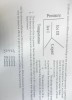 Water exists in different forms depending on the pressure and temperature. A portion the phase diagram for ice I, ice III and liquid water is shown below. What statement about the densities of three phases is correct. a. The density of liquid water is greater than the densities of either ice or ice III. b. The density of ice III is greater than the densities of either ice liquid water. c. The density of ice I is greater than the...
Can I have help with these questions based off the information provided? Information: The explosive picric...
Can I have help with these questions based off the information provided? Information: The explosive picric acid is also known by the IUPAC name 2,4,6-Trinitrophenol. Picric acid is known as a primary explosive and the balanced equation for the explosion is 4 C6H3N3 O7 (aq) + 13 O2 (g) --> 6 H2O (g) + 6 N2 (g) + 24 CO2 (g) volume of gas produced by 1 g is 0.89 L Type bond broken # bond type Enthalpy (KJ/mol Total...
11.) please answer and explain A certain objects' temperature increases by 1.0 degree C for every...
 11.) please answer and explain
A certain objects' temperature increases by 1.0 degree C for every 1560 J that it gains. A 0.1964 g sample of quinone (molar mass = 108.1 g mole) was burnt in it, and the surrounding object's temperature increased from 20.3 degree C to 23.5 degree C. Find the molar enthalpy of combustion of quinone. If the pressure is very low, ice can sublimate at -70 degree C. instead of melting and then evaporating. To calculate...
11.) please answer and explain
A certain objects' temperature increases by 1.0 degree C for every 1560 J that it gains. A 0.1964 g sample of quinone (molar mass = 108.1 g mole) was burnt in it, and the surrounding object's temperature increased from 20.3 degree C to 23.5 degree C. Find the molar enthalpy of combustion of quinone. If the pressure is very low, ice can sublimate at -70 degree C. instead of melting and then evaporating. To calculate...
Question 3 (4 points) The vapor pressure of a liquid is dependent on: the temperature of...
 Question 3 (4 points) The vapor pressure of a liquid is dependent on: the temperature of the liquid and intermolecular forces of attraction in the liquid the temperature of the liquid and the surface area of the liquid only on the surface area of the liquid only the temperature of the liquid O only the forces of intermolecular attraction in the liquid Question 4 (4 points) If the atmospheric pressure over a sample of liquid is increased, the boiling point...
If the pressure is very low, ice can sublimate at -70 degree C, instead of melting...
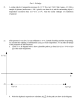
 If the pressure is very low, ice can sublimate at -70 degree C, instead of melting and then evaporating To calculate the enthalpy of sublimation (Delta H_subl) at such temperature, we can take advantage of the properties of state functions. a. In the T vs. H diagram below, draw a plausible path to go from H_2 O ($) at -70 degree C to H_2 O (g) at the same temperature.
 RUX (Research Development Explosive) is the main explosive component of military grade C-4 plastic expos balanced chemical reaction for the detonation of RDX (CH.N.O.) is: . CH..0() + 3C0 + 3H206 + 3N26) a. Given the Heats of Formation below, calculate the amount of heat released when 1.5 moles of RDX is detonated. AH (RDX, solid) = +70.29 kJ/mol AH,(CO, gas) = -110.5 kJ/mol AH (H20, gas) = -241.8 kJ/mol AH,(C0.gas) = -393.5 kJ/mol b. Very briefly (1 sentence) explain...
 1) In class we considered the temperature dependence of chemical potential. Roughly sketch the chemical potential vs. pressure (y vs. x) for water at 100°C from about 1 Pa to 1 MPa. Label the appropriate regions with what phase they contain. What does the slope of these curves correspond to? Hint: It will be useful to look up the appropriate phase diagram for water over this pressure range.
 Time of death determinations can be made using Newton's Law of Heating (or cool- ing, depending on which way the temperature is going), which predicts that the rate of change of temperature is proportional to the difference between the temperature of the object and the ambient temperature of the environment. (a) Last time, you assumed that the death occurred in a place where the temperature was constant. Now, an exercise in adjusting your differential equation! Write a new differ- ential...
 3) Sketch a phase diagram (temperature vs. average system composition) of an ideal solution of two components A and B. Explain how you can obtain a pure sample of B from this mixture using fractional distillation. Indicate on your phase diagram the purification process you describe in your explanation.
 Water exists in different forms depending on the pressure and temperature. A portion the phase diagram for ice I, ice III and liquid water is shown below. What statement about the densities of three phases is correct. a. The density of liquid water is greater than the densities of either ice or ice III. b. The density of ice III is greater than the densities of either ice liquid water. c. The density of ice I is greater than the...
 11.) please answer and explain
A certain objects' temperature increases by 1.0 degree C for every 1560 J that it gains. A 0.1964 g sample of quinone (molar mass = 108.1 g mole) was burnt in it, and the surrounding object's temperature increased from 20.3 degree C to 23.5 degree C. Find the molar enthalpy of combustion of quinone. If the pressure is very low, ice can sublimate at -70 degree C. instead of melting and then evaporating. To calculate...
11.) please answer and explain
A certain objects' temperature increases by 1.0 degree C for every 1560 J that it gains. A 0.1964 g sample of quinone (molar mass = 108.1 g mole) was burnt in it, and the surrounding object's temperature increased from 20.3 degree C to 23.5 degree C. Find the molar enthalpy of combustion of quinone. If the pressure is very low, ice can sublimate at -70 degree C. instead of melting and then evaporating. To calculate...
 Question 3 (4 points) The vapor pressure of a liquid is dependent on: the temperature of the liquid and intermolecular forces of attraction in the liquid the temperature of the liquid and the surface area of the liquid only on the surface area of the liquid only the temperature of the liquid O only the forces of intermolecular attraction in the liquid Question 4 (4 points) If the atmospheric pressure over a sample of liquid is increased, the boiling point...
 If the pressure is very low, ice can sublimate at -70 degree C, instead of melting and then evaporating To calculate the enthalpy of sublimation (Delta H_subl) at such temperature, we can take advantage of the properties of state functions. a. In the T vs. H diagram below, draw a plausible path to go from H_2 O ($) at -70 degree C to H_2 O (g) at the same temperature.
Most questions answered within 3 hours.
-
Where is the error in this code sequence?
String s1 = "Hello";
String s2 = "ello";...
asked 10 months ago -
Financial data for Joel de Paris, Inc., for last year
follow:
Joel de Paris, Inc.
Balance...
asked 10 months ago -
Consider this reaction:
Al2(SO4)3 (aq)+ BaCl3
(aq) Al2Cl6 (aq)- +
3BaSO4(s) . What is the...
asked 10 months ago -
Suppose that Savneet is considering increasing her
recent random sample from 20 car rentals to 40...
asked 10 months ago -
Trucks arrive at an unloading terminal at an average rate of 120
per hour.
Trucks arrive...
asked 10 months ago -
Why are methanol and ethanol completely soluble in water while
octanol is not very little soluble....
asked 10 months ago -
A facilities manager at a university reads in a research report
that the mean amount of...
asked 10 months ago -
When the CuSO4 is rehydrated by adding water to the anhydrous
compound, is this an endothermic...
asked 10 months ago -
A ray of sunlight is passing from diamond into crown glass; the
angle of incidence is...
asked 10 months ago -
A block of mass 0.249 kg is placed on top of a light, vertical
spring of...
asked 10 months ago -
how do the kidneys compensate in the presences of acidosis
a) trigger hyperventilate
b) reserve acid...
asked 10 months ago -
Question 501 pts
The rental rate of capital to the firm increases. Which of the
following...
asked 10 months ago