Draw a cladogram that represents the phylogenetic relationships of amphioxus, salamanders, crocodiles, Passeriformes, and Charadriiformes.
Draw a cladogram that represents the phylogenetic relationships of amphioxus, salamanders, crocodiles, Passeriformes, and Charadriiformes.
Homework Answers

Add Answer to:
Draw a cladogram that represents the phylogenetic relationships
of amphioxus, salamanders, crocodiles, Passeriformes, and
Charadriiformes.
Consider the anatomy of the following six genera: Branchiostomata (Amphioxus), Petromyzon (Lamprey), Squalus (Dogfish), Perca (Perch),...
Consider the anatomy of the following six genera: Branchiostomata (Amphioxus), Petromyzon (Lamprey), Squalus (Dogfish), Perca (Perch), Necturus (Mudpuppy) and Lithobates (Bullfrog). Recall that you had the opportunity to study these animals in the laboratory portion of this course. Construct a table listing the important characters of each of these six genera that you think would be useful in constructing a cladogram or phylogenetic tree. Indicate which characters might be plesiomorphic (generalized for some or all of these taxa) and which...
Salamanders & Newts (Urodela) Plethodontidae Lungless salamanders Salamandridae True salamanders and newts -Ambystomatidae Mole salamanders -Dicamptodontidae...
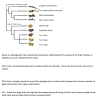 Salamanders & Newts (Urodela) Plethodontidae Lungless salamanders Salamandridae True salamanders and newts -Ambystomatidae Mole salamanders -Dicamptodontidae Giant salamanders Frogs & Toads (Anura) -Ascaphidae Tailed Frogs Pelobatidae Spadefoot Toads Ranidae True Frogs Hylidae Tree Frogs Bufonidae True Toads Above is a phylogenetic tree showing the evolutionary relationships of the several of the major families of amphibians as we understand them today. Q7a. Circle a monophyletic group that contains exactly four families. There may be more than one correct answer. Q7b. Draw...
Phylogenetic Reconstruction I am asked to complete the following tables and to create a cladogram based...
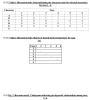 Phylogenetic Reconstruction
I am asked to complete the following tables and to create a
cladogram based on the information already provided in the tables,
any help is greatly appreciated!
(0.25) Table 1 (Reconstructed): Data indicating the character state for selected characters for taxa 1 - 6. Character Taxa 1 0 0 0 (0.25) Table 2 (Reconstructed: Matrix of shared derived characters for taxa 1-6. Taxa 1 2 3 4 5 6 (0.5) Fig. 2 (Reconstructed). Cladogram indicating phylogenetic relationships among...
Phylogenetic Reconstruction
I am asked to complete the following tables and to create a
cladogram based on the information already provided in the tables,
any help is greatly appreciated!
(0.25) Table 1 (Reconstructed): Data indicating the character state for selected characters for taxa 1 - 6. Character Taxa 1 0 0 0 (0.25) Table 2 (Reconstructed: Matrix of shared derived characters for taxa 1-6. Taxa 1 2 3 4 5 6 (0.5) Fig. 2 (Reconstructed). Cladogram indicating phylogenetic relationships among...
According to this phylogenetic tree, which of the following is tru Lamprey Common ancestor Perch Salamander...
 According to this phylogenetic tree, which of the following is tru Lamprey Common ancestor Perch Salamander Lizard Crocodile Pigeon Mouse Chimpanzee Mammals Amniotes Tetrapods Vertebrates Select one: a. More than 1 of these is true. b. Crocodiles are more closely related to mice than to salaman C. Crocodiles are more closely related to salamanders than to r x d. Salamanders are equally related to crocodiles & mice. e. Crocodiles are equally related to mice & salamanders. According to the phylogeny,...
Procedure 1 A Simple Cladogram Cladograms can become very complex. T 17.4 Constructing a Simple Cladogram...
 Procedure 1 A Simple Cladogram Cladograms can become very complex. T 17.4 Constructing a Simple Cladogram In order to fully understand how to Derived Trait construct a detailed cladogram, much experience is necessary. The following Placenta Limbs Hair Segmented Jaws Multicellular exercise will help you understand how to construct a simple cladogram. Catfish 1 Based upon Table 17.4, showing Earthworm scrambled derived traits and sample organisms, place a plus in the boxes Sponge for the organism that has a particu-...
What is meant by phylogenetic dependence versus phylogenetic independence in phenotypic relationships
What is meant by phylogenetic dependence versus phylogenetic independence in phenotypic relationships
We commonly hear the word "reptile" used. Is Reptiles a Monophyletic group (represents all the descendents...
 We commonly hear the word "reptile" used. Is Reptiles a
Monophyletic group (represents all the descendents of a single
ancestor) group in any of these trees? Explain your answer.
Crocodylia Aves Mammalia 10 Lepidosauria (Snakes/Lizards) Chelonia (Turtles) HAEMOTHERMIA (1-17) THECODONTIA (18-27) EUAMNIOTA (28-37) | AMNIOTA Fig. 1. The sister group relationships among the five assemblages of living amniotes advocated by Gardiner (1982; see also Løvtrup, 1985). The numbers of the synapomorphies Gardiner employed are displayed on the cladogram. Redrawn from...
We commonly hear the word "reptile" used. Is Reptiles a
Monophyletic group (represents all the descendents of a single
ancestor) group in any of these trees? Explain your answer.
Crocodylia Aves Mammalia 10 Lepidosauria (Snakes/Lizards) Chelonia (Turtles) HAEMOTHERMIA (1-17) THECODONTIA (18-27) EUAMNIOTA (28-37) | AMNIOTA Fig. 1. The sister group relationships among the five assemblages of living amniotes advocated by Gardiner (1982; see also Løvtrup, 1985). The numbers of the synapomorphies Gardiner employed are displayed on the cladogram. Redrawn from...
Bony no using the following characteristics, build a cladogram that is the most parsimonious to represent...
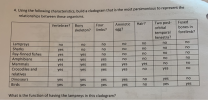 Bony no using the following characteristics, build a cladogram that is the most parsimonious to represent the relationships between these organisms. Vertebrae? Four Amniotic Hair? Fused Two post skeleton? limbs? egg? orbital bones in temporal forelimb? fenestra? Lampreys no no no no no Sharks yes no no no no Ray-finned fishes yes yes no no no Amphibians yes no no Mammals yes yes yes no Crocodiles and yes yes yes yes yes no relatives Dinosaurs yes yes yes Birds yes...
5. A simple cladogram of vertebrate relationships is shown. A circle has been drawn around all...
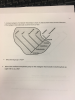 5. A simple cladogram of vertebrate relationships is shown. A circle has been drawn around all the parts of the cladogram that traditionally would be known as "fish." Tetrapoda Ostelchthyes Vertebrata What kind of group is "fish?" . What is the smallest monophyletic group on the cladogram that includes everything that we might refer to as a fish?
Analysis based on two individual genes (gene trees) may imply two different phylogenetic relationships among a...
Analysis based on two individual genes (gene trees) may imply two different phylogenetic relationships among a group of species. List three possible reasons for this (1), and explain how one of them works (2). If only one phylogenetic tree accurately represents the true evolutionary history of these species, what might we do in order to determine which one is correct (2)?
 Salamanders & Newts (Urodela) Plethodontidae Lungless salamanders Salamandridae True salamanders and newts -Ambystomatidae Mole salamanders -Dicamptodontidae Giant salamanders Frogs & Toads (Anura) -Ascaphidae Tailed Frogs Pelobatidae Spadefoot Toads Ranidae True Frogs Hylidae Tree Frogs Bufonidae True Toads Above is a phylogenetic tree showing the evolutionary relationships of the several of the major families of amphibians as we understand them today. Q7a. Circle a monophyletic group that contains exactly four families. There may be more than one correct answer. Q7b. Draw...
 Phylogenetic Reconstruction
I am asked to complete the following tables and to create a
cladogram based on the information already provided in the tables,
any help is greatly appreciated!
(0.25) Table 1 (Reconstructed): Data indicating the character state for selected characters for taxa 1 - 6. Character Taxa 1 0 0 0 (0.25) Table 2 (Reconstructed: Matrix of shared derived characters for taxa 1-6. Taxa 1 2 3 4 5 6 (0.5) Fig. 2 (Reconstructed). Cladogram indicating phylogenetic relationships among...
Phylogenetic Reconstruction
I am asked to complete the following tables and to create a
cladogram based on the information already provided in the tables,
any help is greatly appreciated!
(0.25) Table 1 (Reconstructed): Data indicating the character state for selected characters for taxa 1 - 6. Character Taxa 1 0 0 0 (0.25) Table 2 (Reconstructed: Matrix of shared derived characters for taxa 1-6. Taxa 1 2 3 4 5 6 (0.5) Fig. 2 (Reconstructed). Cladogram indicating phylogenetic relationships among...
 According to this phylogenetic tree, which of the following is tru Lamprey Common ancestor Perch Salamander Lizard Crocodile Pigeon Mouse Chimpanzee Mammals Amniotes Tetrapods Vertebrates Select one: a. More than 1 of these is true. b. Crocodiles are more closely related to mice than to salaman C. Crocodiles are more closely related to salamanders than to r x d. Salamanders are equally related to crocodiles & mice. e. Crocodiles are equally related to mice & salamanders. According to the phylogeny,...
 Procedure 1 A Simple Cladogram Cladograms can become very complex. T 17.4 Constructing a Simple Cladogram In order to fully understand how to Derived Trait construct a detailed cladogram, much experience is necessary. The following Placenta Limbs Hair Segmented Jaws Multicellular exercise will help you understand how to construct a simple cladogram. Catfish 1 Based upon Table 17.4, showing Earthworm scrambled derived traits and sample organisms, place a plus in the boxes Sponge for the organism that has a particu-...
 We commonly hear the word "reptile" used. Is Reptiles a
Monophyletic group (represents all the descendents of a single
ancestor) group in any of these trees? Explain your answer.
Crocodylia Aves Mammalia 10 Lepidosauria (Snakes/Lizards) Chelonia (Turtles) HAEMOTHERMIA (1-17) THECODONTIA (18-27) EUAMNIOTA (28-37) | AMNIOTA Fig. 1. The sister group relationships among the five assemblages of living amniotes advocated by Gardiner (1982; see also Løvtrup, 1985). The numbers of the synapomorphies Gardiner employed are displayed on the cladogram. Redrawn from...
We commonly hear the word "reptile" used. Is Reptiles a
Monophyletic group (represents all the descendents of a single
ancestor) group in any of these trees? Explain your answer.
Crocodylia Aves Mammalia 10 Lepidosauria (Snakes/Lizards) Chelonia (Turtles) HAEMOTHERMIA (1-17) THECODONTIA (18-27) EUAMNIOTA (28-37) | AMNIOTA Fig. 1. The sister group relationships among the five assemblages of living amniotes advocated by Gardiner (1982; see also Løvtrup, 1985). The numbers of the synapomorphies Gardiner employed are displayed on the cladogram. Redrawn from...
 Bony no using the following characteristics, build a cladogram that is the most parsimonious to represent the relationships between these organisms. Vertebrae? Four Amniotic Hair? Fused Two post skeleton? limbs? egg? orbital bones in temporal forelimb? fenestra? Lampreys no no no no no Sharks yes no no no no Ray-finned fishes yes yes no no no Amphibians yes no no Mammals yes yes yes no Crocodiles and yes yes yes yes yes no relatives Dinosaurs yes yes yes Birds yes...
 5. A simple cladogram of vertebrate relationships is shown. A circle has been drawn around all the parts of the cladogram that traditionally would be known as "fish." Tetrapoda Ostelchthyes Vertebrata What kind of group is "fish?" . What is the smallest monophyletic group on the cladogram that includes everything that we might refer to as a fish?
Most questions answered within 3 hours.
-
Where is the error in this code sequence?
String s1 = "Hello";
String s2 = "ello";...
asked 10 months ago -
Financial data for Joel de Paris, Inc., for last year
follow:
Joel de Paris, Inc.
Balance...
asked 10 months ago -
Consider this reaction:
Al2(SO4)3 (aq)+ BaCl3
(aq) Al2Cl6 (aq)- +
3BaSO4(s) . What is the...
asked 10 months ago -
Suppose that Savneet is considering increasing her
recent random sample from 20 car rentals to 40...
asked 10 months ago -
Trucks arrive at an unloading terminal at an average rate of 120
per hour.
Trucks arrive...
asked 10 months ago -
Why are methanol and ethanol completely soluble in water while
octanol is not very little soluble....
asked 10 months ago -
A facilities manager at a university reads in a research report
that the mean amount of...
asked 10 months ago -
When the CuSO4 is rehydrated by adding water to the anhydrous
compound, is this an endothermic...
asked 10 months ago -
A ray of sunlight is passing from diamond into crown glass; the
angle of incidence is...
asked 10 months ago -
A block of mass 0.249 kg is placed on top of a light, vertical
spring of...
asked 10 months ago -
how do the kidneys compensate in the presences of acidosis
a) trigger hyperventilate
b) reserve acid...
asked 10 months ago -
Question 501 pts
The rental rate of capital to the firm increases. Which of the
following...
asked 10 months ago