QUIZZ-CHEMISTRY 306 ORGANIC.[10 POINTS EACH] 1. Classify each compound an alkyl halide, a vinyl halide, or...
 QUIZZ-CHEMISTRY 306 ORGANIC.[10 POINTS EACH] 1. Classify each compound an alkyl halide, a vinyl halide, or an aryl halide CICI Br Br Cl 2. Predict the compound that will undergo Sn2 reaction faster сња 3. Predict the compound that will undergo Sw1 reaction faster. H3C OR Cl
mechanism for the reaction Phenol 3. Predict the major product for the following reaction. (3 Point CHAKE Tora
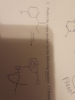 mechanism for the reaction
Phenol 3. Predict the major product for the following reaction. (3 Point CHAKE Tora
mechanism for the reaction
Phenol 3. Predict the major product for the following reaction. (3 Point CHAKE Tora
For the following reactions, indicate whether the equilibrium tends to favor the reactants or the products....
 For the following reactions, indicate whether the equilibrium tends to favor the reactants or the products. Reaction A: Reaction B: Reactions A and B tend to favor the reactants. Reaction A tends to favor the products, Reaction B favors the reactants, Reactions A and B tend to favor the products. Reaction A tends to favor the reactants, Reaction B favors...
If the reaction A + B → C has an equilibrium constant of 10-6. Which of...
If the reaction A + B → C has an equilibrium constant of 10-6. Which of the following statements are necessarily true? Make sure to select all of the correct responses At equilibrium there will be more products than reactants At equilibrium there will be more reactants than products the reaction is spontaneous the reaction is not spontaneous The reaction...
only J and K Z0OM 1. Draw the mechanism and predict the products (including all possible...
 only J and K
Z0OM 1. Draw the mechanism and predict the products (including all possible stereoisomers) for the reaction of the reactant below (whose name is: Hасн,С.. Н.с" Нас CH3 (a) with hydrogen bromide. Also consider: after forming the product(s) what reagent(s) and conditions need to be used in order to reform the above reactant? (b) with hydrogen bromide...
only J and K
Z0OM 1. Draw the mechanism and predict the products (including all possible stereoisomers) for the reaction of the reactant below (whose name is: Hасн,С.. Н.с" Нас CH3 (a) with hydrogen bromide. Also consider: after forming the product(s) what reagent(s) and conditions need to be used in order to reform the above reactant? (b) with hydrogen bromide...
Chemie Heterogeneous Reaction Chemical reactions may be envisioned in terms of reactants and products and written...
 Chemie Heterogeneous Reaction Chemical reactions may be envisioned in terms of reactants and products and written in the general form A +bB - C +dD Reactants Products The equilibrium constant may be expressed in the form K - LORD up or K, - P2 where [C] represents the molar concentration of Catequilibrium. For a given reaction, the concentrations at equilibrium...
Predict the sign and calculate ASⓇ for a reaction. Consider the reaction 2H S(g) + 302(g)...
 Predict the sign and calculate ASⓇ for a reaction. Consider the reaction 2H S(g) + 302(g) +2H2O(g) + 25029) Based upon the stoichiometry of the reaction the sign of Srce should be Using standard thermodynamic data (in the Chemistry References), calculate AS rx at 25°C. AS J/Kºmol Predict the sign and calculate ASº for a reaction. Consider the reaction 2H,S(g)...
q7 Using the activity series, predict whether a reaction occurs or no reaction occurs for each...
 q7
Using the activity series, predict whether a reaction occurs or no reaction occurs for each of the following single-replacement reactions: a) Cu(NO3)2(aq) + Ni(s) - [Select] b) Au(s) + H2SO4(aq) — [ Select] c) FeSO4(aq) + Ag(s) – [Select Using the activity series, predict whether a reaction occurs or no reaction occurs for each of the following single-replacement reactions:...
q7
Using the activity series, predict whether a reaction occurs or no reaction occurs for each of the following single-replacement reactions: a) Cu(NO3)2(aq) + Ni(s) - [Select] b) Au(s) + H2SO4(aq) — [ Select] c) FeSO4(aq) + Ag(s) – [Select Using the activity series, predict whether a reaction occurs or no reaction occurs for each of the following single-replacement reactions:...
q9 Using the solubility table, predict whether a reaction occurs or no reaction occurs for each...
 q9
Using the solubility table, predict whether a reaction occurs or no reaction occurs for each of the following double-replacement reactions: a) AgC2H2O2(aq) + Srl2(aq) → [Select] b) FeSO4(aq) + CuCl2(aq) → [Select] c) NaOH(aq) + CO(NO3)2(aq) – [ Select] Using the solubility table, predict whether a reaction occurs or no reaction occurs for each of the following double-replacement reactions:...
q9
Using the solubility table, predict whether a reaction occurs or no reaction occurs for each of the following double-replacement reactions: a) AgC2H2O2(aq) + Srl2(aq) → [Select] b) FeSO4(aq) + CuCl2(aq) → [Select] c) NaOH(aq) + CO(NO3)2(aq) – [ Select] Using the solubility table, predict whether a reaction occurs or no reaction occurs for each of the following double-replacement reactions:...
Most of the time, the rate of a reaction depends on the concentration of the reactant....
 Most of the time, the rate of a reaction depends on the
concentration of the reactant. In the case of second-order
reactions, the rate is proportional to the square of the
concentration of the reactant.
Select the image to explore the simulation, which will help you
to understand how second-order reactions are identified by the
nature of their plots. You...
Most of the time, the rate of a reaction depends on the
concentration of the reactant. In the case of second-order
reactions, the rate is proportional to the square of the
concentration of the reactant.
Select the image to explore the simulation, which will help you
to understand how second-order reactions are identified by the
nature of their plots. You...
 QUIZZ-CHEMISTRY 306 ORGANIC.[10 POINTS EACH] 1. Classify each compound an alkyl halide, a vinyl halide, or an aryl halide CICI Br Br Cl 2. Predict the compound that will undergo Sn2 reaction faster сња 3. Predict the compound that will undergo Sw1 reaction faster. H3C OR Cl
 mechanism for the reaction
Phenol 3. Predict the major product for the following reaction. (3 Point CHAKE Tora
mechanism for the reaction
Phenol 3. Predict the major product for the following reaction. (3 Point CHAKE Tora
 For the following reactions, indicate whether the equilibrium tends to favor the reactants or the products. Reaction A: Reaction B: Reactions A and B tend to favor the reactants. Reaction A tends to favor the products, Reaction B favors the reactants, Reactions A and B tend to favor the products. Reaction A tends to favor the reactants, Reaction B favors...
 only J and K
Z0OM 1. Draw the mechanism and predict the products (including all possible stereoisomers) for the reaction of the reactant below (whose name is: Hасн,С.. Н.с" Нас CH3 (a) with hydrogen bromide. Also consider: after forming the product(s) what reagent(s) and conditions need to be used in order to reform the above reactant? (b) with hydrogen bromide...
only J and K
Z0OM 1. Draw the mechanism and predict the products (including all possible stereoisomers) for the reaction of the reactant below (whose name is: Hасн,С.. Н.с" Нас CH3 (a) with hydrogen bromide. Also consider: after forming the product(s) what reagent(s) and conditions need to be used in order to reform the above reactant? (b) with hydrogen bromide...
 Chemie Heterogeneous Reaction Chemical reactions may be envisioned in terms of reactants and products and written in the general form A +bB - C +dD Reactants Products The equilibrium constant may be expressed in the form K - LORD up or K, - P2 where [C] represents the molar concentration of Catequilibrium. For a given reaction, the concentrations at equilibrium...
 Predict the sign and calculate ASⓇ for a reaction. Consider the reaction 2H S(g) + 302(g) +2H2O(g) + 25029) Based upon the stoichiometry of the reaction the sign of Srce should be Using standard thermodynamic data (in the Chemistry References), calculate AS rx at 25°C. AS J/Kºmol Predict the sign and calculate ASº for a reaction. Consider the reaction 2H,S(g)...
 q7
Using the activity series, predict whether a reaction occurs or no reaction occurs for each of the following single-replacement reactions: a) Cu(NO3)2(aq) + Ni(s) - [Select] b) Au(s) + H2SO4(aq) — [ Select] c) FeSO4(aq) + Ag(s) – [Select Using the activity series, predict whether a reaction occurs or no reaction occurs for each of the following single-replacement reactions:...
q7
Using the activity series, predict whether a reaction occurs or no reaction occurs for each of the following single-replacement reactions: a) Cu(NO3)2(aq) + Ni(s) - [Select] b) Au(s) + H2SO4(aq) — [ Select] c) FeSO4(aq) + Ag(s) – [Select Using the activity series, predict whether a reaction occurs or no reaction occurs for each of the following single-replacement reactions:...
 q9
Using the solubility table, predict whether a reaction occurs or no reaction occurs for each of the following double-replacement reactions: a) AgC2H2O2(aq) + Srl2(aq) → [Select] b) FeSO4(aq) + CuCl2(aq) → [Select] c) NaOH(aq) + CO(NO3)2(aq) – [ Select] Using the solubility table, predict whether a reaction occurs or no reaction occurs for each of the following double-replacement reactions:...
q9
Using the solubility table, predict whether a reaction occurs or no reaction occurs for each of the following double-replacement reactions: a) AgC2H2O2(aq) + Srl2(aq) → [Select] b) FeSO4(aq) + CuCl2(aq) → [Select] c) NaOH(aq) + CO(NO3)2(aq) – [ Select] Using the solubility table, predict whether a reaction occurs or no reaction occurs for each of the following double-replacement reactions:...
 Most of the time, the rate of a reaction depends on the
concentration of the reactant. In the case of second-order
reactions, the rate is proportional to the square of the
concentration of the reactant.
Select the image to explore the simulation, which will help you
to understand how second-order reactions are identified by the
nature of their plots. You...
Most of the time, the rate of a reaction depends on the
concentration of the reactant. In the case of second-order
reactions, the rate is proportional to the square of the
concentration of the reactant.
Select the image to explore the simulation, which will help you
to understand how second-order reactions are identified by the
nature of their plots. You...
Most questions answered within 3 hours.