by Sapling Ledning Predict the organic and inorganic products of the following reaction and select the...
 by Sapling Ledning Predict the organic and inorganic products of the following reaction and select the class to which the product belongs. Below, complete the curved-arrow mechanism. 11 loading modules The product of the reaction is a(n): imine 2,4-dinitrophenylhydrazone phenylhydrazone oxime hydrazone semicarbazone OO (Scroll down for more)
1. The following chemical reaction: A → products shows first order kinetics with respect to A;...
1. The following chemical reaction: A → products shows first order kinetics with respect to A; rate = k[A]. Assume k = 10.09 x 10⁻⁴ s-1 . If the initial concentration of A was 0.82 mol L-1 and then decreased to 0.11 mol L-1 , how much time elapsed in minutes? 2. Consider the following balanced chemical equation: H2O2 (aq)...
Predict the products of the reaction below. That is, complete the right-hand side of the chemical...
 Predict the products of the reaction below. That is, complete the right-hand side of the chemical equation. Be sure your equation is balanced and contains state symbols after every reactant and product. Hao,(aq) + H2O (i) →
Predict major products and if the reaction cannot occur explain why (mechanisms would be much appreciated...
 Predict major products and if the reaction cannot occur explain
why (mechanisms would be much appreciated as well)
HO Br 1.PPh 2. NaOCH3, 1. LiA 2. Hao DCC NH2
Predict major products and if the reaction cannot occur explain
why (mechanisms would be much appreciated as well)
HO Br 1.PPh 2. NaOCH3, 1. LiA 2. Hao DCC NH2
In the reaction below, label the acid, base, conjugate acid and base indicating the pairs. And...
 In the reaction below, label
the acid, base, conjugate acid and base indicating the pairs. And
predict whether equilibrium favors reactants or products with good
reasoning.
Z-I Iz N 0 S S + +
In the reaction below, label
the acid, base, conjugate acid and base indicating the pairs. And
predict whether equilibrium favors reactants or products with good
reasoning.
Z-I Iz N 0 S S + +
Predict the products and draw a reasonable mechanism for the substitution reaction of 2-bromo-methylheptane with the...
Predict the products and draw a reasonable mechanism for the substitution reaction of 2-bromo-methylheptane with the azide anion. Assume that it is an SN1 mechanism. Make sure you show proper formal charges and curved arrow formalism.
Predict the products of the reaction below. That is, complete the right-hand side of the chemical...
Predict the products of the reaction below. That is, complete the right-hand side of the chemical equation. Be sure your equation is balanced and contains state symbols after every reactant and product. HClO3 (aq) + H2O(l) --->
Will a displacement reaction occur? If it does, balance the equation and predict the products as...
Will a displacement reaction occur? If it does, balance the equation and predict the products as well as their state. 1. Pb (s) + AlCl3 (aq) ⟶ 2. Ca (s) + MgSO3 (aq) ⟶ 3. Cu (s) + FeBr2 (aq) ⟶
17 Question (1point) Select the true statements from the following list as they relate to experimentally...
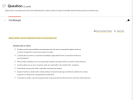 17 Question (1point) Select the true statements from the following list as they relate to experimentally determining reaction mechanisms. 1st attempt See Periodic Table See Hint Select all the correct statements; there is more than one. Choose one or more: Evidence of intermediates sometimes can be seen using techniques such as nuclear magnetic resonance spectroscopy. Carbocations can be routinely isolated...
4. Be sure to answer all parts. The ΔG° for the reaction: H2(g) + I2(g) ⇌...
4. Be sure to answer all parts. The ΔG° for the reaction: H2(g) + I2(g) ⇌ 2HI(g) is 2.60 kJ/mol at 25°C. In one experiment, the initial pressures are PH2 = 3.92 atm PI2 = 0.016 atm PHI = 0.43 atm Calculate ΔG for the reaction and predict the direction of the net reaction. _______ kJ/mol
 by Sapling Ledning Predict the organic and inorganic products of the following reaction and select the class to which the product belongs. Below, complete the curved-arrow mechanism. 11 loading modules The product of the reaction is a(n): imine 2,4-dinitrophenylhydrazone phenylhydrazone oxime hydrazone semicarbazone OO (Scroll down for more)
 Predict the products of the reaction below. That is, complete the right-hand side of the chemical equation. Be sure your equation is balanced and contains state symbols after every reactant and product. Hao,(aq) + H2O (i) →
 Predict major products and if the reaction cannot occur explain
why (mechanisms would be much appreciated as well)
HO Br 1.PPh 2. NaOCH3, 1. LiA 2. Hao DCC NH2
Predict major products and if the reaction cannot occur explain
why (mechanisms would be much appreciated as well)
HO Br 1.PPh 2. NaOCH3, 1. LiA 2. Hao DCC NH2
 In the reaction below, label
the acid, base, conjugate acid and base indicating the pairs. And
predict whether equilibrium favors reactants or products with good
reasoning.
Z-I Iz N 0 S S + +
In the reaction below, label
the acid, base, conjugate acid and base indicating the pairs. And
predict whether equilibrium favors reactants or products with good
reasoning.
Z-I Iz N 0 S S + +
 17 Question (1point) Select the true statements from the following list as they relate to experimentally determining reaction mechanisms. 1st attempt See Periodic Table See Hint Select all the correct statements; there is more than one. Choose one or more: Evidence of intermediates sometimes can be seen using techniques such as nuclear magnetic resonance spectroscopy. Carbocations can be routinely isolated...
Most questions answered within 3 hours.