For the following aqueous reaction, complete and balance the molecular equation and write a net ionic equation, making s...
For the following aqueous reaction, complete and balance the molecular equation and write a net ionic equation, making sure to include the physical states of the compounds. If there is no reaction, write "NR" for the products.potassium chloride + ammonium phosphate
17) What are the products of the following reaction? CH3OH + CH3C=C--- ? A) CH3C=CH+CH30- B)...
 17) What are the products of the following reaction? CH3OH + CH3C=C--- ? A) CH3C=CH+CH30- B) CH3C=COCH3 + HO- C) CH3OC=CH+ -CH3 D) CH3C=CCH3 + HO- E) no reaction
4) Draw the product or products of the following reactions. If there is no reaction, write...
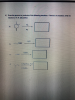 4) Draw the product or products of the following reactions. If there is no reaction, write no reaction or N. R. (20 points) H2 a) Pd H2O MgBr b) NaNH, c) d] HOOACIH, 0 2) Na
Balance the following gas-phase reaction and write its reaction quotient, Q_c: SO_3(g) SO_2(g) + O_2(g). Include...
 Balance the following gas-phase reaction and write its reaction quotient, Q_c: SO_3(g) SO_2(g) + O_2(g). Include the physical states of all reactants and products in your balanced equation.
Given this data:what is the activation energy of this reaction? Also, when plotting what is x1,x2,y1,y2?...
 Given this data:what is the activation energy of this
reaction?
Also, when plotting what is x1,x2,y1,y2?
Consider the reaction data. A products T (K) k (s1) 225 0.381 775 0.859
Given this data:what is the activation energy of this
reaction?
Also, when plotting what is x1,x2,y1,y2?
Consider the reaction data. A products T (K) k (s1) 225 0.381 775 0.859
Consider the reaction, 2 NO + 2CO → N2 + 2 CO2. Molecular art is used...
Consider the reaction, 2 NO + 2CO → N2 + 2 CO2. Molecular art is used to show the starting materials for the reaction. Determine the number of molecules of the products using the balanced equation and following the law of conservation of mass.
Complete the mechanism for the reaction between acetone in acid and bromene by adding the missing...
 Complete the mechanism for the reaction between acetone in acid and bromene by adding the missing bonds, atoms, charges, nonbonding electrons, and curved arrows (forward reaction only). Alter the water or bromide to give the final products.
Topic: Reaction Products Section: 12.3 and 17.3 Difficulty Level: Hard 121) What is the product of...
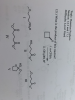 Topic: Reaction Products Section: 12.3 and 17.3 Difficulty Level: Hard 121) What is the product of this reaction?! i. m-CPBA م ? ii. CH3OH, H م هر المهم سلمه III
Calculate the molarity of these ions (K+, CO3 2-, Mg2+, Br- ) after the chemical reaction...
Calculate the molarity of these ions (K+, CO3 2-, Mg2+, Br- ) after the chemical reaction between 2.0L of 1.0M K2CO3 and 1.5L of 1.0M MgBr2. For CHEM I, presume the reaction proceeds completely to products.
Provide the major organic product(s) formed in each step of each of the reaction below (Hydroboration-oxidation...
 Provide the major organic product(s) formed in each step of each of the reaction below (Hydroboration-oxidation gives anti-Markovmkov addition of water to an alkene.) 3 products (i.e. one for each reaction):
 17) What are the products of the following reaction? CH3OH + CH3C=C--- ? A) CH3C=CH+CH30- B) CH3C=COCH3 + HO- C) CH3OC=CH+ -CH3 D) CH3C=CCH3 + HO- E) no reaction
 4) Draw the product or products of the following reactions. If there is no reaction, write no reaction or N. R. (20 points) H2 a) Pd H2O MgBr b) NaNH, c) d] HOOACIH, 0 2) Na
 Balance the following gas-phase reaction and write its reaction quotient, Q_c: SO_3(g) SO_2(g) + O_2(g). Include the physical states of all reactants and products in your balanced equation.
 Given this data:what is the activation energy of this
reaction?
Also, when plotting what is x1,x2,y1,y2?
Consider the reaction data. A products T (K) k (s1) 225 0.381 775 0.859
Given this data:what is the activation energy of this
reaction?
Also, when plotting what is x1,x2,y1,y2?
Consider the reaction data. A products T (K) k (s1) 225 0.381 775 0.859
 Complete the mechanism for the reaction between acetone in acid and bromene by adding the missing bonds, atoms, charges, nonbonding electrons, and curved arrows (forward reaction only). Alter the water or bromide to give the final products.
 Topic: Reaction Products Section: 12.3 and 17.3 Difficulty Level: Hard 121) What is the product of this reaction?! i. m-CPBA م ? ii. CH3OH, H م هر المهم سلمه III
 Provide the major organic product(s) formed in each step of each of the reaction below (Hydroboration-oxidation gives anti-Markovmkov addition of water to an alkene.) 3 products (i.e. one for each reaction):
Most questions answered within 3 hours.