Predict the major product of the following reaction: catalytic OsO4 NMO > + Enantiomer НО. +...
 Predict the major product of the following reaction: catalytic OsO4 NMO > + Enantiomer НО. + Enantiomer HO + Enantiomer CHE HO > + Enantiomer HO OHC HO
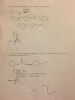
please answer the following questions. thank you 10. Predict the product for the following reaction. 1....
 please answer the following questions. thank you
10. Predict the product for the following reaction. 1. LiAIH 2. H2O 11. Provide the reagents necessary to carry out the following conversion. OH OH OH 9. Provide the reagents necessary to carry out the following conversion. 3. What is the IUPAC name for the following compound? HO OH
please answer the following questions. thank you
10. Predict the product for the following reaction. 1. LiAIH 2. H2O 11. Provide the reagents necessary to carry out the following conversion. OH OH OH 9. Provide the reagents necessary to carry out the following conversion. 3. What is the IUPAC name for the following compound? HO OH
Question- 21. Predict the product of following reaction: (draw inside the box) NaBH4 EtOH, MeOH, or...
 Question- 21. Predict the product of following reaction: (draw inside the box) NaBH4 EtOH, MeOH, or H2O Question 23. What is the IUPAC name for the following compound? OH Answer: Question 24. What is the IUPAC name for the following compound? 11111 OH Answer: Question 25: Identify the following compounds (Write their names below the structure ОН ОН
You have five different tubes and each tube has a different sample, which are cyclohexane, methylcyclohexane,...
You have five different tubes and each tube has a different sample, which are cyclohexane, methylcyclohexane, toluene, ethylbenzene and cumene. You add 1 drop of HCl and 5 drops of bromide-bromate solution (10:1 KBr:KBrO3) to each tube. Predict the order in which the color of the solutions in the tube should chance (reaction occurs) and justify.
CONCEPT QUESTION Predict the Product. Provide the stable organic product(s) for each reaction below. 1. NaBH4,...
 CONCEPT QUESTION Predict the Product. Provide the stable organic product(s) for each reaction below. 1. NaBH4, CH3OH 2. HCI, H20 1. NaBHA (0.50 eq.), CH3OH 2. HCI, H2O 1. LiAIHA (1 eq.), THE 2. HCI, H2O 1. NaBH(CH3)3, (1 eq.), CH3OH 2. HCI, H2O
Predict the Product. Provide the stable organic product(s) that would result for each reaction below. Label...
 Predict the Product. Provide the stable organic product(s) that would result for each reaction below. Label the product formed in highest yield as "major". (5 pts each; 15 pts TOTAL) NaoH/H20 100 oC No2 ーNH2 210 °C OH Na2S204 NaOH/H20 100 oC но NO2 210 °C
7. For the following substitution reactions predict the product(s) showing stereochemistry only if is of revelance...
 7. For the following substitution reactions predict the product(s) showing stereochemistry only if is of revelance. Also comment on what type reaction: S1 or SN2. Finally is the starting material and product optically active or inactive? Explain! CH, OH HBr CN CH3CH2CH3 HO HBr CN 1 CI CH3CH2CH3 НО HBr CH Br H3C
11. Predict the major organic product(s) for the following reactions. If there is no reaction write...
 11. Predict the major organic product(s) for the following reactions. If there is no reaction write N.R. (6 points each, 72 points total) Show the correct stereochemistry when needed!! -OH HSO heat 1) 0, (2 equiv.) 2) Meys (2 equiv.) HC104 excess CHO NaBH4 (excess) HO CHOH Br ON HỌ, PHÚC
4. Predict the product for the following reaction. 1V d. IV Answer: 5. Which of the...
 4. Predict the product for the following reaction. 1V d. IV Answer: 5. Which of the following reagent (s) could not be used to carry out the following transformation? G. 2n (Hg), HC1 b. LIAIH4, ether c. HSCH2CH2SH, BF3: then Raney Ni (H2) d. 1f NH2NH2/H 2. KOH/#20/heat Answer:
. Consider the endothermic reaction: Fe3+(aq) + Cl-(aq) → FeCl2+(aq). Use Le Châtelier’s principle to predict...
. Consider the endothermic reaction: Fe3+(aq) + Cl-(aq) → FeCl2+(aq). Use Le Châtelier’s principle to predict how the equilibrium concentration of the complex ion FeCl2+ will change when: (3.1) Fe(NO3)3 is added (3.2) Cl- is precipitated as AgCl by addition of AgNO3 (3.3) The temperature is increased (3.4) A catalyst is added (3.5) The pressure of the...
 Predict the major product of the following reaction: catalytic OsO4 NMO > + Enantiomer НО. + Enantiomer HO + Enantiomer CHE HO > + Enantiomer HO OHC HO
 please answer the following questions. thank you
10. Predict the product for the following reaction. 1. LiAIH 2. H2O 11. Provide the reagents necessary to carry out the following conversion. OH OH OH 9. Provide the reagents necessary to carry out the following conversion. 3. What is the IUPAC name for the following compound? HO OH
please answer the following questions. thank you
10. Predict the product for the following reaction. 1. LiAIH 2. H2O 11. Provide the reagents necessary to carry out the following conversion. OH OH OH 9. Provide the reagents necessary to carry out the following conversion. 3. What is the IUPAC name for the following compound? HO OH
 Question- 21. Predict the product of following reaction: (draw inside the box) NaBH4 EtOH, MeOH, or H2O Question 23. What is the IUPAC name for the following compound? OH Answer: Question 24. What is the IUPAC name for the following compound? 11111 OH Answer: Question 25: Identify the following compounds (Write their names below the structure ОН ОН
 CONCEPT QUESTION Predict the Product. Provide the stable organic product(s) for each reaction below. 1. NaBH4, CH3OH 2. HCI, H20 1. NaBHA (0.50 eq.), CH3OH 2. HCI, H2O 1. LiAIHA (1 eq.), THE 2. HCI, H2O 1. NaBH(CH3)3, (1 eq.), CH3OH 2. HCI, H2O
 Predict the Product. Provide the stable organic product(s) that would result for each reaction below. Label the product formed in highest yield as "major". (5 pts each; 15 pts TOTAL) NaoH/H20 100 oC No2 ーNH2 210 °C OH Na2S204 NaOH/H20 100 oC но NO2 210 °C
 7. For the following substitution reactions predict the product(s) showing stereochemistry only if is of revelance. Also comment on what type reaction: S1 or SN2. Finally is the starting material and product optically active or inactive? Explain! CH, OH HBr CN CH3CH2CH3 HO HBr CN 1 CI CH3CH2CH3 НО HBr CH Br H3C
 11. Predict the major organic product(s) for the following reactions. If there is no reaction write N.R. (6 points each, 72 points total) Show the correct stereochemistry when needed!! -OH HSO heat 1) 0, (2 equiv.) 2) Meys (2 equiv.) HC104 excess CHO NaBH4 (excess) HO CHOH Br ON HỌ, PHÚC
 4. Predict the product for the following reaction. 1V d. IV Answer: 5. Which of the following reagent (s) could not be used to carry out the following transformation? G. 2n (Hg), HC1 b. LIAIH4, ether c. HSCH2CH2SH, BF3: then Raney Ni (H2) d. 1f NH2NH2/H 2. KOH/#20/heat Answer:
Most questions answered within 3 hours.