Short Answer Section (43 pts) - showing work helps! Substitution us. Elimination (12 pts). Predict all...
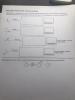 Short Answer Section (43 pts) - showing work helps! Substitution us. Elimination (12 pts). Predict all major product(s) of each of the following reactions and indicate the predominant mechanistic pathways (Snl. S. 12). Remember to consider rearrangements mechanisms? mechanisms? for this reaction, circle the major product mechanism(s) for this reviction, circle the major product mechanism(s)? Mechanism +1 (10 pts). Draw...
1. Predict the major substitution product(s) for the following reactions. Include stereochemistry if appropriate. You may...
 1. Predict the major substitution product(s) for the following reactions. Include stereochemistry if appropriate. You may assume an aqueous workup is performed after each reaction. 1. Nah, DMF ТОН 2. Mel BrMg-Ph KCN 16 { ad ton ot MeOH HD Na Br Me DMSO EtOH Br ~ Br DMSO * Me OH LNH2 M HO Me-S (1 equiv) Me DMF
Draw the major 1.2- and 1,4-addition products obtained in the reaction shown. Assume that both are...
 Draw the major 1.2- and 1,4-addition products obtained in the reaction shown. Assume that both are derived from the most stable carbocation intermediate + HBr • You do not have to consider stereochemistry • You do not have to explicitly draw Hatoms • If the 1,2- and 1,4- addition products are the same due to symmetry, only draw one structure....
Predicting Products of Chemical Reactions Worksheet dict the products of the reactions below. Then, write the balan...
 Predicting Products of Chemical Reactions Worksheet dict the products of the reactions below. Then, write the balanced equation and classify the reaction. If a precipitate forms, indicate by using (s) by the precipitate "no reaction" occurs write N.R. beside the question. Use your activity series, predicting products helper sheet and the solubility rules. 1. magnesium bromide + chlorine - Mg...
9-17. Syntheses: draw / provide the likely organic product(s) generated in each of the reactions (or...
 9-17. Syntheses: draw / provide the likely organic product(s) generated in each of the reactions (or reaction sequences) below. As appropriate, pay attention to regiospecificity (new bond formation and location in the product formed) and stereochemistry (direction in space of new bond[s] formed). Indicate ALL likely products; where one product does not predominate, label / indicate the MAJOR product(s). Where...
answer only pls! thank you so much NaOH, HẠO. a. Draw the structure of the tetrahedral...
 answer only pls! thank you so much
NaOH, HẠO. a. Draw the structure of the tetrahedral intermediate INITIALLY-FORMED in the reaction shown. • You do not have to consider stereochemistry, • Do not include counter-ions, e.g., Na, T. in your answer. • In cases where there is more than one answer, just draw one. 21 -000 - 2rea o Rie...
answer only pls! thank you so much
NaOH, HẠO. a. Draw the structure of the tetrahedral intermediate INITIALLY-FORMED in the reaction shown. • You do not have to consider stereochemistry, • Do not include counter-ions, e.g., Na, T. in your answer. • In cases where there is more than one answer, just draw one. 21 -000 - 2rea o Rie...
Based on the reaction written on paper, answer the following: a) What is the theoretical yield?...
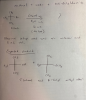 Based on the reaction written on paper, answer the
following:
a) What is the theoretical yield?
b)What were the limiting reactants? Mechanism? Were there any
by-products or side products?
c) Which is the organic layer? What is the relative ratio of
products or reactants?
d) Label all peaks on the NMR. Tell how splitting patterns and
integrations support the product...
Based on the reaction written on paper, answer the
following:
a) What is the theoretical yield?
b)What were the limiting reactants? Mechanism? Were there any
by-products or side products?
c) Which is the organic layer? What is the relative ratio of
products or reactants?
d) Label all peaks on the NMR. Tell how splitting patterns and
integrations support the product...
2) A reaction occurring in a calorimeter absorbs 850.01 of energy. The initial temperature of 200.0g...
 2) A reaction occurring in a calorimeter absorbs 850.01 of energy. The initial temperature of 200.0g of water is 24.5 "C Do you expect the temperature of the water to increase or decrease? Explain? Calculate the final temperature of the water. 329
5. A reaction is first order overall. For a given sample, if its initial rate is...
 5. A reaction is first order overall. For a given sample, if its initial rate is 0.0200 mol L''s and 25.0 days later its rate dropped to 6.25 x 10 moll's', what is its half-life? (A) 25.0 days (B) 50.0 days (C) 12.5 days (D) 5.0 days
Thanks 14. For the reaction shown, find the limiting reactant for each of the initial amounts...
 Thanks
14. For the reaction shown, find the limiting reactant for each of the initial amounts of reactants. 4 Al(s) + 3 O2(g) → 2 Al2O3(s) a. ImolAl, 1mol02 b. 4molA1,2.6mol02 c. 16molAl,13mol02 d. 7.4 mol Al, 6.5 mol O2
Thanks
14. For the reaction shown, find the limiting reactant for each of the initial amounts of reactants. 4 Al(s) + 3 O2(g) → 2 Al2O3(s) a. ImolAl, 1mol02 b. 4molA1,2.6mol02 c. 16molAl,13mol02 d. 7.4 mol Al, 6.5 mol O2
 Short Answer Section (43 pts) - showing work helps! Substitution us. Elimination (12 pts). Predict all major product(s) of each of the following reactions and indicate the predominant mechanistic pathways (Snl. S. 12). Remember to consider rearrangements mechanisms? mechanisms? for this reaction, circle the major product mechanism(s) for this reviction, circle the major product mechanism(s)? Mechanism +1 (10 pts). Draw...
 1. Predict the major substitution product(s) for the following reactions. Include stereochemistry if appropriate. You may assume an aqueous workup is performed after each reaction. 1. Nah, DMF ТОН 2. Mel BrMg-Ph KCN 16 { ad ton ot MeOH HD Na Br Me DMSO EtOH Br ~ Br DMSO * Me OH LNH2 M HO Me-S (1 equiv) Me DMF
 Draw the major 1.2- and 1,4-addition products obtained in the reaction shown. Assume that both are derived from the most stable carbocation intermediate + HBr • You do not have to consider stereochemistry • You do not have to explicitly draw Hatoms • If the 1,2- and 1,4- addition products are the same due to symmetry, only draw one structure....
 Predicting Products of Chemical Reactions Worksheet dict the products of the reactions below. Then, write the balanced equation and classify the reaction. If a precipitate forms, indicate by using (s) by the precipitate "no reaction" occurs write N.R. beside the question. Use your activity series, predicting products helper sheet and the solubility rules. 1. magnesium bromide + chlorine - Mg...
 9-17. Syntheses: draw / provide the likely organic product(s) generated in each of the reactions (or reaction sequences) below. As appropriate, pay attention to regiospecificity (new bond formation and location in the product formed) and stereochemistry (direction in space of new bond[s] formed). Indicate ALL likely products; where one product does not predominate, label / indicate the MAJOR product(s). Where...
 answer only pls! thank you so much
NaOH, HẠO. a. Draw the structure of the tetrahedral intermediate INITIALLY-FORMED in the reaction shown. • You do not have to consider stereochemistry, • Do not include counter-ions, e.g., Na, T. in your answer. • In cases where there is more than one answer, just draw one. 21 -000 - 2rea o Rie...
answer only pls! thank you so much
NaOH, HẠO. a. Draw the structure of the tetrahedral intermediate INITIALLY-FORMED in the reaction shown. • You do not have to consider stereochemistry, • Do not include counter-ions, e.g., Na, T. in your answer. • In cases where there is more than one answer, just draw one. 21 -000 - 2rea o Rie...
 Based on the reaction written on paper, answer the
following:
a) What is the theoretical yield?
b)What were the limiting reactants? Mechanism? Were there any
by-products or side products?
c) Which is the organic layer? What is the relative ratio of
products or reactants?
d) Label all peaks on the NMR. Tell how splitting patterns and
integrations support the product...
Based on the reaction written on paper, answer the
following:
a) What is the theoretical yield?
b)What were the limiting reactants? Mechanism? Were there any
by-products or side products?
c) Which is the organic layer? What is the relative ratio of
products or reactants?
d) Label all peaks on the NMR. Tell how splitting patterns and
integrations support the product...
 2) A reaction occurring in a calorimeter absorbs 850.01 of energy. The initial temperature of 200.0g of water is 24.5 "C Do you expect the temperature of the water to increase or decrease? Explain? Calculate the final temperature of the water. 329
 5. A reaction is first order overall. For a given sample, if its initial rate is 0.0200 mol L''s and 25.0 days later its rate dropped to 6.25 x 10 moll's', what is its half-life? (A) 25.0 days (B) 50.0 days (C) 12.5 days (D) 5.0 days
 Thanks
14. For the reaction shown, find the limiting reactant for each of the initial amounts of reactants. 4 Al(s) + 3 O2(g) → 2 Al2O3(s) a. ImolAl, 1mol02 b. 4molA1,2.6mol02 c. 16molAl,13mol02 d. 7.4 mol Al, 6.5 mol O2
Thanks
14. For the reaction shown, find the limiting reactant for each of the initial amounts of reactants. 4 Al(s) + 3 O2(g) → 2 Al2O3(s) a. ImolAl, 1mol02 b. 4molA1,2.6mol02 c. 16molAl,13mol02 d. 7.4 mol Al, 6.5 mol O2
Most questions answered within 3 hours.