Question 3 (2 points) Predict the product(s) of the following reaction. HBr ROOR a) HBr addition...
 Question 3 (2 points) Predict the product(s) of the following reaction. HBr ROOR a) HBr addition at the alkene position following Markonikov's rule Ob) H20 addition at the alkene position following Markonikov's rule c) HBr addition at the alkene position following Anti-Markonikov's rule d) H20 addition at the alkene position following Anti-Markonikov's rule Question 4 (2 points) For which of...
Predict the product of this reaction: H90° OH haat OH 앤 OH HO OH OH 있...
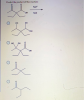 Predict the product of this reaction: H90° OH haat OH 앤 OH HO OH OH 있 왕 What is the best set of reagents and order for the following transformation? OH 7 O 1) Bra, Febrg, 2) Me, ether, 3) HyCCHO, 4) Hot; 5) PCC O 1) CHCHCI, AIC;; 2) NBS, Ir, 3) My, ether, 4) HyCO, 5) Hyo 1)...
1. 2. Predict the major organic product formed when the compounds shown below undergo a reaction...
 1.
2.
Predict the major organic product formed when the compounds shown below undergo a reaction in the presence of AICI3 Interactive 3D display mode OiPr Cl Нас CH3 СНз 3 Choose the right reagent or series of reagents from the ones listed to carry out the following synthesis (see picture). CH он CN followed by HCl, H2O, A, then...
1.
2.
Predict the major organic product formed when the compounds shown below undergo a reaction in the presence of AICI3 Interactive 3D display mode OiPr Cl Нас CH3 СНз 3 Choose the right reagent or series of reagents from the ones listed to carry out the following synthesis (see picture). CH он CN followed by HCl, H2O, A, then...
Predict the major organic product of the following reaction and complete its mechanism below. 1) NaOEt/EtOH...
 Predict the major organic product of the following reaction and complete its mechanism below. 1) NaOEt/EtOH 2) CH3CH2CH2Br 3) dilute NaOH/heat 4) H30* 5) heat Complete the curved-arrow mechanism for the scheme below by adding any missing atoms, bonds, charges, nonbonding electrons, and curved arrows. :O O: :Br. CH3CH2OH Do not show curved arrows for this step. Added acid Dilute...
Predict the rate law for the reaction 23:0(g) — Bry(g) + O2(g) if the following conditions...
 Predict the rate law for the reaction 23:0(g) — Bry(g) + O2(g) if the following conditions hold true: 1st attempt I See Periodic Table See Hint Part 1 (2.7 points) Note: Use k to represent the rate constant and place brackets () arounds the molecular or atomic formula to designate concentration. The rate triples when [BrO] triples. X X ....
numbers 3-5 please Those are the three equations given to us and that is the reaction...
 numbers 3-5 please
Those are the three equations given to us and that is the reaction
mechanism as well as the procedure. there is nothing else i can
give you
EXPERIMENT 9: SYNTHESIS OF DIPHENYLACETYLENE Objective: Complete the two-step halogenation/elimination reaction sequence that converts an alkene (trans- stilbene) to an alkyne (diphenylacetylene) 3. Why is it important that the reaction...
numbers 3-5 please
Those are the three equations given to us and that is the reaction
mechanism as well as the procedure. there is nothing else i can
give you
EXPERIMENT 9: SYNTHESIS OF DIPHENYLACETYLENE Objective: Complete the two-step halogenation/elimination reaction sequence that converts an alkene (trans- stilbene) to an alkyne (diphenylacetylene) 3. Why is it important that the reaction...
Question 4 Multi-Part Questions. Make sure to answer ALL parts (a-c)! You have isolated two versions...
 Question 4 Multi-Part Questions. Make sure to answer ALL parts (a-c)! You have isolated two versions of the same enzyme, a wild type and mutant. The marteses You have determined the following kinetic characteristics for each of the enzymes. Vmax Wild Type Km 200 umol / min 0.2mm Mutant 2 umol / min 20mm and the reaction is a two-step...
1. 2. JUST DRAW ARROWS... (CH3)2Culi + CH3Cu Ph CI Ph CH3 The ketone intermediate formed...
 1.
2.
JUST DRAW ARROWS...
(CH3)2Culi + CH3Cu Ph CI Ph CH3 The ketone intermediate formed in the reaction of an acid chloride with a Grignard reagent cannot be isolated because it reacts too rapidly with the second equivalent of Grignard reagent. To produce a ketone from an acid chloride, one can treat the acid chloride with a lithium dialkylcopper...
1.
2.
JUST DRAW ARROWS...
(CH3)2Culi + CH3Cu Ph CI Ph CH3 The ketone intermediate formed in the reaction of an acid chloride with a Grignard reagent cannot be isolated because it reacts too rapidly with the second equivalent of Grignard reagent. To produce a ketone from an acid chloride, one can treat the acid chloride with a lithium dialkylcopper...
I will be negalite control a positive control * Homework before The Hill Reaction Lab, your...
 I will be negalite control a positive control * Homework before The Hill Reaction Lab, your group should do the following: 1) Write a question that you would like to answer about how different conditions alleet the Hill reaction. Remember, a possible answer to this question should be your hypothesis, not predictions about the specific outcome of an experiment Here...
Experiment F. Nucleophilic Substitution Reactions. Pre -Lab Report 2. SPECIAL INSTRUCTIONS: a. Work in groups of 2-...
 Experiment F. Nucleophilic Substitution Reactions. Pre -Lab Report
2. SPECIAL INSTRUCTIONS: a. Work in groups of 2-3 students. Each group will complete and turn in one report for grade. You will not complete the lab report in your lab notebook using the usual format. Instead, the entire report is provided in the procedures section of these lab materials. You will...
Experiment F. Nucleophilic Substitution Reactions. Pre -Lab Report
2. SPECIAL INSTRUCTIONS: a. Work in groups of 2-3 students. Each group will complete and turn in one report for grade. You will not complete the lab report in your lab notebook using the usual format. Instead, the entire report is provided in the procedures section of these lab materials. You will...
 Question 3 (2 points) Predict the product(s) of the following reaction. HBr ROOR a) HBr addition at the alkene position following Markonikov's rule Ob) H20 addition at the alkene position following Markonikov's rule c) HBr addition at the alkene position following Anti-Markonikov's rule d) H20 addition at the alkene position following Anti-Markonikov's rule Question 4 (2 points) For which of...
 Predict the product of this reaction: H90° OH haat OH 앤 OH HO OH OH 있 왕 What is the best set of reagents and order for the following transformation? OH 7 O 1) Bra, Febrg, 2) Me, ether, 3) HyCCHO, 4) Hot; 5) PCC O 1) CHCHCI, AIC;; 2) NBS, Ir, 3) My, ether, 4) HyCO, 5) Hyo 1)...
 1.
2.
Predict the major organic product formed when the compounds shown below undergo a reaction in the presence of AICI3 Interactive 3D display mode OiPr Cl Нас CH3 СНз 3 Choose the right reagent or series of reagents from the ones listed to carry out the following synthesis (see picture). CH он CN followed by HCl, H2O, A, then...
1.
2.
Predict the major organic product formed when the compounds shown below undergo a reaction in the presence of AICI3 Interactive 3D display mode OiPr Cl Нас CH3 СНз 3 Choose the right reagent or series of reagents from the ones listed to carry out the following synthesis (see picture). CH он CN followed by HCl, H2O, A, then...
 Predict the major organic product of the following reaction and complete its mechanism below. 1) NaOEt/EtOH 2) CH3CH2CH2Br 3) dilute NaOH/heat 4) H30* 5) heat Complete the curved-arrow mechanism for the scheme below by adding any missing atoms, bonds, charges, nonbonding electrons, and curved arrows. :O O: :Br. CH3CH2OH Do not show curved arrows for this step. Added acid Dilute...
 Predict the rate law for the reaction 23:0(g) — Bry(g) + O2(g) if the following conditions hold true: 1st attempt I See Periodic Table See Hint Part 1 (2.7 points) Note: Use k to represent the rate constant and place brackets () arounds the molecular or atomic formula to designate concentration. The rate triples when [BrO] triples. X X ....
 numbers 3-5 please
Those are the three equations given to us and that is the reaction
mechanism as well as the procedure. there is nothing else i can
give you
EXPERIMENT 9: SYNTHESIS OF DIPHENYLACETYLENE Objective: Complete the two-step halogenation/elimination reaction sequence that converts an alkene (trans- stilbene) to an alkyne (diphenylacetylene) 3. Why is it important that the reaction...
numbers 3-5 please
Those are the three equations given to us and that is the reaction
mechanism as well as the procedure. there is nothing else i can
give you
EXPERIMENT 9: SYNTHESIS OF DIPHENYLACETYLENE Objective: Complete the two-step halogenation/elimination reaction sequence that converts an alkene (trans- stilbene) to an alkyne (diphenylacetylene) 3. Why is it important that the reaction...
 Question 4 Multi-Part Questions. Make sure to answer ALL parts (a-c)! You have isolated two versions of the same enzyme, a wild type and mutant. The marteses You have determined the following kinetic characteristics for each of the enzymes. Vmax Wild Type Km 200 umol / min 0.2mm Mutant 2 umol / min 20mm and the reaction is a two-step...
 1.
2.
JUST DRAW ARROWS...
(CH3)2Culi + CH3Cu Ph CI Ph CH3 The ketone intermediate formed in the reaction of an acid chloride with a Grignard reagent cannot be isolated because it reacts too rapidly with the second equivalent of Grignard reagent. To produce a ketone from an acid chloride, one can treat the acid chloride with a lithium dialkylcopper...
1.
2.
JUST DRAW ARROWS...
(CH3)2Culi + CH3Cu Ph CI Ph CH3 The ketone intermediate formed in the reaction of an acid chloride with a Grignard reagent cannot be isolated because it reacts too rapidly with the second equivalent of Grignard reagent. To produce a ketone from an acid chloride, one can treat the acid chloride with a lithium dialkylcopper...
 I will be negalite control a positive control * Homework before The Hill Reaction Lab, your group should do the following: 1) Write a question that you would like to answer about how different conditions alleet the Hill reaction. Remember, a possible answer to this question should be your hypothesis, not predictions about the specific outcome of an experiment Here...
 Experiment F. Nucleophilic Substitution Reactions. Pre -Lab Report
2. SPECIAL INSTRUCTIONS: a. Work in groups of 2-3 students. Each group will complete and turn in one report for grade. You will not complete the lab report in your lab notebook using the usual format. Instead, the entire report is provided in the procedures section of these lab materials. You will...
Experiment F. Nucleophilic Substitution Reactions. Pre -Lab Report
2. SPECIAL INSTRUCTIONS: a. Work in groups of 2-3 students. Each group will complete and turn in one report for grade. You will not complete the lab report in your lab notebook using the usual format. Instead, the entire report is provided in the procedures section of these lab materials. You will...
Most questions answered within 3 hours.