Given the following conditions for five distinct reactions of A + B ---> C Reaction. Ea....
Given the following conditions for five distinct reactions of A + B ---> C Reaction. Ea. temp. concentration 1. high low 1 mole A and 1 mole B 2 low low 1 moleA and 1 mole B 3 low high 1 mole A and 1 mole B 4 high high 1 mole A and 2 mole B 5 high high...
Part I: Voltaic Cells Use your textbook or other resource to complete the following table: Half-Reaction...
 Part I: Voltaic Cells Use your textbook or other resource to complete the following table: Half-Reaction Zn2 ag)2eZn Fe (a)2e Fe (s) Standard Reduction Potential at 25 °C, Volts 0.76 13 34 Cu2+ (aq) +2e- Cu (s) → Use the table above to predict voltlages for the redox couples studied in Part L, sections A and B. Redox Couple predicted...
Question 21 The product, K, of the following sequence of reactions CH2 CH3CHCOCI CH3CH2MgBr H30+ Benzene...
 Question 21 The product, K, of the following sequence of reactions CH2 CH3CHCOCI CH3CH2MgBr H30+ Benzene I J K AlCl3 ether would be: OH OH HO ملک of I II III IV V A. IV B. II C.1 D. III E. V Question 22 Predict the product of the following reaction sequence. i. NaOCH; ii. CH3CH2CH2Br ? iii. NaOH iv....
b) (10 points) The Puryna memungoment can be a pain to an organic chalet Hà NaOH...
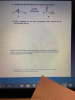 b) (10 points) The Puryna memungoment can be a pain to an organic chalet Hà NaOH a) Write a mechanism for the Payne rearrangement which accounts for all stercochemistry observed. b) When reacted with t-Bus (a bulky nucleophile), attack on one of these epoxides is slow, so we can get one major product. Please predict what product would be obtained...
First, clearly draw and label the starting compound given by name below (3,4-dimethyl-1-hexanol). Next, predict the...
 First, clearly draw and label the starting compound given by name below (3,4-dimethyl-1-hexanol). Next, predict the product for each of the reaction steps below (A, B, and C), and then draw the final product D. Very important: Be sure to show your work for each step, including mechanisms for steps covered in class. 1. 3,4-dimethyl-1-hexanol soch H Mg/ether 3,4-dimethyl-1-hexanol SOCI2...
A chemist is studying the following equilibirum, which has the given equilibrium constant at a certain...
 A chemist is studying the following equilibirum, which has the given equilibrium constant at a certain temperature: 30,(8) = 20,(8) K = 7.x 10-7 He fills a reaction vessel at this temperature with 15. atm of oxygen gas. Use this data to answer the questions in the table below. yes Can you predict the equilibrium pressure of Oy, using only...
(A) Predict whether the change in entropy (ΔS) is positive, negative or near zero for the...
(A) Predict whether the change in entropy (ΔS) is positive, negative or near zero for the following processes at 298K. Provide a molecular level explanation or justification for your prediction. (B) Calculate the change in entropy (ΔS) for the following processes at 298K. i. H2O (s) → H2O (l), melting of ice. ii. Formation reaction for steam (water vapor, H2O...
Below is an equation for a system at equilibrium. The numerical value for the equilibrium constant...
 Below is an equation for a system at equilibrium. The numerical value for the equilibrium constant is 6.8 x 10⁻⁴. What is the numerical value for the equilibriu constant of the reverse reaction? 4. HF(aq) H(aq) +F(aq) Below you will find a balanced chemical equation. For a system at equilibrium, predict what will happen to the concentration of bromate (BrOs)...
a. For reactions with H2, Li readily reacts with H2; F2 readily reacts with H2; but...
a. For reactions with H2, Li readily reacts with H2; F2 readily reacts with H2; but C does not readily combine with H2. Explain the absence of reactivity with C. b. For reactions with N2, the reaction of N2with O2is one of the most complex reactions on the periodic table, but N2 does not directly combine with most other elements. What...
The decomposition of XY is second order in XY and has a rate constant of 7.04×10⁻³...
The decomposition of XY is second order in XY and has a rate constant of 7.04×10⁻³ M−1⋅s−1 at a certain temperature. Part A: What is the half-life for this reaction at an initial concentration of 0.100 M? Express your answer using three significant figures. Part B: How long will it take for the concentration of XY to decrease to 12.5%...
 Part I: Voltaic Cells Use your textbook or other resource to complete the following table: Half-Reaction Zn2 ag)2eZn Fe (a)2e Fe (s) Standard Reduction Potential at 25 °C, Volts 0.76 13 34 Cu2+ (aq) +2e- Cu (s) → Use the table above to predict voltlages for the redox couples studied in Part L, sections A and B. Redox Couple predicted...
 Question 21 The product, K, of the following sequence of reactions CH2 CH3CHCOCI CH3CH2MgBr H30+ Benzene I J K AlCl3 ether would be: OH OH HO ملک of I II III IV V A. IV B. II C.1 D. III E. V Question 22 Predict the product of the following reaction sequence. i. NaOCH; ii. CH3CH2CH2Br ? iii. NaOH iv....
 b) (10 points) The Puryna memungoment can be a pain to an organic chalet Hà NaOH a) Write a mechanism for the Payne rearrangement which accounts for all stercochemistry observed. b) When reacted with t-Bus (a bulky nucleophile), attack on one of these epoxides is slow, so we can get one major product. Please predict what product would be obtained...
 First, clearly draw and label the starting compound given by name below (3,4-dimethyl-1-hexanol). Next, predict the product for each of the reaction steps below (A, B, and C), and then draw the final product D. Very important: Be sure to show your work for each step, including mechanisms for steps covered in class. 1. 3,4-dimethyl-1-hexanol soch H Mg/ether 3,4-dimethyl-1-hexanol SOCI2...
 A chemist is studying the following equilibirum, which has the given equilibrium constant at a certain temperature: 30,(8) = 20,(8) K = 7.x 10-7 He fills a reaction vessel at this temperature with 15. atm of oxygen gas. Use this data to answer the questions in the table below. yes Can you predict the equilibrium pressure of Oy, using only...
 Below is an equation for a system at equilibrium. The numerical value for the equilibrium constant is 6.8 x 10⁻⁴. What is the numerical value for the equilibriu constant of the reverse reaction? 4. HF(aq) H(aq) +F(aq) Below you will find a balanced chemical equation. For a system at equilibrium, predict what will happen to the concentration of bromate (BrOs)...
Most questions answered within 3 hours.