Reaction is Diels-Alder Reaction: 0.6 g (Anthracene) + 0.3 g (maleic anhydride) --> product [9,10-dihydroanthreceno-9,10-endo- α,...
Reaction is Diels-Alder Reaction: 0.6 g (Anthracene) + 0.3 g (maleic anhydride) --> product [9,10-dihydroanthreceno-9,10-endo- α, β-succinic anhydride] 0.70 grams obtained. When vacuumed, xylened and isolated, the product yielded 0.70 grams product. Please show how to calculate % yield with the weights above (Theoretical + Actual).
Predict the major organic product formed when the compounds shown below undergo a reaction in the...
 Predict the major organic product formed when the compounds
shown below undergo a reaction in the presence of AlCl3.
Predict the major organic product formed when the compounds shown below undergo a reaction in the presence of AlCl3.
Predict the major organic product formed when the compounds
shown below undergo a reaction in the presence of AlCl3.
Predict the major organic product formed when the compounds shown below undergo a reaction in the presence of AlCl3.
44. Based on the following reaction profile: Ish la) How many intermediates are formed in the...
 44. Based on the following reaction profile: Ish la) How many intermediates are formed in the reaction A-D 1b) How many transition states are there? le) Which step is the slowest? Id) Is the overall reaction - exothermic or endothermic A) 3.2: Axothermic B)2:3. Bendothermic C) 3:4:B-C, exothermis D23C- endothermic 45. Calculate the rate constant kin's using the information in...
Although nitrogen trifluoride (NF3) is a thermally stable compound, nitrogen triiodide (NI3) is known to be a highly ex...
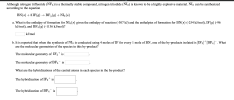 Although nitrogen trifluoride (NF3) is a thermally stable compound, nitrogen triiodide (NI3) is known to be a highly explosive material. NI3 can be synthesized according to the equation BN(s) + 3 IF(g) → BF3(g) + NI3 (8) a. What is the enthalpy of formation for NI3 (s) given the enthalpy of reaction (-307 kJ) and the enthalpies of formation for...
8) a) (marks = 2) Provide an explanation for the formation of both compounds isolated in...
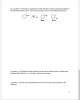 8) a) (marks = 2) Provide an explanation for the formation of both compounds isolated in the following reaction. (Hint - this answer will require an arrow pushing mechanism.) Major b) (marks = 0.5) Would the major product from the above reaction (part a) rotate plane polarized light? Briefly (ie in one line), explain your answer. c) (marks = 0.5)...
Explain the following observations H o 90%. Yield TICH OH 90% Yield Heat No Reaction Explain...
 Explain the following observations H o 90%. Yield TICH OH 90% Yield Heat No Reaction Explain the following observations BE Hear Br2 Heat B12 No Reaction Heat A chemist mixes the following chemicals together in hopes of isolating the indicated compound. Much to their dismay, however, the desired product isn't isolated at all, to any appreciable amount. Explain why the...
For each of the following reactions, use the pKa values given in the Table to predict...
 For
each of the following reactions, use the pKa values given in the
Table to predict whether reactants or products are favored at
equilibrium.
For each of the following reactions, use the pKa values given in the Table to predict whether reactants or products are favored at equilibrium Compound Hydronium ion (H30*) Dichloroacetic acid (C2H202Cl2) Dihydrogen sulfide (H2S) Phenol (C6H5OH)...
For
each of the following reactions, use the pKa values given in the
Table to predict whether reactants or products are favored at
equilibrium.
For each of the following reactions, use the pKa values given in the Table to predict whether reactants or products are favored at equilibrium Compound Hydronium ion (H30*) Dichloroacetic acid (C2H202Cl2) Dihydrogen sulfide (H2S) Phenol (C6H5OH)...
Starting only from organic reagents of 4 carbons or fewer, propose an efficient synthesis for the...
 Starting only from organic reagents of 4 carbons or fewer, propose an efficient synthesis for the molecule below. You may use any necessary solvents and inorganic reagents, and can assume that all products can be isolated as needed. If only one product is to be taken on to a new step, indicate which one.
Consider the following reaction: A(g)⇌B(g)+C(g) Find the equilibrium concentrations of A, B, and C for each...
Consider the following reaction: A(g)⇌B(g)+C(g) Find the equilibrium concentrations of A, B, and C for each of the following different values of Kc. Assume that the initial concentration of A in each case is 1.0 M and that the reaction mixture initially contains no products. Make any appropriate simplifying assumptions. Part A Kc= 1.8 Express your answer using two significant...
1. Predict the product(s) (or no reaction) and reagent(s). (19 pts) 1. Predict the product(s) (or no reaction) and reag...
 1. Predict the product(s) (or no reaction) and reagent(s). (19
pts)
1. Predict the product(s) (or no reaction) and reagent(s). (19 pts) КІ DCM EtOH heat H2O heat DBU -Br DCM
1. Predict the product(s) (or no reaction) and reagent(s). (19
pts)
1. Predict the product(s) (or no reaction) and reagent(s). (19 pts) КІ DCM EtOH heat H2O heat DBU -Br DCM
 Predict the major organic product formed when the compounds
shown below undergo a reaction in the presence of AlCl3.
Predict the major organic product formed when the compounds shown below undergo a reaction in the presence of AlCl3.
Predict the major organic product formed when the compounds
shown below undergo a reaction in the presence of AlCl3.
Predict the major organic product formed when the compounds shown below undergo a reaction in the presence of AlCl3.
 44. Based on the following reaction profile: Ish la) How many intermediates are formed in the reaction A-D 1b) How many transition states are there? le) Which step is the slowest? Id) Is the overall reaction - exothermic or endothermic A) 3.2: Axothermic B)2:3. Bendothermic C) 3:4:B-C, exothermis D23C- endothermic 45. Calculate the rate constant kin's using the information in...
 Although nitrogen trifluoride (NF3) is a thermally stable compound, nitrogen triiodide (NI3) is known to be a highly explosive material. NI3 can be synthesized according to the equation BN(s) + 3 IF(g) → BF3(g) + NI3 (8) a. What is the enthalpy of formation for NI3 (s) given the enthalpy of reaction (-307 kJ) and the enthalpies of formation for...
 8) a) (marks = 2) Provide an explanation for the formation of both compounds isolated in the following reaction. (Hint - this answer will require an arrow pushing mechanism.) Major b) (marks = 0.5) Would the major product from the above reaction (part a) rotate plane polarized light? Briefly (ie in one line), explain your answer. c) (marks = 0.5)...
 Explain the following observations H o 90%. Yield TICH OH 90% Yield Heat No Reaction Explain the following observations BE Hear Br2 Heat B12 No Reaction Heat A chemist mixes the following chemicals together in hopes of isolating the indicated compound. Much to their dismay, however, the desired product isn't isolated at all, to any appreciable amount. Explain why the...
 For
each of the following reactions, use the pKa values given in the
Table to predict whether reactants or products are favored at
equilibrium.
For each of the following reactions, use the pKa values given in the Table to predict whether reactants or products are favored at equilibrium Compound Hydronium ion (H30*) Dichloroacetic acid (C2H202Cl2) Dihydrogen sulfide (H2S) Phenol (C6H5OH)...
For
each of the following reactions, use the pKa values given in the
Table to predict whether reactants or products are favored at
equilibrium.
For each of the following reactions, use the pKa values given in the Table to predict whether reactants or products are favored at equilibrium Compound Hydronium ion (H30*) Dichloroacetic acid (C2H202Cl2) Dihydrogen sulfide (H2S) Phenol (C6H5OH)...
 Starting only from organic reagents of 4 carbons or fewer, propose an efficient synthesis for the molecule below. You may use any necessary solvents and inorganic reagents, and can assume that all products can be isolated as needed. If only one product is to be taken on to a new step, indicate which one.
 1. Predict the product(s) (or no reaction) and reagent(s). (19
pts)
1. Predict the product(s) (or no reaction) and reagent(s). (19 pts) КІ DCM EtOH heat H2O heat DBU -Br DCM
1. Predict the product(s) (or no reaction) and reagent(s). (19
pts)
1. Predict the product(s) (or no reaction) and reagent(s). (19 pts) КІ DCM EtOH heat H2O heat DBU -Br DCM
Most questions answered within 3 hours.