The equilibrium constant, Kc, for the following reaction is 83.3 at 500 K. PC13(g) + Cl2(g)...
 The equilibrium constant, Kc, for the following reaction is 83.3 at 500 K. PC13(g) + Cl2(g) = PC15(g) Calculate the equilibrium concentrations of reactant and products when 0.389 moles of PC13 and 0.389 moles of Cl2 are introduced into a 1.00 L vessel at 500 K [PC13] = [Cl] = [PC15] - The equilibrium constant, Kc, for the following reaction...
Hydrogen peroxide (H2O2) decomposes to produce water and oxygen according to the following reaction: 2 H2O2...
Hydrogen peroxide (H2O2) decomposes to produce water and oxygen according to the following reaction: 2 H2O2 (l) -----------> 2 H2O (l) + O2 (g) Which relationship regarding the quantities of reactants and products associated with this reaction is NOT correct? Group of answer choices 2 molecules of H2O2 -----------------> 2 molecules of H2O + 1 molecule of O2 2 mol...
A) The equilibrium constant, Kc, for the following reaction is 10.5 at 350 K. 2CH2Cl2(g) CH4(g)...
A) The equilibrium constant, Kc, for the following reaction is 10.5 at 350 K. 2CH2Cl2(g) CH4(g) + CCl4(g) Calculate the equilibrium concentrations of reactant and products when 0.391 moles of CH2Cl2 are introduced into a 1.00 L vessel at 350 K. [CH2Cl2] = M [CH4] = M [CCl4] = M B) The equilibrium constant, Kc, for the following reaction is...
7-11 pls What reaction happens? SN1/SN2/E1/E2 And what are the products? Br Br NaCl DMSO ?...
 7-11 pls
What reaction happens? SN1/SN2/E1/E2 And what are the products? Br Br NaCl DMSO ? NaOH 7. 1. Br NaOH Br NaOMe 2 8 3. t-BuOK Br NaOMe 9. Br Br ? ? DBN NaOH 4 10. Br NaOEt ? ? -BUOK 5. 11. NaSH
7-11 pls
What reaction happens? SN1/SN2/E1/E2 And what are the products? Br Br NaCl DMSO ? NaOH 7. 1. Br NaOH Br NaOMe 2 8 3. t-BuOK Br NaOMe 9. Br Br ? ? DBN NaOH 4 10. Br NaOEt ? ? -BUOK 5. 11. NaSH
For the following reaction, the reactants are favored at equilibrium. Classify each of the reactants and...
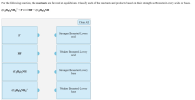 For the following reaction, the reactants are favored at equilibrium. Classify each of the reactants and products based on their strength as Bronsted-Lowry acids or bases. (CH3)2NH2 + HF + (CH3)2NH Clear All Stronger Bronsted-Lowry acid HE Weaker Bronsted-Lowry acid (CH3)2NH Stronger Bronsted-Lowry base (CH3)2NH2 Weaker Bronsted-Lowry base
When two aqueous salt solutions are mixed, how will they react if higher concentrations of each...
When two aqueous salt solutions are mixed, how will they react if higher concentrations of each are mixed, versus lower concentrations? Group of answer choices: A) Higher concentrations will react more swiftly at the outset. B) The concentration does not matter for reaction rate. C) Higher concentrations will yield more products. D) Lower concentrations will react more swiftly at the...
(References Draw the organic product(s) of the following reaction. HCI ether OH • You do not...
 (References Draw the organic product(s) of the following reaction. HCI ether OH • You do not have to consider stereochemistry • Draw one structure per sketcher. Add additional sketchers using the drop-down menu in the bottom right comer. • Separate multiple products using the + sign from the drop-down menu. CO -O0O-IN ChemDoodle
Please help with 1 & 2 A. Go through the steps of listing and labeling reactive...
 Please help with 1 & 2
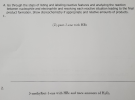
A. Go through the steps of listing and labeling reactive features and analyzing the reaction between nucleophile and electrophile and resolving each reactive situation leading to the final product formation. Show stereochemistry if appropriate and relative amounts of products. (Z)-pent-2-ene with HBr 3-methylbut-1-ene with HBr and trace amounts of H2O2
Please help with 1 & 2
A. Go through the steps of listing and labeling reactive features and analyzing the reaction between nucleophile and electrophile and resolving each reactive situation leading to the final product formation. Show stereochemistry if appropriate and relative amounts of products. (Z)-pent-2-ene with HBr 3-methylbut-1-ene with HBr and trace amounts of H2O2
(9 points) 1. In each case, draw all reasonable resonance forms. Circle the most stable (plus...
 (9 points) 1. In each case, draw all reasonable resonance forms. Circle the most stable (plus any ties). (а) o CH3-N CH3 CH3 (b) (c) (1 pt) 2. For the following Diels-Alder reaction, label the Endo and Exo products. Circle the major product Н CO2CH3 .CO2CH3 + + CO2CHS н
Review Topics Rererences Draw a structural formula for the substitution product of the reaction shown below....
 Review Topics Rererences Draw a structural formula for the substitution product of the reaction shown below. scн, Н,0 • Use the wedge/hash bond tools to indicate stereochemistry where it exists. • If more than one stereoisomer of product is formed, draw both. • Separate multiple products using the + sign from the drop-down menu. C-@- -O0O- IF
 The equilibrium constant, Kc, for the following reaction is 83.3 at 500 K. PC13(g) + Cl2(g) = PC15(g) Calculate the equilibrium concentrations of reactant and products when 0.389 moles of PC13 and 0.389 moles of Cl2 are introduced into a 1.00 L vessel at 500 K [PC13] = [Cl] = [PC15] - The equilibrium constant, Kc, for the following reaction...
 7-11 pls
What reaction happens? SN1/SN2/E1/E2 And what are the products? Br Br NaCl DMSO ? NaOH 7. 1. Br NaOH Br NaOMe 2 8 3. t-BuOK Br NaOMe 9. Br Br ? ? DBN NaOH 4 10. Br NaOEt ? ? -BUOK 5. 11. NaSH
7-11 pls
What reaction happens? SN1/SN2/E1/E2 And what are the products? Br Br NaCl DMSO ? NaOH 7. 1. Br NaOH Br NaOMe 2 8 3. t-BuOK Br NaOMe 9. Br Br ? ? DBN NaOH 4 10. Br NaOEt ? ? -BUOK 5. 11. NaSH
 For the following reaction, the reactants are favored at equilibrium. Classify each of the reactants and products based on their strength as Bronsted-Lowry acids or bases. (CH3)2NH2 + HF + (CH3)2NH Clear All Stronger Bronsted-Lowry acid HE Weaker Bronsted-Lowry acid (CH3)2NH Stronger Bronsted-Lowry base (CH3)2NH2 Weaker Bronsted-Lowry base
 (References Draw the organic product(s) of the following reaction. HCI ether OH • You do not have to consider stereochemistry • Draw one structure per sketcher. Add additional sketchers using the drop-down menu in the bottom right comer. • Separate multiple products using the + sign from the drop-down menu. CO -O0O-IN ChemDoodle
 Please help with 1 & 2
A. Go through the steps of listing and labeling reactive features and analyzing the reaction between nucleophile and electrophile and resolving each reactive situation leading to the final product formation. Show stereochemistry if appropriate and relative amounts of products. (Z)-pent-2-ene with HBr 3-methylbut-1-ene with HBr and trace amounts of H2O2
Please help with 1 & 2
A. Go through the steps of listing and labeling reactive features and analyzing the reaction between nucleophile and electrophile and resolving each reactive situation leading to the final product formation. Show stereochemistry if appropriate and relative amounts of products. (Z)-pent-2-ene with HBr 3-methylbut-1-ene with HBr and trace amounts of H2O2
 (9 points) 1. In each case, draw all reasonable resonance forms. Circle the most stable (plus any ties). (а) o CH3-N CH3 CH3 (b) (c) (1 pt) 2. For the following Diels-Alder reaction, label the Endo and Exo products. Circle the major product Н CO2CH3 .CO2CH3 + + CO2CHS н
 Review Topics Rererences Draw a structural formula for the substitution product of the reaction shown below. scн, Н,0 • Use the wedge/hash bond tools to indicate stereochemistry where it exists. • If more than one stereoisomer of product is formed, draw both. • Separate multiple products using the + sign from the drop-down menu. C-@- -O0O- IF
Most questions answered within 3 hours.