A. Match each type of titration to its pH at the equivalence point. Weak acid, strong base Strong acid, strong base...
Weak acid, strong base
Strong acid, strong base
Weak base, strong acid
pH less than 7
pH equal to 7
pH greater than 7
B. A 56.0 mL volume of 0.25 M HBr is titrated with 0.50 M KOH. Calculate the pH after addition of 28.0 mL of KOH.
C. Consider the titration of 50.0 mL of 0.20 M NH3 (Kb=1.8 x 10^-5) with 0.20 M HNO3. Calculate the pH after addition of 50.0 mL of the titrant.
D. A 30.0 mL volume of 0.50 M CH3COOH (Ka = 1.8 x 10^-5) was titrated with 0.50 M NaOH. Calculate the pH after addition of 30.0 mL of NaOH.
Homework Answers
Solutions are classified into acids or bases based on the pH value.
Titration is a process where a known concentrated solution is used for determining the concentration of an unknown solution. Solution of a known concentration is called as titrant while solution of an unknown concentrated is called as an analyte.
pH is a measure of hydrogen ion present in a solution.It is the negative logarithm of the H+ concentration to the base 10. It gives the acidic strength to a solution.
Acid: Acid substance is the one which can donate a proton or accept a pair of electron.
Base: Base substance is the one which can accept a proton or donate a pair of electrons.
Solutions are classified into acids or bases based on the pH value. If pH value is less than 7, the solution is acidic, and if pH is greater than 7, the solution is basic.
pH of a solution can be determined by identifying the concentration of  in the solution.
The  value is negative logarithm (base
 ) of the Hydrogen ion concentration
![[н]](http://img.homeworklib.com/questions/adc86580-0d24-11ea-b68e-5f007f2ee6d0.png?x-oss-process=image/resize,w_560) .
.

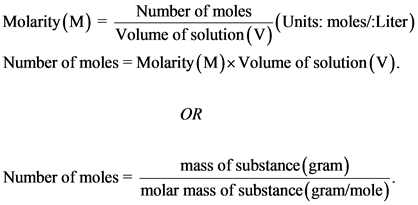
Molarity: Molarity is the ratio of the number of moles to the volume of the solution.

Equilibrium constant is expressed as .
.  is the expression for the base dissociation or ionization constant for an equilibrium reaction. for equilibrium reaction is expressed as follows:
![ОН + B*
ВОН
Гон Тв]
К
[Вн]](http://img.homeworklib.com/questions/b0074ff0-0d24-11ea-97d6-57d4ddf5b289.png?x-oss-process=image/resize,w_560)
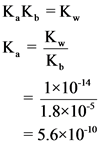
 is the expression for an acid dissociation or ionization constant for an equilibrium reaction.
  for equilibrium reaction is expressed as follows:

(A)

(B)





(C)







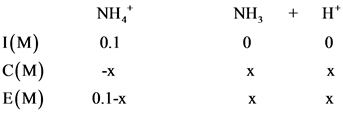


![[H]
pH= -log (*)
pH log
7.48x10
= 5.13](http://img.homeworklib.com/questions/b69803c0-0d24-11ea-8683-4b19fa08aa8f.png?x-oss-process=image/resize,w_560)

Add Answer to:
A. Match each type of titration to its pH at the equivalence
point.
Weak acid, strong base
Strong acid, strong base...
Identify each type of titration curve. Note that the analyte Is stated first, followed by the titration. Drag ea...
 Identify each type of titration curve. Note that the analyte Is stated first, followed by the titration. Drag each graph to the appropriate bin. A 50.0-mL volume of 0.15 M HBr is titrated with 0.25 M KOH. Calculate the pH after the addition of 17.0mL of KOH. A 75.0-mL volume of 0.200 M NH3 (Kb = 1.8 x 10⁻⁵) is titrated with 0.500 M HN03. Calculate the pH after the addition of 21.0mL of HN03. A 52.0-mL volume of 0.35...
A: 48.0 mL volume of 0.25 M HBr is titrated with 0.50 M KOH. Calculate the pH after addition of 24.0 mL of KOH at 25 ∘C...
A: 48.0 mL volume of 0.25 M HBr is titrated with 0.50 M KOH. Calculate the pH after addition of 24.0 mL of KOH at 25 ∘C B: Consider the titration of 50.0 mL of 0.20 M NH3 (Kb=1.8×10⁻⁵) with 0.20 M HNO3. Calculate the pH after addition of 50.0 mL of the titrant at 25 ∘C. C: A 30.0-mL volume of 0.50 M CH3COOH (Ka=1.8×10⁻⁵) was titrated with 0.50 M NaOH. Calculate the pH after addition of 30.0 mL of NaOH at 25...
6.)Part B A 64.0 mL volume of 0.25 M HBr is titrated with 0.50 M KOH. Calculate the pH after addition of 32.0 mL of K...
6.)Part B A 64.0 mL volume of 0.25 M HBr is titrated with 0.50 M KOH. Calculate the pH after addition of 32.0 mL of KOH. Express the pH numerically. 7.) Part C Consider the titration of 50.0 mL of 0.20 M NH3 (Kb=1.8×10⁻⁵) with 0.20 M HNO3. Calculate the pH after addition of 50.0 mL of the titrant. Express the pH numerically. 8.) Part D A 30.0-mL volume of 0.50 M CH3COOH (Ka=1.8×10⁻⁵) was titrated with 0.50 M NaOH....
Part B A 72.0 mL volume of 0.25 M HBr is titrated with 0.50 M KOH. Calculate the pH after addit...
Part B A 72.0 mL volume of 0.25 M HBr is titrated with 0.50 M KOH. Calculate the pH after addition of 36.0 mL of KOH at 25 ∘C. Express the pH numerically. Part C Consider the titration of 50.0 mL of 0.20 M NH3 (Kb=1.8×10⁻⁵) with 0.20 M HNO3. Calculate the pH after addition of 50.0 mL of the titrant at 25 ∘C. Express the pH numerically. Part D A 30.0-mL volume of 0.50 M CH3COOH (Ka=1.8×10⁻⁵) was titrated with 0.50 M NaOH. Calculate the...
Part B A 96.0 mL volume of 0.25 M HBr is titrated with 0.50 M KOH. Calculate the pH after addit...
Part B A 96.0 mL volume of 0.25 M HBr is titrated with 0.50 M KOH. Calculate the pH after addition of 48.0 mL of KOH at 25 ∘C. Express the pH numerically. Part C Consider the titration of 50.0 mL of 0.20 M NH3 (Kb=1.8×10⁻⁵) with 0.20 M HNO3. Calculate the pH after addition of 50.0 mL of the titrant at 25 ∘C. Express the pH numerically. Part D A 30.0-mL volume of 0.50 M CH3COOH (Ka=1.8×10⁻⁵) was titrated with 0.50 M NaOH. Calculate...
Learning Goal: To learn about titration types and how to calculate pH at different points of...
Learning Goal: To learn about titration types and how to calculate pH at different points of titration. In an acid-base titration, a titrant (solution of a base or acid) is added slowly to an analyte (solution of an acid or base). The titration is often monitored using a pH meter. A plot of pH as a function of the volume of titrant added is called a pH titration curve. Prior to the titration, the pH is determined by the concentration...
Calculate pH for a weak acid/strong base titration. Determine the pH during the titration of 60.9...
 Calculate pH for a weak acid/strong base titration. Determine the pH during the titration of 60.9 mL of 0.396 M hypochlorous acid (K4 = 3.5x10-8) by 0.396 M KOH at the following points. (a) Before the addition of any KOH (b) After the addition of 15.0 mL of KOH (c) At the half-equivalence point (the titration midpoint) (d) At the equivalence point (e) After the addition of 91.4 mL of KOH
Calculate pH for a weak acid/strong base titration. Determine the pH during the titration of 59.3...
 Calculate pH for a weak acid/strong base titration. Determine the pH during the titration of 59.3 mlL of 0.335 M nitrous acid (K-4.5x104) by 0.335 M KOH at the following points. (a) Before the addition of any KOH (b) After the addition of 15.0 mL of KOH (c) At the half-equivalence point (the titration midpoint) (d) At the equivalence point (e) After the addition of 89.0 mL of KOH
Calculate pH for a weak acid/strong base titration. Determine the pH during the titration of 67.3...
 Calculate pH for a weak acid/strong base titration. Determine the pH during the titration of 67.3 mL of 0.419 M hypochlorous acid (K-3.5x10-) by 0.419 M NaOH at the following points. (a) Before the addition of any NaOH (b) After the addition of 15.0 mL of NaOH (c) At the half-equivalence point (the titration midpoint) (d) At the equivalence point (e) After the addition of 101 mL of NaOH
Tutored Practice Problem 17.3.2 COUNTS Calculate pH for a weak acid/strong base titration. Close Problem Determine...
 Tutored Practice Problem 17.3.2 COUNTS Calculate pH for a weak acid/strong base titration. Close Problem Determine the pll during the titration of 57.0 ml of 0.303 M formie acid (K, - 1.8*10*) by 0.303 M N OH at the following points. (a) Before the addition of any NaOH (b) After the addition of 14.0 mL of NaOH (c) At the half-equivalence point the titration midpoint) (d) At the equivalence point (e) After the addition of 85.5 mL of NaOH Check...
 Identify each type of titration curve. Note that the analyte Is stated first, followed by the titration. Drag each graph to the appropriate bin. A 50.0-mL volume of 0.15 M HBr is titrated with 0.25 M KOH. Calculate the pH after the addition of 17.0mL of KOH. A 75.0-mL volume of 0.200 M NH3 (Kb = 1.8 x 10⁻⁵) is titrated with 0.500 M HN03. Calculate the pH after the addition of 21.0mL of HN03. A 52.0-mL volume of 0.35...
 Calculate pH for a weak acid/strong base titration. Determine the pH during the titration of 60.9 mL of 0.396 M hypochlorous acid (K4 = 3.5x10-8) by 0.396 M KOH at the following points. (a) Before the addition of any KOH (b) After the addition of 15.0 mL of KOH (c) At the half-equivalence point (the titration midpoint) (d) At the equivalence point (e) After the addition of 91.4 mL of KOH
 Calculate pH for a weak acid/strong base titration. Determine the pH during the titration of 59.3 mlL of 0.335 M nitrous acid (K-4.5x104) by 0.335 M KOH at the following points. (a) Before the addition of any KOH (b) After the addition of 15.0 mL of KOH (c) At the half-equivalence point (the titration midpoint) (d) At the equivalence point (e) After the addition of 89.0 mL of KOH
 Calculate pH for a weak acid/strong base titration. Determine the pH during the titration of 67.3 mL of 0.419 M hypochlorous acid (K-3.5x10-) by 0.419 M NaOH at the following points. (a) Before the addition of any NaOH (b) After the addition of 15.0 mL of NaOH (c) At the half-equivalence point (the titration midpoint) (d) At the equivalence point (e) After the addition of 101 mL of NaOH
 Tutored Practice Problem 17.3.2 COUNTS Calculate pH for a weak acid/strong base titration. Close Problem Determine the pll during the titration of 57.0 ml of 0.303 M formie acid (K, - 1.8*10*) by 0.303 M N OH at the following points. (a) Before the addition of any NaOH (b) After the addition of 14.0 mL of NaOH (c) At the half-equivalence point the titration midpoint) (d) At the equivalence point (e) After the addition of 85.5 mL of NaOH Check...
Most questions answered within 3 hours.
-
Where is the error in this code sequence?
String s1 = "Hello";
String s2 = "ello";...
asked 11 months ago -
Financial data for Joel de Paris, Inc., for last year
follow:
Joel de Paris, Inc.
Balance...
asked 11 months ago -
Consider this reaction:
Al2(SO4)3 (aq)+ BaCl3
(aq) Al2Cl6 (aq)- +
3BaSO4(s) . What is the...
asked 11 months ago -
Suppose that Savneet is considering increasing her
recent random sample from 20 car rentals to 40...
asked 11 months ago -
Trucks arrive at an unloading terminal at an average rate of 120
per hour.
Trucks arrive...
asked 11 months ago -
Why are methanol and ethanol completely soluble in water while
octanol is not very little soluble....
asked 11 months ago -
A facilities manager at a university reads in a research report
that the mean amount of...
asked 11 months ago -
When the CuSO4 is rehydrated by adding water to the anhydrous
compound, is this an endothermic...
asked 11 months ago -
A ray of sunlight is passing from diamond into crown glass; the
angle of incidence is...
asked 11 months ago -
A block of mass 0.249 kg is placed on top of a light, vertical
spring of...
asked 11 months ago -
how do the kidneys compensate in the presences of acidosis
a) trigger hyperventilate
b) reserve acid...
asked 11 months ago -
Question 501 pts
The rental rate of capital to the firm increases. Which of the
following...
asked 11 months ago