how do the kidneys compensate in the presences of acidosis a) trigger hyperventilate b) reserve acid...
how do the kidneys compensate in the presences of acidosis
a) trigger hyperventilate
b) reserve acid and excrete bicarb
c) excrete acid and hold onto bicarb
d) trigger hypoventilation
Homework Answers
Answer : C.excrete acid and hold onto bicarbonate
Explanation : The kidneys compensate in acidosis by Increasing acid excretion (intercalated cells secrete H+ into tubules) and decrease bicarbonate excretion. They also make new bicarbonate to add to the plasma.
-The kidneys compensate in alkalosis by Increase bicarbonate excretion and Decrease bicarbonate reabsorption
Process of making bicarbonate in kidney -When intercalated cells secrete H+ into the tubule, it is combined with buffers in the lumen (ammonia) to make new HCO3 (bicarbonate)...Thanks dear student
Add Answer to:
how do the kidneys compensate in the presences of acidosis
a) trigger hyperventilate
b) reserve acid...
5. Explain how the body compensates for each of the following: a. Metabolic acidosis- to compensate,...
 5. Explain how the body compensates for each of the following: a. Metabolic acidosis- to compensate, the kidneys attempt to excrete additional acid and the lungs increase CO2 excretion. The patient will often develop Kussmaul respirations.
16. How do the kidneys help maintain pH balance? 17. Which is the correct sequence of...
 16. How do the kidneys help maintain pH balance? 17. Which is the correct sequence of events leading to the production and release of aldosterone? (Explain the steps of Renin-Angiotensin-Aldosterone System (RAAS)) 18. Why are women more susceptible to urinary tract infections than men? 19. List the parts of the nephron in order. 20. List substances that can be eliminated from the blood by tubular secretions 21. If a client suffers hypokalemia, what abnormality could be detected on the EKG?...
Acid-Base Balance Worksheet What is the normal pH range of blood? HOND 7.35 to 7.45. Which...
 Acid-Base Balance Worksheet What is the normal pH range of blood? HOND 7.35 to 7.45. Which three systems work to regulate pH? 1. Suffer 2.respitory 3. Klaneys A shift below the normal pH in the body is called: a) acidosis b) alkalosis A shift above the normal pH in the body is called: a) acidosis b) alkalosis What is the chemical symbol for carbonic acid? H2CO3 What is the chemical symbol for hydrogen ion? H+ mo What is the chemical...
Which of the following acid-base disorder is associated with its appropriate compensatory mechanism? A)Metabolic acidosis -...
Which of the following acid-base disorder is associated with its appropriate compensatory mechanism? A)Metabolic acidosis - Bicarbonate retention B)Respiratory acidosis - Hyperventilation C)Metabolic alkalosis - Hypoventilation D)Respiratory alkalosis - Hydrogen excretion
20) The amount of Potassium secreted by the kidneys is regulated by: a) ADH b) Aldosterone...
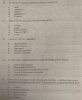 20) The amount of Potassium secreted by the kidneys is regulated by: a) ADH b) Aldosterone c) Cortisol d) Parathormone e) Calcitonin 21) Where in the body Co, reacts with water to form H2 CO a) Kidneys b) Lungs c) Plasma & RBC's d) Plasma & WBC's e) Serum 22) Respiratory response to Alkalosis is: a) Hyperventilation b) Hypoventilation c) Hypercapnia d) Decreased metabolism e) Increased metabolism 23) The most effective long-term protecion agains pH changes of body luid is:...
20) The amount of Potassium secreted by the kidneys is regulated by a) ADH b) Aldosterone...
 20) The amount of Potassium secreted by the kidneys is regulated by a) ADH b) Aldosterone c) Cortisol d) Parathormone e) Calcitonin 21) Where in the body CO2 reacts with water to form H2 CO3 a) Kineys b) Lungs c) Plasma & RBC's d) Plasma & WBC's e) Serum 22) Respiratory response to Alkalosis is: a) Hyperventilation b) Hypoventilation c) Hypercapnia d) Decreased metabolism e) Increased metabolism 23) The most effective long-term protection against pH changes of body fluid is:...
A. RESP ACIDOSIS B. RESP ALKALOSIS C. METABOLIC ACIDOSIS D. METABOLIC ALKALOSIS E. RR WILL INCREASE...
 A. RESP ACIDOSIS B. RESP ALKALOSIS C. METABOLIC ACIDOSIS D. METABOLIC ALKALOSIS E. RR WILL INCREASE F. RR WILL DECREASE G. KIDNEYS WILL HANG ON TO HCO3 H. KIDNEYS WILL GET RID OF HC03 L HAS RR OF 18/MIN J. IS HAVING A PANIC ATTACK K. HAS HYPERCAPNIA L HAS KUSSMAUL RESPIRATIONS M HAS MILIARY TB N. HAS BRONCHOGENIC CANCER O. HAS BEEN VOMITING P. IS IN DKA Eor questions 20-25 below, use the choices A- Pabove. One letter per...
How do the kidneys help to correct acid-base imbalance. Please be sure to include reference for...
How do the kidneys help to correct acid-base imbalance. Please be sure to include reference for your answer
can also explain how to analyzed abg? 9. The patient is a 21-year-old college student brought...
 can also explain how to analyzed abg?
9. The patient is a 21-year-old college student brought to the emergency department by his friends when he was found unconscious during a fraternity party. He was seen drinking heavily at the party and had not eaten for 2 days before the event. He takes no prescription drugs, and his current vital signs are: T = 97.8°F; P = 48, slightly irregular and thready: R=28, deep and regular; BP = 88/50. His current...
can also explain how to analyzed abg?
9. The patient is a 21-year-old college student brought to the emergency department by his friends when he was found unconscious during a fraternity party. He was seen drinking heavily at the party and had not eaten for 2 days before the event. He takes no prescription drugs, and his current vital signs are: T = 97.8°F; P = 48, slightly irregular and thready: R=28, deep and regular; BP = 88/50. His current...
A. RESP ACIDOSIS B. RESP ALKALOSIS M. HAS MILARY TB N. HAS BRONCHOGENIC CANCER O. HAS...
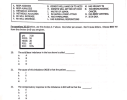 A. RESP ACIDOSIS B. RESP ALKALOSIS M. HAS MILARY TB N. HAS BRONCHOGENIC CANCER O. HAS BEEN VOMITING. P. IS IN DKA. G. KIDNEYS WILL HANG ON TO HCO3 H. KIDNEYS WILL GET RID OF HCO3 I. HAS RR OF 18/MIN. J. IS HAVING A PANIC ATTACK K. HAS HYPERCAPNIA C. METABOLIC ACIDOSIS D. METABOLIC ALKALOSIS E. RR WILL INCREASE. F. RR WILL DECREASE L. HAS KUSSMAUL RESPIRATIONS For questions 20-25 below, use the choices A- P above. One letter...
 5. Explain how the body compensates for each of the following: a. Metabolic acidosis- to compensate, the kidneys attempt to excrete additional acid and the lungs increase CO2 excretion. The patient will often develop Kussmaul respirations.
 16. How do the kidneys help maintain pH balance? 17. Which is the correct sequence of events leading to the production and release of aldosterone? (Explain the steps of Renin-Angiotensin-Aldosterone System (RAAS)) 18. Why are women more susceptible to urinary tract infections than men? 19. List the parts of the nephron in order. 20. List substances that can be eliminated from the blood by tubular secretions 21. If a client suffers hypokalemia, what abnormality could be detected on the EKG?...
 Acid-Base Balance Worksheet What is the normal pH range of blood? HOND 7.35 to 7.45. Which three systems work to regulate pH? 1. Suffer 2.respitory 3. Klaneys A shift below the normal pH in the body is called: a) acidosis b) alkalosis A shift above the normal pH in the body is called: a) acidosis b) alkalosis What is the chemical symbol for carbonic acid? H2CO3 What is the chemical symbol for hydrogen ion? H+ mo What is the chemical...
 20) The amount of Potassium secreted by the kidneys is regulated by: a) ADH b) Aldosterone c) Cortisol d) Parathormone e) Calcitonin 21) Where in the body Co, reacts with water to form H2 CO a) Kidneys b) Lungs c) Plasma & RBC's d) Plasma & WBC's e) Serum 22) Respiratory response to Alkalosis is: a) Hyperventilation b) Hypoventilation c) Hypercapnia d) Decreased metabolism e) Increased metabolism 23) The most effective long-term protecion agains pH changes of body luid is:...
 20) The amount of Potassium secreted by the kidneys is regulated by a) ADH b) Aldosterone c) Cortisol d) Parathormone e) Calcitonin 21) Where in the body CO2 reacts with water to form H2 CO3 a) Kineys b) Lungs c) Plasma & RBC's d) Plasma & WBC's e) Serum 22) Respiratory response to Alkalosis is: a) Hyperventilation b) Hypoventilation c) Hypercapnia d) Decreased metabolism e) Increased metabolism 23) The most effective long-term protection against pH changes of body fluid is:...
 A. RESP ACIDOSIS B. RESP ALKALOSIS C. METABOLIC ACIDOSIS D. METABOLIC ALKALOSIS E. RR WILL INCREASE F. RR WILL DECREASE G. KIDNEYS WILL HANG ON TO HCO3 H. KIDNEYS WILL GET RID OF HC03 L HAS RR OF 18/MIN J. IS HAVING A PANIC ATTACK K. HAS HYPERCAPNIA L HAS KUSSMAUL RESPIRATIONS M HAS MILIARY TB N. HAS BRONCHOGENIC CANCER O. HAS BEEN VOMITING P. IS IN DKA Eor questions 20-25 below, use the choices A- Pabove. One letter per...
 can also explain how to analyzed abg?
9. The patient is a 21-year-old college student brought to the emergency department by his friends when he was found unconscious during a fraternity party. He was seen drinking heavily at the party and had not eaten for 2 days before the event. He takes no prescription drugs, and his current vital signs are: T = 97.8°F; P = 48, slightly irregular and thready: R=28, deep and regular; BP = 88/50. His current...
can also explain how to analyzed abg?
9. The patient is a 21-year-old college student brought to the emergency department by his friends when he was found unconscious during a fraternity party. He was seen drinking heavily at the party and had not eaten for 2 days before the event. He takes no prescription drugs, and his current vital signs are: T = 97.8°F; P = 48, slightly irregular and thready: R=28, deep and regular; BP = 88/50. His current...
 A. RESP ACIDOSIS B. RESP ALKALOSIS M. HAS MILARY TB N. HAS BRONCHOGENIC CANCER O. HAS BEEN VOMITING. P. IS IN DKA. G. KIDNEYS WILL HANG ON TO HCO3 H. KIDNEYS WILL GET RID OF HCO3 I. HAS RR OF 18/MIN. J. IS HAVING A PANIC ATTACK K. HAS HYPERCAPNIA C. METABOLIC ACIDOSIS D. METABOLIC ALKALOSIS E. RR WILL INCREASE. F. RR WILL DECREASE L. HAS KUSSMAUL RESPIRATIONS For questions 20-25 below, use the choices A- P above. One letter...
Most questions answered within 3 hours.
-
Where is the error in this code sequence?
String s1 = "Hello";
String s2 = "ello";...
asked 11 months ago -
Financial data for Joel de Paris, Inc., for last year
follow:
Joel de Paris, Inc.
Balance...
asked 11 months ago -
Consider this reaction:
Al2(SO4)3 (aq)+ BaCl3
(aq) Al2Cl6 (aq)- +
3BaSO4(s) . What is the...
asked 11 months ago -
Suppose that Savneet is considering increasing her
recent random sample from 20 car rentals to 40...
asked 11 months ago -
Trucks arrive at an unloading terminal at an average rate of 120
per hour.
Trucks arrive...
asked 11 months ago -
Why are methanol and ethanol completely soluble in water while
octanol is not very little soluble....
asked 11 months ago -
A facilities manager at a university reads in a research report
that the mean amount of...
asked 11 months ago -
When the CuSO4 is rehydrated by adding water to the anhydrous
compound, is this an endothermic...
asked 11 months ago -
A ray of sunlight is passing from diamond into crown glass; the
angle of incidence is...
asked 11 months ago -
A block of mass 0.249 kg is placed on top of a light, vertical
spring of...
asked 11 months ago -
how do the kidneys compensate in the presences of acidosis
a) trigger hyperventilate
b) reserve acid...
asked 11 months ago -
Question 501 pts
The rental rate of capital to the firm increases. Which of the
following...
asked 11 months ago