The following graph shows the market for loanable funds. For each or the given scenarios, adjust the appropriate curve on the graph to help you complete the questions that follow.
5. The market for loanable funds and government pollcy
The following graph shows the market for loanable funds. For each or the given scenarios, adjust the appropriate curve on the graph to help you complete the questions that follow. Treat each scenario separately by resetting the graph to its original state before examining the erect of each Individual scenario. (Note: You will not be graded on any changes you make to the graph.)
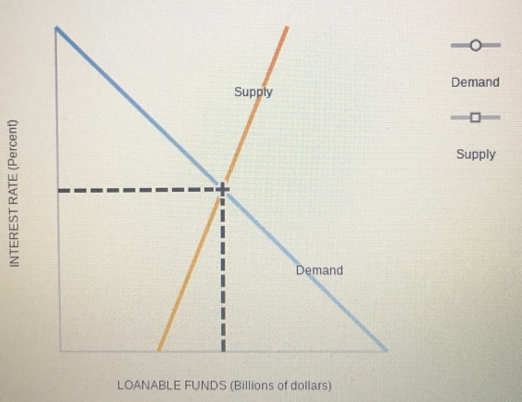
Scenario 1: Individual Retirement Accounts (IRAs) allow people to shelter some of thelr income from taxation. Suppose the maximum annual contribution to such accounts is $5,000 per person. Now suppose there is an increase in the maximum contribution, from $5,000 to $8,000 per year.
Shift the appropriate curve on the graph to reflect this change.
This change in the tax treatment of saving causes the equilibrium interest rate in the market for loanable funds to _______ investment spending to _______ .
and the level of
Scenario 2: An investment tax credit effectively lowers the tax bill of any firm that purchases new copital in the relevant time period. Suppose the government implements a new investment tax credit.
Shift the appropriate curve on the graph to reflect this change.
The implementation of the new tax credit causes the interest rate to _______ and the level of saving to _______ .
Scenario 3: Initially, the government's budget is balanced; then the government responds to the conclusion of a war by significantly reducing defense
spending without changing taxes.
This change in spending causes the government to run a budget _______ , which _______ national saving.
Scenario 3: Initially, the government's budget is balanced; then the govermment responds to the conclusion of a war by significantly reducing spending without changing taxes.
This change in spending causes the govenment to run a budget _______ , which _______ national saving.
Shift the appropriate curve on the graph to reflect this change.
This causes the interest rate to _______ , _______ the level of investment spending.
Homework Answers
Scenario 1
(a) Increase in maximum IRA contribution will increase savings, which will raise the supply of loanable funds (savings being source of loanable funds), shifting the supply curve to right.
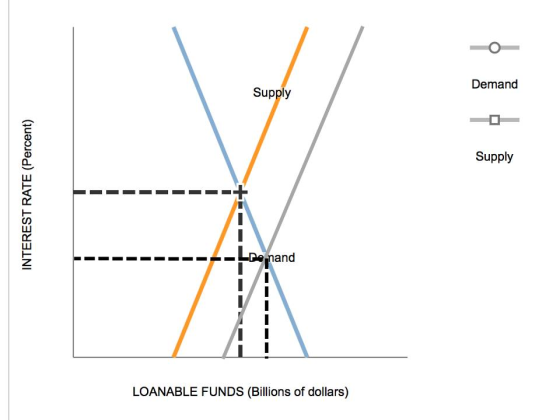
(b) This change causes equilibrium interest rate to fall and level of investment spending to rise.
Scenario 2
(a) Implementation of new investment tax credit will raise business investment, increasing the demand for loanable funds (investment being the demand for loanable funds), shifting demand for loanable funds to right.

(b) New investment tax credit causes interest rate to rise and level of savings to rise.
Scenario 3
(a) A fall in military spending reduces the demand for loanable funds (since government borrowing for deficit financing purposes will fall), shifting demand for loanable funds to left.

(b) This causes government to run a Budget surplus which increases national saving.
(b) This causes interest rate to fall, increasing investment spending.
Add Answer to:
The following graph shows the market for loanable funds. For each or the given scenarios, adjust the appropriate curve on the graph to help you complete the questions that follow.
The following graph shows the market for loanable funds. For each of the given scenarios, adjust the appropriate curve on the graph to help you complete the questions that follow.
 5. The market for loanable funds and government policy The following graph shows the market for loanable funds. For each of the given scenarios, adjust the appropriate curve on the graph to help you complete the questions that follow. Treat each scenario separately by resetting the graph to its original state before examining the effect of each individual scenario. (Note: You will not be graded on any changes you make to the graph.) Scenario 1: Individual Retirement Accounts (IRAs) allow people to...
The following graph shows the market for loanable funds. For each of the given scenarios, adjust...
 The following graph shows the market for loanable funds. For each of the given scenarios, adjust the appropriate curve on the graph to help you complete the questions that follow. Treat each scenario separately by resetting the graph to its original state before examining the effect of each individual scenario. (Note: You will not be graded on any changes you make to the graph.) Scenario 1: Suppose savers either buy bonds or make deposits in savings accounts at banks. Initially, the...
The following graph shows the market for loanable funds. For each of the given scenarios, adjust...
 The following graph shows the market for loanable funds. For
each of the given scenarios, adjust the appropriate curve on the
graph to help you complete the questions that follow. Treat each
scenario separately by resetting the graph to its original state
before examining the effect of each individual scenario.
Demand Supply Supply INTEREST RATE (Percent) Demand LOANABLE FUNDS (Billions of dollars) Scenario 1: Individual Retirement Accounts (IRAS) allow people to shelter some of their income from taxation. Suppose the...
The following graph shows the market for loanable funds. For
each of the given scenarios, adjust the appropriate curve on the
graph to help you complete the questions that follow. Treat each
scenario separately by resetting the graph to its original state
before examining the effect of each individual scenario.
Demand Supply Supply INTEREST RATE (Percent) Demand LOANABLE FUNDS (Billions of dollars) Scenario 1: Individual Retirement Accounts (IRAS) allow people to shelter some of their income from taxation. Suppose the...
5. The market for loanable funds and government policy The following graph shows the market for...
 5. The market for loanable funds and government policy The following graph shows the market for loanable funds. For each of the given scenarios, adjust the appropriate curve on the graph to help you complete the questions that follow. Treat each scenario separately by resetting the graph to its original state before examining the effect of each Individual scenario. (Note: You will not be graded on any changes you make to the graph.) INTERESTREP LOANASLE PUNOS Scenario 1: Individual Retirement...
5. The market for loanable funds and government policy The following graph shows the market for...
 5. The market for loanable funds and government policy The following graph shows the market for loanable funds. For each of the given scenarios, adjust the appropriate curve on the graph to help you complete the questions that follow. Treat each scenario separately by resetting the graph to its original state before examining the effect of each individual scenario. (Note: You will not be graded on any changes you make to the graph.) Demand Supply Supply Demand LOANABLE FUNDS (Billions...
5. The market for loanable funds and government policy The following graph shows the market for...
 5. The market for loanable funds and government policy The following graph shows the market for loanable funds. For each of the given scenarios, adjust the appropriate curve on the graph to help you complete the questions that follow. Treat each scenario separately by resetting the graph to its original state before examining the effect of each Individual scenario. (Note: You will not be graded on any changes you make to the graph.) Demand Supply ATE (Percent) Supply Homework (Ch...
5. The market for loanable funds and government policy The following graph shows the market for...
 5. The market for loanable funds and government policy The following graph shows the market for loanable funds. For each of the given scenarios, adjust the appropriate curve on the graph to help you complete the questions that follow. Treat each scenario separately by resetting the graph to its original state before examining the effect of each individual scenario. (Note: You will not be graded on any changes you make to the graph.) Demand - 0 Supply INTEREST RATE (Percent)...
Demand Supply Supply INTEREST RATE (Percent) Demand LOANABLE FUNDS (Billions of dollars) Scenario 1: Individual Retirement...
 Demand Supply Supply INTEREST RATE (Percent) Demand LOANABLE FUNDS (Billions of dollars) Scenario 1: Individual Retirement Accounts (IRAs) allow people to shelter some of their income from taxation. Suppose the maximum annual contribution to such accounts is $5,000 per person. Now suppose there is an increase in the maximum contribution, from $5,000 to $8,000 per year. Shift the appropriate curve on the graph to reflect this change. and the level of This change in the tax treatment of saving causes...
(Decrease or Increase) Attempts: Keep the Highest: /4 5. The market for loanable funds and government...
 (Decrease or Increase)
Attempts: Keep the Highest: /4 5. The market for loanable funds and government policy The following graph shows the market for loanable funds. For each of the given scenarios, adjust the appropriate curve on the graph to help you complete the questions that follow. Treat each scenario separately by resetting the graph to its original state before examining the effect of each individual scenario. (Note: You will not be graded on any changes you make to the...
(Decrease or Increase)
Attempts: Keep the Highest: /4 5. The market for loanable funds and government policy The following graph shows the market for loanable funds. For each of the given scenarios, adjust the appropriate curve on the graph to help you complete the questions that follow. Treat each scenario separately by resetting the graph to its original state before examining the effect of each individual scenario. (Note: You will not be graded on any changes you make to the...
The market for loanable funds and government policy
The following graph shows the market for loanable funds. For each of the given scenarios, adjust the appropriate curve on the graph to help you complete the questions that follow. (Note: You will not be graded on any changes you make to the graph.)DemandSupplyINTEREST RATE (Percent)LOANABLE FUNDS (Billions of dollars)Demand Supply Registered retirement savings plans (RRSPs) allow people to shelter some of their income from taxation. Suppose the maximum annual contribution to such accounts is $5,000 per person. Now suppose there is...
 The following graph shows the market for loanable funds. For
each of the given scenarios, adjust the appropriate curve on the
graph to help you complete the questions that follow. Treat each
scenario separately by resetting the graph to its original state
before examining the effect of each individual scenario.
Demand Supply Supply INTEREST RATE (Percent) Demand LOANABLE FUNDS (Billions of dollars) Scenario 1: Individual Retirement Accounts (IRAS) allow people to shelter some of their income from taxation. Suppose the...
The following graph shows the market for loanable funds. For
each of the given scenarios, adjust the appropriate curve on the
graph to help you complete the questions that follow. Treat each
scenario separately by resetting the graph to its original state
before examining the effect of each individual scenario.
Demand Supply Supply INTEREST RATE (Percent) Demand LOANABLE FUNDS (Billions of dollars) Scenario 1: Individual Retirement Accounts (IRAS) allow people to shelter some of their income from taxation. Suppose the...
 5. The market for loanable funds and government policy The following graph shows the market for loanable funds. For each of the given scenarios, adjust the appropriate curve on the graph to help you complete the questions that follow. Treat each scenario separately by resetting the graph to its original state before examining the effect of each Individual scenario. (Note: You will not be graded on any changes you make to the graph.) INTERESTREP LOANASLE PUNOS Scenario 1: Individual Retirement...
 5. The market for loanable funds and government policy The following graph shows the market for loanable funds. For each of the given scenarios, adjust the appropriate curve on the graph to help you complete the questions that follow. Treat each scenario separately by resetting the graph to its original state before examining the effect of each individual scenario. (Note: You will not be graded on any changes you make to the graph.) Demand Supply Supply Demand LOANABLE FUNDS (Billions...
 5. The market for loanable funds and government policy The following graph shows the market for loanable funds. For each of the given scenarios, adjust the appropriate curve on the graph to help you complete the questions that follow. Treat each scenario separately by resetting the graph to its original state before examining the effect of each Individual scenario. (Note: You will not be graded on any changes you make to the graph.) Demand Supply ATE (Percent) Supply Homework (Ch...
 5. The market for loanable funds and government policy The following graph shows the market for loanable funds. For each of the given scenarios, adjust the appropriate curve on the graph to help you complete the questions that follow. Treat each scenario separately by resetting the graph to its original state before examining the effect of each individual scenario. (Note: You will not be graded on any changes you make to the graph.) Demand - 0 Supply INTEREST RATE (Percent)...
 Demand Supply Supply INTEREST RATE (Percent) Demand LOANABLE FUNDS (Billions of dollars) Scenario 1: Individual Retirement Accounts (IRAs) allow people to shelter some of their income from taxation. Suppose the maximum annual contribution to such accounts is $5,000 per person. Now suppose there is an increase in the maximum contribution, from $5,000 to $8,000 per year. Shift the appropriate curve on the graph to reflect this change. and the level of This change in the tax treatment of saving causes...
 (Decrease or Increase)
Attempts: Keep the Highest: /4 5. The market for loanable funds and government policy The following graph shows the market for loanable funds. For each of the given scenarios, adjust the appropriate curve on the graph to help you complete the questions that follow. Treat each scenario separately by resetting the graph to its original state before examining the effect of each individual scenario. (Note: You will not be graded on any changes you make to the...
(Decrease or Increase)
Attempts: Keep the Highest: /4 5. The market for loanable funds and government policy The following graph shows the market for loanable funds. For each of the given scenarios, adjust the appropriate curve on the graph to help you complete the questions that follow. Treat each scenario separately by resetting the graph to its original state before examining the effect of each individual scenario. (Note: You will not be graded on any changes you make to the...
Most questions answered within 3 hours.
-
Where is the error in this code sequence?
String s1 = "Hello";
String s2 = "ello";...
asked 11 months ago -
Financial data for Joel de Paris, Inc., for last year
follow:
Joel de Paris, Inc.
Balance...
asked 11 months ago -
Consider this reaction:
Al2(SO4)3 (aq)+ BaCl3
(aq) Al2Cl6 (aq)- +
3BaSO4(s) . What is the...
asked 11 months ago -
Suppose that Savneet is considering increasing her
recent random sample from 20 car rentals to 40...
asked 11 months ago -
Trucks arrive at an unloading terminal at an average rate of 120
per hour.
Trucks arrive...
asked 11 months ago -
Why are methanol and ethanol completely soluble in water while
octanol is not very little soluble....
asked 11 months ago -
A facilities manager at a university reads in a research report
that the mean amount of...
asked 11 months ago -
When the CuSO4 is rehydrated by adding water to the anhydrous
compound, is this an endothermic...
asked 11 months ago -
A ray of sunlight is passing from diamond into crown glass; the
angle of incidence is...
asked 11 months ago -
A block of mass 0.249 kg is placed on top of a light, vertical
spring of...
asked 11 months ago -
how do the kidneys compensate in the presences of acidosis
a) trigger hyperventilate
b) reserve acid...
asked 11 months ago -
Question 501 pts
The rental rate of capital to the firm increases. Which of the
following...
asked 11 months ago
> this answer is partially correct. and your question may be randomly changed, so what you see on your homework may not be exactly the same as this one.
ohno@bccto.cc Fri, Feb 4, 2022 1:21 PM