1. Understanding the implications of taxes on welfare
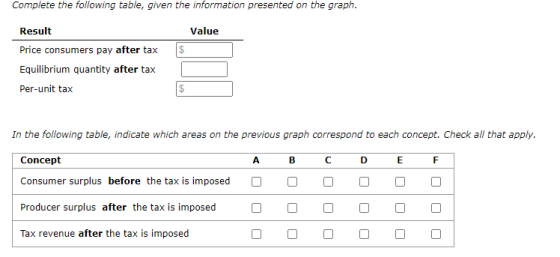
The following graph represents the demand and supply for pinckneys (an imaginary product). The black point (plus symbol) indicates the pre-tax equilibrium. Suppose the government has just decided to impose a tax on this market; the grey points (star symbol) indicate the after-tax scenario.

Homework Answers
Equilibrium Quantity after tax = $10.5
Explanation: This is the new quantity where the consumers and producers are happy to buy and sell with different prices
Price consumers pay after tax = $32.50
Explanation : Here after tax is paid, the top grey star ($32.50) shows the price paid by consumers and the bottom star ( $22.50 ) shows the price paid by producers.
Per-unit tax = $32.50 - $22.50 = $10
Explanation: Per unit tax = difference between the price paid by consumers and the price paid by producers
Producer surplus after the tax is imposed = F
Explanation: Producer surplus is the difference between the price a seller receives and the lowest amount a producer is willing to receive. Graphically, this area is above the supply curve , below the actual price recieved by producers after tax and left of the equilibrium quantity.
Deadweight loss after the tax is imposed = C + E
Explanation: Deadweight loss is the loss of economic efficiency that can occur when equilibrium is not achieved. Graphically, it is the area left to the old equilibrium quanity and right to the new equlibrium quantity.
Consumer surplus before the tax is imposed = A+ B + C
Explanation: Consumer surplus is the difference between the willingness of buyer to pay and the buyer actually pays. Graphically, here it is the area, above the price actually paid by the consumer before tax and below the demand curve, left of the equilibrium quantity.
1. Understanding the implications of taxes on welfare The following graph represents the demand and supply...
 1. Understanding the implications of taxes on welfare The following graph represents the demand and supply for pinckneys (an imaginary product). The black point (plus symbol) indicates the pre-tax equilibrium. Suppose the government has just decided to impose a tax on this market; the grey points (star symbol) indicate the after-tax scenario.
1. Understanding the implications of taxes on welfare The following graph represents the demand and supply...
 1. Understanding the implications of taxes on welfare The following graph represents the demand and supply for an imaginary good called a pinckney. The black point (plus symbol) indicates the pre-ta equilibrium. Suppose the government has just decided to impose a tax on this market the grey points (star symbol) indicate the after-ta scenario. 2 Demand Supply 13.00 . 9.00 5.00 QUANTITY (Pinckneys)
The following graph represents the demand and supply forpinckneys (an imaginary product). The black point...
 The following graph represents the demand and supply for
pinckneys (an imaginary product). The black point (plus symbol)
indicates the pre-tax equilibrium. Suppose the government has just
decided to impose a tax on this market; the grey points (star
symbol) indicate the after-tax scenario.
The following graph represents the demand and supply for
pinckneys (an imaginary product). The black point (plus symbol)
indicates the pre-tax equilibrium. Suppose the government has just
decided to impose a tax on this market; the grey points (star
symbol) indicate the after-tax scenario.
The following graph represents the demand and supply for an imaginary good called a pinckney. The...
 The
following graph represents the demand and supply for an imaginary
good called a pinckney. The black point (plus symbol) indicates the
pre-tax equilibrium. Suppose the government just decided to impose
a tax on this market; the grey points (star symbol) indicates the
after-tax scenario.
omework (Ch 08) Due Today at 11:59 PM CST The following graph represents the demand and supply for an imaginary good called a pinckney. The black point (plus symbol) Indicates the pre-tax equllibrium. Suppose the...
The
following graph represents the demand and supply for an imaginary
good called a pinckney. The black point (plus symbol) indicates the
pre-tax equilibrium. Suppose the government just decided to impose
a tax on this market; the grey points (star symbol) indicates the
after-tax scenario.
omework (Ch 08) Due Today at 11:59 PM CST The following graph represents the demand and supply for an imaginary good called a pinckney. The black point (plus symbol) Indicates the pre-tax equllibrium. Suppose the...
1. Understanding the implications of taxes on welfare The following graph represents the demand and supply...
 1. Understanding the implications of taxes on welfare The following graph represents the demand and supply for an imaginary good called a pinckney. The black point (plus symbol) indicates the pre-tax equilibrium. Suppose the government has just decided to impose a tax on this market; the grey points (star symbol) indicate the after-tax scenario Demand Supply 28.00 24.00 20.00 QUANTITY (Pinckneys) Complete the following table, given the information presented on the graph Result Equilibrium quantity after tax Price producers receive...
understanding the implications 1. Understanding the implications of taxes on welfare The following graph represents the...
 understanding the implications
1. Understanding the implications of taxes on welfare The following graph represents the demand and supply for pinckneys (an imaginary product). The black point (plus symbol) indicates the pre-tax equilibrium. Suppose the government has just decided to impose a tax on this market; the grey points (star symbol) indicate the after tax scenario. Demand PRICE Dollars per QUANTITY P res) 6 7 9 QUANTITY (Pinckneys) Complete the following table, given the information presented on the graph. Result...
understanding the implications
1. Understanding the implications of taxes on welfare The following graph represents the demand and supply for pinckneys (an imaginary product). The black point (plus symbol) indicates the pre-tax equilibrium. Suppose the government has just decided to impose a tax on this market; the grey points (star symbol) indicate the after tax scenario. Demand PRICE Dollars per QUANTITY P res) 6 7 9 QUANTITY (Pinckneys) Complete the following table, given the information presented on the graph. Result...
The following graph represents the demand and supply for pinckneys (an imaginary product).
 1. Understanding the implications of taxes on welfare The following graph represents the demand and supply for pinckneys (an imaginary product). The black point (plus symbol) indicates the pre-tax equilibrium. Suppose the government has just decided to impose a tax on this market; the grey points (star symbol) indicate the after-tax scenario.
The following graph represents the demand and supply for pinckneys (an imaginary product). The black point (plus symbol) indicates the pre-tax equilibrium.
 1. Understanding the implications of taxes on welfare The following graph represents the demand and supply for pinckneys (an imaginary product). The black point (plus symbol) indicates the pre-tax equilibrium. Suppose the government has just decided to impose a tax on this market; the grey points (star symbol) indicate the after-tax scenario.
1. Understanding the implications of taxes on welfare The following graph represents the demand and supply...
 1. Understanding the implications of taxes on welfare The following graph represents the demand and supply for an imaginary good called a pinckney. The black point (plus symbol) indicates the pre-tax equilibrium. Suppose the government has just decided to impose a tax on this market; the grey points (star symbol) indicate the after-tax scenario. Sueply 3.50 QUANTITY (Pinckneys) Complete the following table, given the information presented on the graph. Result Value Price preducers receive after tax S Equibrium quantity before...
The following graph represents the demand and supply for pinckneys (an Imaginary product).
 Understanding the implications of taxes on welfare The following graph represents the demand and supply for pinckneys (an Imaginary product). The black point (plus symbol) indicates the pre-tax equilibrium. Suppose the government has just decided to impose a tax on this market; the grey points (star symbol) indicate the after-tax scenario. Complete the following table, given the information presented on the graph.
 1. Understanding the implications of taxes on welfare The following graph represents the demand and supply for an imaginary good called a pinckney. The black point (plus symbol) indicates the pre-ta equilibrium. Suppose the government has just decided to impose a tax on this market the grey points (star symbol) indicate the after-ta scenario. 2 Demand Supply 13.00 . 9.00 5.00 QUANTITY (Pinckneys)
 The
following graph represents the demand and supply for an imaginary
good called a pinckney. The black point (plus symbol) indicates the
pre-tax equilibrium. Suppose the government just decided to impose
a tax on this market; the grey points (star symbol) indicates the
after-tax scenario.
omework (Ch 08) Due Today at 11:59 PM CST The following graph represents the demand and supply for an imaginary good called a pinckney. The black point (plus symbol) Indicates the pre-tax equllibrium. Suppose the...
The
following graph represents the demand and supply for an imaginary
good called a pinckney. The black point (plus symbol) indicates the
pre-tax equilibrium. Suppose the government just decided to impose
a tax on this market; the grey points (star symbol) indicates the
after-tax scenario.
omework (Ch 08) Due Today at 11:59 PM CST The following graph represents the demand and supply for an imaginary good called a pinckney. The black point (plus symbol) Indicates the pre-tax equllibrium. Suppose the...
 1. Understanding the implications of taxes on welfare The following graph represents the demand and supply for an imaginary good called a pinckney. The black point (plus symbol) indicates the pre-tax equilibrium. Suppose the government has just decided to impose a tax on this market; the grey points (star symbol) indicate the after-tax scenario Demand Supply 28.00 24.00 20.00 QUANTITY (Pinckneys) Complete the following table, given the information presented on the graph Result Equilibrium quantity after tax Price producers receive...
 understanding the implications
1. Understanding the implications of taxes on welfare The following graph represents the demand and supply for pinckneys (an imaginary product). The black point (plus symbol) indicates the pre-tax equilibrium. Suppose the government has just decided to impose a tax on this market; the grey points (star symbol) indicate the after tax scenario. Demand PRICE Dollars per QUANTITY P res) 6 7 9 QUANTITY (Pinckneys) Complete the following table, given the information presented on the graph. Result...
understanding the implications
1. Understanding the implications of taxes on welfare The following graph represents the demand and supply for pinckneys (an imaginary product). The black point (plus symbol) indicates the pre-tax equilibrium. Suppose the government has just decided to impose a tax on this market; the grey points (star symbol) indicate the after tax scenario. Demand PRICE Dollars per QUANTITY P res) 6 7 9 QUANTITY (Pinckneys) Complete the following table, given the information presented on the graph. Result...
 1. Understanding the implications of taxes on welfare The following graph represents the demand and supply for pinckneys (an imaginary product). The black point (plus symbol) indicates the pre-tax equilibrium. Suppose the government has just decided to impose a tax on this market; the grey points (star symbol) indicate the after-tax scenario.
 1. Understanding the implications of taxes on welfare The following graph represents the demand and supply for an imaginary good called a pinckney. The black point (plus symbol) indicates the pre-tax equilibrium. Suppose the government has just decided to impose a tax on this market; the grey points (star symbol) indicate the after-tax scenario. Sueply 3.50 QUANTITY (Pinckneys) Complete the following table, given the information presented on the graph. Result Value Price preducers receive after tax S Equibrium quantity before...
Most questions answered within 3 hours.
-
Where is the error in this code sequence?
String s1 = "Hello";
String s2 = "ello";...
asked 11 months ago -
Financial data for Joel de Paris, Inc., for last year
follow:
Joel de Paris, Inc.
Balance...
asked 11 months ago -
Consider this reaction:
Al2(SO4)3 (aq)+ BaCl3
(aq) Al2Cl6 (aq)- +
3BaSO4(s) . What is the...
asked 11 months ago -
Suppose that Savneet is considering increasing her
recent random sample from 20 car rentals to 40...
asked 11 months ago -
Trucks arrive at an unloading terminal at an average rate of 120
per hour.
Trucks arrive...
asked 11 months ago -
Why are methanol and ethanol completely soluble in water while
octanol is not very little soluble....
asked 11 months ago -
A facilities manager at a university reads in a research report
that the mean amount of...
asked 11 months ago -
When the CuSO4 is rehydrated by adding water to the anhydrous
compound, is this an endothermic...
asked 11 months ago -
A ray of sunlight is passing from diamond into crown glass; the
angle of incidence is...
asked 11 months ago -
A block of mass 0.249 kg is placed on top of a light, vertical
spring of...
asked 11 months ago -
how do the kidneys compensate in the presences of acidosis
a) trigger hyperventilate
b) reserve acid...
asked 11 months ago -
Question 501 pts
The rental rate of capital to the firm increases. Which of the
following...
asked 11 months ago