Complete the mechanism for the following reaction of benzaldehyde dissolved in dry ethanol bubbled with HCl(g)...
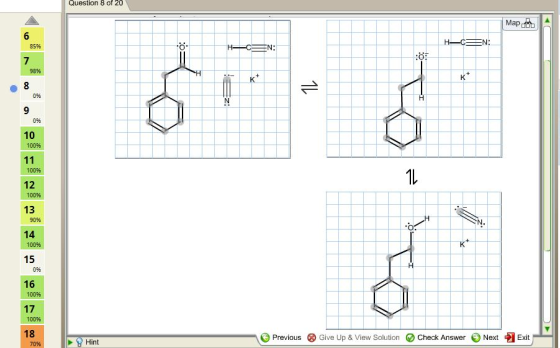
Complete the mechanism for the following reaction of benzaldehyde dissolved in dry ethanol bubbled with HCl(g) by adding any missing atoms, bonds, charges, non-bonding electrons, and curved arrows. Select the name that best describes the final product.
Homework Answers

Add Answer to:
Complete the mechanism for the following reaction of
benzaldehyde dissolved in dry ethanol bubbled with HCl(g)...
Complete the mechanism for the following reaction of acetone dissolved in dry ethanol bubbled with HCl(g)...
 Complete the mechanism for the following reaction of acetone
dissolved in dry ethanol bubbled with HCl(g) by adding any missing
atoms, bonds, charges, nonbonding electrons and curved arrows.
Select the name that best describes the final product. and Select
the choice that best describes the product formed in the reaction
(1 gem-diol, 2 gem-diol, hemicetal or acetal)
Complete the mechanism for the following reaction of acetone
dissolved in dry ethanol bubbled with HCl(g) by adding any missing
atoms, bonds, charges, nonbonding electrons and curved arrows.
Select the name that best describes the final product. and Select
the choice that best describes the product formed in the reaction
(1 gem-diol, 2 gem-diol, hemicetal or acetal)
Complete the electron pushing mechanism for the formation of the major product in the following reaction...
 Complete the electron pushing mechanism for the formation of the major product in the following reaction by adding any missing charges, atoms, bonds, non-bonding electrons, and curved arrows. Predict all the products of the reaction.
Complete the electron pushing mechanism for the formation of the major product in the following reaction by adding any missing charges, atoms, bonds, non-bonding electrons, and curved arrows. Predict all the products of the reaction.
Complete the electron pushing mechanism for the formation of the major product in the following reaction by adding any missing charges, atoms, bonds, non-bonding electrons, and curved arrows. Predict all the products of the reaction.
Complete the electron pushing mechanism for the formation of the major product in the following reaction...
 Complete the electron pushing mechanism for the formation of the major product in the following reaction by adding any missing charges, atoms, bonds, non-bonding electrons, and curved arrows. Predict all the products of the reaction.
Complete the electron-pushing mechanism for the following reaction with any missing atoms, bonds, charges, non-bonding electrons...
 Complete the electron-pushing mechanism for the following
reaction with any missing atoms, bonds, charges, non-bonding
electrons and curved arrows and select the type of final product
formed below.
Complete the electron-pushing mechanism for the following
reaction with any missing atoms, bonds, charges, non-bonding
electrons and curved arrows and select the type of final product
formed below.
Complete the mechanism of the initial step of the reaction of the alkyl halide with sodium...
 Complete the mechanism of the initial step of the reaction of the alkyl halide with sodium azide by adding curved arrows. Complete the product structure by adding any missing atoms, bonds, charges, and nonbonding electrons. Omit curved arrows. In a subsequent step, lithium aluminum hydride (LAH) is added to yield the final products. Predict the organic product of the LAH reduction; include non-bonding electrons. Do not include any inorganic products.
Complete the mechanism for the following reaction by adding the missing bonds, charges, non-bonding electrons, and curv...
 Complete the mechanism for the following reaction by adding the
missing bonds, charges, non-bonding electrons, and curved
arrows.
Complete the mechanism for the following reaction by adding the missing bonds, charges, nonbonding electrons and curved arrows. Draw only one curved arrow. Omit H2O
Complete the mechanism for the following reaction by adding the
missing bonds, charges, non-bonding electrons, and curved
arrows.
Complete the mechanism for the following reaction by adding the missing bonds, charges, nonbonding electrons and curved arrows. Draw only one curved arrow. Omit H2O
Complete the mechanism for the following reaction by adding the missing bonds, charges, non bonding electrons,...
 Complete the mechanism for the following reaction by adding the missing bonds, charges, non bonding electrons, and curved arrows.
Complete the mechanism for the following amide base catalyzed reaction by adding any missing atoms, bonds,...
 Complete the mechanism for the following amide base catalyzed
reaction by adding any missing atoms, bonds, charges, curved
arrows, and non-bonding electrons. The reaction is quenched with
water.
Print CalculatorPeriodic Table Question 8 of 10 click to edit Na Na Previous Check Answer NextFvit
Complete the mechanism for the following amide base catalyzed
reaction by adding any missing atoms, bonds, charges, curved
arrows, and non-bonding electrons. The reaction is quenched with
water.
Print CalculatorPeriodic Table Question 8 of 10 click to edit Na Na Previous Check Answer NextFvit
Complete the electron pushing mechanism for the formation of the major product in the following reaction...
 Complete the electron pushing mechanism for the formation of the major product in the following reaction by adding any missing charges, atoms, bonds, nonbonding electrons, and curved arrows. Predict all the products of the reaction.
Predict the product of the conjugate addition below and then complete the mechanism of the reaction...
 Predict the product of the conjugate addition below and then complete the mechanism of the reaction 1) CN" 2) H30 Complete the mechanism for the conjugate addition by adding the missing curved arrows, bonds, atoms, charges and nonbonding electrons. Use the skeleton provided in each subsequent box to help guide whi bonds are formed/broken. :: از سهم امیر ZEC ON 30H final product
 Complete the mechanism for the following reaction of acetone
dissolved in dry ethanol bubbled with HCl(g) by adding any missing
atoms, bonds, charges, nonbonding electrons and curved arrows.
Select the name that best describes the final product. and Select
the choice that best describes the product formed in the reaction
(1 gem-diol, 2 gem-diol, hemicetal or acetal)
Complete the mechanism for the following reaction of acetone
dissolved in dry ethanol bubbled with HCl(g) by adding any missing
atoms, bonds, charges, nonbonding electrons and curved arrows.
Select the name that best describes the final product. and Select
the choice that best describes the product formed in the reaction
(1 gem-diol, 2 gem-diol, hemicetal or acetal)
 Complete the electron pushing mechanism for the formation of the major product in the following reaction by adding any missing charges, atoms, bonds, non-bonding electrons, and curved arrows. Predict all the products of the reaction.
Complete the electron pushing mechanism for the formation of the major product in the following reaction by adding any missing charges, atoms, bonds, non-bonding electrons, and curved arrows. Predict all the products of the reaction.
Complete the electron pushing mechanism for the formation of the major product in the following reaction by adding any missing charges, atoms, bonds, non-bonding electrons, and curved arrows. Predict all the products of the reaction.
 Complete the electron pushing mechanism for the formation of the major product in the following reaction by adding any missing charges, atoms, bonds, non-bonding electrons, and curved arrows. Predict all the products of the reaction.
 Complete the electron-pushing mechanism for the following
reaction with any missing atoms, bonds, charges, non-bonding
electrons and curved arrows and select the type of final product
formed below.
Complete the electron-pushing mechanism for the following
reaction with any missing atoms, bonds, charges, non-bonding
electrons and curved arrows and select the type of final product
formed below.
 Complete the mechanism of the initial step of the reaction of the alkyl halide with sodium azide by adding curved arrows. Complete the product structure by adding any missing atoms, bonds, charges, and nonbonding electrons. Omit curved arrows. In a subsequent step, lithium aluminum hydride (LAH) is added to yield the final products. Predict the organic product of the LAH reduction; include non-bonding electrons. Do not include any inorganic products.
 Complete the mechanism for the following reaction by adding the
missing bonds, charges, non-bonding electrons, and curved
arrows.
Complete the mechanism for the following reaction by adding the missing bonds, charges, nonbonding electrons and curved arrows. Draw only one curved arrow. Omit H2O
Complete the mechanism for the following reaction by adding the
missing bonds, charges, non-bonding electrons, and curved
arrows.
Complete the mechanism for the following reaction by adding the missing bonds, charges, nonbonding electrons and curved arrows. Draw only one curved arrow. Omit H2O
 Complete the mechanism for the following reaction by adding the missing bonds, charges, non bonding electrons, and curved arrows.
 Complete the mechanism for the following amide base catalyzed
reaction by adding any missing atoms, bonds, charges, curved
arrows, and non-bonding electrons. The reaction is quenched with
water.
Print CalculatorPeriodic Table Question 8 of 10 click to edit Na Na Previous Check Answer NextFvit
Complete the mechanism for the following amide base catalyzed
reaction by adding any missing atoms, bonds, charges, curved
arrows, and non-bonding electrons. The reaction is quenched with
water.
Print CalculatorPeriodic Table Question 8 of 10 click to edit Na Na Previous Check Answer NextFvit
 Complete the electron pushing mechanism for the formation of the major product in the following reaction by adding any missing charges, atoms, bonds, nonbonding electrons, and curved arrows. Predict all the products of the reaction.
 Predict the product of the conjugate addition below and then complete the mechanism of the reaction 1) CN" 2) H30 Complete the mechanism for the conjugate addition by adding the missing curved arrows, bonds, atoms, charges and nonbonding electrons. Use the skeleton provided in each subsequent box to help guide whi bonds are formed/broken. :: از سهم امیر ZEC ON 30H final product
Most questions answered within 3 hours.
-
Where is the error in this code sequence?
String s1 = "Hello";
String s2 = "ello";...
asked 10 months ago -
Financial data for Joel de Paris, Inc., for last year
follow:
Joel de Paris, Inc.
Balance...
asked 10 months ago -
Consider this reaction:
Al2(SO4)3 (aq)+ BaCl3
(aq) Al2Cl6 (aq)- +
3BaSO4(s) . What is the...
asked 10 months ago -
Suppose that Savneet is considering increasing her
recent random sample from 20 car rentals to 40...
asked 10 months ago -
Trucks arrive at an unloading terminal at an average rate of 120
per hour.
Trucks arrive...
asked 10 months ago -
Why are methanol and ethanol completely soluble in water while
octanol is not very little soluble....
asked 10 months ago -
A facilities manager at a university reads in a research report
that the mean amount of...
asked 10 months ago -
When the CuSO4 is rehydrated by adding water to the anhydrous
compound, is this an endothermic...
asked 10 months ago -
A ray of sunlight is passing from diamond into crown glass; the
angle of incidence is...
asked 10 months ago -
A block of mass 0.249 kg is placed on top of a light, vertical
spring of...
asked 10 months ago -
how do the kidneys compensate in the presences of acidosis
a) trigger hyperventilate
b) reserve acid...
asked 10 months ago -
Question 501 pts
The rental rate of capital to the firm increases. Which of the
following...
asked 10 months ago