You are caring for a patient with severe sepsis and third-degree heart block. The patient is...
You are caring for a patient with severe sepsis and third-degree heart block. The patient is hypotensive. The treatment for this life-threatening rhythm change includes:
|
a. chest compressions. |
|
b. defibrillation. |
|
c. norepinephrine infusion. |
|
d. transcutaneous pacing. |
Homework Answers
c, Norepinephrine infusion
It is catacholamine family that functions in the
brain and body as a hormone and neurotransmitter.
Norepinephrin infusion we use for hypotension,sepsis and cardiac
arrest patient..For use in patient during sepsis or septic shock to
increase blood pressure.
Add Answer to:
You are caring for a patient with severe sepsis and third-degree
heart block. The patient is...
This is an example of what type of heart rhythm? sal-ns-acls Asystole Ventricular fibrillation Normal sinus...
This is an example of what type of heart rhythm? sal-ns-acls Asystole Ventricular fibrillation Normal sinus rhythm Atrial fibrillation Thirty ____________ and two ____________ equal one cycle of CPR. Chest compressions, ventilations Chest compressions, pulse checks Ventilations, compressions Chest compressions, jaw lifts Which of the following can be a result of prolonged asystole? Severe brain damage Lack of oxygen to vital organs Severe myocardial ischemia All of the above The following drugs and/or interventions may be used in the ACS...
M 23. A telemetry strip display a regular rate of 84, with a PR interval of...
 M 23. A telemetry strip display a regular rate of 84, with a PR interval of U.20C nplex measuring 0,08 seconds and an A V ratio of 1:1. The nurse would document this rhythm as a. Sinus rhythm with bundle branch block b. Sinus rhythm with 1" degree AV block c. Sinus rhythm with frequent PVC's d. Sinus rhythm no ectopy noted 24. A patient on telemetry is in complete heart block, and is hypotensive and complaining of dizziness. Which...
You are caring for a patient with severe sepsis and ARDS. The lab results show that her INR and aPTT are elevated while...
You are caring for a patient with severe sepsis and ARDS. The lab results show that her INR and aPTT are elevated while her platelet count and fibrinogen are elevated. The laboratory calls and reports the D-dimer is severely elevated. Your next action is to report your suspicion for: a. DIC. b. HIT. c. ITP. d. TTP.
please answe only which one is myocardial infarction and third degree heart block Match the following...
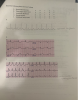 please answe only which one is myocardial infarction and third
degree heart block
Match the following EKGs with their findings C A Myocardial infarction B. Third degree heart block Ventricular fibrillation D. Normal rhythm E Ventricular tachycardia u normal rhythm مسلسللسردلالالالالی مرسال u ventricular Facinycardio τσΙτ Γ Λ Courtesy of Jason E. Rooder. OCT. CRAI wwwwwwwwwwwwwwwwwwwww ummmmmmllimmmmmmmmmmmmm numme wwwwwwwwww wwwwww mmmmm ventricular Fibrillation
please answe only which one is myocardial infarction and third
degree heart block
Match the following EKGs with their findings C A Myocardial infarction B. Third degree heart block Ventricular fibrillation D. Normal rhythm E Ventricular tachycardia u normal rhythm مسلسللسردلالالالالی مرسال u ventricular Facinycardio τσΙτ Γ Λ Courtesy of Jason E. Rooder. OCT. CRAI wwwwwwwwwwwwwwwwwwwww ummmmmmllimmmmmmmmmmmmm numme wwwwwwwwww wwwwww mmmmm ventricular Fibrillation
I need all the questions to answer, please True or False: Synchronized cardioversion is appropriate for...
 I need all the questions to answer, please
True or False: Synchronized cardioversion is appropriate for
treating an unknown wide complex tachycardia.
True
False
True or False: A nasopharyngeal airway (NPA) can be used on a
semi-conscious or conscious individual, while an oropharyngeal
airway (OPA) should only be used on an unconscious individual.
True
False
True or False: Any bradycardia less than 60 beats per minute is
a pathologic event.
True
False
True or False: Transcutaneous pacing should be used...
I need all the questions to answer, please
True or False: Synchronized cardioversion is appropriate for
treating an unknown wide complex tachycardia.
True
False
True or False: A nasopharyngeal airway (NPA) can be used on a
semi-conscious or conscious individual, while an oropharyngeal
airway (OPA) should only be used on an unconscious individual.
True
False
True or False: Any bradycardia less than 60 beats per minute is
a pathologic event.
True
False
True or False: Transcutaneous pacing should be used...
True or False: Synchronized cardioversion is appropriate for treating an unknown wide complex tachycardia. True False...
 True or False: Synchronized cardioversion is appropriate for
treating an unknown wide complex tachycardia.
True
False
True or False: A nasopharyngeal airway (NPA) can be used on a
semi-conscious or conscious individual, while an oropharyngeal
airway (OPA) should only be used on an unconscious individual.
True
False
True or False: Any bradycardia less than 60 beats per minute is
a pathologic event.
True
False
True or False: Transcutaneous pacing should be used on an
individual with bradycardia and inadequate perfusion...
True or False: Synchronized cardioversion is appropriate for
treating an unknown wide complex tachycardia.
True
False
True or False: A nasopharyngeal airway (NPA) can be used on a
semi-conscious or conscious individual, while an oropharyngeal
airway (OPA) should only be used on an unconscious individual.
True
False
True or False: Any bradycardia less than 60 beats per minute is
a pathologic event.
True
False
True or False: Transcutaneous pacing should be used on an
individual with bradycardia and inadequate perfusion...
True or False: A nasopharyngeal airway (NPA) can be used on a semi-conscious or conscious individual,...
True or False: A nasopharyngeal airway (NPA) can be used on a semi-conscious or conscious individual, while an oropharyngeal airway (OPA) should only be used on an unconscious individual. True False True or False: An individual in PEA has an organized cardiac rhythm on ECG. True False True or False: Symptomatic bradycardia and poor perfusion may degrade into cardiac arrest. True False True or False: The definition of stable tachycardia is a fast but constant heart rate between 80 and...
Match the following EKGs with their findings C A Myocardial infarction B. Third degree heart block...
 Match the following EKGs with their findings C A Myocardial infarction B. Third degree heart block Ventricular fibrillation D. Normal rhythm E Ventricular tachycardia an normal rhythm ممممم اساسا مسلسالسردی لالاااالی مرسال w ventricular tachycardia τσΙτ ΓΛ Courtesy of lasen E. Roediger. CCTCRA wwwwwwwwwwwwwwwwwwwany ummmmmmmmmmmmmmmmmmm nammu M mwwwwwwww mmm ventricular Fibrillation
What does the PR interval on an ECG reflect? T wave inversion Opening of mitral valve...
 What does the PR interval on an ECG reflect?
T wave inversion
Opening of mitral valve between the left atrium and left
ventricle
Time between atrial and ventricular contraction
Width of septum
Which wave represents repolarization of the ventricles?
P wave
PR interval
T wave
QRS complex
You are alone when you encounter an individual in cardiac
arrest. They are not breathing, have no pulse, and have no
suspected cervical spine trauma. Which maneuver should you use to
open the...
What does the PR interval on an ECG reflect?
T wave inversion
Opening of mitral valve between the left atrium and left
ventricle
Time between atrial and ventricular contraction
Width of septum
Which wave represents repolarization of the ventricles?
P wave
PR interval
T wave
QRS complex
You are alone when you encounter an individual in cardiac
arrest. They are not breathing, have no pulse, and have no
suspected cervical spine trauma. Which maneuver should you use to
open the...
DU MJL JU 19 17. You are caring for a patient in skeletal traction. Which intervention...
 DU MJL JU 19 17. You are caring for a patient in skeletal traction. Which intervention can you delegate to an experienced nurse's aide? a. Assist the patient with using the bed pan b. Release the skeletal traction to assess skin integrity C. Evaluate the effectiveness of pain medication d. Assess for pedal pulses and swelling 18. A 65 year-old patient arrives to the ED with complaints of 8/10 pain to the right foot and is diagnosed with acute gout....
 M 23. A telemetry strip display a regular rate of 84, with a PR interval of U.20C nplex measuring 0,08 seconds and an A V ratio of 1:1. The nurse would document this rhythm as a. Sinus rhythm with bundle branch block b. Sinus rhythm with 1" degree AV block c. Sinus rhythm with frequent PVC's d. Sinus rhythm no ectopy noted 24. A patient on telemetry is in complete heart block, and is hypotensive and complaining of dizziness. Which...
 please answe only which one is myocardial infarction and third
degree heart block
Match the following EKGs with their findings C A Myocardial infarction B. Third degree heart block Ventricular fibrillation D. Normal rhythm E Ventricular tachycardia u normal rhythm مسلسللسردلالالالالی مرسال u ventricular Facinycardio τσΙτ Γ Λ Courtesy of Jason E. Rooder. OCT. CRAI wwwwwwwwwwwwwwwwwwwww ummmmmmllimmmmmmmmmmmmm numme wwwwwwwwww wwwwww mmmmm ventricular Fibrillation
please answe only which one is myocardial infarction and third
degree heart block
Match the following EKGs with their findings C A Myocardial infarction B. Third degree heart block Ventricular fibrillation D. Normal rhythm E Ventricular tachycardia u normal rhythm مسلسللسردلالالالالی مرسال u ventricular Facinycardio τσΙτ Γ Λ Courtesy of Jason E. Rooder. OCT. CRAI wwwwwwwwwwwwwwwwwwwww ummmmmmllimmmmmmmmmmmmm numme wwwwwwwwww wwwwww mmmmm ventricular Fibrillation
 I need all the questions to answer, please
True or False: Synchronized cardioversion is appropriate for
treating an unknown wide complex tachycardia.
True
False
True or False: A nasopharyngeal airway (NPA) can be used on a
semi-conscious or conscious individual, while an oropharyngeal
airway (OPA) should only be used on an unconscious individual.
True
False
True or False: Any bradycardia less than 60 beats per minute is
a pathologic event.
True
False
True or False: Transcutaneous pacing should be used...
I need all the questions to answer, please
True or False: Synchronized cardioversion is appropriate for
treating an unknown wide complex tachycardia.
True
False
True or False: A nasopharyngeal airway (NPA) can be used on a
semi-conscious or conscious individual, while an oropharyngeal
airway (OPA) should only be used on an unconscious individual.
True
False
True or False: Any bradycardia less than 60 beats per minute is
a pathologic event.
True
False
True or False: Transcutaneous pacing should be used...
 True or False: Synchronized cardioversion is appropriate for
treating an unknown wide complex tachycardia.
True
False
True or False: A nasopharyngeal airway (NPA) can be used on a
semi-conscious or conscious individual, while an oropharyngeal
airway (OPA) should only be used on an unconscious individual.
True
False
True or False: Any bradycardia less than 60 beats per minute is
a pathologic event.
True
False
True or False: Transcutaneous pacing should be used on an
individual with bradycardia and inadequate perfusion...
True or False: Synchronized cardioversion is appropriate for
treating an unknown wide complex tachycardia.
True
False
True or False: A nasopharyngeal airway (NPA) can be used on a
semi-conscious or conscious individual, while an oropharyngeal
airway (OPA) should only be used on an unconscious individual.
True
False
True or False: Any bradycardia less than 60 beats per minute is
a pathologic event.
True
False
True or False: Transcutaneous pacing should be used on an
individual with bradycardia and inadequate perfusion...
 Match the following EKGs with their findings C A Myocardial infarction B. Third degree heart block Ventricular fibrillation D. Normal rhythm E Ventricular tachycardia an normal rhythm ممممم اساسا مسلسالسردی لالاااالی مرسال w ventricular tachycardia τσΙτ ΓΛ Courtesy of lasen E. Roediger. CCTCRA wwwwwwwwwwwwwwwwwwwany ummmmmmmmmmmmmmmmmmm nammu M mwwwwwwww mmm ventricular Fibrillation
 What does the PR interval on an ECG reflect?
T wave inversion
Opening of mitral valve between the left atrium and left
ventricle
Time between atrial and ventricular contraction
Width of septum
Which wave represents repolarization of the ventricles?
P wave
PR interval
T wave
QRS complex
You are alone when you encounter an individual in cardiac
arrest. They are not breathing, have no pulse, and have no
suspected cervical spine trauma. Which maneuver should you use to
open the...
What does the PR interval on an ECG reflect?
T wave inversion
Opening of mitral valve between the left atrium and left
ventricle
Time between atrial and ventricular contraction
Width of septum
Which wave represents repolarization of the ventricles?
P wave
PR interval
T wave
QRS complex
You are alone when you encounter an individual in cardiac
arrest. They are not breathing, have no pulse, and have no
suspected cervical spine trauma. Which maneuver should you use to
open the...
 DU MJL JU 19 17. You are caring for a patient in skeletal traction. Which intervention can you delegate to an experienced nurse's aide? a. Assist the patient with using the bed pan b. Release the skeletal traction to assess skin integrity C. Evaluate the effectiveness of pain medication d. Assess for pedal pulses and swelling 18. A 65 year-old patient arrives to the ED with complaints of 8/10 pain to the right foot and is diagnosed with acute gout....
Most questions answered within 3 hours.
-
Where is the error in this code sequence?
String s1 = "Hello";
String s2 = "ello";...
asked 10 months ago -
Financial data for Joel de Paris, Inc., for last year
follow:
Joel de Paris, Inc.
Balance...
asked 10 months ago -
Consider this reaction:
Al2(SO4)3 (aq)+ BaCl3
(aq) Al2Cl6 (aq)- +
3BaSO4(s) . What is the...
asked 10 months ago -
Suppose that Savneet is considering increasing her
recent random sample from 20 car rentals to 40...
asked 10 months ago -
Trucks arrive at an unloading terminal at an average rate of 120
per hour.
Trucks arrive...
asked 10 months ago -
Why are methanol and ethanol completely soluble in water while
octanol is not very little soluble....
asked 10 months ago -
A facilities manager at a university reads in a research report
that the mean amount of...
asked 10 months ago -
When the CuSO4 is rehydrated by adding water to the anhydrous
compound, is this an endothermic...
asked 10 months ago -
A ray of sunlight is passing from diamond into crown glass; the
angle of incidence is...
asked 10 months ago -
A block of mass 0.249 kg is placed on top of a light, vertical
spring of...
asked 10 months ago -
how do the kidneys compensate in the presences of acidosis
a) trigger hyperventilate
b) reserve acid...
asked 10 months ago -
Question 501 pts
The rental rate of capital to the firm increases. Which of the
following...
asked 10 months ago