Consider the following information on Stocks I and II: State of Economy Probability of State of...
| Consider the following information on Stocks I and II: |
| State of Economy | Probability of State of Economy |
Rate of Return if State Occurs |
|
| Stock I | Stock II | ||
| Recession | .25 | .04 | −.22 |
| Normal | .60 | .22 | .15 |
| Irrational exuberance | .15 | .16 | .45 |
| The market risk premium is 7 percent, and the risk-free rate is 4 percent. |
| a. |
Calculate the beta of each stock. (Do not round intermediate calculations and round your answers to 2 decimal places, e.g., 32.16.) |
| b. | Calculate the standard deviation of each stock. (Do not round intermediate calculations and enter your answers as a percent rounded to 2 decimal places, e.g., 32.16.) |
| c. | Which stock has the most systematic risk? |
| d. | Which one has the most unsystematic risk? |
| e. | Which stock is “riskier”? |
Homework Answers
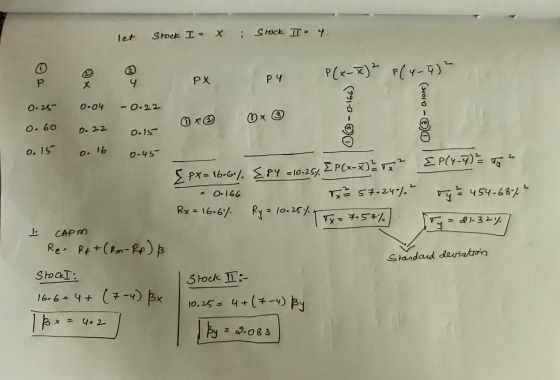
1. The beta of stock I = 4.2
The beta of stock II = 2.083
2. STANDARD DEVIATION OF STOCK I=7.54%
STANDARD DEVIATION OF STOCK II= 21.32%
3. The stock I has the most systematic risk because it has the
highest beta.
4. Stock II has the most unsystematic risk because it has an
overall high risk (s.d or variance) and less systematic risk.
5. Stock II has the risker because it has an overall high risk
(that is high standard deviation and variance).
Add Answer to:
Consider the following information on Stocks I and II:
State of Economy
Probability of
State of...
Consider the following information on Stocks I and II: State of Economy Probability of State of...
Consider the following information on Stocks I and II: State of Economy Probability of State of Economy Rate of Return if State Occurs Stock I Stock II Recession .25 .04 −.22 Normal .60 .22 .15 Irrational exuberance .15 .16 .45 The market risk premium is 7 percent, and the risk-free rate is 4 percent. a. Calculate the beta of each stock. (Do not round intermediate calculations and round your answers to 2 decimal places, e.g., 32.16.) b....
Consider the following information on Stocks I and II: State of Economy Probability of State of...
Consider the following information on Stocks I and II: State of Economy Probability of State of Economy Rate of Return if State Occurs Stock I Stock II Recession .25 .04 −.22 Normal .60 .22 .15 Irrational exuberance .15 .16 .45 The market risk premium is 7 percent, and the risk-free rate is 4 percent. a. Calculate the beta of each stock. (Do not round intermediate calculations and round your answers to 2 decimal places, e.g., 32.16.) b....
Consider the following information on Stocks I and II: Probability of State of Economy .25 .60...
 Consider the following information on Stocks I and II: Probability of State of Economy .25 .60 State of Economy Recession Normal Irrational exuberance Rate of Return if State Occurs Stock Stock Il -22 .22 1.04 .15 45 The market risk premium is 7 percent, and the risk-free rate is 4 percent. a. Calculate the beta of each stock. (Do not round intermediate calculations and round your answers to 2 decimal places, e.g., 32.16.) b. Calculate the standard deviation of each...
Consider the following information on Stocks I and II: Probability of State of Economy .25 .60...
 Consider the following information on Stocks I and II: Probability of State of Economy .25 .60 State of Economy Recession Normal Irrational exuberance Rate of Return if State Occurs Stock Stock Il -22 .22 1.04 .15 45 The market risk premium is 7 percent, and the risk-free rate is 4 percent. a. Calculate the beta of each stock. (Do not round intermediate calculations and round your answers to 2 decimal places, e.g., 32.16.) b. Calculate the standard deviation of each...
Consider the following information on Stocks I and II: Probability of State of Economy Rate of...
 Consider the following information on Stocks I and II: Probability of State of Economy Rate of Return if State Occurs Stock Stock Il -22 .15 State of Economy Recession Normal Irrational exuberance .04 22 .45 The market risk premium is 7 percent, and the risk-free rate is 4 percent. a. Calculate the beta of each stock. (Do not round intermediate calculations your answers to 2 decimal places, e.g., 32.16.) b. Calculate the standard deviation of each stock. (Do not round...
Consider the following information on Stocks I and II: Rate of Return if State Probability of...
 Consider the following information on Stocks I and II: Rate of Return if State Probability of Occurs State of State of Economy Economy Stock! Stock II Recession .27 .030 --22 Normal .62 .330 .14 Irrational .11 .190 42 exuberance The market risk premium is 11.2 percent, and the risk-free rate is 4.2 percent. a. Calculate the beta and standard deviation of Stock I. (Do not round Intermediate calculations. Enter the standard deviation as a percent and round both answers to...
Consider the following information on Stocks I and II: Probability of Rate of Retum if State...
 Consider the following information on Stocks I and II: Probability of Rate of Retum if State State of Occurs State of Economy Economy Stock Stock | Recession Normal Irrational 45 exuberance The market risk premium is 7 percent, and the risk-free rate is 4 percent. a. Calculate the beta of each stock. (Do not round intermediate caldalations and round your answers to 2 decimal places, e.g., 32.16.) b. Calculate the standard deviation of each stock. (Do not round intermediate calculations...
onsider the following information on Stocks I and II: Rate of Return if State Occurs Probability...
 onsider the following information on Stocks I and II: Rate of Return if State Occurs Probability of State of Economy Stock Il Stock I .055 State of Economy Recession Normal Irrational exuberance 24 .64 - 39 365 31 49 12 .225 The market risk premium is 11.9 percent, and the risk-free rate is 4.9 percent a. Calculate the beta and standard deviation of Stock I. (Do not round intermediate calculations. Enter the standard deviation as a percent and round both...
Consider the following information on Stocks I and II
 Consider the following information on Stocks I and II: State of EconomyProbability ofState of EconomyRate of Return if State OccursStock IStock II Recession.26.025−.21 Normal.61.325.13 Irrational exuberance.13.185.41 The market risk premium is 11.1 percent, and the risk-free rate is 4.1 percent.a.Calculate the beta and standard deviation of Stock I. (Do not round intermediate calculations. Enter the standard deviation as a percent and round both answers to 2 decimal places, e.g., 32.16.)b.Calculate the beta and standard deviation of Stock II. (Do not round intermediate calculations. Enter...
Consider the following information about Stocks I and II Consider the following information on Stocks I...
 Consider the following information about Stocks I and II
Consider the following information on Stocks I and Il: Probability of State of Economy Rate of Return if State Occurs Stock Stock II State of Economy Recession Normal Irrational exuberance 20 55 25 02 32 18 -20 12 40 The market risk premium is 7 percent, and the risk-free rate is 4 percent Requirement 1: (a) Calculate the beta and standard deviation of Stock I. (Do not round intermediate calculations. Enter...
Consider the following information about Stocks I and II
Consider the following information on Stocks I and Il: Probability of State of Economy Rate of Return if State Occurs Stock Stock II State of Economy Recession Normal Irrational exuberance 20 55 25 02 32 18 -20 12 40 The market risk premium is 7 percent, and the risk-free rate is 4 percent Requirement 1: (a) Calculate the beta and standard deviation of Stock I. (Do not round intermediate calculations. Enter...
 Consider the following information on Stocks I and II: Probability of State of Economy .25 .60 State of Economy Recession Normal Irrational exuberance Rate of Return if State Occurs Stock Stock Il -22 .22 1.04 .15 45 The market risk premium is 7 percent, and the risk-free rate is 4 percent. a. Calculate the beta of each stock. (Do not round intermediate calculations and round your answers to 2 decimal places, e.g., 32.16.) b. Calculate the standard deviation of each...
 Consider the following information on Stocks I and II: Probability of State of Economy .25 .60 State of Economy Recession Normal Irrational exuberance Rate of Return if State Occurs Stock Stock Il -22 .22 1.04 .15 45 The market risk premium is 7 percent, and the risk-free rate is 4 percent. a. Calculate the beta of each stock. (Do not round intermediate calculations and round your answers to 2 decimal places, e.g., 32.16.) b. Calculate the standard deviation of each...
 Consider the following information on Stocks I and II: Probability of State of Economy Rate of Return if State Occurs Stock Stock Il -22 .15 State of Economy Recession Normal Irrational exuberance .04 22 .45 The market risk premium is 7 percent, and the risk-free rate is 4 percent. a. Calculate the beta of each stock. (Do not round intermediate calculations your answers to 2 decimal places, e.g., 32.16.) b. Calculate the standard deviation of each stock. (Do not round...
 Consider the following information on Stocks I and II: Rate of Return if State Probability of Occurs State of State of Economy Economy Stock! Stock II Recession .27 .030 --22 Normal .62 .330 .14 Irrational .11 .190 42 exuberance The market risk premium is 11.2 percent, and the risk-free rate is 4.2 percent. a. Calculate the beta and standard deviation of Stock I. (Do not round Intermediate calculations. Enter the standard deviation as a percent and round both answers to...
 Consider the following information on Stocks I and II: Probability of Rate of Retum if State State of Occurs State of Economy Economy Stock Stock | Recession Normal Irrational 45 exuberance The market risk premium is 7 percent, and the risk-free rate is 4 percent. a. Calculate the beta of each stock. (Do not round intermediate caldalations and round your answers to 2 decimal places, e.g., 32.16.) b. Calculate the standard deviation of each stock. (Do not round intermediate calculations...
 onsider the following information on Stocks I and II: Rate of Return if State Occurs Probability of State of Economy Stock Il Stock I .055 State of Economy Recession Normal Irrational exuberance 24 .64 - 39 365 31 49 12 .225 The market risk premium is 11.9 percent, and the risk-free rate is 4.9 percent a. Calculate the beta and standard deviation of Stock I. (Do not round intermediate calculations. Enter the standard deviation as a percent and round both...
 Consider the following information about Stocks I and II
Consider the following information on Stocks I and Il: Probability of State of Economy Rate of Return if State Occurs Stock Stock II State of Economy Recession Normal Irrational exuberance 20 55 25 02 32 18 -20 12 40 The market risk premium is 7 percent, and the risk-free rate is 4 percent Requirement 1: (a) Calculate the beta and standard deviation of Stock I. (Do not round intermediate calculations. Enter...
Consider the following information about Stocks I and II
Consider the following information on Stocks I and Il: Probability of State of Economy Rate of Return if State Occurs Stock Stock II State of Economy Recession Normal Irrational exuberance 20 55 25 02 32 18 -20 12 40 The market risk premium is 7 percent, and the risk-free rate is 4 percent Requirement 1: (a) Calculate the beta and standard deviation of Stock I. (Do not round intermediate calculations. Enter...
Most questions answered within 3 hours.
-
Where is the error in this code sequence?
String s1 = "Hello";
String s2 = "ello";...
asked 10 months ago -
Financial data for Joel de Paris, Inc., for last year
follow:
Joel de Paris, Inc.
Balance...
asked 10 months ago -
Consider this reaction:
Al2(SO4)3 (aq)+ BaCl3
(aq) Al2Cl6 (aq)- +
3BaSO4(s) . What is the...
asked 10 months ago -
Suppose that Savneet is considering increasing her
recent random sample from 20 car rentals to 40...
asked 10 months ago -
Trucks arrive at an unloading terminal at an average rate of 120
per hour.
Trucks arrive...
asked 10 months ago -
Why are methanol and ethanol completely soluble in water while
octanol is not very little soluble....
asked 10 months ago -
A facilities manager at a university reads in a research report
that the mean amount of...
asked 10 months ago -
When the CuSO4 is rehydrated by adding water to the anhydrous
compound, is this an endothermic...
asked 10 months ago -
A ray of sunlight is passing from diamond into crown glass; the
angle of incidence is...
asked 10 months ago -
A block of mass 0.249 kg is placed on top of a light, vertical
spring of...
asked 10 months ago -
how do the kidneys compensate in the presences of acidosis
a) trigger hyperventilate
b) reserve acid...
asked 10 months ago -
Question 501 pts
The rental rate of capital to the firm increases. Which of the
following...
asked 10 months ago