
Homework Answers
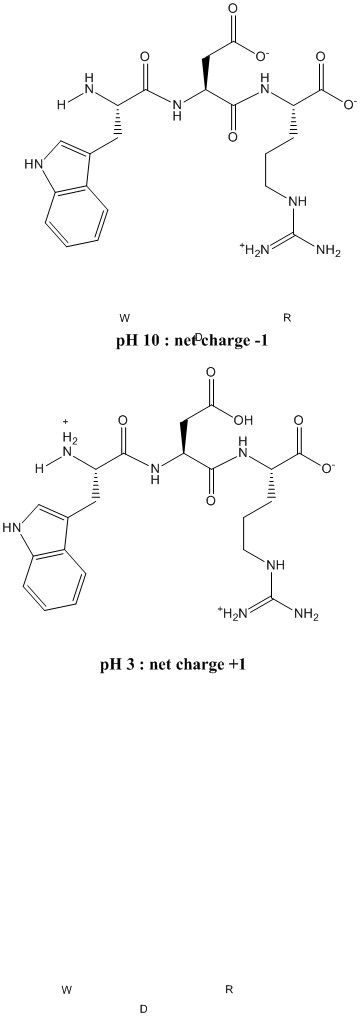
if pH < pKa then all the ionizable NH2 will be protonated and will exist as NH3+
if pH > pKa then all the ionizable COOH will be deprotonated and will exist as COO-
pKa of a-NH2 of Trp = 9.39
pKa of Asp side chain (COOH) = 3.86
pKa of alpha COOH of Arg : 2.17
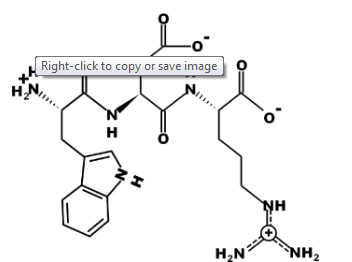
AT pH 10
According to HOMEWORKLIB POLICY only 1 question per post is allowed. please post the rest question seperately.
PLEASE LEAVE THE POSITIVE FEEDBACK IF YOU LIKE THE SOLUTION
Add Answer to:
draw the predominate form
1. Draw the predominate form that the following tripeptide will assume at...
Glycine (Gly) (Glu) Glutamic acid Phenylalanine (Phe) Leucine (Leu) (Asp) Aspartic acid Serine (Ser) Alanine (Ala)...
 Glycine (Gly) (Glu) Glutamic acid Phenylalanine (Phe) Leucine (Leu) (Asp) Aspartic acid Serine (Ser) Alanine (Ala) chou GU Tyrosine (Tyr) A с A Valine (Val) G U Cysteine (Cys) U G START HERE Typtophan (Trp) Arginine (Arg) A G U с A с Leucine (Leu) Serine (Ser) A с UGA Proline (Pro) Lysine (Lys) Asparagine (AST) Threonine (Thr) Methionine (Met) Isoleucine (lle) Arginine (Arg) Glutamine (Gin) Histidine (His) Кеу - Start codon - Stop codon The anticodon for CCA is...
Phenylalanin (Phe) Glycine (Gly) (Glu) Glutamic acid O Leucine (Leu) Serine (Ser) (Asp) Aspartic acid Alanine...
 Phenylalanin (Phe) Glycine (Gly) (Glu) Glutamic acid O Leucine (Leu) Serine (Ser) (Asp) Aspartic acid Alanine (Ala) coroca GU Tyrosine (Tyr) А с Valine (Val) G A G Cysteine (Cys) C U GTyptophan (Trp) START HERE Arginine (Arg) A G U A С Leucine (Leu) Serine (Ser) A с с poleo U G G A Proline (Pro) Lysine (Lys) Asparagine (Asri Threonine (Thr) Methionine (Met) Isoleucine (lle) Arginine (Arg) Glutamine (Gin) Histidine (His) Кеу - Start codon - Stop codon...
The DNA sequence below is copied from question 30 and has a mutation (highlighted in yellow)....
 The DNA sequence below is copied from question 30 and has a
mutation (highlighted in yellow).
TACGTACATACT
1) Transcribe the new sequence.
2) Translate the new sequence.
What is the mutation?
Original sequence:
TACGTCCATACT
Mutated sequence:
TACGTACATACT
(Glu) (Asp) Aspartic acid Glutamic acid Serine (Ser) Alanine (Ala) GU Jc Tyrosine (Tyr) A U Valine (Val) G А G Cysteine (Cys) с с U GTyptophan (Trp) START HERE Arginine (Arg) G U с A C Leucine (Leu) Serine (Ser) А с...
The DNA sequence below is copied from question 30 and has a
mutation (highlighted in yellow).
TACGTACATACT
1) Transcribe the new sequence.
2) Translate the new sequence.
What is the mutation?
Original sequence:
TACGTCCATACT
Mutated sequence:
TACGTACATACT
(Glu) (Asp) Aspartic acid Glutamic acid Serine (Ser) Alanine (Ala) GU Jc Tyrosine (Tyr) A U Valine (Val) G А G Cysteine (Cys) с с U GTyptophan (Trp) START HERE Arginine (Arg) G U с A C Leucine (Leu) Serine (Ser) А с...
The one-letter sequence is: WATER a) Draw the peptide (R-groups trans), indicating charges, in pr...
 The one-letter sequence is: WATER
a) Draw the peptide (R-groups trans), indicating charges, in
predominant form found at pH = 0.
b) What is the isoelectric point?
c) What is the average charge on the population of peptide
macromolecules at pH = 2.2?
d) What is the average charge on the population of peptide
macromolecules at pH = 12.5?
TABLE 4.1 Amino Acid Alanine Arginine Asparagine Aspartic acid Cysteine....« Glutamic acid Glutamine Glycine Histidine Isoleucine Leucine Lysine … Methionine Phenylalanine...
The one-letter sequence is: WATER
a) Draw the peptide (R-groups trans), indicating charges, in
predominant form found at pH = 0.
b) What is the isoelectric point?
c) What is the average charge on the population of peptide
macromolecules at pH = 2.2?
d) What is the average charge on the population of peptide
macromolecules at pH = 12.5?
TABLE 4.1 Amino Acid Alanine Arginine Asparagine Aspartic acid Cysteine....« Glutamic acid Glutamine Glycine Histidine Isoleucine Leucine Lysine … Methionine Phenylalanine...
1. A.) Draw the tripeptide corresponding to Cys-Met-Arg with the correct stereochemistry for L-amino acids found...
1. A.) Draw the tripeptide corresponding to Cys-Met-Arg with the correct stereochemistry for L-amino acids found in most proteins. B.) Draw the principle structural form the amino acid with the one-letter code of E. Assume that the pH of the solution is 7.4.
uestion Completion Status: QUESTION 1 What type of IPF would you expect from the following R...
 uestion Completion Status: QUESTION 1 What type of IPF would you expect from the following R groups in a tertiary structure of a prot Two cysteine residues A. LDF Serine and aspartic acid B. Ion-dipole Glutamic acid and Lysine C. covalent bond (disulfide) Leucine and Isoleucine D. ion-ion (salt bridge) QUESTION 2
The chemical structures of the 20 standard amino acids at pH 7, along with their 3...
 The chemical structures of the 20 standard amino acids at pH 7, along with their 3 and 1 letter codes, are givern in alphabetical order below. While the oxygen and nitrogen atoms of the peptide bonds may serve as a donor atom to complex a metal ion, very often the ligands for the metal come from the amino acid side chains. Takea few moments to examine the chemical structures of the different side chains. Circle the side chains that you...
1. Partial hydrolysis of lysozyme yielded an octapeptide that was later identified as the N-terminal segment of...
1. Partial hydrolysis of lysozyme yielded an octapeptide that was later identified as the N-terminal segment of the protein. From the following information, determine the sequence of this octapeptide. a. The following amino acids were identified after complete hydrolysis of the octapeptide: Arginine (Arg) Glycine (Gly) Phenylalanine (Phe) Cysteine (Cys) Leucine (Leu) Valine (Val) Glutamic Acid (Glu) Lysine (Lys) b. Treatment of the octapeptide with dinitroflurobenzene (Sanger reagent) followed by complete hydrolysis gave lysine (Lys) labeled with two dinitrophenyl (DNP) groups. c. Treatment of the octapeptide with trypsin gave lysine...
1. Partial hydrolysis of lysozyme yielded an octapeptide that was later identified as the N-terminal segment of...
1. Partial hydrolysis of lysozyme yielded an octapeptide that was later identified as the N-terminal segment of the protein. From the following information, determine the sequence of this octapeptide. a. The following amino acids were identified after complete hydrolysis of the octapeptide: Arginine (Arg) Glycine (Gly) Phenylalanine (Phe) Cysteine (Cys) Leucine (Leu) Valine (Val) Glutamic Acid (Glu) Lysine (Lys) b. Treatment of the octapeptide with dinitroflurobenzene (Sanger reagent) followed by complete hydrolysis gave lysine (Lys) labeled with two dinitrophenyl (DNP) groups. c. Treatment of the octapeptide with trypsin gave lysine...
1. Explain why polyaspartatic acid (a peptide containing only aspartic acid residues) does NOT form an...
1. Explain why polyaspartatic acid (a peptide containing only aspartic acid residues) does NOT form an alpha helix at pH 7.0 but can at pH 2. 6. 2. What kind of non-covalent interaction would the following pairs of amino acids have in the three dimensional structure of a protein at pH 7.0? a) His-Asp b) Tyr-Asp c) Val-Leu d) Trp-Gln 3. Explain how the difference in structure of hemoglobin and myoglobin contribute to their different functions.
 Glycine (Gly) (Glu) Glutamic acid Phenylalanine (Phe) Leucine (Leu) (Asp) Aspartic acid Serine (Ser) Alanine (Ala) chou GU Tyrosine (Tyr) A с A Valine (Val) G U Cysteine (Cys) U G START HERE Typtophan (Trp) Arginine (Arg) A G U с A с Leucine (Leu) Serine (Ser) A с UGA Proline (Pro) Lysine (Lys) Asparagine (AST) Threonine (Thr) Methionine (Met) Isoleucine (lle) Arginine (Arg) Glutamine (Gin) Histidine (His) Кеу - Start codon - Stop codon The anticodon for CCA is...
 Phenylalanin (Phe) Glycine (Gly) (Glu) Glutamic acid O Leucine (Leu) Serine (Ser) (Asp) Aspartic acid Alanine (Ala) coroca GU Tyrosine (Tyr) А с Valine (Val) G A G Cysteine (Cys) C U GTyptophan (Trp) START HERE Arginine (Arg) A G U A С Leucine (Leu) Serine (Ser) A с с poleo U G G A Proline (Pro) Lysine (Lys) Asparagine (Asri Threonine (Thr) Methionine (Met) Isoleucine (lle) Arginine (Arg) Glutamine (Gin) Histidine (His) Кеу - Start codon - Stop codon...
 The DNA sequence below is copied from question 30 and has a
mutation (highlighted in yellow).
TACGTACATACT
1) Transcribe the new sequence.
2) Translate the new sequence.
What is the mutation?
Original sequence:
TACGTCCATACT
Mutated sequence:
TACGTACATACT
(Glu) (Asp) Aspartic acid Glutamic acid Serine (Ser) Alanine (Ala) GU Jc Tyrosine (Tyr) A U Valine (Val) G А G Cysteine (Cys) с с U GTyptophan (Trp) START HERE Arginine (Arg) G U с A C Leucine (Leu) Serine (Ser) А с...
The DNA sequence below is copied from question 30 and has a
mutation (highlighted in yellow).
TACGTACATACT
1) Transcribe the new sequence.
2) Translate the new sequence.
What is the mutation?
Original sequence:
TACGTCCATACT
Mutated sequence:
TACGTACATACT
(Glu) (Asp) Aspartic acid Glutamic acid Serine (Ser) Alanine (Ala) GU Jc Tyrosine (Tyr) A U Valine (Val) G А G Cysteine (Cys) с с U GTyptophan (Trp) START HERE Arginine (Arg) G U с A C Leucine (Leu) Serine (Ser) А с...
 The one-letter sequence is: WATER
a) Draw the peptide (R-groups trans), indicating charges, in
predominant form found at pH = 0.
b) What is the isoelectric point?
c) What is the average charge on the population of peptide
macromolecules at pH = 2.2?
d) What is the average charge on the population of peptide
macromolecules at pH = 12.5?
TABLE 4.1 Amino Acid Alanine Arginine Asparagine Aspartic acid Cysteine....« Glutamic acid Glutamine Glycine Histidine Isoleucine Leucine Lysine … Methionine Phenylalanine...
The one-letter sequence is: WATER
a) Draw the peptide (R-groups trans), indicating charges, in
predominant form found at pH = 0.
b) What is the isoelectric point?
c) What is the average charge on the population of peptide
macromolecules at pH = 2.2?
d) What is the average charge on the population of peptide
macromolecules at pH = 12.5?
TABLE 4.1 Amino Acid Alanine Arginine Asparagine Aspartic acid Cysteine....« Glutamic acid Glutamine Glycine Histidine Isoleucine Leucine Lysine … Methionine Phenylalanine...
 uestion Completion Status: QUESTION 1 What type of IPF would you expect from the following R groups in a tertiary structure of a prot Two cysteine residues A. LDF Serine and aspartic acid B. Ion-dipole Glutamic acid and Lysine C. covalent bond (disulfide) Leucine and Isoleucine D. ion-ion (salt bridge) QUESTION 2
 The chemical structures of the 20 standard amino acids at pH 7, along with their 3 and 1 letter codes, are givern in alphabetical order below. While the oxygen and nitrogen atoms of the peptide bonds may serve as a donor atom to complex a metal ion, very often the ligands for the metal come from the amino acid side chains. Takea few moments to examine the chemical structures of the different side chains. Circle the side chains that you...
Most questions answered within 3 hours.
-
Where is the error in this code sequence?
String s1 = "Hello";
String s2 = "ello";...
asked 10 months ago -
Financial data for Joel de Paris, Inc., for last year
follow:
Joel de Paris, Inc.
Balance...
asked 10 months ago -
Consider this reaction:
Al2(SO4)3 (aq)+ BaCl3
(aq) Al2Cl6 (aq)- +
3BaSO4(s) . What is the...
asked 10 months ago -
Suppose that Savneet is considering increasing her
recent random sample from 20 car rentals to 40...
asked 10 months ago -
Trucks arrive at an unloading terminal at an average rate of 120
per hour.
Trucks arrive...
asked 10 months ago -
Why are methanol and ethanol completely soluble in water while
octanol is not very little soluble....
asked 10 months ago -
A facilities manager at a university reads in a research report
that the mean amount of...
asked 10 months ago -
When the CuSO4 is rehydrated by adding water to the anhydrous
compound, is this an endothermic...
asked 10 months ago -
A ray of sunlight is passing from diamond into crown glass; the
angle of incidence is...
asked 10 months ago -
A block of mass 0.249 kg is placed on top of a light, vertical
spring of...
asked 10 months ago -
how do the kidneys compensate in the presences of acidosis
a) trigger hyperventilate
b) reserve acid...
asked 10 months ago -
Question 501 pts
The rental rate of capital to the firm increases. Which of the
following...
asked 10 months ago