Assume that Home and Foreign produce two goods, TVs and cars, and use the information below...
Assume that Home and Foreign produce two goods, TVs and cars, and use the information below to answer the following questions.
|
No-Trade Equilibrium |
||||
|
Home |
Foreign |
|||
|
wageTV= 12 |
wageC= ? |
wage*TV = ? |
wage*C= 6 |
|
|
aLTV = 0.5 |
aLC = ? |
aLTV * = ? |
aLC* = 1 |
|
|
PTV = ? |
PC = 4 |
PTV = 3 |
PC = ? |
|
a. What is the unit labor requirement for cars in Home?
b. What is the no-trade relative price of TVs in Home?
c. What is the unit labor requirement for TVs in Foreign?
d. What is the no-trade relative price of TVs in Foreign?
e. Suppose that the free trade equilibrium relative price of TVs, is PTV/ PC= 1. Which good will Home export?
f. Which good will Foreign export?
Homework Answers
a) For finding the unit labour requirement, we need to look at the equation
Pc= aLC* wage C
Wages in both sectors in home would be same because If there is difference in wages , workers would shift to the one with higher wages
Wage C= wageTv=12
4= aLC* 12
So aLC=1/ 3
Hence unit labour requirement is1/ 3 for cars at home.
b) The same equation which was used to find aLC would be used here to find Ptv
Ptv= aLTV*wageTv
Ptv= 0.5* 12
Ptv= 6
No trade relative Price of Tv is PTv/ Pc= 6/4= 3/2
c) formula for unit wage requirement in foreign is given by
Ptv*= wagetv* × aLTv*
3= 6× altv* ( wages in both sectors in foreign would be same)
aLTV*= 1/2
So unit labour requirement for TVs in foreign is1/2
d) Pc*= wageC*× alC*
Pc*= 6×1=6
So no trade relative price of tv in foreign is
PTv*/PC* = 3/6=1/2
e) We have the free trade relative price as PTv/Pc= 1
Sp the country having less of opportunity cost than the relative price will export.
In home market
alTV/aLC= 0.5/1/3=3/2
It is given that PTv/Pc=1
So Ptv/Pc < .aLT/aLC
aLTV*/ aLc*= 1/2/1=1/2
Ptv/PC> aLTv*/aLc*
The opportunity cost of producing Tv in home is more and of producing cloth is less.
Similarly the opportunity cost of producing Tv is less in foreign. So home produces and exports cloth.
f) From the same working above we know that foreign has a lower opportunity in producing Tv and hence would produce and export Tv.
(You can comment for doubts)
Add Answer to:
Assume that Home and Foreign produce two goods, TVs and
cars, and use the information below...
7. Assume that Home and Foreign produce two goods, TVs and cars, and use the information below to answer the follo...
 7. Assume that Home and Foreign produce two goods, TVs and cars, and use the information below to answer the following questions: In the No-Trade Equilibrium Home Foreign Wagerv = 12 Wagec = ? Wageiv=? Wagec = 6 MPLT=4 MPL = ? MPLiv=? MPL = 1 Prv=? Pc=4 Piv=8 P = ? a. What is the marginal product of labor for TVs and cars in Home? What is the no- trade relative price of TVs in Home? b. What is...
Assume that Home and Foreign produce two goods, televisions and cars, and use the following infor...
 Assume that Home and Foreign produce two goods, televisions and cars, and use the following information to answer the questions. Suppose the world relative price of cars in the trade equilibrium is P/PTv-1. In the no-trade equilibrium: Home Country Foreign Country Wagery 12 MPLIV 2 Wagec MPL = ? Wage? MPL? Waget 6 MPL-1 TV TV Fill in the missing information in the table. What is the no-trade relative price of television in the Home country? What is the no-trade...
Assume that Home and Foreign produce 2 goods, High-Definition televisions and kiwi fruit. Use the following...
Assume that Home and Foreign produce 2 goods, High-Definition televisions and kiwi fruit. Use the following information to answer the questions. a) The Home Country is endowed with 10 workers and has the following marginal products: MPLTV = 2, MPLK = 4. Illustrate the Home country’s PPF, placing televisions on the x-axis. Fully label your graph. (2 pts) b) The Foreign Country is also endowed with 10 workers and has the following marginal products: MPL*TV =1, MPL*K =3. Illustrate the...
Assume that Home and Foreign produce 2 goods, High-Definition televisions and kiwi fruit. Use the following...
Assume that Home and Foreign produce 2 goods, High-Definition televisions and kiwi fruit. Use the following information to answer the questions. a) The Home Country is endowed with 10 workers and has the following marginal products: MPLTV = 2, MPLK = 4. Illustrate the Home country’s PPF, placing televisions on the x-axis. Fully label your graph. (2 pts) b) The Foreign Country is also endowed with 10 workers and has the following marginal products: MPL*TV =1, MPL*K =3. Illustrate the...
Assume that Home and Foreign produce 2 goods, High-Definition televisions and kiwi fruit. Use the following...
Assume that Home and Foreign produce 2 goods, High-Definition televisions and kiwi fruit. Use the following information to answer the questions. a) The Home Country is endowed with 10 workers and has the following marginal products: MPLTV = 2, MPLK = 4. Illustrate the Home country’s PPF, placing televisions on the x-axis. Fully label your graph. (2 pts) b) The Foreign Country is also endowed with 10 workers and has the following marginal products: MPL*TV =1, MPL*K =3. Illustrate the...
Assume that Home and Foreign produce 2 goods, High-Definition televisions and kiwi fruit. Use the following...
Assume that Home and Foreign produce 2 goods, High-Definition televisions and kiwi fruit. Use the following information to answer the questions. a) The Home Country is endowed with 10 workers and has the following marginal products: MPLTV = 2, MPLK = 4. Illustrate the Home country’s PPF, placing televisions on the x-axis. Fully label your graph. (2 pts) b) The Foreign Country is also endowed with 10 workers and has the following marginal products: MPL*TV =1, MPL*K =3. Illustrate the...
This exercise applies the basic Ricardian model of one factor and two goods. The table below...
 This exercise applies the basic Ricardian model of one factor and two goods. The table below contains the unit labor requirements in Foreign and Home for each of two goods Candy alc - 1 hour per pound aLC = 5 hours per pound Whiskey a w 3 hours per gallon a4 hours per gallon Home Foreign LW where alc - number of labor hours needed to produce a unit of candy in Home aLw = number of labor hours needed...
Consider a general model of Ricardian trade with 2 countries (Home and Foreign) and 2 goods...
 Consider a general model of Ricardian trade with 2 countries
(Home and Foreign) and 2 goods (Clothing and Food): unit labor
costs are aLC and aLF in Home and a∗LC and a∗LF in Foreign. Home
and Foreign are endowed, respectively, with L and L∗ units of
labor. Workers in both countries have the same preferences
represented by a Cobb-Douglas utility function:
Consider a general model of Ricardian trade with 2 countries (Home and Foreign) and 2 goods (Clothing and Food):...
Consider a general model of Ricardian trade with 2 countries
(Home and Foreign) and 2 goods (Clothing and Food): unit labor
costs are aLC and aLF in Home and a∗LC and a∗LF in Foreign. Home
and Foreign are endowed, respectively, with L and L∗ units of
labor. Workers in both countries have the same preferences
represented by a Cobb-Douglas utility function:
Consider a general model of Ricardian trade with 2 countries (Home and Foreign) and 2 goods (Clothing and Food):...
Consider a world with two countries, Home and Foreign, both able to produce two goods: cloth and tablet computers. The p...
Consider a world with two countries, Home and Foreign, both able to produce two goods: cloth and tablet computers. The production of both goods uses capital and labor in fixed proportions, with the tablets industry using more capital per worker than the cloth industry. The units of each input needed to produce one unit output are given by: capital Labor Cloth 1 2 Tablets 2 1 Both countries have 150 units of capital available for production, but the Home country...
MPLk=4 (part that was cut off) Assume that Home and Foreign produce 2 goods, High-Definition televisions...
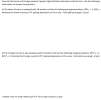 MPLk=4 (part that was cut
off)
Assume that Home and Foreign produce 2 goods, High-Definition televisions and kiwi fruit. Use the following information to answer the questions a) The Home Country is endowed with 10 workers and has the following marginal products: MPLv Illustrate the Home country's PPF, placing televisions on the x-axis. Fully label your graph. (2 pts) 2, MPL b) The Foreign Country is also endowed with 10 workers and has the following marginal products: MPL,-1, MPL*k 3....
MPLk=4 (part that was cut
off)
Assume that Home and Foreign produce 2 goods, High-Definition televisions and kiwi fruit. Use the following information to answer the questions a) The Home Country is endowed with 10 workers and has the following marginal products: MPLv Illustrate the Home country's PPF, placing televisions on the x-axis. Fully label your graph. (2 pts) 2, MPL b) The Foreign Country is also endowed with 10 workers and has the following marginal products: MPL,-1, MPL*k 3....
 7. Assume that Home and Foreign produce two goods, TVs and cars, and use the information below to answer the following questions: In the No-Trade Equilibrium Home Foreign Wagerv = 12 Wagec = ? Wageiv=? Wagec = 6 MPLT=4 MPL = ? MPLiv=? MPL = 1 Prv=? Pc=4 Piv=8 P = ? a. What is the marginal product of labor for TVs and cars in Home? What is the no- trade relative price of TVs in Home? b. What is...
 Assume that Home and Foreign produce two goods, televisions and cars, and use the following information to answer the questions. Suppose the world relative price of cars in the trade equilibrium is P/PTv-1. In the no-trade equilibrium: Home Country Foreign Country Wagery 12 MPLIV 2 Wagec MPL = ? Wage? MPL? Waget 6 MPL-1 TV TV Fill in the missing information in the table. What is the no-trade relative price of television in the Home country? What is the no-trade...
 This exercise applies the basic Ricardian model of one factor and two goods. The table below contains the unit labor requirements in Foreign and Home for each of two goods Candy alc - 1 hour per pound aLC = 5 hours per pound Whiskey a w 3 hours per gallon a4 hours per gallon Home Foreign LW where alc - number of labor hours needed to produce a unit of candy in Home aLw = number of labor hours needed...
 Consider a general model of Ricardian trade with 2 countries
(Home and Foreign) and 2 goods (Clothing and Food): unit labor
costs are aLC and aLF in Home and a∗LC and a∗LF in Foreign. Home
and Foreign are endowed, respectively, with L and L∗ units of
labor. Workers in both countries have the same preferences
represented by a Cobb-Douglas utility function:
Consider a general model of Ricardian trade with 2 countries (Home and Foreign) and 2 goods (Clothing and Food):...
Consider a general model of Ricardian trade with 2 countries
(Home and Foreign) and 2 goods (Clothing and Food): unit labor
costs are aLC and aLF in Home and a∗LC and a∗LF in Foreign. Home
and Foreign are endowed, respectively, with L and L∗ units of
labor. Workers in both countries have the same preferences
represented by a Cobb-Douglas utility function:
Consider a general model of Ricardian trade with 2 countries (Home and Foreign) and 2 goods (Clothing and Food):...
 MPLk=4 (part that was cut
off)
Assume that Home and Foreign produce 2 goods, High-Definition televisions and kiwi fruit. Use the following information to answer the questions a) The Home Country is endowed with 10 workers and has the following marginal products: MPLv Illustrate the Home country's PPF, placing televisions on the x-axis. Fully label your graph. (2 pts) 2, MPL b) The Foreign Country is also endowed with 10 workers and has the following marginal products: MPL,-1, MPL*k 3....
MPLk=4 (part that was cut
off)
Assume that Home and Foreign produce 2 goods, High-Definition televisions and kiwi fruit. Use the following information to answer the questions a) The Home Country is endowed with 10 workers and has the following marginal products: MPLv Illustrate the Home country's PPF, placing televisions on the x-axis. Fully label your graph. (2 pts) 2, MPL b) The Foreign Country is also endowed with 10 workers and has the following marginal products: MPL,-1, MPL*k 3....
Most questions answered within 3 hours.
-
Where is the error in this code sequence?
String s1 = "Hello";
String s2 = "ello";...
asked 10 months ago -
Financial data for Joel de Paris, Inc., for last year
follow:
Joel de Paris, Inc.
Balance...
asked 10 months ago -
Consider this reaction:
Al2(SO4)3 (aq)+ BaCl3
(aq) Al2Cl6 (aq)- +
3BaSO4(s) . What is the...
asked 10 months ago -
Suppose that Savneet is considering increasing her
recent random sample from 20 car rentals to 40...
asked 10 months ago -
Trucks arrive at an unloading terminal at an average rate of 120
per hour.
Trucks arrive...
asked 10 months ago -
Why are methanol and ethanol completely soluble in water while
octanol is not very little soluble....
asked 10 months ago -
A facilities manager at a university reads in a research report
that the mean amount of...
asked 10 months ago -
When the CuSO4 is rehydrated by adding water to the anhydrous
compound, is this an endothermic...
asked 10 months ago -
A ray of sunlight is passing from diamond into crown glass; the
angle of incidence is...
asked 10 months ago -
A block of mass 0.249 kg is placed on top of a light, vertical
spring of...
asked 10 months ago -
how do the kidneys compensate in the presences of acidosis
a) trigger hyperventilate
b) reserve acid...
asked 10 months ago -
Question 501 pts
The rental rate of capital to the firm increases. Which of the
following...
asked 10 months ago