
Homework Answers

Add Answer to:
5. For each reaction below, draw the major organic product and give the mechanism for its...
1.1What is the major product formed upon radical bromination of (S)-3-methylhexane? Select the best response. Draw...
1.1What is the major product formed upon radical bromination of (S)-3-methylhexane? Select the best response. Draw the full mechanism. A. (S)-3-bromo-3-methylhexane B. (R)-3-bromo-3-methylhexane C. A mixture of (R) and (S) 3-Bromo-3-methylhexane D. (3R)-1-bromo-3-methylhexane 1.2 What is the major product obtained from the reaction of 2-methyl-2-butene with hydrogen bromide in the presence of peroxides?Select the best response. Draw the mechanism. A. 2,3-dibromo-2-methylbutane B. 2-bromo-3-methylbutane C. 2-bromo-2-methylbutane D. (E)-1-bromo-2-methyl-2-butene 1.3 There are 4 major products formed upon treatment of (E)-3-methyl-2-hexene with HBr...
12. Draw the major organic product for the following reaction and write a mechanism for its...
 12. Draw the major organic product for the following reaction and write a mechanism for its formation. (10)
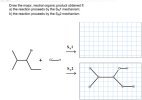
Draw the major, neutral organic product obtained if: the reaction proceeds by the SN1 mechanism the reaction proceeds by the SN2 mechanism
 Draw the major, neutral organic product obtained if: the reaction proceeds by the SN1 mechanism the reaction proceeds by the SN2 mechanism. Draw the major, neutral organic product for each substitution reaction below. (For this question, assume that each substitution reaction goes to completion. Disregard elimination.)
Draw the major, neutral organic product obtained if: the reaction proceeds by the SN1 mechanism the reaction proceeds by the SN2 mechanism. Draw the major, neutral organic product for each substitution reaction below. (For...
Draw the major, neutral organic product obtained if: the reaction proceeds by the SN1 mechanism the reaction proceeds by the SN2 mechanism. Draw the major, neutral organic product for each substitution reaction below. (For this question, assume that each substitution reaction goes to completion. Disregard elimination.)
Draw the major, neutral organic product obtained if: the reaction proceeds by the SN1 mechanism the reaction proceeds by the SN2 mechanism. Draw the major, neutral organic product for each substitution reaction below. (For...
Provide the structure of the major organic product of the reaction below. Write a mechanism that...
 Provide the structure of the major organic product of the
reaction below.
Write a mechanism that explains the formation of the following
product.
Give a mechanism to account for
(2S,3R)-3-bromobutan-2-ol as a product.
H3 C CH3 (CH2CH2)2N нси We were unable to transcribe this image
Provide the structure of the major organic product of the
reaction below.
Write a mechanism that explains the formation of the following
product.
Give a mechanism to account for
(2S,3R)-3-bromobutan-2-ol as a product.
H3 C CH3 (CH2CH2)2N нси We were unable to transcribe this image
For the alcohol reaction below, give the major organic product. For each alcohol reaction below, give...
 For the alcohol reaction below, give the major organic product. For each alcohol reaction below, give the major organic product. For each alcohol reaction below, give Ihe major organic product.
3. Apply your knowledge! Draw the curved arrow mechanism and predict the Major organic product(s) for...
 3. Apply your knowledge! Draw the curved arrow mechanism and predict the Major organic product(s) for the reaction below. Show all appropriate stereochemistry and be sure to use the hint to help guide you to the correct mechanism 1. NaH OTS OCH₃ Hint: IR contains stretches at: 1708, 1648, and 3052 cm
(fn) t-Bu MeOH, 25 C Draw the major product(s) of the reaction. Include all stereoisomers formed...
 (fn) t-Bu MeOH, 25 C Draw the major product(s) of the reaction. Include all stereoisomers formed as part of the major product. ? Edit Draw the minor product(s) of the reaction. Edit The major product(s) is/are formed by an mechanism, the other mechanism that gives minor product(s) is (9) MeO 3-Chloropentane MeOH, 50 C Draw the major product(s) of the reaction. Edit The product(s) is/are formed by an mechanism. (h) Cнсо, 3-Chloropentane CHCO-H, БО "с Draw the major product(s) of...
1.Provide the major organic product of the reaction below. 2.Provide the major organic product of the...
 1.Provide the major organic product of the reaction below.
2.Provide the major organic product of the reaction shown
below.
3.Provide the major organic product of the reaction shown
below.
4.Predict the necessary starting material for the reaction
below. Give the IUPAC name.
5.
Part A
Draw the carbonyl compound needed for this synthesis.
6.Predict the product formed when
CH3-CH2-C≡C:–Na+
undergoes a reaction with the compound shown below followed by an
aqueous workup..
Interactive 3D display mode
7. When 2,2-dibromo-1-phenylpropane is...
1.Provide the major organic product of the reaction below.
2.Provide the major organic product of the reaction shown
below.
3.Provide the major organic product of the reaction shown
below.
4.Predict the necessary starting material for the reaction
below. Give the IUPAC name.
5.
Part A
Draw the carbonyl compound needed for this synthesis.
6.Predict the product formed when
CH3-CH2-C≡C:–Na+
undergoes a reaction with the compound shown below followed by an
aqueous workup..
Interactive 3D display mode
7. When 2,2-dibromo-1-phenylpropane is...
Draw the major, neutral organic product obtained if: the reaction proceeds by the S N1 mechanism...
 I have the SN2! I need the
SN1!
Draw the major, neutral organic product obtained if: the reaction proceeds by the S N1 mechanism; the reaction proceeds by the S N2 mechanism.
Draw the major, neutral organic product obtained if: the reaction proceeds by the S N1 mechanism; the reaction proceeds by the S N2 mechanism.
I have the SN2! I need the
SN1!
Draw the major, neutral organic product obtained if: the reaction proceeds by the S N1 mechanism; the reaction proceeds by the S N2 mechanism.
Draw the major, neutral organic product obtained if: the reaction proceeds by the S N1 mechanism; the reaction proceeds by the S N2 mechanism.
2) Provide the structure of the major organic product of the reaction below. -CH3 Br2, H2O...
 2) Provide the structure of the major organic product of the reaction below. -CH3 Br2, H2O 3) Draw the major organic product generated in the reaction below. Pay particular attention to regio- and stereochemical detail. H, H20 dilute aqueous acid 4) Draw the major organic product generated in the reaction below. Pay particular attention to regio- and stereochemical detail. CH3 1. Hg(OAc)2, H20 2. NaBH 5) Provide the structure of the major organic product of the reaction below. 1. BH3...
 12. Draw the major organic product for the following reaction and write a mechanism for its formation. (10)
 Draw the major, neutral organic product obtained if: the reaction proceeds by the SN1 mechanism the reaction proceeds by the SN2 mechanism. Draw the major, neutral organic product for each substitution reaction below. (For this question, assume that each substitution reaction goes to completion. Disregard elimination.)
Draw the major, neutral organic product obtained if: the reaction proceeds by the SN1 mechanism the reaction proceeds by the SN2 mechanism. Draw the major, neutral organic product for each substitution reaction below. (For...
Draw the major, neutral organic product obtained if: the reaction proceeds by the SN1 mechanism the reaction proceeds by the SN2 mechanism. Draw the major, neutral organic product for each substitution reaction below. (For this question, assume that each substitution reaction goes to completion. Disregard elimination.)
Draw the major, neutral organic product obtained if: the reaction proceeds by the SN1 mechanism the reaction proceeds by the SN2 mechanism. Draw the major, neutral organic product for each substitution reaction below. (For...
 Provide the structure of the major organic product of the
reaction below.
Write a mechanism that explains the formation of the following
product.
Give a mechanism to account for
(2S,3R)-3-bromobutan-2-ol as a product.
H3 C CH3 (CH2CH2)2N нси We were unable to transcribe this image
Provide the structure of the major organic product of the
reaction below.
Write a mechanism that explains the formation of the following
product.
Give a mechanism to account for
(2S,3R)-3-bromobutan-2-ol as a product.
H3 C CH3 (CH2CH2)2N нси We were unable to transcribe this image
 For the alcohol reaction below, give the major organic product. For each alcohol reaction below, give the major organic product. For each alcohol reaction below, give Ihe major organic product.
 3. Apply your knowledge! Draw the curved arrow mechanism and predict the Major organic product(s) for the reaction below. Show all appropriate stereochemistry and be sure to use the hint to help guide you to the correct mechanism 1. NaH OTS OCH₃ Hint: IR contains stretches at: 1708, 1648, and 3052 cm
 (fn) t-Bu MeOH, 25 C Draw the major product(s) of the reaction. Include all stereoisomers formed as part of the major product. ? Edit Draw the minor product(s) of the reaction. Edit The major product(s) is/are formed by an mechanism, the other mechanism that gives minor product(s) is (9) MeO 3-Chloropentane MeOH, 50 C Draw the major product(s) of the reaction. Edit The product(s) is/are formed by an mechanism. (h) Cнсо, 3-Chloropentane CHCO-H, БО "с Draw the major product(s) of...
 1.Provide the major organic product of the reaction below.
2.Provide the major organic product of the reaction shown
below.
3.Provide the major organic product of the reaction shown
below.
4.Predict the necessary starting material for the reaction
below. Give the IUPAC name.
5.
Part A
Draw the carbonyl compound needed for this synthesis.
6.Predict the product formed when
CH3-CH2-C≡C:–Na+
undergoes a reaction with the compound shown below followed by an
aqueous workup..
Interactive 3D display mode
7. When 2,2-dibromo-1-phenylpropane is...
1.Provide the major organic product of the reaction below.
2.Provide the major organic product of the reaction shown
below.
3.Provide the major organic product of the reaction shown
below.
4.Predict the necessary starting material for the reaction
below. Give the IUPAC name.
5.
Part A
Draw the carbonyl compound needed for this synthesis.
6.Predict the product formed when
CH3-CH2-C≡C:–Na+
undergoes a reaction with the compound shown below followed by an
aqueous workup..
Interactive 3D display mode
7. When 2,2-dibromo-1-phenylpropane is...
 I have the SN2! I need the
SN1!
Draw the major, neutral organic product obtained if: the reaction proceeds by the S N1 mechanism; the reaction proceeds by the S N2 mechanism.
Draw the major, neutral organic product obtained if: the reaction proceeds by the S N1 mechanism; the reaction proceeds by the S N2 mechanism.
I have the SN2! I need the
SN1!
Draw the major, neutral organic product obtained if: the reaction proceeds by the S N1 mechanism; the reaction proceeds by the S N2 mechanism.
Draw the major, neutral organic product obtained if: the reaction proceeds by the S N1 mechanism; the reaction proceeds by the S N2 mechanism.
 2) Provide the structure of the major organic product of the reaction below. -CH3 Br2, H2O 3) Draw the major organic product generated in the reaction below. Pay particular attention to regio- and stereochemical detail. H, H20 dilute aqueous acid 4) Draw the major organic product generated in the reaction below. Pay particular attention to regio- and stereochemical detail. CH3 1. Hg(OAc)2, H20 2. NaBH 5) Provide the structure of the major organic product of the reaction below. 1. BH3...
Most questions answered within 3 hours.
-
Where is the error in this code sequence?
String s1 = "Hello";
String s2 = "ello";...
asked 10 months ago -
Financial data for Joel de Paris, Inc., for last year
follow:
Joel de Paris, Inc.
Balance...
asked 10 months ago -
Consider this reaction:
Al2(SO4)3 (aq)+ BaCl3
(aq) Al2Cl6 (aq)- +
3BaSO4(s) . What is the...
asked 10 months ago -
Suppose that Savneet is considering increasing her
recent random sample from 20 car rentals to 40...
asked 10 months ago -
Trucks arrive at an unloading terminal at an average rate of 120
per hour.
Trucks arrive...
asked 10 months ago -
Why are methanol and ethanol completely soluble in water while
octanol is not very little soluble....
asked 10 months ago -
A facilities manager at a university reads in a research report
that the mean amount of...
asked 10 months ago -
When the CuSO4 is rehydrated by adding water to the anhydrous
compound, is this an endothermic...
asked 10 months ago -
A ray of sunlight is passing from diamond into crown glass; the
angle of incidence is...
asked 10 months ago -
A block of mass 0.249 kg is placed on top of a light, vertical
spring of...
asked 10 months ago -
how do the kidneys compensate in the presences of acidosis
a) trigger hyperventilate
b) reserve acid...
asked 10 months ago -
Question 501 pts
The rental rate of capital to the firm increases. Which of the
following...
asked 10 months ago