&nb
United States Canada
Lumberjack shirts Lumberjack boots Lumberjack shirts Lumberjack boots
A 12 0 6 0
B 3 3 3 3
C 0 4 0 6
Which country has absolute advantage in the production of shirts, in the production of boots? Why?
a. Canada; United States b. United States; Canada
12. In the United States, what is the opportunity cost of one shirt, and of one pair of boots? Show your calculation of domestic costs .Show costs calculation and circle the correct answer
a. 4 boots; 1/3 of shirt b. 1/3 boots; 3 shirts c.1 boot; 3 shirts d. ¼ of boots; 1 shirt
In Canada, what is the opportunity cost of one shirt, and of one pair of boots? Show your calculation
a. 1 boot; 1 shirt b. 3 boots; 3 shirts c. 1/3of boots; 1/3 of shirt
Homework Answers
Question 11
Using same amount of resources in the production of lumberjack shirts, United States can produce 12 lumberjack shirts while Canada can produce 6 lumberjack shirts.
As United States can produce greater quantity of shirts relative to Canada using same amount of resources, US has absolute advantage in the production of lumberjack shirts.
Similarly,
Using same amount of resources in the production of lumberjack boots, United States can produce 4 lumberjack boots while Canada can produce 6 lumberjack boots.
As Canada can produce greater quantity of boots relative to United States using same amount of resources, Canada has absolute advantage in the production of lumberjack boots.
Hence, the correct answer is the option (b).
Question 12
(a)
Using all its resources, United States can produce a maximum of 12 shirts or 4 boots.
So,
Opportunity cost of one shirt = maximum number of boots that can be produced/maximum number of shirts that can be produced
Opportunity cost of one shirt = 4/12 = 1/3
The opportunity cost one shirt is 1/3 boots
Opportunity cost of one boot = maximum number of shirts that can be produced/maximum number of boots that can be produced
Opportunity cost of one boot = 12/4 = 3
The opportunity cost one boot is 3 shirts.
Hence, the correct answer is the option (b).
(b)
Using all its resources, Canada can produce a maximum of 6 shirts or 6 boots.
So,
Opportunity cost of one shirt = maximum number of boots that can be produced/maximum number of shirts that can be produced
Opportunity cost of one shirt = 6/6 = 1
The opportunity cost one shirt is 1 boots
Opportunity cost of one boot = maximum number of shirts that can be produced/maximum number of boots that can be produced
Opportunity cost of one boot = 6/6 = 1
The opportunity cost one boot is 1 shirt.
Hence, the correct answer is the option (a).
The United States will have 0 additional shirt(s) after the trade (enter a numeric response using...
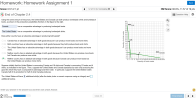 The United States will have 0 additional
shirt(s) after the trade (enter a numeric response using an
integer) and __ additional boot(s).
At the same time, Canada will be able to consume ___ additional
shirt(s) as a result of the trade and ___ additional boot(s).
Homework: Homework Assignment 1 Save Score: 0.57 of 1 pt 12 of 19 (12 complete) HW Score: 60.9%, 11.57 of 19 pts % End of Chapter 2.4 :3Question Help • Using the same amount of...
The United States will have 0 additional
shirt(s) after the trade (enter a numeric response using an
integer) and __ additional boot(s).
At the same time, Canada will be able to consume ___ additional
shirt(s) as a result of the trade and ___ additional boot(s).
Homework: Homework Assignment 1 Save Score: 0.57 of 1 pt 12 of 19 (12 complete) HW Score: 60.9%, 11.57 of 19 pts % End of Chapter 2.4 :3Question Help • Using the same amount of...
Using the same amount of resources, the United States and Canada can both produce lumberjack shirts...
 Using the same amount of resources, the United States and Canada can both produce lumberjack shirts and lumberjack boots, as shown in the production possibilities frontiers in the figure to the right Canada has a comparsative advantage in producing lumberjack boots. The United States has a comparative advantage in producing lumberjack shirts 26 44PPF.s Does either country have an absolute advantage in producing both goods? A Neither country has an absolute advantage in both goods because Canada can produce more...
Suppose initially that the United States is consuming 2 boots and 18 shirts and Canada is...
 Suppose initially that the United States is consuming 2 boots
and 18 shirts and Canada is consuming 12 boots and 2 shirts, as
indicated in the figure. Then, suppose the United States and
Canada specialize by each only producing the good for which they
have a comparative advantage and then trade. In particular,
suppose the United States trades Canada half of its production for
half of what Canada produces.?
Using the same amount of resources, the United States and...
Suppose initially that the United States is consuming 2 boots
and 18 shirts and Canada is consuming 12 boots and 2 shirts, as
indicated in the figure. Then, suppose the United States and
Canada specialize by each only producing the good for which they
have a comparative advantage and then trade. In particular,
suppose the United States trades Canada half of its production for
half of what Canada produces.?
Using the same amount of resources, the United States and...
We were unable to transcribe this imageSection Student ID Name: Part 3: Suppose that Canada increases its production of sweaters from 90 sweaters to 180 sweaters. What is the opportunity cost of...
 We were unable to transcribe this imageSection Student ID Name: Part 3: Suppose that Canada increases its production of sweaters from 90 sweaters to 180 sweaters. What is the opportunity cost of producing an additional sweater? Part 4: Does Canada's production of sweaters experience constant or increasing opportunity costs? Part 5: Suppose that Canada increases its production of shirts from 90 shirts to 150 shirts. What is the opportunity cost of producing an additional shi rt? Part 6: Suppose that...
1. Below is production levels of lumber and oll for the United States and Canada. Country...
 1. Below is production levels of lumber and oll for the United States and Canada. Country Lumber Production (using 50 worker hours) 100 200 Oil Production (using 50 worker hours) 150 50 United States Canada a. Calculate the opportunity cost of producing 100 units of lumber for U.S. b. Calculate the opportunity cost of producing 200 units of lumber for Canada. C. Calculate the opportunity cost of producing 150 units of oil for U.S. d. Calculate the opportunity cost of...
Please help me with my economics homework? 1. The United States and Brazil each produce only...
 Please help me with my economics homework?
1. The United States and Brazil each produce only cheese and wine. Domestic prices are given in the following table United States $5 per pound Brazil 8 BRL per pound 15 BRL per bottle Wine $8 per bottle On April 1, the London exchange listed an exchange rate of $1-1 BRL According to the table, (1) production of wine has an absolute advantage in the production of cheese and (2) has an absolute...
Please help me with my economics homework?
1. The United States and Brazil each produce only cheese and wine. Domestic prices are given in the following table United States $5 per pound Brazil 8 BRL per pound 15 BRL per bottle Wine $8 per bottle On April 1, the London exchange listed an exchange rate of $1-1 BRL According to the table, (1) production of wine has an absolute advantage in the production of cheese and (2) has an absolute...
NOTE THIS QUESTION HAS SIX ANSWERS. BE CLEAR WITH YOUR ANSWERS BY LABELING EACH ANSWER. Output...
NOTE THIS QUESTION HAS SIX ANSWERS. BE CLEAR WITH YOUR ANSWERS BY LABELING EACH ANSWER. Output per hour of work Output per hour of work Catfish Cowboy Boots Arkansas 6 2 Tennessee 3 2 The table above describes the output per hour worker measured as pounds of catfish and pairs of cowboy boots in Arkansas and Tennessee. A) Who has the absolute advantage in producing Catfish? B) For Arkansas, the opportunity cost of one more pound of catfish is ________...
Price (dollars per shirt) 12 0 8 16 24 32 40 48 56 64 Quantity (millions...
 Price (dollars per shirt) 12 0 8 16 24 32 40 48 56 64 Quantity (millions of shirts per year) The above figure shows the domestic supply of and domestic demand for shirts. The world price is $36 per shirt. a. If there is no international trade, what are the equilibrium price and quantity? b. At the world price of $36 per shirt, what is the domestic consumption and domestic production? C. With the change from no international trade to...
Use the following to answer questions 40-42: Table: The Production Possibilities for Tractors and Crude Oil...
 Use the following to answer questions 40-42: Table: The Production Possibilities for Tractors and Crude Oil Crude oil Country Tractors (thousands of barrels) United States 80 40 Mexico 60 180 40. Look at the table The Production Possibilities for Tractors and Crude Oil. In Mexico the opportunity cost of producing one tractor is thousand barrels of crude oil. A) 3 B) 1/2 C) 2 D) 3/4 E) 1/3 41. Look at the table The Production Possibilities for Tractors and Crude...
Price (dollars per shirt) 44 40 36 32 28 24 20 16 I would price 12...
 Price (dollars per shirt) 44 40 36 32 28 24 20 16 I would price 12 0 8 16 24 32 40 48 56 64 Quantity (millions of shirts per year) Figure 7.2.1 The figure shows the market for shirts in Canada, where D is the domestic demand curve and S is the domestic supply curve. The world price is $20 per shirt. 30) In Figure 7.2.1, international trade total surplus in Canada by A) increases; $320 million B) increases;...
 The United States will have 0 additional
shirt(s) after the trade (enter a numeric response using an
integer) and __ additional boot(s).
At the same time, Canada will be able to consume ___ additional
shirt(s) as a result of the trade and ___ additional boot(s).
Homework: Homework Assignment 1 Save Score: 0.57 of 1 pt 12 of 19 (12 complete) HW Score: 60.9%, 11.57 of 19 pts % End of Chapter 2.4 :3Question Help • Using the same amount of...
The United States will have 0 additional
shirt(s) after the trade (enter a numeric response using an
integer) and __ additional boot(s).
At the same time, Canada will be able to consume ___ additional
shirt(s) as a result of the trade and ___ additional boot(s).
Homework: Homework Assignment 1 Save Score: 0.57 of 1 pt 12 of 19 (12 complete) HW Score: 60.9%, 11.57 of 19 pts % End of Chapter 2.4 :3Question Help • Using the same amount of...
 Using the same amount of resources, the United States and Canada can both produce lumberjack shirts and lumberjack boots, as shown in the production possibilities frontiers in the figure to the right Canada has a comparsative advantage in producing lumberjack boots. The United States has a comparative advantage in producing lumberjack shirts 26 44PPF.s Does either country have an absolute advantage in producing both goods? A Neither country has an absolute advantage in both goods because Canada can produce more...
 Suppose initially that the United States is consuming 2 boots
and 18 shirts and Canada is consuming 12 boots and 2 shirts, as
indicated in the figure. Then, suppose the United States and
Canada specialize by each only producing the good for which they
have a comparative advantage and then trade. In particular,
suppose the United States trades Canada half of its production for
half of what Canada produces.?
Using the same amount of resources, the United States and...
Suppose initially that the United States is consuming 2 boots
and 18 shirts and Canada is consuming 12 boots and 2 shirts, as
indicated in the figure. Then, suppose the United States and
Canada specialize by each only producing the good for which they
have a comparative advantage and then trade. In particular,
suppose the United States trades Canada half of its production for
half of what Canada produces.?
Using the same amount of resources, the United States and...
 We were unable to transcribe this imageSection Student ID Name: Part 3: Suppose that Canada increases its production of sweaters from 90 sweaters to 180 sweaters. What is the opportunity cost of producing an additional sweater? Part 4: Does Canada's production of sweaters experience constant or increasing opportunity costs? Part 5: Suppose that Canada increases its production of shirts from 90 shirts to 150 shirts. What is the opportunity cost of producing an additional shi rt? Part 6: Suppose that...
 1. Below is production levels of lumber and oll for the United States and Canada. Country Lumber Production (using 50 worker hours) 100 200 Oil Production (using 50 worker hours) 150 50 United States Canada a. Calculate the opportunity cost of producing 100 units of lumber for U.S. b. Calculate the opportunity cost of producing 200 units of lumber for Canada. C. Calculate the opportunity cost of producing 150 units of oil for U.S. d. Calculate the opportunity cost of...
 Please help me with my economics homework?
1. The United States and Brazil each produce only cheese and wine. Domestic prices are given in the following table United States $5 per pound Brazil 8 BRL per pound 15 BRL per bottle Wine $8 per bottle On April 1, the London exchange listed an exchange rate of $1-1 BRL According to the table, (1) production of wine has an absolute advantage in the production of cheese and (2) has an absolute...
Please help me with my economics homework?
1. The United States and Brazil each produce only cheese and wine. Domestic prices are given in the following table United States $5 per pound Brazil 8 BRL per pound 15 BRL per bottle Wine $8 per bottle On April 1, the London exchange listed an exchange rate of $1-1 BRL According to the table, (1) production of wine has an absolute advantage in the production of cheese and (2) has an absolute...
 Price (dollars per shirt) 12 0 8 16 24 32 40 48 56 64 Quantity (millions of shirts per year) The above figure shows the domestic supply of and domestic demand for shirts. The world price is $36 per shirt. a. If there is no international trade, what are the equilibrium price and quantity? b. At the world price of $36 per shirt, what is the domestic consumption and domestic production? C. With the change from no international trade to...
 Use the following to answer questions 40-42: Table: The Production Possibilities for Tractors and Crude Oil Crude oil Country Tractors (thousands of barrels) United States 80 40 Mexico 60 180 40. Look at the table The Production Possibilities for Tractors and Crude Oil. In Mexico the opportunity cost of producing one tractor is thousand barrels of crude oil. A) 3 B) 1/2 C) 2 D) 3/4 E) 1/3 41. Look at the table The Production Possibilities for Tractors and Crude...
 Price (dollars per shirt) 44 40 36 32 28 24 20 16 I would price 12 0 8 16 24 32 40 48 56 64 Quantity (millions of shirts per year) Figure 7.2.1 The figure shows the market for shirts in Canada, where D is the domestic demand curve and S is the domestic supply curve. The world price is $20 per shirt. 30) In Figure 7.2.1, international trade total surplus in Canada by A) increases; $320 million B) increases;...
Most questions answered within 3 hours.
-
Where is the error in this code sequence?
String s1 = "Hello";
String s2 = "ello";...
asked 1 year ago -
Financial data for Joel de Paris, Inc., for last year
follow:
Joel de Paris, Inc.
Balance...
asked 1 year ago -
Consider this reaction:
Al2(SO4)3 (aq)+ BaCl3
(aq) Al2Cl6 (aq)- +
3BaSO4(s) . What is the...
asked 1 year ago -
Suppose that Savneet is considering increasing her
recent random sample from 20 car rentals to 40...
asked 1 year ago -
Trucks arrive at an unloading terminal at an average rate of 120
per hour.
Trucks arrive...
asked 1 year ago -
Why are methanol and ethanol completely soluble in water while
octanol is not very little soluble....
asked 1 year ago -
A facilities manager at a university reads in a research report
that the mean amount of...
asked 1 year ago -
When the CuSO4 is rehydrated by adding water to the anhydrous
compound, is this an endothermic...
asked 1 year ago -
A ray of sunlight is passing from diamond into crown glass; the
angle of incidence is...
asked 1 year ago -
A block of mass 0.249 kg is placed on top of a light, vertical
spring of...
asked 1 year ago -
how do the kidneys compensate in the presences of acidosis
a) trigger hyperventilate
b) reserve acid...
asked 1 year ago -
Question 501 pts
The rental rate of capital to the firm increases. Which of the
following...
asked 1 year ago