![(e) Consider the following reaction sequence: ÇO2Me [4+2] Retro-[4+2] CO2Me MeOzca - E CO2Me CO2Me (i) (ii) Draw the tricycli](http://img.homeworklib.com/questions/f7809ff0-7011-11ea-8646-678572ee217a.png?x-oss-process=image/resize,w_560)
Homework Answers

Add Answer to:
(e) Consider the following reaction sequence: ÇO2Me [4+2] Retro-[4+2] CO2Me MeOzca - E CO2Me CO2Me (i)...
a. Compound 6 reacts with hydrogen bromide as shown in reaction (4) i. Draw the structures...
 a. Compound 6 reacts with hydrogen bromide as shown in reaction (4) i. Draw the structures of the potential products which may be formed in this reaction (ignore any stereochemical isomers). (4 marks) ii. Using curly arrows, draw a mechanism for the formation of each of the potential products. ldentify the major product. Explain briefly why the major product you identified is favoured. (11 marks)
11. Draw the structure of the major organic product of the reaction sequence below. (4 marks)...
 11. Draw the structure of the major organic product of the reaction sequence below. (4 marks) Show all mechanistic steps and intermediates. ОН Y i) SOCI, ii) CH, AICI: iii) Zn(Hg). HCI, heat
Phenylalanine G can be synthesised from 3-phenylpropanoic acid E through intermediate F using the well-known Hell-Vollhard-Zelinsky...
 Phenylalanine G can be synthesised from 3-phenylpropanoic acid E through intermediate F using the well-known Hell-Vollhard-Zelinsky reaction shown in Figure 1. CHBO Figure 1 (1) Identify the structure of intermediate F. [2 marks] (1) F from 3- Draw the mechanism for the formation of intermediate phenylpropanoic acid E. [6 marks) (i) Draw the mechanism for the formation of phenylalanine G from intermediate [1 marks) (iv) Outline two drawbacks to this method of amino acid synthesis. [2 marks)
(ii) Explain your answer to part (i) using approximate pKa values. 17 marks Acy e. ()...
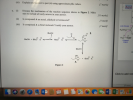 (ii) Explain your answer to part (i) using approximate pKa values. 17 marks Acy e. () Discuss the mechanism of the reaction sequence shown in Figure 2. Make sure to include all curly arrows in your answer. Is compound A an acetal, aldehyde or hemiacetal? (ii) Is compound A a chiral molecule? Justify your answer. 1I marks) I markj [I markj (ii) acid chloride tBuOH ΘΚ H3C MgBr Grignard tBuOH Ci Figure 2 Click to add not Notes 0
2. Consider the following SNl reaction: H3 CHs CH3 CH3 i. Draw a mechanism using curved...
 2. Consider the following SNl reaction: H3 CHs CH3 CH3 i. Draw a mechanism using curved arrows. Show all step(s) involved in bond breaking& forming. ii. Draw an energy diagram. Label the axes, the reactants, products, Ea, and AH. Assume that the reaction is exothermic. ili Draw the structure of the intermediate product at the correct position in the energy diagram.
c. Consider the sequence of reactions: "NH2 HO HO. НО. N 3 serotonin OH (i) Determine...
 c. Consider the sequence of reactions: "NH2 HO HO. НО. N 3 serotonin OH (i) Determine reaction condition 1. Give the expanded formula. Identify the reaction type (acid-base, substitution, elimination, addition). Separate your answers with a comma. Your answer (ii) Determine reaction condition 2. Give the expanded formula. Your answer (iii) Determine reaction condition 3. Give the expanded formula. Your answer (iv) Identify Compound 4. (iv) Identify Compound 4. NH2 HO HO HO OH HO. 다 Compound 4 is A
4. Consider the compound (2R,3S)-2-bromo-1,1,3-trimethylcyclohexane. A. Will this compound undergo E2 reaction? Explain. Show relevant structures...
 4. Consider the compound (2R,3S)-2-bromo-1,1,3-trimethylcyclohexane. A. Will this compound undergo E2 reaction? Explain. Show relevant structures that justify your explanations to get full credit. B. Consider the following reaction: H-Br. 0. Draw the mechanism of the reaction to predict all the possible stereochemical products of the reaction. Show all electron flows using the curved arrows. (ii). Does the reaction produce a meso compound? Explain. Justify with relevant structures to get full credit. I
Mechanisms Question 1 (22 marks) (a) Consider the radical chain reactions of the alkane shown below with Br, in the...
 Mechanisms Question 1 (22 marks) (a) Consider the radical chain reactions of the alkane shown below with Br, in the presence of light. H3C HH H C-CCHS CH3 Br2 hv 2 Different mono- bromo products 25 °C + (you will need to look up the bond dissociation energy (BDE) for the types of bonds formed and broken in this reactions) (i) Give the structures of the products from the reaction and using standard arrow conventions show the series of mechanistic...
1. Consider the following molecule (12 marks total) i. Provide the reaction conditions, and major product,...
 1. Consider the following molecule (12 marks total) i. Provide the reaction conditions, and major product, for the monobromination of this molecule (2 marks) ii. Provide the full arrow pushing mechanism for the formation of the major product (making sure to include all initiation, and propagation steps as well as one termination step) (4 marks) (Continuation of Question 1) iii. Provide an explanation for why only one product is obtained through monobromination of this molecule (2 marks) iv. When reacting...
Supplementary SESSION WII UE CU UN 2/11/20 0 1) In each of the following nucleophilic addition...
 Supplementary SESSION WII UE CU UN 2/11/20 0 1) In each of the following nucleophilic addition reactions (i) using arrows provide a mechanistic explanation of the course of the reaction (show intermediates); (ii) write the product of the reaction. (32 points) a. Show the mechanism of acetal formation through hemiacetal reacting butanone with (RS)-2,3- butanediol under acidic catalysis. The acetal formation reaction from hemiacetal is the intramolecular reaction. (6 points = 3 points for hemiacetal + 3 points for acetal)
 a. Compound 6 reacts with hydrogen bromide as shown in reaction (4) i. Draw the structures of the potential products which may be formed in this reaction (ignore any stereochemical isomers). (4 marks) ii. Using curly arrows, draw a mechanism for the formation of each of the potential products. ldentify the major product. Explain briefly why the major product you identified is favoured. (11 marks)
 11. Draw the structure of the major organic product of the reaction sequence below. (4 marks) Show all mechanistic steps and intermediates. ОН Y i) SOCI, ii) CH, AICI: iii) Zn(Hg). HCI, heat
 Phenylalanine G can be synthesised from 3-phenylpropanoic acid E through intermediate F using the well-known Hell-Vollhard-Zelinsky reaction shown in Figure 1. CHBO Figure 1 (1) Identify the structure of intermediate F. [2 marks] (1) F from 3- Draw the mechanism for the formation of intermediate phenylpropanoic acid E. [6 marks) (i) Draw the mechanism for the formation of phenylalanine G from intermediate [1 marks) (iv) Outline two drawbacks to this method of amino acid synthesis. [2 marks)
 (ii) Explain your answer to part (i) using approximate pKa values. 17 marks Acy e. () Discuss the mechanism of the reaction sequence shown in Figure 2. Make sure to include all curly arrows in your answer. Is compound A an acetal, aldehyde or hemiacetal? (ii) Is compound A a chiral molecule? Justify your answer. 1I marks) I markj [I markj (ii) acid chloride tBuOH ΘΚ H3C MgBr Grignard tBuOH Ci Figure 2 Click to add not Notes 0
 2. Consider the following SNl reaction: H3 CHs CH3 CH3 i. Draw a mechanism using curved arrows. Show all step(s) involved in bond breaking& forming. ii. Draw an energy diagram. Label the axes, the reactants, products, Ea, and AH. Assume that the reaction is exothermic. ili Draw the structure of the intermediate product at the correct position in the energy diagram.
 c. Consider the sequence of reactions: "NH2 HO HO. НО. N 3 serotonin OH (i) Determine reaction condition 1. Give the expanded formula. Identify the reaction type (acid-base, substitution, elimination, addition). Separate your answers with a comma. Your answer (ii) Determine reaction condition 2. Give the expanded formula. Your answer (iii) Determine reaction condition 3. Give the expanded formula. Your answer (iv) Identify Compound 4. (iv) Identify Compound 4. NH2 HO HO HO OH HO. 다 Compound 4 is A
 4. Consider the compound (2R,3S)-2-bromo-1,1,3-trimethylcyclohexane. A. Will this compound undergo E2 reaction? Explain. Show relevant structures that justify your explanations to get full credit. B. Consider the following reaction: H-Br. 0. Draw the mechanism of the reaction to predict all the possible stereochemical products of the reaction. Show all electron flows using the curved arrows. (ii). Does the reaction produce a meso compound? Explain. Justify with relevant structures to get full credit. I
 Mechanisms Question 1 (22 marks) (a) Consider the radical chain reactions of the alkane shown below with Br, in the presence of light. H3C HH H C-CCHS CH3 Br2 hv 2 Different mono- bromo products 25 °C + (you will need to look up the bond dissociation energy (BDE) for the types of bonds formed and broken in this reactions) (i) Give the structures of the products from the reaction and using standard arrow conventions show the series of mechanistic...
 1. Consider the following molecule (12 marks total) i. Provide the reaction conditions, and major product, for the monobromination of this molecule (2 marks) ii. Provide the full arrow pushing mechanism for the formation of the major product (making sure to include all initiation, and propagation steps as well as one termination step) (4 marks) (Continuation of Question 1) iii. Provide an explanation for why only one product is obtained through monobromination of this molecule (2 marks) iv. When reacting...
 Supplementary SESSION WII UE CU UN 2/11/20 0 1) In each of the following nucleophilic addition reactions (i) using arrows provide a mechanistic explanation of the course of the reaction (show intermediates); (ii) write the product of the reaction. (32 points) a. Show the mechanism of acetal formation through hemiacetal reacting butanone with (RS)-2,3- butanediol under acidic catalysis. The acetal formation reaction from hemiacetal is the intramolecular reaction. (6 points = 3 points for hemiacetal + 3 points for acetal)
Most questions answered within 3 hours.
-
Where is the error in this code sequence?
String s1 = "Hello";
String s2 = "ello";...
asked 10 months ago -
Financial data for Joel de Paris, Inc., for last year
follow:
Joel de Paris, Inc.
Balance...
asked 10 months ago -
Consider this reaction:
Al2(SO4)3 (aq)+ BaCl3
(aq) Al2Cl6 (aq)- +
3BaSO4(s) . What is the...
asked 10 months ago -
Suppose that Savneet is considering increasing her
recent random sample from 20 car rentals to 40...
asked 10 months ago -
Trucks arrive at an unloading terminal at an average rate of 120
per hour.
Trucks arrive...
asked 10 months ago -
Why are methanol and ethanol completely soluble in water while
octanol is not very little soluble....
asked 10 months ago -
A facilities manager at a university reads in a research report
that the mean amount of...
asked 10 months ago -
When the CuSO4 is rehydrated by adding water to the anhydrous
compound, is this an endothermic...
asked 10 months ago -
A ray of sunlight is passing from diamond into crown glass; the
angle of incidence is...
asked 10 months ago -
A block of mass 0.249 kg is placed on top of a light, vertical
spring of...
asked 10 months ago -
how do the kidneys compensate in the presences of acidosis
a) trigger hyperventilate
b) reserve acid...
asked 10 months ago -
Question 501 pts
The rental rate of capital to the firm increases. Which of the
following...
asked 10 months ago