
Homework Answers

Add Answer to:
Let S = {a,b,c,d) be a sample space and A = {a,b,c}, B = {a,b,d) and...
1. Let S P(ta), P(ld) if you are given that {a,b,c,d) be a sample space and...
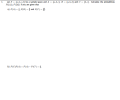 1. Let S P(ta), P(ld) if you are given that {a,b,c,d) be a sample space and A-{a,b,e). В-{a,b,d) and C-{b,e). Calculate the probabilities a) P(A) = , P(B)-i and P(C)- 21 b) P(C)P(A) = P(A)-P(C)-흄
Let and B be events in a sample space S, and let C = S -...
 Let and B be events in a sample space S, and let C = S - (AUB). Suppose P(A) = 0.8, P(B) = 0.2, and P(An B) = 0.1. Find each of the following. (a) P(AUB) (b) P(C) (c) PAS (d) PLAC BC) (e) PLACUBS (1) P(BCnc)
A random experiment has sample space S={a, b, c, d}S={a, b, c, d}. Suppose that P({a,...
A random experiment has sample space S={a, b, c, d}S={a, b, c, d}. Suppose that P({a, d})=38, P({a, b})=58P({a, d})=38, P({a, b})=58, and P({d})=18P({d})=18. Use the axioms of probability to find the probabilities of each of the elementary events.
[15] 4. Let E and F be events of sample space S. Let P(E) = 0.3,...
 [15] 4. Let E and F be events of sample space S. Let P(E) = 0.3, P(F) = 0.6 and the P(EUF) = 0.7. a) Fill in all probabilities in the Venn diagram shown. S b) Find P(EnF). c) Find P(ENF). d) Find the P(E|F). e) Are E and F independent events? Justify your answer.
Q2. 5 marks] The sample space of a random experiment is (a; b; c; d; e)...
 Q2. 5 marks] The sample space of a random experiment is (a; b; c; d; e) with probabilities 0.1, 0.2, 0.2, 0.1, and 0.4 respectively. Let A denote the event fa; b; c) and let B denote the event (b; c; e a. Determine P(A | B') b. Are the events A and B independent?
05 (24 marks) Let A, B, and C be three events in the sample space S....
 05 (24 marks) Let A, B, and C be three events in the sample space S. Suppose we know that A U B U C-S, P(A)-1/2, P(B)-1/3, PALJ B-3/4. Answer the following questions: a) Find P(AnB). (4 marks) b) Do A, B, and C form a partition of S? Why? (4 marks) c) Find P(C-(AUB)). (8 marks) d) If P(Cn (AU B))-5/12, find P(C). (8 marks)
C. Let S represent the sample space of classrooms on C classroom without a projector i....
 C. Let S represent the sample space of classrooms on C classroom without a projector i. Compute the probability P(A nBnC). campus. Events are defined as follows: A classroom remodeled/built within the last 5 years B- classroom with a window(s) The following probabilities are known: PCA)0.1, P(B)0.6, P(C)0.3, P(An B)0.1, P(AnC)- 0.0, and P(B nC)0.2 ii. Compute the probability P(A UBUC) ii. Provide evidence, using the rules of probability, that you cannot find a classroom remodeled/built within the last 5...
C. Let S represent the sample space of classrooms on C classroom without a projector i....
 C. Let S represent the sample space of classrooms on C classroom without a projector i. Compute the probability P(A nBnC). campus. Events are defined as follows: A classroom remodeled/built within the last 5 years B- classroom with a window(s) The following probabilities are known: PCA)0.1, P(B)0.6, P(C)0.3, P(An B)0.1, P(AnC)- 0.0, and P(B nC)0.2 ii. Compute the probability P(A UBUC) ii. Provide evidence, using the rules of probability, that you cannot find a classroom remodeled/built within the last 5...
3. Let A, B, C be events in a sample space S. Prove that (a) P(AUB)...
 3. Let A, B, C be events in a sample space S. Prove that (a) P(AUB) P(A)P(B), (b) P(AUBUC) P(A)+P(B)+P(C)-P(AnB)-P(Anc)-P(Bnc)+P(AnBnc)
2. Let A and B be subsets of a sample space S. The relative complement of...
 2. Let A and B be subsets of a sample space S. The relative complement of B with respect to A is denoted and give by A B(r:r E A and r (a) Express B as a relative complement. (b) Prove that A B An B. (c) Prove that (A\B) A*UB. (d) Prove that p(AP)-P(1)-P(An B). B).
 1. Let S P(ta), P(ld) if you are given that {a,b,c,d) be a sample space and A-{a,b,e). В-{a,b,d) and C-{b,e). Calculate the probabilities a) P(A) = , P(B)-i and P(C)- 21 b) P(C)P(A) = P(A)-P(C)-흄
 Let and B be events in a sample space S, and let C = S - (AUB). Suppose P(A) = 0.8, P(B) = 0.2, and P(An B) = 0.1. Find each of the following. (a) P(AUB) (b) P(C) (c) PAS (d) PLAC BC) (e) PLACUBS (1) P(BCnc)
 [15] 4. Let E and F be events of sample space S. Let P(E) = 0.3, P(F) = 0.6 and the P(EUF) = 0.7. a) Fill in all probabilities in the Venn diagram shown. S b) Find P(EnF). c) Find P(ENF). d) Find the P(E|F). e) Are E and F independent events? Justify your answer.
 Q2. 5 marks] The sample space of a random experiment is (a; b; c; d; e) with probabilities 0.1, 0.2, 0.2, 0.1, and 0.4 respectively. Let A denote the event fa; b; c) and let B denote the event (b; c; e a. Determine P(A | B') b. Are the events A and B independent?
 05 (24 marks) Let A, B, and C be three events in the sample space S. Suppose we know that A U B U C-S, P(A)-1/2, P(B)-1/3, PALJ B-3/4. Answer the following questions: a) Find P(AnB). (4 marks) b) Do A, B, and C form a partition of S? Why? (4 marks) c) Find P(C-(AUB)). (8 marks) d) If P(Cn (AU B))-5/12, find P(C). (8 marks)
 C. Let S represent the sample space of classrooms on C classroom without a projector i. Compute the probability P(A nBnC). campus. Events are defined as follows: A classroom remodeled/built within the last 5 years B- classroom with a window(s) The following probabilities are known: PCA)0.1, P(B)0.6, P(C)0.3, P(An B)0.1, P(AnC)- 0.0, and P(B nC)0.2 ii. Compute the probability P(A UBUC) ii. Provide evidence, using the rules of probability, that you cannot find a classroom remodeled/built within the last 5...
 C. Let S represent the sample space of classrooms on C classroom without a projector i. Compute the probability P(A nBnC). campus. Events are defined as follows: A classroom remodeled/built within the last 5 years B- classroom with a window(s) The following probabilities are known: PCA)0.1, P(B)0.6, P(C)0.3, P(An B)0.1, P(AnC)- 0.0, and P(B nC)0.2 ii. Compute the probability P(A UBUC) ii. Provide evidence, using the rules of probability, that you cannot find a classroom remodeled/built within the last 5...
 3. Let A, B, C be events in a sample space S. Prove that (a) P(AUB) P(A)P(B), (b) P(AUBUC) P(A)+P(B)+P(C)-P(AnB)-P(Anc)-P(Bnc)+P(AnBnc)
 2. Let A and B be subsets of a sample space S. The relative complement of B with respect to A is denoted and give by A B(r:r E A and r (a) Express B as a relative complement. (b) Prove that A B An B. (c) Prove that (A\B) A*UB. (d) Prove that p(AP)-P(1)-P(An B). B).
Most questions answered within 3 hours.
-
Where is the error in this code sequence?
String s1 = "Hello";
String s2 = "ello";...
asked 10 months ago -
Financial data for Joel de Paris, Inc., for last year
follow:
Joel de Paris, Inc.
Balance...
asked 10 months ago -
Consider this reaction:
Al2(SO4)3 (aq)+ BaCl3
(aq) Al2Cl6 (aq)- +
3BaSO4(s) . What is the...
asked 10 months ago -
Suppose that Savneet is considering increasing her
recent random sample from 20 car rentals to 40...
asked 10 months ago -
Trucks arrive at an unloading terminal at an average rate of 120
per hour.
Trucks arrive...
asked 10 months ago -
Why are methanol and ethanol completely soluble in water while
octanol is not very little soluble....
asked 10 months ago -
A facilities manager at a university reads in a research report
that the mean amount of...
asked 10 months ago -
When the CuSO4 is rehydrated by adding water to the anhydrous
compound, is this an endothermic...
asked 10 months ago -
A ray of sunlight is passing from diamond into crown glass; the
angle of incidence is...
asked 10 months ago -
A block of mass 0.249 kg is placed on top of a light, vertical
spring of...
asked 10 months ago -
how do the kidneys compensate in the presences of acidosis
a) trigger hyperventilate
b) reserve acid...
asked 10 months ago -
Question 501 pts
The rental rate of capital to the firm increases. Which of the
following...
asked 10 months ago