
Homework Answers
Add Answer to:
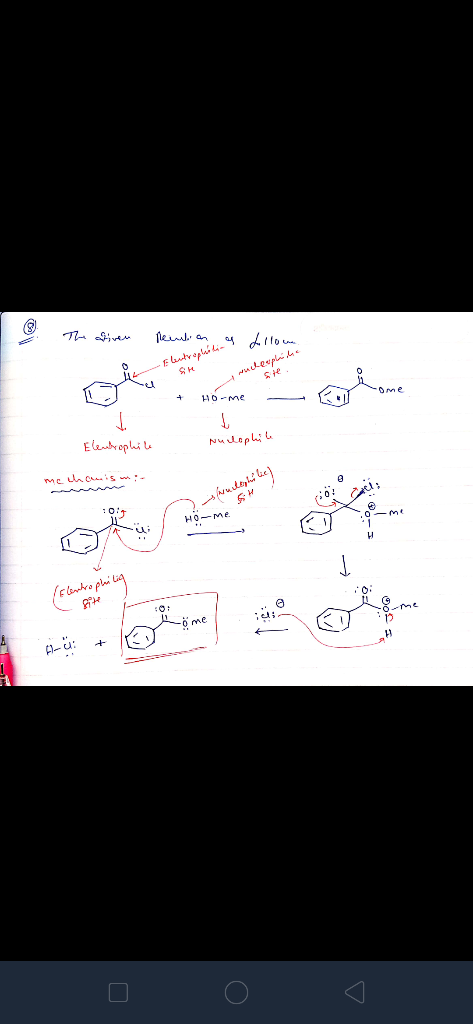
8. Identify the nucleophilic and electrophilic sites (one of each) in the two reactants in the...
7. Draw the most likely structure of the following cation after it has rearranged. 8. Identify...
 7. Draw the most likely structure of the following cation after it has rearranged. 8. Identify the nucleophilic and electrophilic sites (one of each) in the two reactants in the following reaction. HOME
For each of the sites specified in the following molecules, indicate whether the site is nucleophilic,...
 For each of the sites specified in the following
molecules, indicate whether the site is nucleophilic,
electrophilic, or neither by dragging the appropriate label to the
box pointing to the site.
For each of the sites specified in the following molecules, indicate whether the site is nucleophilic, electrophilic, or neither by dragging the appropriate label to the box pointing to the site.
For each of the sites specified in the following
molecules, indicate whether the site is nucleophilic,
electrophilic, or neither by dragging the appropriate label to the
box pointing to the site.
For each of the sites specified in the following molecules, indicate whether the site is nucleophilic, electrophilic, or neither by dragging the appropriate label to the box pointing to the site.
1. Label all electrophilic (El) and nucleophilic (Nu) sites on the following molecules. BYYY OH
 1. Label all electrophilic (El) and nucleophilic (Nu) sites on the following molecules. BYYY OH
2. Identify the nucleophilic center, the electrophilic center, and the leaving group in these nucleophilic acyl...
 2. Identify the nucleophilic center, the electrophilic center, and the leaving group in these nucleophilic acyl substitution reactions. مسلسل به مع کہا ہوئے - INH,
In carbonyl condensation reactions, the carbonyl is neither electrophilic nor nucleophilic both electrophilic and nucleophilic electrophilic...
 In carbonyl condensation reactions, the carbonyl is neither electrophilic nor nucleophilic both electrophilic and nucleophilic electrophilic nucleophilic Question 20 Give the major product of the following sequence of reactions: 1) HNO/H2SO4 acetophenone 2) H/Pd Op-aminoethylbenzene m-aminoethylbenzene m-aminoacetophenone m-nitroacetophenone MacBook Pro COO 80 DIN FB DOO F7 F9 F6 FS % & * < CC 7 8
The two reactants shown below are combined to bring about a nucleophilic substitution reaction. Which letter...
 The two reactants shown below are combined to bring about a nucleophilic substitution reaction. Which letter designates the electrophilic carbon at which substitution occurs? (If no reaction occurs enter the letter corresponding to "none.") Which letter corresponds to the leaving group? Which letter designates the nucleophile?
20. Identify the electrophilic sites in the molecule below. ZI
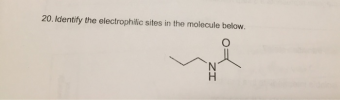 20. Identify the electrophilic sites in the molecule below. ZI
Classify the circled atom as nucleophilic, electrophilic, or neither. Select one: O a. Nucleophilic O b....
 Classify the circled atom as nucleophilic, electrophilic, or neither. Select one: O a. Nucleophilic O b. Electrophilic c. Neither Draw the mechanism for the following SN1 reaction. Indicate which of the following statements is true. Select all correct answers to receive full credit. Cl +NaF Select one or more: a. The mechanism involves only a loss of leaving group and a nucleophilic attack and no other steps. b. A carbocation rearrangement occurs. c. The first step is a proton transfer....
The two reactants shown below are combined to bring about a nucleophilic substitution reaction. F +...
 The two reactants shown below are combined to bring about a nucleophilic substitution reaction. F + Nal IT g. HI h. Nat i. none f. HF Which letter designates the electrophilic carbon at which substitution occurs? (If no reaction occurs enter the letter corresponding to "none.") Which letter corresponds to the leaving group? Which letter designates the nucleophile? Submit Answer Try Another Version 1 item attempt remaining
For the reactions below, name each as either nucleophilic attack. electrophilic attack, rearrangement proton transfer, or...
 For the reactions below, name each as either nucleophilic attack. electrophilic attack, rearrangement proton transfer, or loss of leaving.group. chose the correct answer set? Select one: a. Rearrangement, electrophilic attack, nucleophilic attack b. Electrophilic attack, nucleophilic attack, rearrangement c. Nucleophilic attack, proton transfer, loss of leaving group. d. Loss of leaving group.proton transfer, rearrangement. e. Electrophilic attack, proton transfer, loss of leaving group.
 7. Draw the most likely structure of the following cation after it has rearranged. 8. Identify the nucleophilic and electrophilic sites (one of each) in the two reactants in the following reaction. HOME
 For each of the sites specified in the following
molecules, indicate whether the site is nucleophilic,
electrophilic, or neither by dragging the appropriate label to the
box pointing to the site.
For each of the sites specified in the following molecules, indicate whether the site is nucleophilic, electrophilic, or neither by dragging the appropriate label to the box pointing to the site.
For each of the sites specified in the following
molecules, indicate whether the site is nucleophilic,
electrophilic, or neither by dragging the appropriate label to the
box pointing to the site.
For each of the sites specified in the following molecules, indicate whether the site is nucleophilic, electrophilic, or neither by dragging the appropriate label to the box pointing to the site.
 1. Label all electrophilic (El) and nucleophilic (Nu) sites on the following molecules. BYYY OH
 2. Identify the nucleophilic center, the electrophilic center, and the leaving group in these nucleophilic acyl substitution reactions. مسلسل به مع کہا ہوئے - INH,
 In carbonyl condensation reactions, the carbonyl is neither electrophilic nor nucleophilic both electrophilic and nucleophilic electrophilic nucleophilic Question 20 Give the major product of the following sequence of reactions: 1) HNO/H2SO4 acetophenone 2) H/Pd Op-aminoethylbenzene m-aminoethylbenzene m-aminoacetophenone m-nitroacetophenone MacBook Pro COO 80 DIN FB DOO F7 F9 F6 FS % & * < CC 7 8
 The two reactants shown below are combined to bring about a nucleophilic substitution reaction. Which letter designates the electrophilic carbon at which substitution occurs? (If no reaction occurs enter the letter corresponding to "none.") Which letter corresponds to the leaving group? Which letter designates the nucleophile?
 20. Identify the electrophilic sites in the molecule below. ZI
 Classify the circled atom as nucleophilic, electrophilic, or neither. Select one: O a. Nucleophilic O b. Electrophilic c. Neither Draw the mechanism for the following SN1 reaction. Indicate which of the following statements is true. Select all correct answers to receive full credit. Cl +NaF Select one or more: a. The mechanism involves only a loss of leaving group and a nucleophilic attack and no other steps. b. A carbocation rearrangement occurs. c. The first step is a proton transfer....
 The two reactants shown below are combined to bring about a nucleophilic substitution reaction. F + Nal IT g. HI h. Nat i. none f. HF Which letter designates the electrophilic carbon at which substitution occurs? (If no reaction occurs enter the letter corresponding to "none.") Which letter corresponds to the leaving group? Which letter designates the nucleophile? Submit Answer Try Another Version 1 item attempt remaining
 For the reactions below, name each as either nucleophilic attack. electrophilic attack, rearrangement proton transfer, or loss of leaving.group. chose the correct answer set? Select one: a. Rearrangement, electrophilic attack, nucleophilic attack b. Electrophilic attack, nucleophilic attack, rearrangement c. Nucleophilic attack, proton transfer, loss of leaving group. d. Loss of leaving group.proton transfer, rearrangement. e. Electrophilic attack, proton transfer, loss of leaving group.
Most questions answered within 3 hours.
-
Where is the error in this code sequence?
String s1 = "Hello";
String s2 = "ello";...
asked 10 months ago -
Financial data for Joel de Paris, Inc., for last year
follow:
Joel de Paris, Inc.
Balance...
asked 10 months ago -
Consider this reaction:
Al2(SO4)3 (aq)+ BaCl3
(aq) Al2Cl6 (aq)- +
3BaSO4(s) . What is the...
asked 10 months ago -
Suppose that Savneet is considering increasing her
recent random sample from 20 car rentals to 40...
asked 10 months ago -
Trucks arrive at an unloading terminal at an average rate of 120
per hour.
Trucks arrive...
asked 10 months ago -
Why are methanol and ethanol completely soluble in water while
octanol is not very little soluble....
asked 10 months ago -
A facilities manager at a university reads in a research report
that the mean amount of...
asked 10 months ago -
When the CuSO4 is rehydrated by adding water to the anhydrous
compound, is this an endothermic...
asked 10 months ago -
A ray of sunlight is passing from diamond into crown glass; the
angle of incidence is...
asked 10 months ago -
A block of mass 0.249 kg is placed on top of a light, vertical
spring of...
asked 10 months ago -
how do the kidneys compensate in the presences of acidosis
a) trigger hyperventilate
b) reserve acid...
asked 10 months ago -
Question 501 pts
The rental rate of capital to the firm increases. Which of the
following...
asked 10 months ago