
Homework Answers
Add Answer to:
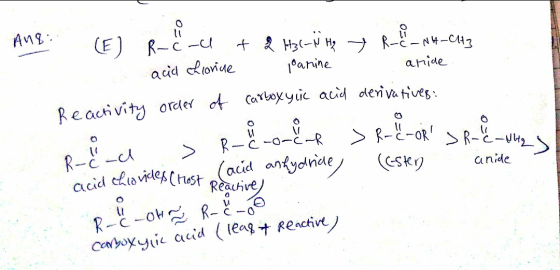
the reason also
What acylchlonde 2. N-ethylbutanamide PROBLEM3 Which of the following reactions lead to the...
First question: Which type of enzyme fron table 11-2 catalyzes the following reactions (a) 600 c=0...
 First question: Which type of enzyme fron table 11-2 catalyzes the
following reactions
(a) 600 c=0 CH + NADH + H - 500- + NAD HO-- CH, COO H-CH(CH HỘI NH ADP + P 5. On the free energy diagram shown, label the intermediate(s) and transition state(s). Is the reaction thermodynamically favorable? 6. Urcase, the first enzyme to be crystallized, is inhibited in the presence of Hg, Cd, or Co ions What does this information suggest about the catalytic mechanism...
First question: Which type of enzyme fron table 11-2 catalyzes the
following reactions
(a) 600 c=0 CH + NADH + H - 500- + NAD HO-- CH, COO H-CH(CH HỘI NH ADP + P 5. On the free energy diagram shown, label the intermediate(s) and transition state(s). Is the reaction thermodynamically favorable? 6. Urcase, the first enzyme to be crystallized, is inhibited in the presence of Hg, Cd, or Co ions What does this information suggest about the catalytic mechanism...
please help. thanks in advance! 6 Which of the following arrows correctly points to the anomeric carbon? 7. Of the following, what is the most likely reason that cooking with Nutrasweet (Aspartam...
 please help. thanks in advance!
6 Which of the following arrows correctly points to the anomeric carbon? 7. Of the following, what is the most likely reason that cooking with Nutrasweet (Aspartame) destroys the sweetness? HO-C-CH2-CH-C-N-CH-C-OCH NH2 CH2-CsHs Aspartame 8. A heptapeptide containing 2 alanine residues and one each of glutamine, phenylalanine, roline, tyrosine and valine was analyzed as follows: 1. Treatmen w 2,4-dinitrofluorobenzene followed by complete hydrolysis yielded 2,4-dinitrophenylalanine. 2. Partial hydrolysis with aqueous acid yielded the following fragments:...
please help. thanks in advance!
6 Which of the following arrows correctly points to the anomeric carbon? 7. Of the following, what is the most likely reason that cooking with Nutrasweet (Aspartame) destroys the sweetness? HO-C-CH2-CH-C-N-CH-C-OCH NH2 CH2-CsHs Aspartame 8. A heptapeptide containing 2 alanine residues and one each of glutamine, phenylalanine, roline, tyrosine and valine was analyzed as follows: 1. Treatmen w 2,4-dinitrofluorobenzene followed by complete hydrolysis yielded 2,4-dinitrophenylalanine. 2. Partial hydrolysis with aqueous acid yielded the following fragments:...
What is the major Organic product from the following sequence of reactions? 1) NaNH2 2) Br...
 What is the major Organic product from the following sequence of reactions? 1) NaNH2 2) Br W u on ou oh oh oh NH (a) (d) (e ) a. a b.b d. d e. e f. f Arrange the following species in order of increasing nucleophile strength in an SN 2 reaction. h:1-, CH3NH2, CH301- O a. (Weakest nucleophile) CH3NH2 < CH301- <H:1- (Strongest Nucleophile) O b. (Weakest nucleophile) CH3NH2 <H:1- < CH301- (Strongest Nucleophile) OC (Weakest nucleophile) CH301- <h:1-...
9. What is the final product of the following sequence of reactions? 13. Arrange the following...
 9. What is the final product of the following sequence of reactions? 13. Arrange the following compounds in order of decreasing adidity CH PB Mg Eto 011 CHCI 10. Methanolysis of 4-bromo-2-methyl-2-pentene gives two isomeric substitution products, one of which is shown. What is the other substitution product? B с CH,OH Isomer 14. Benzalacetone is the crossed aldol condensation product formed between betaaldehyde and acetone. Draw the structure of benzalacetone. OCH, 11. Which of the following has the largest for...
(Multiple reactions with heat effects). Styrene can be produced from ethylbenzene by the following reaction: 2...
(Multiple reactions with heat effects). Styrene can be produced from ethylbenzene by the following reaction: 2 H styrene ne ethylbenze + ↔ (1) However, several irreversible side reactions also occur: ethylene benzene ne ethylbenze + → (2) methane toluene H ne ethylbenze 2 + → + (3) [J. Snyder and B. Subramaniam, Chem. Eng. Sci., 49, 5585 (1994)]. Ethylbenzene is fed at a rate of 0.00344 kmol/s to a 10.0- m 3 PFR reactor along with inert steam at a...
What is the equilibrium constant for each of the following reactions? Use the standard reduction potentials in these Re...
 What is the equilibrium constant for each of the following
reactions? Use the standard reduction potentials in these Reference
Tables.
(a) 2 Cu1+(aq) → Cu(s) + Cu2+(aq)
(b) 3 Tl1+(aq) + Al(s) → 3 Tl(s) + Al3+(aq)
(c) 2 H1+(aq) + Sn(s) → H2(g) + Sn2+(aq)
13 1.49 F2 +2e-2F Age - Ag Coco H.0 +2 2e -2 .0 PO, + 4H+So, +2-PSO2H0 MnO' + 4H+3c-MO, 2 H,0 CA 2H+10 +26-10, 2 H 0 B.0, 6He r +3H-0...
What is the equilibrium constant for each of the following
reactions? Use the standard reduction potentials in these Reference
Tables.
(a) 2 Cu1+(aq) → Cu(s) + Cu2+(aq)
(b) 3 Tl1+(aq) + Al(s) → 3 Tl(s) + Al3+(aq)
(c) 2 H1+(aq) + Sn(s) → H2(g) + Sn2+(aq)
13 1.49 F2 +2e-2F Age - Ag Coco H.0 +2 2e -2 .0 PO, + 4H+So, +2-PSO2H0 MnO' + 4H+3c-MO, 2 H,0 CA 2H+10 +26-10, 2 H 0 B.0, 6He r +3H-0...
18. Which of the following compound(s) would undergo mutarotation in aqueous solution? 19. Draw the chair...
 18.
Which of the following compound(s) would undergo mutarotation in
aqueous solution?
19. Draw the chair conformation of a-D-galactopyranose.
20. Which of the following compound(s) is a glycoside?
21. Provide the reagents neccesary to carry out the following
conversion.
22. Predict the product(s) for the following reaction.
23. D-glucose & D-galactose are ______epimers of each
other.
24. Predict the product(s) for the following reaction.
25. Which of the following compound(s) would produce D-glucose
and D-mannose when treated with HCN followed...
18.
Which of the following compound(s) would undergo mutarotation in
aqueous solution?
19. Draw the chair conformation of a-D-galactopyranose.
20. Which of the following compound(s) is a glycoside?
21. Provide the reagents neccesary to carry out the following
conversion.
22. Predict the product(s) for the following reaction.
23. D-glucose & D-galactose are ______epimers of each
other.
24. Predict the product(s) for the following reaction.
25. Which of the following compound(s) would produce D-glucose
and D-mannose when treated with HCN followed...
if you can't answer all ,please don't answer 1) of the reactions below, which one is...
 if you can't answer all ,please don't answer
1) of the reactions below, which one is a decomposition reaction? A) Ca(NO3)2 + Na2S -- CdS +2NaNO3 B) NH4Cl- NH3 + HCI C) 2Mg + 02 - 2MgO D) 2N2 + 3H2 → 2NH3 E) 2CH4 + 402 - 2002 + 4H20 miches of - x 1? 2 2) Calculate the percentage by mass of ammonia in cisplatin, PtCl2/NH3 12. A) 12.53 B) 5.68 C) 18.09 D) 11.35 E) 4.67 3)...
if you can't answer all ,please don't answer
1) of the reactions below, which one is a decomposition reaction? A) Ca(NO3)2 + Na2S -- CdS +2NaNO3 B) NH4Cl- NH3 + HCI C) 2Mg + 02 - 2MgO D) 2N2 + 3H2 → 2NH3 E) 2CH4 + 402 - 2002 + 4H20 miches of - x 1? 2 2) Calculate the percentage by mass of ammonia in cisplatin, PtCl2/NH3 12. A) 12.53 B) 5.68 C) 18.09 D) 11.35 E) 4.67 3)...
Using enthalpies of formation (Appendix C), calculate ΔH ° for the following reaction at 25°C. Also...
 Using enthalpies of formation
(Appendix C), calculate ΔH ° for the following reaction at 25°C.
Also calculate ΔS ° for this reaction from standard entropies at
25°C. Use these values to calculate ΔG ° for the reaction at this
temperature. COCl2(g) + H2O(l ) h CO2(g) + 2HCl(g).
Appendix C Thermodynamic Quantities for Substances and Ions at 25°C Substance or lon AH; (kW/mol) 0 AG: (kJ/mol) 0 S° (J/mol-K) 20.87 ΔΗ, (kJ/mol) -946.3 - 33422 AG; {kj/mol) --859,3 -2793 (J/mol-K)...
Using enthalpies of formation
(Appendix C), calculate ΔH ° for the following reaction at 25°C.
Also calculate ΔS ° for this reaction from standard entropies at
25°C. Use these values to calculate ΔG ° for the reaction at this
temperature. COCl2(g) + H2O(l ) h CO2(g) + 2HCl(g).
Appendix C Thermodynamic Quantities for Substances and Ions at 25°C Substance or lon AH; (kW/mol) 0 AG: (kJ/mol) 0 S° (J/mol-K) 20.87 ΔΗ, (kJ/mol) -946.3 - 33422 AG; {kj/mol) --859,3 -2793 (J/mol-K)...
(7 pts.) Calculate the heat absorbed when 4.20 g of H2 are produced according to the...
 (7 pts.) Calculate the heat absorbed when 4.20 g of H2 are produced according to the following equation. CH3OH (g) → CO(g) + 2 H2(g) AH = 90.2 kJ (7 pts.) When one adds 1.475 kJ of heat energy to a sample of gold, the temperature goes from 12.5 °C to 84.6 °C. Calculate the mass of the sample of gold. Gold has a specific heat capacity of 0.129 J/g.°C. (6 pts.) 10. Write the thermochemical equation for the standard...
 First question: Which type of enzyme fron table 11-2 catalyzes the
following reactions
(a) 600 c=0 CH + NADH + H - 500- + NAD HO-- CH, COO H-CH(CH HỘI NH ADP + P 5. On the free energy diagram shown, label the intermediate(s) and transition state(s). Is the reaction thermodynamically favorable? 6. Urcase, the first enzyme to be crystallized, is inhibited in the presence of Hg, Cd, or Co ions What does this information suggest about the catalytic mechanism...
First question: Which type of enzyme fron table 11-2 catalyzes the
following reactions
(a) 600 c=0 CH + NADH + H - 500- + NAD HO-- CH, COO H-CH(CH HỘI NH ADP + P 5. On the free energy diagram shown, label the intermediate(s) and transition state(s). Is the reaction thermodynamically favorable? 6. Urcase, the first enzyme to be crystallized, is inhibited in the presence of Hg, Cd, or Co ions What does this information suggest about the catalytic mechanism...
 please help. thanks in advance!
6 Which of the following arrows correctly points to the anomeric carbon? 7. Of the following, what is the most likely reason that cooking with Nutrasweet (Aspartame) destroys the sweetness? HO-C-CH2-CH-C-N-CH-C-OCH NH2 CH2-CsHs Aspartame 8. A heptapeptide containing 2 alanine residues and one each of glutamine, phenylalanine, roline, tyrosine and valine was analyzed as follows: 1. Treatmen w 2,4-dinitrofluorobenzene followed by complete hydrolysis yielded 2,4-dinitrophenylalanine. 2. Partial hydrolysis with aqueous acid yielded the following fragments:...
please help. thanks in advance!
6 Which of the following arrows correctly points to the anomeric carbon? 7. Of the following, what is the most likely reason that cooking with Nutrasweet (Aspartame) destroys the sweetness? HO-C-CH2-CH-C-N-CH-C-OCH NH2 CH2-CsHs Aspartame 8. A heptapeptide containing 2 alanine residues and one each of glutamine, phenylalanine, roline, tyrosine and valine was analyzed as follows: 1. Treatmen w 2,4-dinitrofluorobenzene followed by complete hydrolysis yielded 2,4-dinitrophenylalanine. 2. Partial hydrolysis with aqueous acid yielded the following fragments:...
 What is the major Organic product from the following sequence of reactions? 1) NaNH2 2) Br W u on ou oh oh oh NH (a) (d) (e ) a. a b.b d. d e. e f. f Arrange the following species in order of increasing nucleophile strength in an SN 2 reaction. h:1-, CH3NH2, CH301- O a. (Weakest nucleophile) CH3NH2 < CH301- <H:1- (Strongest Nucleophile) O b. (Weakest nucleophile) CH3NH2 <H:1- < CH301- (Strongest Nucleophile) OC (Weakest nucleophile) CH301- <h:1-...
 9. What is the final product of the following sequence of reactions? 13. Arrange the following compounds in order of decreasing adidity CH PB Mg Eto 011 CHCI 10. Methanolysis of 4-bromo-2-methyl-2-pentene gives two isomeric substitution products, one of which is shown. What is the other substitution product? B с CH,OH Isomer 14. Benzalacetone is the crossed aldol condensation product formed between betaaldehyde and acetone. Draw the structure of benzalacetone. OCH, 11. Which of the following has the largest for...
 What is the equilibrium constant for each of the following
reactions? Use the standard reduction potentials in these Reference
Tables.
(a) 2 Cu1+(aq) → Cu(s) + Cu2+(aq)
(b) 3 Tl1+(aq) + Al(s) → 3 Tl(s) + Al3+(aq)
(c) 2 H1+(aq) + Sn(s) → H2(g) + Sn2+(aq)
13 1.49 F2 +2e-2F Age - Ag Coco H.0 +2 2e -2 .0 PO, + 4H+So, +2-PSO2H0 MnO' + 4H+3c-MO, 2 H,0 CA 2H+10 +26-10, 2 H 0 B.0, 6He r +3H-0...
What is the equilibrium constant for each of the following
reactions? Use the standard reduction potentials in these Reference
Tables.
(a) 2 Cu1+(aq) → Cu(s) + Cu2+(aq)
(b) 3 Tl1+(aq) + Al(s) → 3 Tl(s) + Al3+(aq)
(c) 2 H1+(aq) + Sn(s) → H2(g) + Sn2+(aq)
13 1.49 F2 +2e-2F Age - Ag Coco H.0 +2 2e -2 .0 PO, + 4H+So, +2-PSO2H0 MnO' + 4H+3c-MO, 2 H,0 CA 2H+10 +26-10, 2 H 0 B.0, 6He r +3H-0...
 18.
Which of the following compound(s) would undergo mutarotation in
aqueous solution?
19. Draw the chair conformation of a-D-galactopyranose.
20. Which of the following compound(s) is a glycoside?
21. Provide the reagents neccesary to carry out the following
conversion.
22. Predict the product(s) for the following reaction.
23. D-glucose & D-galactose are ______epimers of each
other.
24. Predict the product(s) for the following reaction.
25. Which of the following compound(s) would produce D-glucose
and D-mannose when treated with HCN followed...
18.
Which of the following compound(s) would undergo mutarotation in
aqueous solution?
19. Draw the chair conformation of a-D-galactopyranose.
20. Which of the following compound(s) is a glycoside?
21. Provide the reagents neccesary to carry out the following
conversion.
22. Predict the product(s) for the following reaction.
23. D-glucose & D-galactose are ______epimers of each
other.
24. Predict the product(s) for the following reaction.
25. Which of the following compound(s) would produce D-glucose
and D-mannose when treated with HCN followed...
 if you can't answer all ,please don't answer
1) of the reactions below, which one is a decomposition reaction? A) Ca(NO3)2 + Na2S -- CdS +2NaNO3 B) NH4Cl- NH3 + HCI C) 2Mg + 02 - 2MgO D) 2N2 + 3H2 → 2NH3 E) 2CH4 + 402 - 2002 + 4H20 miches of - x 1? 2 2) Calculate the percentage by mass of ammonia in cisplatin, PtCl2/NH3 12. A) 12.53 B) 5.68 C) 18.09 D) 11.35 E) 4.67 3)...
if you can't answer all ,please don't answer
1) of the reactions below, which one is a decomposition reaction? A) Ca(NO3)2 + Na2S -- CdS +2NaNO3 B) NH4Cl- NH3 + HCI C) 2Mg + 02 - 2MgO D) 2N2 + 3H2 → 2NH3 E) 2CH4 + 402 - 2002 + 4H20 miches of - x 1? 2 2) Calculate the percentage by mass of ammonia in cisplatin, PtCl2/NH3 12. A) 12.53 B) 5.68 C) 18.09 D) 11.35 E) 4.67 3)...
 Using enthalpies of formation
(Appendix C), calculate ΔH ° for the following reaction at 25°C.
Also calculate ΔS ° for this reaction from standard entropies at
25°C. Use these values to calculate ΔG ° for the reaction at this
temperature. COCl2(g) + H2O(l ) h CO2(g) + 2HCl(g).
Appendix C Thermodynamic Quantities for Substances and Ions at 25°C Substance or lon AH; (kW/mol) 0 AG: (kJ/mol) 0 S° (J/mol-K) 20.87 ΔΗ, (kJ/mol) -946.3 - 33422 AG; {kj/mol) --859,3 -2793 (J/mol-K)...
Using enthalpies of formation
(Appendix C), calculate ΔH ° for the following reaction at 25°C.
Also calculate ΔS ° for this reaction from standard entropies at
25°C. Use these values to calculate ΔG ° for the reaction at this
temperature. COCl2(g) + H2O(l ) h CO2(g) + 2HCl(g).
Appendix C Thermodynamic Quantities for Substances and Ions at 25°C Substance or lon AH; (kW/mol) 0 AG: (kJ/mol) 0 S° (J/mol-K) 20.87 ΔΗ, (kJ/mol) -946.3 - 33422 AG; {kj/mol) --859,3 -2793 (J/mol-K)...
 (7 pts.) Calculate the heat absorbed when 4.20 g of H2 are produced according to the following equation. CH3OH (g) → CO(g) + 2 H2(g) AH = 90.2 kJ (7 pts.) When one adds 1.475 kJ of heat energy to a sample of gold, the temperature goes from 12.5 °C to 84.6 °C. Calculate the mass of the sample of gold. Gold has a specific heat capacity of 0.129 J/g.°C. (6 pts.) 10. Write the thermochemical equation for the standard...
Most questions answered within 3 hours.
-
Where is the error in this code sequence?
String s1 = "Hello";
String s2 = "ello";...
asked 11 months ago -
Financial data for Joel de Paris, Inc., for last year
follow:
Joel de Paris, Inc.
Balance...
asked 11 months ago -
Consider this reaction:
Al2(SO4)3 (aq)+ BaCl3
(aq) Al2Cl6 (aq)- +
3BaSO4(s) . What is the...
asked 11 months ago -
Suppose that Savneet is considering increasing her
recent random sample from 20 car rentals to 40...
asked 11 months ago -
Trucks arrive at an unloading terminal at an average rate of 120
per hour.
Trucks arrive...
asked 11 months ago -
Why are methanol and ethanol completely soluble in water while
octanol is not very little soluble....
asked 11 months ago -
A facilities manager at a university reads in a research report
that the mean amount of...
asked 11 months ago -
When the CuSO4 is rehydrated by adding water to the anhydrous
compound, is this an endothermic...
asked 11 months ago -
A ray of sunlight is passing from diamond into crown glass; the
angle of incidence is...
asked 11 months ago -
A block of mass 0.249 kg is placed on top of a light, vertical
spring of...
asked 11 months ago -
how do the kidneys compensate in the presences of acidosis
a) trigger hyperventilate
b) reserve acid...
asked 11 months ago -
Question 501 pts
The rental rate of capital to the firm increases. Which of the
following...
asked 11 months ago