
Homework Answers

Add Answer to:
Consider the reaction of the aldehyde below with a base (Removal of hydrogen to form carbonanion)....
Draw one resonance structure for each of the conjugate bases formed by removal of the labeled...
 Draw one resonance structure for each of the conjugate bases formed by removal of the labeled protons (H4, H7, and H.) in acetanilide. Your structures should show all unshared electron pairs. Rank these protons in order of increasing acidity and explain the order you chose. нь N но Ha Acetanilide Part 1 out of 3 draw structure ... draw structure... draw structure ... H, removed H removed Hremoved Proline is an unusual amino acid because its Natom on the a...
Draw a resonance stabilized conjugate base derived from nepetalactone, circle the major resonance contributor or write...
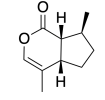 Draw a resonance stabilized conjugate base derived from
nepetalactone, circle the major resonance contributor or write
equal if they're equal, also lable the most acidic hydrogen of the
molecule.
Draw a resonance stabilized conjugate base derived from
nepetalactone, circle the major resonance contributor or write
equal if they're equal, also lable the most acidic hydrogen of the
molecule.
Q.1. Draw the conjugate base or conjugate acid of the following species Conjugate Acid Conjugate Base...
 Q.1. Draw the conjugate base or conjugate acid of the following species Conjugate Acid Conjugate Base a) OH Sb) ? CH3NH2 c) HO d) ? SO- Q.2. ) Circle the most acidic proton and cross out the least acidic protons among the shown hydrogen atoms in the following molecules. NO H NH2 O-H Η Η CH3 OH -SC-H Н" Q.3. Circle the most acidic compound and cross out the least acidic compound in each set. ou la olagla ОН OH...
IV) Acid/Base Reaction - Answer the next few questions about Molecule B, shown below. a) Circle...
 IV) Acid/Base Reaction - Answer the next few questions about Molecule B, shown below. a) Circle the terms that correctly describe the molecule. H-bond acceptor dextrorotatory contains ketone racemic has enantiomer H-bond donor Molecule B [a] = -27.8° optically active contains aldehyde levorotatory b) Molecule B can react with another molecule in an acid/base reaction (shown below). olgan In the spaces provided, please do the following: i) Draw the structure of the missing molecule in the space provided. ii) Circle...
1. A hydrogen atom in the organic base pyridine, CsHsN, can be substituted by various atoms...
 1. A hydrogen atom in the organic base pyridine, CsHsN, can be substituted by various atoms or groups to give XCsH4N, where X is an atom such as Cl or a group such as CH3. The following table gives K, values for the conjugate acids of a variety of substituted pyridines. Atom or Group X (aq) + HCl(aq) → (aq) + Cl-(aq) NO K, of Conjugate Acid 5.9 x 10⁻² 1.5 x 10⁻⁴ 6.8 x 10⁻⁶ 1.0 x 10⁻⁶ н....
Apprica 1. (a) For each of the Bronsted-Lowery acid base reactions below, draw the conjugate acid...
 Apprica 1. (a) For each of the Bronsted-Lowery acid base reactions below, draw the conjugate acid and conjugate base pairs most likely to form. (b) Circle the set of arrows that best describe the equilibrium for each reaction. (3pts for each correct conjugate pair, 1 pt for each correct set of arrows) equilibrium arrows conjugate base conjugate acid (0) -H + он conjugate base conjugate acid (II) NaH + conjugate base conjugate acid
21) Consider the following structures I-IV. Circle the two species that represent resor sonance structures H....
 21) Consider the following structures I-IV. Circle the two species that represent resor sonance structures H. O: :0: H .H N. N: 22) Circle the base and the conjugate base in the following reaction но CH,COO CH COOH HO IV ш II Chapter 3 particular molecule? 23) Why do z bonds confer reactivity on a A) Because n bonds are diffficult to break in chemical reactions. B) Because z bonds make a molecule an acid. C) Because z bonds are...
Draw all major resonance structures of the conjugate base of acetophenone. The most acidic hydrogen atom...
 Draw all major resonance structures of the conjugate base of acetophenone. The most acidic hydrogen atom in acetophenone is drawn in red. Interactive 3D display mode Draw the molecule on the canvas by choosing buttons from the Tools (for bonds), Atoms, and Advanced Template toolbars, including charges where needed. The single bond is active by default. Draw a mechanism for this reaction. Interactive 3D display mode Edit the reaction by drawing all steps in the appropriate boxes and connecting them...
10 46·The weak base(s) in the following list is (are) (II) I (TV) HyCOs(aq) + H2O(l)-?...
 10 46·The weak base(s) in the following list is (are) (II) I (TV) HyCOs(aq) + H2O(l)-? H,0. (aq) + HCOs (aq CH COOH Ho)Ho (aq) CH,COO-(aq) NaOH(aq) + CH3NH2 (aq) HsO(1) -Na.(aq) OH (aq) + () A) Only IV 47. Which of the following is the Arhenius Theory of acids and bases? (A) + H2O(I)- + CHIH'(aq) ?? (aq) + (B) Only V (C) IV & V DI.n&V An acid dissociates in water to form hydrogen ions (H") and a...
Determine the theoretical and percent yield for this lab Wednerdouy 13 CH 4521-8: Crossed Aldol Condensation:...
 Determine the theoretical and percent yield for this lab
Wednerdouy 13 CH 4521-8: Crossed Aldol Condensation: Synthesls of trans-p-anisalacetophenone Ketones that contain an a-hydrogen (a hydrogen on the C right next door to the carbonyl group) can be tabilized via keto-enol tautomerization, or through the loss of the a-hydrogen to form an enolate anion. enolate anion Enolate ions actas nudbophiles and are considerable more reactive than tois. The enolate on i the subject of today's experiment. The formation of an...
Determine the theoretical and percent yield for this lab
Wednerdouy 13 CH 4521-8: Crossed Aldol Condensation: Synthesls of trans-p-anisalacetophenone Ketones that contain an a-hydrogen (a hydrogen on the C right next door to the carbonyl group) can be tabilized via keto-enol tautomerization, or through the loss of the a-hydrogen to form an enolate anion. enolate anion Enolate ions actas nudbophiles and are considerable more reactive than tois. The enolate on i the subject of today's experiment. The formation of an...
 Draw one resonance structure for each of the conjugate bases formed by removal of the labeled protons (H4, H7, and H.) in acetanilide. Your structures should show all unshared electron pairs. Rank these protons in order of increasing acidity and explain the order you chose. нь N но Ha Acetanilide Part 1 out of 3 draw structure ... draw structure... draw structure ... H, removed H removed Hremoved Proline is an unusual amino acid because its Natom on the a...
 Draw a resonance stabilized conjugate base derived from
nepetalactone, circle the major resonance contributor or write
equal if they're equal, also lable the most acidic hydrogen of the
molecule.
Draw a resonance stabilized conjugate base derived from
nepetalactone, circle the major resonance contributor or write
equal if they're equal, also lable the most acidic hydrogen of the
molecule.
 Q.1. Draw the conjugate base or conjugate acid of the following species Conjugate Acid Conjugate Base a) OH Sb) ? CH3NH2 c) HO d) ? SO- Q.2. ) Circle the most acidic proton and cross out the least acidic protons among the shown hydrogen atoms in the following molecules. NO H NH2 O-H Η Η CH3 OH -SC-H Н" Q.3. Circle the most acidic compound and cross out the least acidic compound in each set. ou la olagla ОН OH...
 IV) Acid/Base Reaction - Answer the next few questions about Molecule B, shown below. a) Circle the terms that correctly describe the molecule. H-bond acceptor dextrorotatory contains ketone racemic has enantiomer H-bond donor Molecule B [a] = -27.8° optically active contains aldehyde levorotatory b) Molecule B can react with another molecule in an acid/base reaction (shown below). olgan In the spaces provided, please do the following: i) Draw the structure of the missing molecule in the space provided. ii) Circle...
 1. A hydrogen atom in the organic base pyridine, CsHsN, can be substituted by various atoms or groups to give XCsH4N, where X is an atom such as Cl or a group such as CH3. The following table gives K, values for the conjugate acids of a variety of substituted pyridines. Atom or Group X (aq) + HCl(aq) → (aq) + Cl-(aq) NO K, of Conjugate Acid 5.9 x 10⁻² 1.5 x 10⁻⁴ 6.8 x 10⁻⁶ 1.0 x 10⁻⁶ н....
 Apprica 1. (a) For each of the Bronsted-Lowery acid base reactions below, draw the conjugate acid and conjugate base pairs most likely to form. (b) Circle the set of arrows that best describe the equilibrium for each reaction. (3pts for each correct conjugate pair, 1 pt for each correct set of arrows) equilibrium arrows conjugate base conjugate acid (0) -H + он conjugate base conjugate acid (II) NaH + conjugate base conjugate acid
 21) Consider the following structures I-IV. Circle the two species that represent resor sonance structures H. O: :0: H .H N. N: 22) Circle the base and the conjugate base in the following reaction но CH,COO CH COOH HO IV ш II Chapter 3 particular molecule? 23) Why do z bonds confer reactivity on a A) Because n bonds are diffficult to break in chemical reactions. B) Because z bonds make a molecule an acid. C) Because z bonds are...
 Draw all major resonance structures of the conjugate base of acetophenone. The most acidic hydrogen atom in acetophenone is drawn in red. Interactive 3D display mode Draw the molecule on the canvas by choosing buttons from the Tools (for bonds), Atoms, and Advanced Template toolbars, including charges where needed. The single bond is active by default. Draw a mechanism for this reaction. Interactive 3D display mode Edit the reaction by drawing all steps in the appropriate boxes and connecting them...
 10 46·The weak base(s) in the following list is (are) (II) I (TV) HyCOs(aq) + H2O(l)-? H,0. (aq) + HCOs (aq CH COOH Ho)Ho (aq) CH,COO-(aq) NaOH(aq) + CH3NH2 (aq) HsO(1) -Na.(aq) OH (aq) + () A) Only IV 47. Which of the following is the Arhenius Theory of acids and bases? (A) + H2O(I)- + CHIH'(aq) ?? (aq) + (B) Only V (C) IV & V DI.n&V An acid dissociates in water to form hydrogen ions (H") and a...
 Determine the theoretical and percent yield for this lab
Wednerdouy 13 CH 4521-8: Crossed Aldol Condensation: Synthesls of trans-p-anisalacetophenone Ketones that contain an a-hydrogen (a hydrogen on the C right next door to the carbonyl group) can be tabilized via keto-enol tautomerization, or through the loss of the a-hydrogen to form an enolate anion. enolate anion Enolate ions actas nudbophiles and are considerable more reactive than tois. The enolate on i the subject of today's experiment. The formation of an...
Determine the theoretical and percent yield for this lab
Wednerdouy 13 CH 4521-8: Crossed Aldol Condensation: Synthesls of trans-p-anisalacetophenone Ketones that contain an a-hydrogen (a hydrogen on the C right next door to the carbonyl group) can be tabilized via keto-enol tautomerization, or through the loss of the a-hydrogen to form an enolate anion. enolate anion Enolate ions actas nudbophiles and are considerable more reactive than tois. The enolate on i the subject of today's experiment. The formation of an...
Most questions answered within 3 hours.
-
Where is the error in this code sequence?
String s1 = "Hello";
String s2 = "ello";...
asked 10 months ago -
Financial data for Joel de Paris, Inc., for last year
follow:
Joel de Paris, Inc.
Balance...
asked 10 months ago -
Consider this reaction:
Al2(SO4)3 (aq)+ BaCl3
(aq) Al2Cl6 (aq)- +
3BaSO4(s) . What is the...
asked 10 months ago -
Suppose that Savneet is considering increasing her
recent random sample from 20 car rentals to 40...
asked 10 months ago -
Trucks arrive at an unloading terminal at an average rate of 120
per hour.
Trucks arrive...
asked 10 months ago -
Why are methanol and ethanol completely soluble in water while
octanol is not very little soluble....
asked 10 months ago -
A facilities manager at a university reads in a research report
that the mean amount of...
asked 10 months ago -
When the CuSO4 is rehydrated by adding water to the anhydrous
compound, is this an endothermic...
asked 10 months ago -
A ray of sunlight is passing from diamond into crown glass; the
angle of incidence is...
asked 10 months ago -
A block of mass 0.249 kg is placed on top of a light, vertical
spring of...
asked 10 months ago -
how do the kidneys compensate in the presences of acidosis
a) trigger hyperventilate
b) reserve acid...
asked 10 months ago -
Question 501 pts
The rental rate of capital to the firm increases. Which of the
following...
asked 10 months ago