


Homework Answers
Add Answer to:
please answer questions 1-4
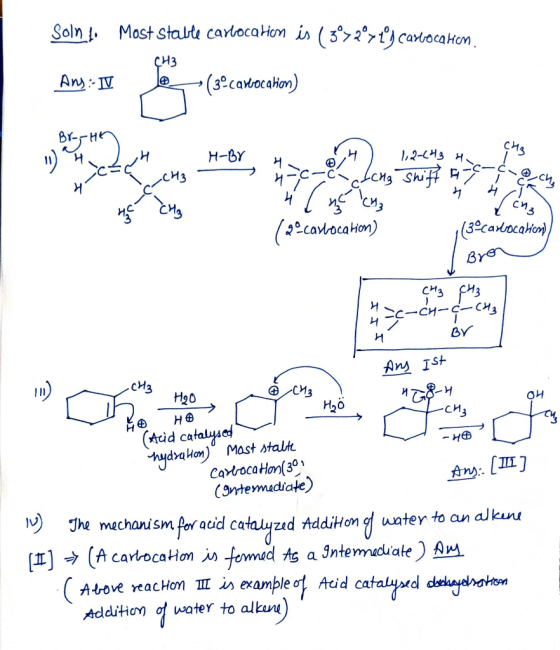
Question 1 Which of the following is the most stable carbocation? СН3...
please answer questions 9-12 Question 9 1 pts Which of the following statements describes the reactivity...
 please answer questions 9-12
Question 9 1 pts Which of the following statements describes the reactivity of alkynes? An alkyne is an electron-rich molecule and therefore reacts as a nucleophile. When a symmetrical internal alkyne reacts with HBr, two products are formed. Unlike alkenes, alkynes fail to undergo electrophilic addition reactions The o bonds of alkynes are greater in energy than the rt bonds and, therefore, are more reactive Alkynes react as electrophiles, whereas alkenes react as nucleophiles What is...
please answer questions 9-12
Question 9 1 pts Which of the following statements describes the reactivity of alkynes? An alkyne is an electron-rich molecule and therefore reacts as a nucleophile. When a symmetrical internal alkyne reacts with HBr, two products are formed. Unlike alkenes, alkynes fail to undergo electrophilic addition reactions The o bonds of alkynes are greater in energy than the rt bonds and, therefore, are more reactive Alkynes react as electrophiles, whereas alkenes react as nucleophiles What is...
please answer for me all questions 1-20 1) Identify the alkyl halide that reacts the fastest...
 please answer for me all questions 1-20
1) Identify the alkyl halide that reacts the fastest in a Sn2 reaction. A) chloromethane B) 2-chloro-2-methylpropane C) 2-chlorobutane D) 1-chlorobutane 2) Identify the alkyl halide that reacts the fastest in an SN 2 reaction. A) 1-bromopropane B) 1-fluoropropane C) 1-chloropropane D) 1-iodopropane 3) Which of the following alkyl halides gives the slowest SN2 reaction? A) CH3CH2C1 B) Ci CH3CCH2CH3 CH3 C) CH3CHCH2CH3 CH2 CH3CHCHCH3 C1 СН3 4) Which of the following alkyl...
please answer for me all questions 1-20
1) Identify the alkyl halide that reacts the fastest in a Sn2 reaction. A) chloromethane B) 2-chloro-2-methylpropane C) 2-chlorobutane D) 1-chlorobutane 2) Identify the alkyl halide that reacts the fastest in an SN 2 reaction. A) 1-bromopropane B) 1-fluoropropane C) 1-chloropropane D) 1-iodopropane 3) Which of the following alkyl halides gives the slowest SN2 reaction? A) CH3CH2C1 B) Ci CH3CCH2CH3 CH3 C) CH3CHCH2CH3 CH2 CH3CHCHCH3 C1 СН3 4) Which of the following alkyl...
2) Order the following alkenes from most stable to least stable Нас Нас с-сн, н,с Hас +C- Нас н CHs -CH3 H Hе mos...
 2) Order the following alkenes from most stable to least stable Нас Нас с-сн, н,с Hас +C- Нас н CHs -CH3 H Hе most stable least stable (a) I (b) I (c) I ll (d) 7) Order the following C-H bonds from strongest to weakest. strongest weakest (a) (b) (c) II (d) 8) Which of the following is represents the lowest energy transition state for the addition of BH, to 2-methyl-1-propene? quCH «сHs нСи Нас (b) (a) Нив--н H H...
34. Which molecule is the most reactive in an S,2 reaction? (A) CH,CH,CH,CI (в) CH,CH, CH,...
 34. Which molecule is the most reactive in an S,2 reaction? (A) CH,CH,CH,CI (в) CH,CH, CH, он (C) CH, CH. CH, Oть (D) CH,CH,CH,CN 35. Which halide readily undergoes BOTH displacement (5,2) and ionization (S,1) reactions? (B) CHs (A) Br Br (D) сн,Bг (C) Br 36. Which best describes the rate-limiting step in the S,1 mechanism? (B) -c-Br (A) (D) (C) CO Br 37. Which is the least nucleophilic? (в) (CH), С (A) (CH), NH (D) HC C: (C) CH,OH...
1. (4 pts) Rank each of the following carbocations in order of stability (1 most stable...
 1. (4 pts) Rank each of the following carbocations in order of stability (1 most stable and 4 least stable). н н сH н Н,с Н,с" H сH; CH3 Hас- H 2. (6 pts total; 2 pts each) Complete the following transformations by indicating the reactant structure or the major organic product(s). Place your answer(s) in the space provided. Be certain to indicate stereochemistry where applicable. Cl2 Он cat. H2SO H-о Br Br conc. HBra) сн сна 3. (10 pts...
Question 10 (1 point) Saved What is the major product of the following reaction? HBr HBr...
 Question 10 (1 point) Saved What is the major product of the following reaction? HBr HBr -CH3 1 TV. . -CH Br CH_B II. носH,CHCH, -CH3 HOCH CH CH BI ш. BrCHCHCH, OH
CH3 (4) 1. Which of the following alkyl halides would you expect to be most reactive...
 CH3 (4) 1. Which of the following alkyl halides would you expect to be most reactive in a unimolecular reaction? a) C&H, CH, CH, CH, BY b) CH 1 CH CH Br C) CH11CCH, Br d) C6H CH2 CH CHỊ CHỊ CH3 CHỊ e) C&H, CCH Br CHE (4) 2. What would you expect to be the chief organic product(s) when tert-butyl bromide reacts with sodium acetylide, i.e., CH3 + - CH2-C-Br + Na :CECH — ? CH a) I...
Question 1: Draw the expected major product for the following reactions: НІ HC CH CH₂ HBO...
 Question 1: Draw the expected major product for the following reactions: НІ HC CH CH₂ HBO ROOR Question 2: Draw a mechanism for the following transformations: a) H₃C CH3 HCI H₂C T CH3 HAC CH3 нс с Question 3: Draw the mechanism for the following transformations: нс сH3 CH3 о (H,SO4), он H₂C7 Question 4 HĄCE 1) Hg(OAC), H, 2) NaBH, HEC CH, Question : Predict the product(s) of the following reaction: 1) BHZ. THE Н4С SCH, 2) H2O, NaOH...
PLEASE HELP WITH THESE. THANK YOU How are the following two compounds related? CH CH3 HO...
 PLEASE HELP WITH THESE. THANK
YOU
How are the following two compounds related? CH CH3 HO -H HO -Н Given the following substitution reaction, what would the effect be of changing the solvent from CH3OH to (CH3)2S=0? H- OH H OH VS HO -H H -OH H -OH HO H + CH (CH2CH2-Br NaOH CH;(CH2), CH2-OH + NaBr CH OH CH2OH A. The reaction rate will increase. OB. There is no effect on the rate of the reaction, C. The...
PLEASE HELP WITH THESE. THANK
YOU
How are the following two compounds related? CH CH3 HO -H HO -Н Given the following substitution reaction, what would the effect be of changing the solvent from CH3OH to (CH3)2S=0? H- OH H OH VS HO -H H -OH H -OH HO H + CH (CH2CH2-Br NaOH CH;(CH2), CH2-OH + NaBr CH OH CH2OH A. The reaction rate will increase. OB. There is no effect on the rate of the reaction, C. The...
how would I solve 21 and 22 Question 21 (4 points) Which of the following is...
 how would I solve 21 and 22
Question 21 (4 points) Which of the following is an SN2 reaction? OCH, OH + CH3 OH – CH3 – 0 – CH3 + H2O O CH3 I + KOH – CH3 OH + KI OCH3 CH2 I + KOH – CH2 = CH2 + H2O + OCH2 = CH2 + HCI – CH3 CH, CI Which statement is true for SN2 reactions? substitution at the stereocenter gives predominantly a racemic product O...
how would I solve 21 and 22
Question 21 (4 points) Which of the following is an SN2 reaction? OCH, OH + CH3 OH – CH3 – 0 – CH3 + H2O O CH3 I + KOH – CH3 OH + KI OCH3 CH2 I + KOH – CH2 = CH2 + H2O + OCH2 = CH2 + HCI – CH3 CH, CI Which statement is true for SN2 reactions? substitution at the stereocenter gives predominantly a racemic product O...
 please answer questions 9-12
Question 9 1 pts Which of the following statements describes the reactivity of alkynes? An alkyne is an electron-rich molecule and therefore reacts as a nucleophile. When a symmetrical internal alkyne reacts with HBr, two products are formed. Unlike alkenes, alkynes fail to undergo electrophilic addition reactions The o bonds of alkynes are greater in energy than the rt bonds and, therefore, are more reactive Alkynes react as electrophiles, whereas alkenes react as nucleophiles What is...
please answer questions 9-12
Question 9 1 pts Which of the following statements describes the reactivity of alkynes? An alkyne is an electron-rich molecule and therefore reacts as a nucleophile. When a symmetrical internal alkyne reacts with HBr, two products are formed. Unlike alkenes, alkynes fail to undergo electrophilic addition reactions The o bonds of alkynes are greater in energy than the rt bonds and, therefore, are more reactive Alkynes react as electrophiles, whereas alkenes react as nucleophiles What is...
 please answer for me all questions 1-20
1) Identify the alkyl halide that reacts the fastest in a Sn2 reaction. A) chloromethane B) 2-chloro-2-methylpropane C) 2-chlorobutane D) 1-chlorobutane 2) Identify the alkyl halide that reacts the fastest in an SN 2 reaction. A) 1-bromopropane B) 1-fluoropropane C) 1-chloropropane D) 1-iodopropane 3) Which of the following alkyl halides gives the slowest SN2 reaction? A) CH3CH2C1 B) Ci CH3CCH2CH3 CH3 C) CH3CHCH2CH3 CH2 CH3CHCHCH3 C1 СН3 4) Which of the following alkyl...
please answer for me all questions 1-20
1) Identify the alkyl halide that reacts the fastest in a Sn2 reaction. A) chloromethane B) 2-chloro-2-methylpropane C) 2-chlorobutane D) 1-chlorobutane 2) Identify the alkyl halide that reacts the fastest in an SN 2 reaction. A) 1-bromopropane B) 1-fluoropropane C) 1-chloropropane D) 1-iodopropane 3) Which of the following alkyl halides gives the slowest SN2 reaction? A) CH3CH2C1 B) Ci CH3CCH2CH3 CH3 C) CH3CHCH2CH3 CH2 CH3CHCHCH3 C1 СН3 4) Which of the following alkyl...
 2) Order the following alkenes from most stable to least stable Нас Нас с-сн, н,с Hас +C- Нас н CHs -CH3 H Hе most stable least stable (a) I (b) I (c) I ll (d) 7) Order the following C-H bonds from strongest to weakest. strongest weakest (a) (b) (c) II (d) 8) Which of the following is represents the lowest energy transition state for the addition of BH, to 2-methyl-1-propene? quCH «сHs нСи Нас (b) (a) Нив--н H H...
 34. Which molecule is the most reactive in an S,2 reaction? (A) CH,CH,CH,CI (в) CH,CH, CH, он (C) CH, CH. CH, Oть (D) CH,CH,CH,CN 35. Which halide readily undergoes BOTH displacement (5,2) and ionization (S,1) reactions? (B) CHs (A) Br Br (D) сн,Bг (C) Br 36. Which best describes the rate-limiting step in the S,1 mechanism? (B) -c-Br (A) (D) (C) CO Br 37. Which is the least nucleophilic? (в) (CH), С (A) (CH), NH (D) HC C: (C) CH,OH...
 1. (4 pts) Rank each of the following carbocations in order of stability (1 most stable and 4 least stable). н н сH н Н,с Н,с" H сH; CH3 Hас- H 2. (6 pts total; 2 pts each) Complete the following transformations by indicating the reactant structure or the major organic product(s). Place your answer(s) in the space provided. Be certain to indicate stereochemistry where applicable. Cl2 Он cat. H2SO H-о Br Br conc. HBra) сн сна 3. (10 pts...
 Question 10 (1 point) Saved What is the major product of the following reaction? HBr HBr -CH3 1 TV. . -CH Br CH_B II. носH,CHCH, -CH3 HOCH CH CH BI ш. BrCHCHCH, OH
 CH3 (4) 1. Which of the following alkyl halides would you expect to be most reactive in a unimolecular reaction? a) C&H, CH, CH, CH, BY b) CH 1 CH CH Br C) CH11CCH, Br d) C6H CH2 CH CHỊ CHỊ CH3 CHỊ e) C&H, CCH Br CHE (4) 2. What would you expect to be the chief organic product(s) when tert-butyl bromide reacts with sodium acetylide, i.e., CH3 + - CH2-C-Br + Na :CECH — ? CH a) I...
 Question 1: Draw the expected major product for the following reactions: НІ HC CH CH₂ HBO ROOR Question 2: Draw a mechanism for the following transformations: a) H₃C CH3 HCI H₂C T CH3 HAC CH3 нс с Question 3: Draw the mechanism for the following transformations: нс сH3 CH3 о (H,SO4), он H₂C7 Question 4 HĄCE 1) Hg(OAC), H, 2) NaBH, HEC CH, Question : Predict the product(s) of the following reaction: 1) BHZ. THE Н4С SCH, 2) H2O, NaOH...
 PLEASE HELP WITH THESE. THANK
YOU
How are the following two compounds related? CH CH3 HO -H HO -Н Given the following substitution reaction, what would the effect be of changing the solvent from CH3OH to (CH3)2S=0? H- OH H OH VS HO -H H -OH H -OH HO H + CH (CH2CH2-Br NaOH CH;(CH2), CH2-OH + NaBr CH OH CH2OH A. The reaction rate will increase. OB. There is no effect on the rate of the reaction, C. The...
PLEASE HELP WITH THESE. THANK
YOU
How are the following two compounds related? CH CH3 HO -H HO -Н Given the following substitution reaction, what would the effect be of changing the solvent from CH3OH to (CH3)2S=0? H- OH H OH VS HO -H H -OH H -OH HO H + CH (CH2CH2-Br NaOH CH;(CH2), CH2-OH + NaBr CH OH CH2OH A. The reaction rate will increase. OB. There is no effect on the rate of the reaction, C. The...
 how would I solve 21 and 22
Question 21 (4 points) Which of the following is an SN2 reaction? OCH, OH + CH3 OH – CH3 – 0 – CH3 + H2O O CH3 I + KOH – CH3 OH + KI OCH3 CH2 I + KOH – CH2 = CH2 + H2O + OCH2 = CH2 + HCI – CH3 CH, CI Which statement is true for SN2 reactions? substitution at the stereocenter gives predominantly a racemic product O...
how would I solve 21 and 22
Question 21 (4 points) Which of the following is an SN2 reaction? OCH, OH + CH3 OH – CH3 – 0 – CH3 + H2O O CH3 I + KOH – CH3 OH + KI OCH3 CH2 I + KOH – CH2 = CH2 + H2O + OCH2 = CH2 + HCI – CH3 CH, CI Which statement is true for SN2 reactions? substitution at the stereocenter gives predominantly a racemic product O...
Most questions answered within 3 hours.
-
Where is the error in this code sequence?
String s1 = "Hello";
String s2 = "ello";...
asked 10 months ago -
Financial data for Joel de Paris, Inc., for last year
follow:
Joel de Paris, Inc.
Balance...
asked 10 months ago -
Consider this reaction:
Al2(SO4)3 (aq)+ BaCl3
(aq) Al2Cl6 (aq)- +
3BaSO4(s) . What is the...
asked 10 months ago -
Suppose that Savneet is considering increasing her
recent random sample from 20 car rentals to 40...
asked 10 months ago -
Trucks arrive at an unloading terminal at an average rate of 120
per hour.
Trucks arrive...
asked 10 months ago -
Why are methanol and ethanol completely soluble in water while
octanol is not very little soluble....
asked 10 months ago -
A facilities manager at a university reads in a research report
that the mean amount of...
asked 10 months ago -
When the CuSO4 is rehydrated by adding water to the anhydrous
compound, is this an endothermic...
asked 10 months ago -
A ray of sunlight is passing from diamond into crown glass; the
angle of incidence is...
asked 10 months ago -
A block of mass 0.249 kg is placed on top of a light, vertical
spring of...
asked 10 months ago -
how do the kidneys compensate in the presences of acidosis
a) trigger hyperventilate
b) reserve acid...
asked 10 months ago -
Question 501 pts
The rental rate of capital to the firm increases. Which of the
following...
asked 10 months ago