1. Explain how bioavailability affects the functionality of vitamins within the body. Discuss how food preparation...
Homework Answers
1. Bioavailability- a principle in which a body is able to use only a portion of the nutrients. Vitamins, minerals and other various carotenoids vary greatly with bioavailbility. For instance, vitamin D helps with the absorption of calcium as such other nutrients like zinc and iron can also act against each other. Moreover, some substances called anti-nutrients interferes with some sort of vitamins and minerals. The oxalates which is found in green leafy vegetables interferes with the absorption of minerals like zinc, calcium and iron as does the phytic acid found in some high-fiber diets.
2. Vitamins play a different role in body metabolism. They function as a parts of enzymes involved in energy release and storage. Moreover, the water soluble vitamins such as vitamin B acts as coenzymes in the breakdown of nutrients and in the building of proteins, RNA and DNA.
3. Dragon fruit is the unique source of niacin. FUNCTION: Niacin is a B vitamin that helps to activate over 200 enzymes, the majority of which breakdown of carbohydrates, fats and proteins, which in turn the body uses it as energy and for keeping the digestive system, nervous system, skin, hair and eyes healthy.
4. Folate is found in wide range of foods including legumes, eggs, cereals and fruits. It is one of a B vitamin needed to make red and white blood cells in the bone marrow, convert carbohydrates into energy and produce DNA and RNA. It reduces the risk of a) congenital deformities b) depression c) breast cancers and d) maintains a healthy heart.
Add Answer to:
1. Explain how bioavailability affects the functionality of
vitamins
within the body. Discuss how food preparation...
Chapter 10 Self Study Assignment)(Compatibility Mode]- Word Malings Reviewe t Draw Desige Layout Refee answers in w...
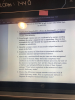 Chapter 10 Self Study Assignment)(Compatibility Mode]- Word Malings Reviewe t Draw Desige Layout Refee answers in word doc or pdf formats only before 5pm on 10/25/18 1. Explain how bioavailability affects the functionality of vitamins vitamin bioavailability 2. Even though vitamins are not considered to be energy-yielding nutrients they play a required role in metabolism. How do they accomplish this task? Identify the significant roles of B complex vitamins in metabolism. 3. Describe a unique source of niacin and a...
explain how bioavailability affects the functionality of vitamins within the body. Discuss how food preparation methods...
explain how bioavailability affects the functionality of vitamins within the body. Discuss how food preparation methods affect vitamin bioavailability.
QUESTION 1 Which of the following is an advanced form of thiamin deficiency seen in alcoholics?...
QUESTION 1 Which of the following is an advanced form of thiamin deficiency seen in alcoholics? a. Scurvy b. Megaloblastic anemia c. Wernicke-korsokoff syndrome. d. Pellagra QUESTION 2 Which of the following is NOT TRUE about thiamin? a. A deficiency is called beriberi. b. Polyneuritis is a symptom of thiamin toxicity. c. Thiamin deficiency is common among people who subsist almost exclusively on white rice. d. Lean pork is a nutrient-dense source of naturally occurring thiamin. QUESTION 3 Which of...
Chapter 7 Vitamins Define what a vitamin is. Identify the fat-soluble vitamins and water-soluble vitamins. Identify...
Chapter 7 Vitamins Define what a vitamin is. Identify the fat-soluble vitamins and water-soluble vitamins. Identify the functions and major food sources of: vitamin A, Vitamin D, Vitamin E, Vitamin K, Vitamin C, Vitamin B12, niacin, thiamin, riboflavin, pantothenic acid, folic acid/folate, and beta-carotene. What are the functions of antioxidants. Identify the causes of beriberi, scurvy, pellagra, hemolytic anemia, megaloblastic anemia, macrocytic anemia, pernicious anemia, neural tube defects, rickets, osteoporosis, xerophthalmia. Chapter 8 Minerals Define what a mineral is. What...
1.) Discuss the roles of the B vitamins in energy metabolism. Why might vegans develop a...
1.) Discuss the roles of the B vitamins in energy metabolism. Why might vegans develop a vitamin B12 deficiency? 2.)Describe the differences between fat-soluble vitamins and water-soluble vitamins. Explain how vitamin D differs from all other vitamins in both dietary requirements and functions in the body. 3.)Define bioavailability of vitamins. List four factors that affect bioavailability of vitamins and give examples for each. 4.)Consider the following hypothetical discussion you are having with a friend. She tells you that you should...
1. Which of the following food preparation or storage methods affects the amounts of vitamins in...
1. Which of the following food preparation or storage methods affects the amounts of vitamins in foods? milling of grains boiling vegetables drying apples all of these 2.Which of the following statements is true about vitamin-like compounds such as choline and inositol? Even healthy people have a high risk of developing deficiencies of vitamin-like compounds. The body can synthesize these compounds. Manufacturers are required to add these compounds to infant formulas. None of these 3. A retinol equivalent is the...
A deficiency of the B vitamin niacin can result in which of the following? A beriberi B Wernicke encephalopathy c pellagra D scurvy 1. Which organ contributes to the homeostasis of riboflavin...
 A deficiency of the B vitamin niacin can result in which of the following? A beriberi B Wernicke encephalopathy c pellagra D scurvy 1. Which organ contributes to the homeostasis of riboflavin by removing the excess? A kidney B liver C stomach D duodenum 2. 3. How does smoking seem to affect biotin catabolism in women? A increases it decreases it B C changes it into a toxic substance D there is no effect on biotin from smoking The primary...
11. Which of the following is an attribute of a scientifically literate person? A. Creates templates...
11. Which of the following is an attribute of a scientifically literate person? A. Creates templates for understanding B. Constructs hypothetical arguments for discussion C. Respects the rights of self determination D. Uses scientific evidence to understand the natural world E. Reports on social phenomena consistently 12. Which of the following does not contribute to the Calorie intake of a person? A. Protein B. Carbohydrate C. Fat D. Alcohol E. Water 13. Which of the following is not a technique...
Chapter 1: 1. What is homeostasis? 2. What are the 3 sources of energy? 3. What...
 Chapter 1: 1. What is homeostasis? 2. What are the 3 sources of energy? 3. What is the storage form of carbohydrate? Chapter 2: 1. Trace the path of a piece of bread from ingestion to absorption to elimination. 2. Describe chemical and mechanical digestion Chapter 3: 1. What are the monosacchrides? 2. Describe the digestion of carbohydrate. What enzyme is involved? 3. What is fiber? Chapter 4: 1. Describe the digestion of fat. What enzyme is involved? 2. How...
Need answers. thank you VOCABULARY BUILDER Misspelled Words Find the words below that are misspelled; circle...
 Need answers. thank you
VOCABULARY BUILDER Misspelled Words Find the words below that are misspelled; circle them, and then correctly spell them in the spaces provided. Then fill in the blanks below with the correct vocabulary terms from the following list. amino acids digestion clectrolytes nutrients antioxident nutrition basal metabolic rate extracellulare oxydation calories fat-soluble presearvatives catalist glycogen processed foods cellulose homeostasis saturated fats major mineral coenzyeme trace minerals diaretics metabolism water-soluable 1. Artificial flavors, colors, and commonly added to...
Need answers. thank you
VOCABULARY BUILDER Misspelled Words Find the words below that are misspelled; circle them, and then correctly spell them in the spaces provided. Then fill in the blanks below with the correct vocabulary terms from the following list. amino acids digestion clectrolytes nutrients antioxident nutrition basal metabolic rate extracellulare oxydation calories fat-soluble presearvatives catalist glycogen processed foods cellulose homeostasis saturated fats major mineral coenzyeme trace minerals diaretics metabolism water-soluable 1. Artificial flavors, colors, and commonly added to...
 Chapter 10 Self Study Assignment)(Compatibility Mode]- Word Malings Reviewe t Draw Desige Layout Refee answers in word doc or pdf formats only before 5pm on 10/25/18 1. Explain how bioavailability affects the functionality of vitamins vitamin bioavailability 2. Even though vitamins are not considered to be energy-yielding nutrients they play a required role in metabolism. How do they accomplish this task? Identify the significant roles of B complex vitamins in metabolism. 3. Describe a unique source of niacin and a...
 A deficiency of the B vitamin niacin can result in which of the following? A beriberi B Wernicke encephalopathy c pellagra D scurvy 1. Which organ contributes to the homeostasis of riboflavin by removing the excess? A kidney B liver C stomach D duodenum 2. 3. How does smoking seem to affect biotin catabolism in women? A increases it decreases it B C changes it into a toxic substance D there is no effect on biotin from smoking The primary...
 Chapter 1: 1. What is homeostasis? 2. What are the 3 sources of energy? 3. What is the storage form of carbohydrate? Chapter 2: 1. Trace the path of a piece of bread from ingestion to absorption to elimination. 2. Describe chemical and mechanical digestion Chapter 3: 1. What are the monosacchrides? 2. Describe the digestion of carbohydrate. What enzyme is involved? 3. What is fiber? Chapter 4: 1. Describe the digestion of fat. What enzyme is involved? 2. How...
 Need answers. thank you
VOCABULARY BUILDER Misspelled Words Find the words below that are misspelled; circle them, and then correctly spell them in the spaces provided. Then fill in the blanks below with the correct vocabulary terms from the following list. amino acids digestion clectrolytes nutrients antioxident nutrition basal metabolic rate extracellulare oxydation calories fat-soluble presearvatives catalist glycogen processed foods cellulose homeostasis saturated fats major mineral coenzyeme trace minerals diaretics metabolism water-soluable 1. Artificial flavors, colors, and commonly added to...
Need answers. thank you
VOCABULARY BUILDER Misspelled Words Find the words below that are misspelled; circle them, and then correctly spell them in the spaces provided. Then fill in the blanks below with the correct vocabulary terms from the following list. amino acids digestion clectrolytes nutrients antioxident nutrition basal metabolic rate extracellulare oxydation calories fat-soluble presearvatives catalist glycogen processed foods cellulose homeostasis saturated fats major mineral coenzyeme trace minerals diaretics metabolism water-soluable 1. Artificial flavors, colors, and commonly added to...
Most questions answered within 3 hours.
-
Where is the error in this code sequence?
String s1 = "Hello";
String s2 = "ello";...
asked 11 months ago -
Financial data for Joel de Paris, Inc., for last year
follow:
Joel de Paris, Inc.
Balance...
asked 11 months ago -
Consider this reaction:
Al2(SO4)3 (aq)+ BaCl3
(aq) Al2Cl6 (aq)- +
3BaSO4(s) . What is the...
asked 11 months ago -
Suppose that Savneet is considering increasing her
recent random sample from 20 car rentals to 40...
asked 11 months ago -
Trucks arrive at an unloading terminal at an average rate of 120
per hour.
Trucks arrive...
asked 11 months ago -
Why are methanol and ethanol completely soluble in water while
octanol is not very little soluble....
asked 11 months ago -
A facilities manager at a university reads in a research report
that the mean amount of...
asked 11 months ago -
When the CuSO4 is rehydrated by adding water to the anhydrous
compound, is this an endothermic...
asked 11 months ago -
A ray of sunlight is passing from diamond into crown glass; the
angle of incidence is...
asked 11 months ago -
A block of mass 0.249 kg is placed on top of a light, vertical
spring of...
asked 11 months ago -
how do the kidneys compensate in the presences of acidosis
a) trigger hyperventilate
b) reserve acid...
asked 11 months ago -
Question 501 pts
The rental rate of capital to the firm increases. Which of the
following...
asked 11 months ago