


Homework Answers

Add Answer to:
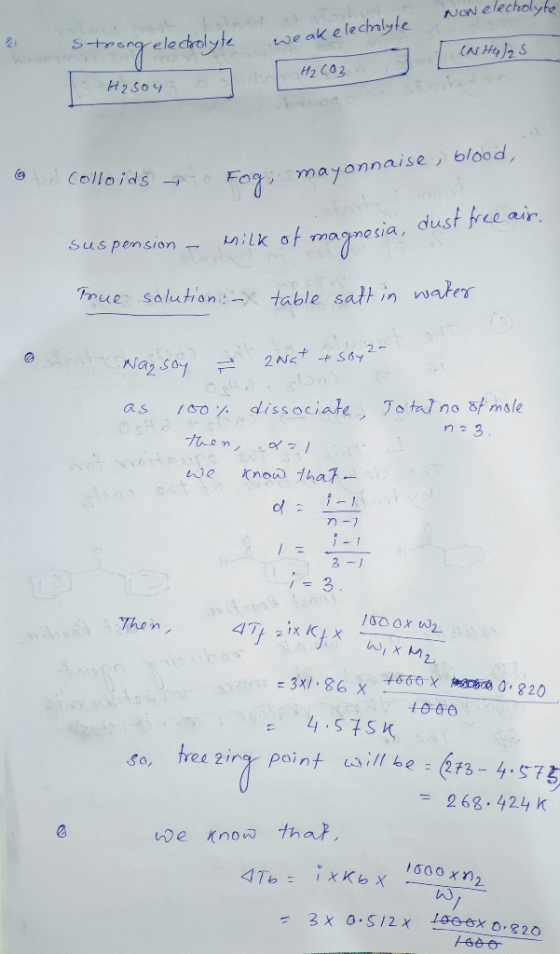
Classify each compound as a strong electrolyte, weak electrolyte, or nonelectrolyte. Strong electrolyte Weak electrolyte Nonelectrolyte...
Help me get the correct answers for the pictures and the question at the bottom. Cell...
 Help me get the correct answers for the pictures and the
question at the bottom.
Cell membranes are semipermeable, and osmosis is an ongoing process in the body. Differences in osmotic pressure inside and outside a red blood cell can result in crenation (shriveling) or hemolysis (rupture). The diagram shows three solutions: an isotonic solution, a hypertonic solution, and a hypotonic solution. Place the appropriate red blood cell in each solution. isotonic solution hypertonic solution hypotonic solution Answer Bank The...
Help me get the correct answers for the pictures and the
question at the bottom.
Cell membranes are semipermeable, and osmosis is an ongoing process in the body. Differences in osmotic pressure inside and outside a red blood cell can result in crenation (shriveling) or hemolysis (rupture). The diagram shows three solutions: an isotonic solution, a hypertonic solution, and a hypotonic solution. Place the appropriate red blood cell in each solution. isotonic solution hypertonic solution hypotonic solution Answer Bank The...
Classify each compound as a strong electrolyte, weak electrolyte, or nonelectrolyte. Strong electrolyte Weak elec...
 Classify each compound as a strong electrolyte, weak electrolyte, or nonelectrolyte. Strong electrolyte Weak electrolyte Nonelectrolyte H.SO, H.CO (NH),S Answer Bank Classify the mixtures as colloids, suspensions, or true solutions. Colloids Suspensions True solutions milk of magnesia blod table salt in water dast free air mayonnaise Answer Bank Assuming 100% dissociation, calculate the freezing point and the boiling point of 0.820 mol Na, So, in 1.00 kg water. freezing point: 1.25 boiling point: -4.57
check my answer please if it wrong correct me Osmosis is an ongoing process in the...
 check my answer please if it wrong correct me
Osmosis is an ongoing process in the body that is possible because cell membranes are selectively permeable (semipermeable). Osmosis effects can be observed in the lab. For example, differences in osmotic pressure inside and outside a red blood cell can result in crenation (shriveling) or hemolysis (rupture). For this reason, care must be taken when administering intravenous (IV) fluids to hospital patients. If the IV solution has a different concentration from...
check my answer please if it wrong correct me
Osmosis is an ongoing process in the body that is possible because cell membranes are selectively permeable (semipermeable). Osmosis effects can be observed in the lab. For example, differences in osmotic pressure inside and outside a red blood cell can result in crenation (shriveling) or hemolysis (rupture). For this reason, care must be taken when administering intravenous (IV) fluids to hospital patients. If the IV solution has a different concentration from...
sUOnsan2 Compreted 6 out of 8 00 14 HR MIN SEC Resources Save Answer mplete Question...
 sUOnsan2 Compreted 6 out of 8 00 14 HR MIN SEC Resources Save Answer mplete Question 7 of 8 > mplete Cell membranes are semipermeable and osmosis is an ongoing process in the body. Differences in osmotic pressure inside and outside a red blood cell can result in crenation (shriveling) or hemolysis (rupture). nplete The diagram shows three solutions: an isotonic solution, a hypertonic solution, and a hypotonic solution. Place the appropriate red blood cell in cach solution, plete plete...
93 SUluiunl Ul CUnUlu. 6. With regards to red blood cells (RBCS), what are 2 examples...
 93 SUluiunl Ul CUnUlu. 6. With regards to red blood cells (RBCS), what are 2 examples of solutions of glucose and NaCI that are isotonic? 7. What would happen to a RBC if it was put into a hypotonic solution? 8. Into a hypertonic solution? 9. Label these solutions as hypotonic, hypertonic, or isotonic. Also state what would happen to the red blood cell (crenation, stays nice, hemolysis) Solution: Нуро-, Нурer-, or Isotonic Crenation, Stays Nice, Hemolysis 3% NaCl DI...
When blood cells are placed in a 0.50% (m/v) solution of NaCl, this is considered: crenation...
 When blood cells are placed in a 0.50% (m/v) solution of NaCl, this is considered: crenation isotonic hypotonic hypertonic Question 19 (4 points) Saved When blood cells are placed in a 0.9% (m/v) solution of NaCl, this is considered: isotonic hemolysis hypotonic crenation
Name: Lab 7: Solutions, Colloids, and Suspensions: 1) Please determine which are colloids (C), solutions (S), or su...
 Name: Lab 7: Solutions, Colloids, and Suspensions: 1) Please determine which are colloids (C), solutions (S), or suspensions (SP): Milk Salt in water Tomato juice Flour in water White wine Charcoal in water Powdered chalk in water Cup of tea (no milk) 2) What are the concentrations of isotonic solutions for red blood cells? Fill in this table: Solution: Hypo-, Hyper-, or Isotonic Crenation, Stays Nice, Hemolysis 2% NaCl DI HO 6% glucose 0.1% NaCl 1% glucose
25) In the process known as osmosis, concentration. A) solute; lower solute D) solvent; lower solvent moves through...
 25) In the process known as osmosis, concentration. A) solute; lower solute D) solvent; lower solvent moves through a semipermeable membrane into an area o B) solute; higher solute E) solvent; higher solvent C) solvent; lower solute 26) A solution that has an osmotic pressure less than that of red blood cells is called A) saturated. B) hypertonic. C) isotonic. D) hypotonic. E) unsaturated 27) A red blood cell will undergo crenation in A) water. B) 0.5% NaCl. C) 3%...
Question 12 of 38 > Classify each compound as a strong electrolyte, weak electrolyte, or nonelectrolyte....
 Question 12 of 38 > Classify each compound as a strong electrolyte, weak electrolyte, or nonelectrolyte. Strong electrolyte Weak electrolyte Nonelectrolyte FOCI H,SO HCN Answer Bank
Drag the terms on the left to the appropriate blanks on the right. Reset Help non-electrolyte...
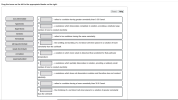 Drag the terms on the left to the appropriate blanks on the right. Reset Help non-electrolyte - refers to a solution having greater osmolarity than 0.30 Osmol. hypotonic a substance which dissociates completely in solution, providing a relatively large hypertonic number ions to conduct electricity isotonic - refers to two solutions having the same osmolarity. hemolysis strong electrolyte the swelling and bursting of a red blood cell when placed in a solution of lower osmolarity than the cell itself. weak...
 Help me get the correct answers for the pictures and the
question at the bottom.
Cell membranes are semipermeable, and osmosis is an ongoing process in the body. Differences in osmotic pressure inside and outside a red blood cell can result in crenation (shriveling) or hemolysis (rupture). The diagram shows three solutions: an isotonic solution, a hypertonic solution, and a hypotonic solution. Place the appropriate red blood cell in each solution. isotonic solution hypertonic solution hypotonic solution Answer Bank The...
Help me get the correct answers for the pictures and the
question at the bottom.
Cell membranes are semipermeable, and osmosis is an ongoing process in the body. Differences in osmotic pressure inside and outside a red blood cell can result in crenation (shriveling) or hemolysis (rupture). The diagram shows three solutions: an isotonic solution, a hypertonic solution, and a hypotonic solution. Place the appropriate red blood cell in each solution. isotonic solution hypertonic solution hypotonic solution Answer Bank The...
 Classify each compound as a strong electrolyte, weak electrolyte, or nonelectrolyte. Strong electrolyte Weak electrolyte Nonelectrolyte H.SO, H.CO (NH),S Answer Bank Classify the mixtures as colloids, suspensions, or true solutions. Colloids Suspensions True solutions milk of magnesia blod table salt in water dast free air mayonnaise Answer Bank Assuming 100% dissociation, calculate the freezing point and the boiling point of 0.820 mol Na, So, in 1.00 kg water. freezing point: 1.25 boiling point: -4.57
 check my answer please if it wrong correct me
Osmosis is an ongoing process in the body that is possible because cell membranes are selectively permeable (semipermeable). Osmosis effects can be observed in the lab. For example, differences in osmotic pressure inside and outside a red blood cell can result in crenation (shriveling) or hemolysis (rupture). For this reason, care must be taken when administering intravenous (IV) fluids to hospital patients. If the IV solution has a different concentration from...
check my answer please if it wrong correct me
Osmosis is an ongoing process in the body that is possible because cell membranes are selectively permeable (semipermeable). Osmosis effects can be observed in the lab. For example, differences in osmotic pressure inside and outside a red blood cell can result in crenation (shriveling) or hemolysis (rupture). For this reason, care must be taken when administering intravenous (IV) fluids to hospital patients. If the IV solution has a different concentration from...
 sUOnsan2 Compreted 6 out of 8 00 14 HR MIN SEC Resources Save Answer mplete Question 7 of 8 > mplete Cell membranes are semipermeable and osmosis is an ongoing process in the body. Differences in osmotic pressure inside and outside a red blood cell can result in crenation (shriveling) or hemolysis (rupture). nplete The diagram shows three solutions: an isotonic solution, a hypertonic solution, and a hypotonic solution. Place the appropriate red blood cell in cach solution, plete plete...
 93 SUluiunl Ul CUnUlu. 6. With regards to red blood cells (RBCS), what are 2 examples of solutions of glucose and NaCI that are isotonic? 7. What would happen to a RBC if it was put into a hypotonic solution? 8. Into a hypertonic solution? 9. Label these solutions as hypotonic, hypertonic, or isotonic. Also state what would happen to the red blood cell (crenation, stays nice, hemolysis) Solution: Нуро-, Нурer-, or Isotonic Crenation, Stays Nice, Hemolysis 3% NaCl DI...
 When blood cells are placed in a 0.50% (m/v) solution of NaCl, this is considered: crenation isotonic hypotonic hypertonic Question 19 (4 points) Saved When blood cells are placed in a 0.9% (m/v) solution of NaCl, this is considered: isotonic hemolysis hypotonic crenation
 Name: Lab 7: Solutions, Colloids, and Suspensions: 1) Please determine which are colloids (C), solutions (S), or suspensions (SP): Milk Salt in water Tomato juice Flour in water White wine Charcoal in water Powdered chalk in water Cup of tea (no milk) 2) What are the concentrations of isotonic solutions for red blood cells? Fill in this table: Solution: Hypo-, Hyper-, or Isotonic Crenation, Stays Nice, Hemolysis 2% NaCl DI HO 6% glucose 0.1% NaCl 1% glucose
 25) In the process known as osmosis, concentration. A) solute; lower solute D) solvent; lower solvent moves through a semipermeable membrane into an area o B) solute; higher solute E) solvent; higher solvent C) solvent; lower solute 26) A solution that has an osmotic pressure less than that of red blood cells is called A) saturated. B) hypertonic. C) isotonic. D) hypotonic. E) unsaturated 27) A red blood cell will undergo crenation in A) water. B) 0.5% NaCl. C) 3%...
 Question 12 of 38 > Classify each compound as a strong electrolyte, weak electrolyte, or nonelectrolyte. Strong electrolyte Weak electrolyte Nonelectrolyte FOCI H,SO HCN Answer Bank
 Drag the terms on the left to the appropriate blanks on the right. Reset Help non-electrolyte - refers to a solution having greater osmolarity than 0.30 Osmol. hypotonic a substance which dissociates completely in solution, providing a relatively large hypertonic number ions to conduct electricity isotonic - refers to two solutions having the same osmolarity. hemolysis strong electrolyte the swelling and bursting of a red blood cell when placed in a solution of lower osmolarity than the cell itself. weak...
Most questions answered within 3 hours.
-
Where is the error in this code sequence?
String s1 = "Hello";
String s2 = "ello";...
asked 11 months ago -
Financial data for Joel de Paris, Inc., for last year
follow:
Joel de Paris, Inc.
Balance...
asked 11 months ago -
Consider this reaction:
Al2(SO4)3 (aq)+ BaCl3
(aq) Al2Cl6 (aq)- +
3BaSO4(s) . What is the...
asked 11 months ago -
Suppose that Savneet is considering increasing her
recent random sample from 20 car rentals to 40...
asked 11 months ago -
Trucks arrive at an unloading terminal at an average rate of 120
per hour.
Trucks arrive...
asked 11 months ago -
Why are methanol and ethanol completely soluble in water while
octanol is not very little soluble....
asked 11 months ago -
A facilities manager at a university reads in a research report
that the mean amount of...
asked 11 months ago -
When the CuSO4 is rehydrated by adding water to the anhydrous
compound, is this an endothermic...
asked 11 months ago -
A ray of sunlight is passing from diamond into crown glass; the
angle of incidence is...
asked 11 months ago -
A block of mass 0.249 kg is placed on top of a light, vertical
spring of...
asked 11 months ago -
how do the kidneys compensate in the presences of acidosis
a) trigger hyperventilate
b) reserve acid...
asked 11 months ago -
Question 501 pts
The rental rate of capital to the firm increases. Which of the
following...
asked 11 months ago