
Homework Answers
Add Answer to:
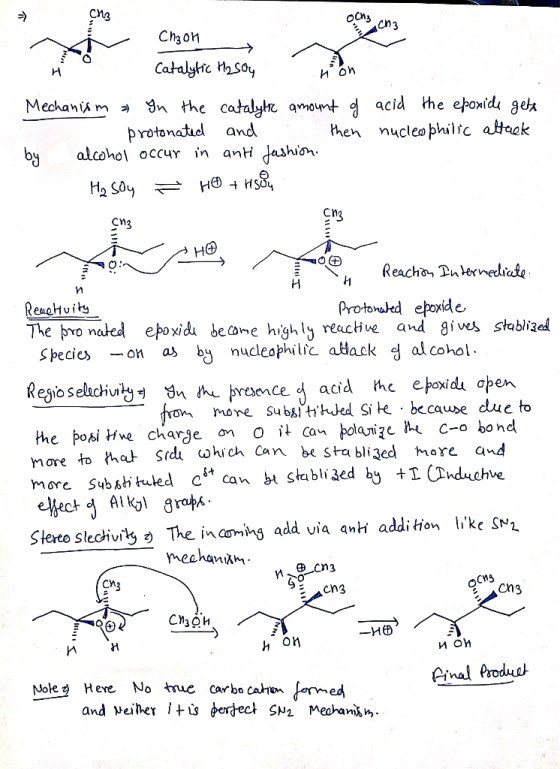
3. Give the structure of the major expected product (with proper regio- and stereochemistry) for this...
(12 points) Draw the structure of the major product to be expected in Include stereochemistry when...
 (12 points) Draw the structure of the major product to be expected in Include stereochemistry when appropriate. 15. each of the following eactions. CH3CH2CH2CH2CH2CH2OH a. H2SO4 K2Cr207 OH H2SO4 b. NaBH4 CH3 C.
1. PREDICT THE PRODUCT: Provide the structure of the major product expected from the following reactions...
 1. PREDICT THE PRODUCT: Provide the structure of the major product expected from the following reactions or reaction sequences. Make sure you account for any regio- and/or stereochemistry! (24 pts.) H2O 1. Hg(OAC), CH, OH 2. NaBH H2SO4 H20 1) BH-THF 2) H202, KOH HBr Bry, H2O HBr ROOR 1. BH3-THF 2. H2O2, NaOH H20, H2SO4 1. NaNH2 H2 H-CEC-CH2 CH2 CH3 2. CH CH Br Lindlar cat 1. Sia BH-THF 2. H2O2, H2O
For each of the following reactions, predict the major product(s), showing proper stereochemistry where appropriate. Write...
 For each of the following reactions, predict the major product(s), showing proper stereochemistry where appropriate. Write N.R. if no reaction occurs. Identify the type of substrate (1º, 2º, 3º, allylic, benzylic, aryl, vinyl) and give the type of mechanism by which each product is formed (Syl, Sy2, E, B). Assume the reaction is at room temperature if no temperature or heat symbol (A) is indicated. You may work in peer groups; if so, turn in just one copy with the...
3. Give the major product for the following reactions. Proper stereochemistry (shape, geometry) is required /...
 3. Give the major product for the following reactions. Proper stereochemistry (shape, geometry) is required / chirality may be ignored. Watch out for carbocation rearrangement, and proper geometry like cis/trans. (Be sure to check your work by working out reaction mechanisms - practice, practice, practice!) a. 2-methyl-1-pentene + HBr b. 2-methyl-1-pentene + HBr/peroxide c. 3-methyl-1-pentene + H30+
Give the structure of the major organic product(s) expected for the final step. If there is...
 Give the structure of the major organic product(s) expected for
the final step. If there is no reaction indicate it. Include
stereochemistry where needed. Assume standard aqueous work up
IZ 1. LIAIH4, Et20 2. CH3COCI
Give the structure of the major organic product(s) expected for
the final step. If there is no reaction indicate it. Include
stereochemistry where needed. Assume standard aqueous work up
IZ 1. LIAIH4, Et20 2. CH3COCI
For each of the following reactions, predict the major product(s), showing proper stereochemistry where appropriate. Write...
 For each of the following reactions, predict the major product(s), showing proper stereochemistry where appropriate. Write N.R. if no reaction occurs. Identify the type of substrate (1º, 2º, 3º, allylic, benzylic, aryl, vinyl) and give the type of mechanism by which each product is formed (Syl. Sy 2, E.B). Assume the reaction is at room temperature if no temperature or heat symbol (A) is indicated. You may work in peer groups; if so, turn in just one copy with the...
Draw the major organic product generated in the reaction below. Pay particular attention to regio- and stereochemical de...
 Draw the major organic product generated in the reaction below.
Pay particular attention to regio- and stereochemical detail.
Draw the major organic product generated in the reaction below.
Pay particular attention to regio- and stereochemical detail.
Draw the major organic product generated in the reaction below.
Pay particular attention to regio- and stereochemical detail.
Provide the structure of the major organic product of the
reaction below.
Provide the structure of the major organic product of the
reaction below.
Provide the...
Draw the major organic product generated in the reaction below.
Pay particular attention to regio- and stereochemical detail.
Draw the major organic product generated in the reaction below.
Pay particular attention to regio- and stereochemical detail.
Draw the major organic product generated in the reaction below.
Pay particular attention to regio- and stereochemical detail.
Provide the structure of the major organic product of the
reaction below.
Provide the structure of the major organic product of the
reaction below.
Provide the...
22. Draw the major organic product generated in the reaction below. Pay particular attention to regio-...
 22. Draw the major organic product generated in the reaction below. Pay particular attention to regio- and stereochemical detail. CH3 -CH3 КMпO, (warm, conc.) CH3 Н 23. Give the structure of the alkene which would yield the following products upon ozonolysis- reduction. CН3CОCH3 + СН3CH2CHO 24. Provide the reagents necessary to complete the following transformation. Он , Br + enantiomer ОН Please give your answer below:
1. Draw the structure of the principal organic product and predict the stereochemistry to be expected...
 1. Draw the structure of the principal organic product and predict the stereochemistry to be expected from the reaction of (IR, 2R)-/-bromo-2-methylcyclohexane with each of the following: a. NaOCH, in CH,OH at 60° d. NaNH, in NH, dt 50° b. aqueous CH OH at 140° e. aqueous CH.CH,OH at 25° c. Nal in DMSO at 40° 2. Draw the major product(s) (showing appropriate stereochemistry when necessary) for the following reactions. Indicate the mechanism(s) in operation (SNI,SN2, El. or E2). CH,...
Draw the corresponding structure and stereochemistry of the major organic product(s) in the reaction of 1-hexene...
Draw the corresponding structure and stereochemistry of the major organic product(s) in the reaction of 1-hexene with H2SO4/H2O.
 (12 points) Draw the structure of the major product to be expected in Include stereochemistry when appropriate. 15. each of the following eactions. CH3CH2CH2CH2CH2CH2OH a. H2SO4 K2Cr207 OH H2SO4 b. NaBH4 CH3 C.
 1. PREDICT THE PRODUCT: Provide the structure of the major product expected from the following reactions or reaction sequences. Make sure you account for any regio- and/or stereochemistry! (24 pts.) H2O 1. Hg(OAC), CH, OH 2. NaBH H2SO4 H20 1) BH-THF 2) H202, KOH HBr Bry, H2O HBr ROOR 1. BH3-THF 2. H2O2, NaOH H20, H2SO4 1. NaNH2 H2 H-CEC-CH2 CH2 CH3 2. CH CH Br Lindlar cat 1. Sia BH-THF 2. H2O2, H2O
 For each of the following reactions, predict the major product(s), showing proper stereochemistry where appropriate. Write N.R. if no reaction occurs. Identify the type of substrate (1º, 2º, 3º, allylic, benzylic, aryl, vinyl) and give the type of mechanism by which each product is formed (Syl, Sy2, E, B). Assume the reaction is at room temperature if no temperature or heat symbol (A) is indicated. You may work in peer groups; if so, turn in just one copy with the...
 3. Give the major product for the following reactions. Proper stereochemistry (shape, geometry) is required / chirality may be ignored. Watch out for carbocation rearrangement, and proper geometry like cis/trans. (Be sure to check your work by working out reaction mechanisms - practice, practice, practice!) a. 2-methyl-1-pentene + HBr b. 2-methyl-1-pentene + HBr/peroxide c. 3-methyl-1-pentene + H30+
 Give the structure of the major organic product(s) expected for
the final step. If there is no reaction indicate it. Include
stereochemistry where needed. Assume standard aqueous work up
IZ 1. LIAIH4, Et20 2. CH3COCI
Give the structure of the major organic product(s) expected for
the final step. If there is no reaction indicate it. Include
stereochemistry where needed. Assume standard aqueous work up
IZ 1. LIAIH4, Et20 2. CH3COCI
 For each of the following reactions, predict the major product(s), showing proper stereochemistry where appropriate. Write N.R. if no reaction occurs. Identify the type of substrate (1º, 2º, 3º, allylic, benzylic, aryl, vinyl) and give the type of mechanism by which each product is formed (Syl. Sy 2, E.B). Assume the reaction is at room temperature if no temperature or heat symbol (A) is indicated. You may work in peer groups; if so, turn in just one copy with the...
 Draw the major organic product generated in the reaction below.
Pay particular attention to regio- and stereochemical detail.
Draw the major organic product generated in the reaction below.
Pay particular attention to regio- and stereochemical detail.
Draw the major organic product generated in the reaction below.
Pay particular attention to regio- and stereochemical detail.
Provide the structure of the major organic product of the
reaction below.
Provide the structure of the major organic product of the
reaction below.
Provide the...
Draw the major organic product generated in the reaction below.
Pay particular attention to regio- and stereochemical detail.
Draw the major organic product generated in the reaction below.
Pay particular attention to regio- and stereochemical detail.
Draw the major organic product generated in the reaction below.
Pay particular attention to regio- and stereochemical detail.
Provide the structure of the major organic product of the
reaction below.
Provide the structure of the major organic product of the
reaction below.
Provide the...
 22. Draw the major organic product generated in the reaction below. Pay particular attention to regio- and stereochemical detail. CH3 -CH3 КMпO, (warm, conc.) CH3 Н 23. Give the structure of the alkene which would yield the following products upon ozonolysis- reduction. CН3CОCH3 + СН3CH2CHO 24. Provide the reagents necessary to complete the following transformation. Он , Br + enantiomer ОН Please give your answer below:
 1. Draw the structure of the principal organic product and predict the stereochemistry to be expected from the reaction of (IR, 2R)-/-bromo-2-methylcyclohexane with each of the following: a. NaOCH, in CH,OH at 60° d. NaNH, in NH, dt 50° b. aqueous CH OH at 140° e. aqueous CH.CH,OH at 25° c. Nal in DMSO at 40° 2. Draw the major product(s) (showing appropriate stereochemistry when necessary) for the following reactions. Indicate the mechanism(s) in operation (SNI,SN2, El. or E2). CH,...
Most questions answered within 3 hours.
-
Where is the error in this code sequence?
String s1 = "Hello";
String s2 = "ello";...
asked 10 months ago -
Financial data for Joel de Paris, Inc., for last year
follow:
Joel de Paris, Inc.
Balance...
asked 10 months ago -
Consider this reaction:
Al2(SO4)3 (aq)+ BaCl3
(aq) Al2Cl6 (aq)- +
3BaSO4(s) . What is the...
asked 10 months ago -
Suppose that Savneet is considering increasing her
recent random sample from 20 car rentals to 40...
asked 10 months ago -
Trucks arrive at an unloading terminal at an average rate of 120
per hour.
Trucks arrive...
asked 10 months ago -
Why are methanol and ethanol completely soluble in water while
octanol is not very little soluble....
asked 10 months ago -
A facilities manager at a university reads in a research report
that the mean amount of...
asked 10 months ago -
When the CuSO4 is rehydrated by adding water to the anhydrous
compound, is this an endothermic...
asked 10 months ago -
A ray of sunlight is passing from diamond into crown glass; the
angle of incidence is...
asked 10 months ago -
A block of mass 0.249 kg is placed on top of a light, vertical
spring of...
asked 10 months ago -
how do the kidneys compensate in the presences of acidosis
a) trigger hyperventilate
b) reserve acid...
asked 10 months ago -
Question 501 pts
The rental rate of capital to the firm increases. Which of the
following...
asked 10 months ago