
Homework Answers
Chiral centre: A chiral centre is an atom that has four different groups bonded to it in such a manner that it has a nonsuperimposable mirror image.
Absolute Configuration: Chiral centre are label as R or S. this is called absolute configuration. To determine R , S configuration 1st we have to give number to the four substituent( 1 for highest prior to 4 for lowest prior). a curved arrow is drawn from the highest priority (1) substituent to the lowest priority (4) substituent. If the arrow points in a counterclockwise direction the configuration at stereocenter is considered S and If the arrow points in a clockwise direction the configuration at stereocenter is considered R.
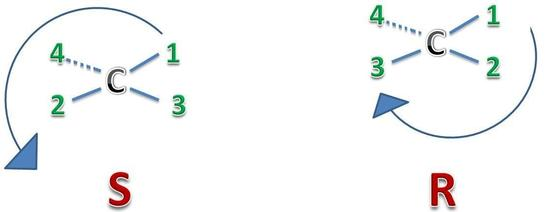
The given molecules have chiral centres. I am showing the chiral centers and the absolute configurations.

Add Answer to:
4 Identily all the chiral centers with an asterisk () in each molecule and determine the...
Chem. 251 ** ICE-3 ** Page 2 3. What is the specific rotation of each of the following solutions? Show all of your w...
 Chem. 251 ** ICE-3 ** Page 2 3. What is the specific rotation of each of the following solutions? Show all of your work. See McMurry, sec. 5-3 and chap. 5 PPT slides 10-13. a) 1.00 g of sample is diluted to 5.00 mL. A 3.00 mL aliquot is placed in a tube that is 1.0 cm long. The observed rotation is +0.45°. b) A 0.20 g sample is diluted to 2.0 mL and placed in a 10 cm tube....
2. Star (*) the chirality centers (if any) in the following molecules. See McMurry, secs. 5-1&5-2...
 2. Star (*) the chirality centers (if any) in the following molecules. See McMurry, secs. 5-1&5-2 and chap. 5 PPT slides 7-9. Note: sp' and sp carbons cannot be chiral centers. -CH-CH.CH (a) CH,CHCOH NH, (e) CICHCHCH,OH CH, CH (d) HOCH CH,OH
4. Put an asterisk (*) next to each chiral center in the structure of erythronolide B,...
 4. Put an asterisk (*) next to each chiral center in the structure of erythronolide B, a metabone precursor to the commercial antibiotic, erythromycin. H3C .CH OH CH3 нс, Toi Erythronolide R Нас Анас OH 5. Determine whether the chirality centers in the following molecules have Rors configuration. (a) H (b) OCH2CH3 (c) OH NO-C-OH HC-CH3 H₃C-C-CH₂OH (a) HOH (b) c) HOCHZ HOCH2 CO2H 6. Are the following molecules chiral or achiral? If they are chiral, put an asterisk next...
1. Identify all the chiral centers in the y all the chiral centers in the molecule...
 1. Identify all the chiral centers in the y all the chiral centers in the molecule below: 2. For each of the pairs of compounds, de indicate if they are identical, enantiomers, diastereomers, constitutional isomers or different compounds. 3. Identify the chiral centers in the diastereomers below and label each as R or S.
are all of these identical? 4. Determine if each of the following structures i) contain chiral centers. Label Chical...
 are all of these identical?
4. Determine if each of the following structures i) contain chiral centers. Label Chical centers with an asterisk. ii) are enantiomers or not. Write "enantiomers" or "identical below each pair. (Hint: determine Ror S for each) a k al identical identical 3 CH | HỌC, OH HOA Hu H + C F ¢ identical ch; HH Br B HC CH, HẠC X 10 identical 3 4 O HC H4 4. 3 . 44 4n/ ТОН...
are all of these identical?
4. Determine if each of the following structures i) contain chiral centers. Label Chical centers with an asterisk. ii) are enantiomers or not. Write "enantiomers" or "identical below each pair. (Hint: determine Ror S for each) a k al identical identical 3 CH | HỌC, OH HOA Hu H + C F ¢ identical ch; HH Br B HC CH, HẠC X 10 identical 3 4 O HC H4 4. 3 . 44 4n/ ТОН...
4. (26 points) Identify each chiral carbon in the molecules below with an asterisk (*) and...
 4. (26 points) Identify each chiral carbon in the molecules below with an asterisk (*) and assign R or s absolute configuration to each chiral carbon. Then, state (in the box provided) whether the molecules are enantiomers, identical, diastereomers, or not related. Hint: if it looks like a Fischer projection then it is a Fischer projection. ...1111 O піон аnd and .Ley O Era o C CHO CH,OH C. H oH and OHCH IH Сн,он
This molecule has several chiral centers labeled. Indicate the R/S configuration for the center labeled B....
 This molecule has several chiral centers labeled. Indicate the R/S configuration for the center labeled B. HN NH OR os This molecule has several chiral centers labeled. Indicate the R/S configuration for the center labeled B. H3 CH3 НО СН3 НЕ ОН IIIty .(с NH2 ОН. ОН о ОН о
5. Consider the molecules shown below. (4 points) Identify all chiral centers in each molecule. Determine...
 5. Consider the molecules shown below. (4 points) Identify all chiral centers in each molecule. Determine whether each molecule is chiral or achiral. If the achiral molecules are meso, classify them as such. ОН ОН он Cl Alacan.
2. Mark all stereocenters with an asterisk (*) and assign the configuration (R or S) for...
 2. Mark all stereocenters with an asterisk (*) and assign the configuration (R or S) for each. Also write whether the molecule is chiral, achiral, or meso (3 pts each) H CH2OH b. c. tch Br Сн, 3. Name the following compounds (2 pts each) Br b.
Quiz/hw 5 due 2/20/19 1. Identify as chiral or achiral. 2. Prioritize the substituents on the...
 Quiz/hw 5 due 2/20/19 1. Identify as chiral or achiral. 2. Prioritize the substituents on the chiral carbon noted. Assign the highest priority as "1. Br, Br NH a Kers. OH 2.K 4. Assign the indicated chiral carbons as R or S CHO H2OH 5. Each molecule below has a chiral carbon. Determine the absolute configuration (R/S) for each.
 Chem. 251 ** ICE-3 ** Page 2 3. What is the specific rotation of each of the following solutions? Show all of your work. See McMurry, sec. 5-3 and chap. 5 PPT slides 10-13. a) 1.00 g of sample is diluted to 5.00 mL. A 3.00 mL aliquot is placed in a tube that is 1.0 cm long. The observed rotation is +0.45°. b) A 0.20 g sample is diluted to 2.0 mL and placed in a 10 cm tube....
 2. Star (*) the chirality centers (if any) in the following molecules. See McMurry, secs. 5-1&5-2 and chap. 5 PPT slides 7-9. Note: sp' and sp carbons cannot be chiral centers. -CH-CH.CH (a) CH,CHCOH NH, (e) CICHCHCH,OH CH, CH (d) HOCH CH,OH
 4. Put an asterisk (*) next to each chiral center in the structure of erythronolide B, a metabone precursor to the commercial antibiotic, erythromycin. H3C .CH OH CH3 нс, Toi Erythronolide R Нас Анас OH 5. Determine whether the chirality centers in the following molecules have Rors configuration. (a) H (b) OCH2CH3 (c) OH NO-C-OH HC-CH3 H₃C-C-CH₂OH (a) HOH (b) c) HOCHZ HOCH2 CO2H 6. Are the following molecules chiral or achiral? If they are chiral, put an asterisk next...
 1. Identify all the chiral centers in the y all the chiral centers in the molecule below: 2. For each of the pairs of compounds, de indicate if they are identical, enantiomers, diastereomers, constitutional isomers or different compounds. 3. Identify the chiral centers in the diastereomers below and label each as R or S.
 are all of these identical?
4. Determine if each of the following structures i) contain chiral centers. Label Chical centers with an asterisk. ii) are enantiomers or not. Write "enantiomers" or "identical below each pair. (Hint: determine Ror S for each) a k al identical identical 3 CH | HỌC, OH HOA Hu H + C F ¢ identical ch; HH Br B HC CH, HẠC X 10 identical 3 4 O HC H4 4. 3 . 44 4n/ ТОН...
are all of these identical?
4. Determine if each of the following structures i) contain chiral centers. Label Chical centers with an asterisk. ii) are enantiomers or not. Write "enantiomers" or "identical below each pair. (Hint: determine Ror S for each) a k al identical identical 3 CH | HỌC, OH HOA Hu H + C F ¢ identical ch; HH Br B HC CH, HẠC X 10 identical 3 4 O HC H4 4. 3 . 44 4n/ ТОН...
 4. (26 points) Identify each chiral carbon in the molecules below with an asterisk (*) and assign R or s absolute configuration to each chiral carbon. Then, state (in the box provided) whether the molecules are enantiomers, identical, diastereomers, or not related. Hint: if it looks like a Fischer projection then it is a Fischer projection. ...1111 O піон аnd and .Ley O Era o C CHO CH,OH C. H oH and OHCH IH Сн,он
 This molecule has several chiral centers labeled. Indicate the R/S configuration for the center labeled B. HN NH OR os This molecule has several chiral centers labeled. Indicate the R/S configuration for the center labeled B. H3 CH3 НО СН3 НЕ ОН IIIty .(с NH2 ОН. ОН о ОН о
 5. Consider the molecules shown below. (4 points) Identify all chiral centers in each molecule. Determine whether each molecule is chiral or achiral. If the achiral molecules are meso, classify them as such. ОН ОН он Cl Alacan.
 2. Mark all stereocenters with an asterisk (*) and assign the configuration (R or S) for each. Also write whether the molecule is chiral, achiral, or meso (3 pts each) H CH2OH b. c. tch Br Сн, 3. Name the following compounds (2 pts each) Br b.
 Quiz/hw 5 due 2/20/19 1. Identify as chiral or achiral. 2. Prioritize the substituents on the chiral carbon noted. Assign the highest priority as "1. Br, Br NH a Kers. OH 2.K 4. Assign the indicated chiral carbons as R or S CHO H2OH 5. Each molecule below has a chiral carbon. Determine the absolute configuration (R/S) for each.
Most questions answered within 3 hours.
-
Where is the error in this code sequence?
String s1 = "Hello";
String s2 = "ello";...
asked 10 months ago -
Financial data for Joel de Paris, Inc., for last year
follow:
Joel de Paris, Inc.
Balance...
asked 10 months ago -
Consider this reaction:
Al2(SO4)3 (aq)+ BaCl3
(aq) Al2Cl6 (aq)- +
3BaSO4(s) . What is the...
asked 10 months ago -
Suppose that Savneet is considering increasing her
recent random sample from 20 car rentals to 40...
asked 10 months ago -
Trucks arrive at an unloading terminal at an average rate of 120
per hour.
Trucks arrive...
asked 10 months ago -
Why are methanol and ethanol completely soluble in water while
octanol is not very little soluble....
asked 10 months ago -
A facilities manager at a university reads in a research report
that the mean amount of...
asked 10 months ago -
When the CuSO4 is rehydrated by adding water to the anhydrous
compound, is this an endothermic...
asked 10 months ago -
A ray of sunlight is passing from diamond into crown glass; the
angle of incidence is...
asked 10 months ago -
A block of mass 0.249 kg is placed on top of a light, vertical
spring of...
asked 10 months ago -
how do the kidneys compensate in the presences of acidosis
a) trigger hyperventilate
b) reserve acid...
asked 10 months ago -
Question 501 pts
The rental rate of capital to the firm increases. Which of the
following...
asked 10 months ago