

Homework Answers
Add Answer to:
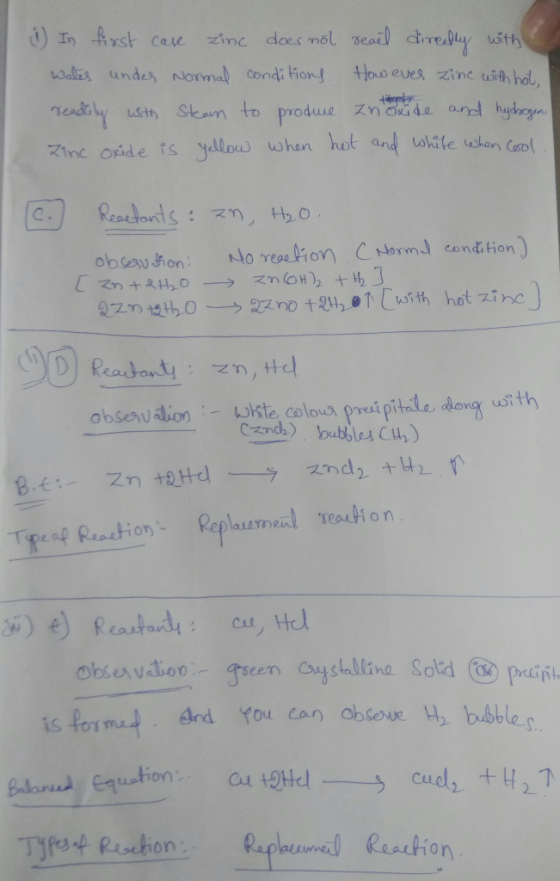
c. Reactants Type of Reaction Observations Balanced Equation d. Reactants Type of Reaction Observations Balanced Equation...
i. Add about 2 mL of cobalt (II) chloride solution, CoCl2(aq), to a clean test tube....
 i. Add about 2 mL of cobalt (II) chloride solution, CoCl2(aq), to a clean test tube. Add about 10 drops of the sodium hydroxide solution, NaOH(aq). Observe any changes. j. Place about 2 mL of silver nitrate solution, AgNO3(aq), to a clean test tube. Add about 10 drops of 3M hydrochloric acid, HCl(aq). Observe any changes. i. Reactants Type of Reaction Observations: Balanced Equation i. Reactants Type of Reaction Observations: Balanced Equation
Chemical Reactions & Equations System 1: Reaction of Sodium Metal with Water Observations: solution start to...
Chemical Reactions & Equations System 1: Reaction of Sodium Metal with Water Observations: solution start to produce vapor and eventually catches fire Reaction Type: Balanced Equation: (Na with H2O) Reaction in words: The hydrogen gas produced in the reaction can ignite in the presence of oxygen gas in the air. If you observed flames above, it was likely due to this reaction Reaction Type: Balanced Equation: (hydrogen gas with oxygen gas): System 2: Combustion Reactions of Methane (CH4) and Cellulose...
f. Place about 2 mL of iron (III) chloride solution, FeCl3(aq), in a test tube. Add...
 f. Place about 2 mL of iron (III) chloride solution, FeCl3(aq), in a test tube. Add about 10 drops of potassium thiocyanate solution, KSCN(aq). Observe any changes. Place a small amount of solid sodium bicarbonate, NaHCO3. also known as baking soda) in the bottom of a dry test tube. Cover the bottom to a depth of about 1 em. Quickly pour in about 2 mL of acetic acid, HC2H309. Observe any changes. There are really two reactions occurring here, one...
TABLE 9.11 Observations Tube 3: Zinc strip and about 4 mL lead(m) nitrate Reactants Products Balanced...
 TABLE 9.11 Observations Tube 3: Zinc strip and about 4 mL lead(m) nitrate Reactants Products Balanced Chemical Equation Total Ionic Equation Net Ionic Equation Which element is oxidized? Which element is reduced? Which element is more active? Which element is less active? TABLE 9.12 Observations Tube 4: Zinc strip and about 4 ml magnesium sullate Reactants Products Balanced Chemical Equation Total lonic Equation Net Ionic Equation Which element is oxidized? Which element is reduced? Which element is more active? Which...
1. Add hydrochloric acid (HCl) to magnesium metal in a test tube. Observations: &
1. Add hydrochloric acid (HCl) to magnesium metal in a test tube. Observations: Reactants: Products: Chemical Equation: 2. Add calcium nitrate to sodium carbonate in a test tube. Observations: Reactants: Products: Chemical Equation: 3. Add iron (III) nitrate to sodium hydroxide in a test tube. Observations: Reactants: Products: Chemical Equation: 4. Add copper (II) nitrate to ammonium hydroxide in a test tube. For writing the equation, the Roman numeral indicates the charge of copper. Caution: ammonium hydroxide produces very pungent...
2. Obtain and clean with sandpaper to expose the surface: 3 pieces of zinc, 2 pieces...
 2. Obtain and clean with sandpaper to expose the surface: 3 pieces of zinc, 2 pieces of copper and 1 piece of lead. Place 6 test tubes in a rack and label each appropriately. Observe the contents of each of the test tubes for evidence of a reaction. Record your observations in the tables below. TABLE 9.9 Observations Tube 1: Copper strip and approximately 4 mL silver nitrate Spiks colnd was present unyctal like l<parku on top of the piece...
Hello, these are part of one question, please show work. Data Sheet Chemical Reactions 2. Obtain a...
 Hello, these are part of one question, please show work.
Data Sheet Chemical Reactions 2. Obtain and clean with sandpaper to expose the surface: 3 pieces of zine, 2 pieces of copper and 1 piece of lead. Place 6 test tubes in a rack and label each appropriately. Observe the contents of each of the test tubes for evidence of a reaction. Record your observations in the tables below TABLE 55 Observations Tube I: Copper strip and approximately 1 mL...
Hello, these are part of one question, please show work.
Data Sheet Chemical Reactions 2. Obtain and clean with sandpaper to expose the surface: 3 pieces of zine, 2 pieces of copper and 1 piece of lead. Place 6 test tubes in a rack and label each appropriately. Observe the contents of each of the test tubes for evidence of a reaction. Record your observations in the tables below TABLE 55 Observations Tube I: Copper strip and approximately 1 mL...
Dala Shoot! Chemical Reactions 2. in a clean, dry test tube, place a small amount of...
 Dala Shoot! Chemical Reactions 2. in a clean, dry test tube, place a small amount of calcium carbonate. Carefully and slowly add about 3 mL of 6 M HCl solution. Remember that carbonic acid is NOT a gas, but an aqueous acid that decomposes into carbon dioxide and water. Allow the reaction to proceed for 60 seconds, the insert a lit splint into the test tube. What did you observe? From your observation, determine what gas is evolved. TABLE 9.17...
Dala Shoot! Chemical Reactions 2. in a clean, dry test tube, place a small amount of...
 Dala Shoot! Chemical Reactions 2. in a clean, dry test tube, place a small amount of calcium carbonate. Carefully and slowly add about 3 mL of 6 M HCl solution. Remember that carbonic acid is NOT a gas, but an aqueous acid that decomposes into carbon dioxide and water. Allow the reaction to proceed for 60 seconds, the insert a lit splint into the test tube. What did you observe? From your observation, determine what gas is evolved. TABLE 9.17...
1 Reaction C: Copper(II) Hydroxide to Copper(IT) Oxide Observations: The solntich goes from a light blue...
 1 Reaction C: Copper(II) Hydroxide to Copper(IT) Oxide Observations: The solntich goes from a light blue to a dark blue. when heated the solution turns to a green/black color. Balanced Molecular Equation: Balanced Net lonie Equation: Reaction D: Copper(IT) Oxide to Copper(II) Sulfate Observations: "The back sond is dissolved in the acid. This creates a light blue / Clear solurich Balanced Molecular Equation: Balanced Net Ionic Equation: Reaction E: Copper(II) Sulfate to Copper Metal (and Dissolution of excess Mg) Observations:...
 i. Add about 2 mL of cobalt (II) chloride solution, CoCl2(aq), to a clean test tube. Add about 10 drops of the sodium hydroxide solution, NaOH(aq). Observe any changes. j. Place about 2 mL of silver nitrate solution, AgNO3(aq), to a clean test tube. Add about 10 drops of 3M hydrochloric acid, HCl(aq). Observe any changes. i. Reactants Type of Reaction Observations: Balanced Equation i. Reactants Type of Reaction Observations: Balanced Equation
 f. Place about 2 mL of iron (III) chloride solution, FeCl3(aq), in a test tube. Add about 10 drops of potassium thiocyanate solution, KSCN(aq). Observe any changes. Place a small amount of solid sodium bicarbonate, NaHCO3. also known as baking soda) in the bottom of a dry test tube. Cover the bottom to a depth of about 1 em. Quickly pour in about 2 mL of acetic acid, HC2H309. Observe any changes. There are really two reactions occurring here, one...
 TABLE 9.11 Observations Tube 3: Zinc strip and about 4 mL lead(m) nitrate Reactants Products Balanced Chemical Equation Total Ionic Equation Net Ionic Equation Which element is oxidized? Which element is reduced? Which element is more active? Which element is less active? TABLE 9.12 Observations Tube 4: Zinc strip and about 4 ml magnesium sullate Reactants Products Balanced Chemical Equation Total lonic Equation Net Ionic Equation Which element is oxidized? Which element is reduced? Which element is more active? Which...
 2. Obtain and clean with sandpaper to expose the surface: 3 pieces of zinc, 2 pieces of copper and 1 piece of lead. Place 6 test tubes in a rack and label each appropriately. Observe the contents of each of the test tubes for evidence of a reaction. Record your observations in the tables below. TABLE 9.9 Observations Tube 1: Copper strip and approximately 4 mL silver nitrate Spiks colnd was present unyctal like l<parku on top of the piece...
 Hello, these are part of one question, please show work.
Data Sheet Chemical Reactions 2. Obtain and clean with sandpaper to expose the surface: 3 pieces of zine, 2 pieces of copper and 1 piece of lead. Place 6 test tubes in a rack and label each appropriately. Observe the contents of each of the test tubes for evidence of a reaction. Record your observations in the tables below TABLE 55 Observations Tube I: Copper strip and approximately 1 mL...
Hello, these are part of one question, please show work.
Data Sheet Chemical Reactions 2. Obtain and clean with sandpaper to expose the surface: 3 pieces of zine, 2 pieces of copper and 1 piece of lead. Place 6 test tubes in a rack and label each appropriately. Observe the contents of each of the test tubes for evidence of a reaction. Record your observations in the tables below TABLE 55 Observations Tube I: Copper strip and approximately 1 mL...
 Dala Shoot! Chemical Reactions 2. in a clean, dry test tube, place a small amount of calcium carbonate. Carefully and slowly add about 3 mL of 6 M HCl solution. Remember that carbonic acid is NOT a gas, but an aqueous acid that decomposes into carbon dioxide and water. Allow the reaction to proceed for 60 seconds, the insert a lit splint into the test tube. What did you observe? From your observation, determine what gas is evolved. TABLE 9.17...
 Dala Shoot! Chemical Reactions 2. in a clean, dry test tube, place a small amount of calcium carbonate. Carefully and slowly add about 3 mL of 6 M HCl solution. Remember that carbonic acid is NOT a gas, but an aqueous acid that decomposes into carbon dioxide and water. Allow the reaction to proceed for 60 seconds, the insert a lit splint into the test tube. What did you observe? From your observation, determine what gas is evolved. TABLE 9.17...
 1 Reaction C: Copper(II) Hydroxide to Copper(IT) Oxide Observations: The solntich goes from a light blue to a dark blue. when heated the solution turns to a green/black color. Balanced Molecular Equation: Balanced Net lonie Equation: Reaction D: Copper(IT) Oxide to Copper(II) Sulfate Observations: "The back sond is dissolved in the acid. This creates a light blue / Clear solurich Balanced Molecular Equation: Balanced Net Ionic Equation: Reaction E: Copper(II) Sulfate to Copper Metal (and Dissolution of excess Mg) Observations:...
Most questions answered within 3 hours.
-
Where is the error in this code sequence?
String s1 = "Hello";
String s2 = "ello";...
asked 10 months ago -
Financial data for Joel de Paris, Inc., for last year
follow:
Joel de Paris, Inc.
Balance...
asked 10 months ago -
Consider this reaction:
Al2(SO4)3 (aq)+ BaCl3
(aq) Al2Cl6 (aq)- +
3BaSO4(s) . What is the...
asked 10 months ago -
Suppose that Savneet is considering increasing her
recent random sample from 20 car rentals to 40...
asked 10 months ago -
Trucks arrive at an unloading terminal at an average rate of 120
per hour.
Trucks arrive...
asked 10 months ago -
Why are methanol and ethanol completely soluble in water while
octanol is not very little soluble....
asked 10 months ago -
A facilities manager at a university reads in a research report
that the mean amount of...
asked 10 months ago -
When the CuSO4 is rehydrated by adding water to the anhydrous
compound, is this an endothermic...
asked 10 months ago -
A ray of sunlight is passing from diamond into crown glass; the
angle of incidence is...
asked 10 months ago -
A block of mass 0.249 kg is placed on top of a light, vertical
spring of...
asked 10 months ago -
how do the kidneys compensate in the presences of acidosis
a) trigger hyperventilate
b) reserve acid...
asked 10 months ago -
Question 501 pts
The rental rate of capital to the firm increases. Which of the
following...
asked 10 months ago