

Homework Answers


Add Answer to:
1. Technology and the Industrial Revolution Global Income, Maddison Historical Estimates Ind. 0500 1000 Year 1500...
1. Technology and the Industrial Revolution Global Income, Maddison Historical Estimates Ind gh 0500 1000 Year...
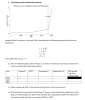 1. Technology and the Industrial Revolution Global Income, Maddison Historical Estimates Ind gh 0500 1000 Year 1500 2000 Suppose Britain's economy in the year 1500 is described by the following production function and parameters: s= 0.2 δ 0.1 The capital stock is K15001 1.1. Fil in the following table, which will give us a sense of how Britain's economy evolved in the centuries before the Industrial Revolution. Year Capital K GDPY Investmentl Depreciation Dt GDP growth rate from previous year...
Draw a steady-state diagram showing Britain before the industrial revolution. Label the capital stock in 1500...
 Draw a steady-state diagram showing Britain before the
industrial revolution. Label the capital stock in 1500 through 1502
as well as
steady-state capital, steady-state investment, and steady-state
output.
Numbers #1.4-1.6
1 Technology and the Industrial Revolution Global Income, Maddison Historical Estimatas nd Re Suppose Britain's economy in the year 1500 is described by the following production function and parameters: s= 0.2 8 0.1 The capital stock is K1500 = 1 1.1. Fill in the following table, which will give us...
Draw a steady-state diagram showing Britain before the
industrial revolution. Label the capital stock in 1500 through 1502
as well as
steady-state capital, steady-state investment, and steady-state
output.
Numbers #1.4-1.6
1 Technology and the Industrial Revolution Global Income, Maddison Historical Estimatas nd Re Suppose Britain's economy in the year 1500 is described by the following production function and parameters: s= 0.2 8 0.1 The capital stock is K1500 = 1 1.1. Fill in the following table, which will give us...
Consider the Solow growth model without labor force or technology growth. Suppose y = k^1/4, total...
Consider the Solow growth model without labor force or technology growth. Suppose y = k^1/4, total factor productivity is constant and equal to 1, s = 0.40, and d = 0.05. Find the steady-state capital––labor ratio for this economy. Find the steady-state real GDP per worker for this economy. Find the steady-state level of investment per worker for this economy. Find the steady-state level of consumption per worker for this economy.
everything but part a Problem Set 8 1. (Population growth but no technology growth) Consider an...
 everything but part a
Problem Set 8 1. (Population growth but no technology growth) Consider an economy that is described by the production function Y = K L. Moreover the de preciation rate of capital is 8 = 0.05 and the population growth rate is n=0.05 (there is no technology growth) (a) What is the per-worker production function, that is y = ¥? What is the marginal product of capital, that is 8X? (b) If the saving rate is 8...
everything but part a
Problem Set 8 1. (Population growth but no technology growth) Consider an economy that is described by the production function Y = K L. Moreover the de preciation rate of capital is 8 = 0.05 and the population growth rate is n=0.05 (there is no technology growth) (a) What is the per-worker production function, that is y = ¥? What is the marginal product of capital, that is 8X? (b) If the saving rate is 8...
1. Consider the simple version of the Solow Growth Model discussed in class summarized by these...
 1. Consider the simple version of the Solow Growth Model discussed in class summarized by these four equations: Consumers save a fraction s of output: 1 = sy Capital grows as follows: K' = 1 + (1 - 8)K Firms use capital to make output: Y = AK 0.3 There is no government or trade: Y = C+/ where Y is GDP, / is investment, C is consumption, s is the savings rate, K is the capital stock this year,...
An economy is described by the standard Solow model without technological progress and without population growth....
An economy is described by the standard Solow model without technological progress and without population growth. You are given the information that the savings rate dropped to a lower level in this economy, but you don’t know by how much it did so. Suppose that prior to the drop in s the economy was in a steady-state with a capital stock per worker higher than the Golden Rule level. a. In a graph which should include the production function, the...
Just 5-8 1 Analytics of the Solow Model In the Solow economy, people consume a good...
 Just 5-8
1 Analytics of the Solow Model In the Solow economy, people consume a good that firms produce with technology Y (which we assume to be constant) and f is a Cobb-Douglas production function Af (K, L), where A is TFP f(K, L) KL-a Here K is the stock of capital, which depreciates at rate δ E (0, 1) per period, and L is the labor force, which grows exogenously at rate n > 0. Here employment is always...
Just 5-8
1 Analytics of the Solow Model In the Solow economy, people consume a good that firms produce with technology Y (which we assume to be constant) and f is a Cobb-Douglas production function Af (K, L), where A is TFP f(K, L) KL-a Here K is the stock of capital, which depreciates at rate δ E (0, 1) per period, and L is the labor force, which grows exogenously at rate n > 0. Here employment is always...
How do the national income accounts change if social security payments increase? A) Consumption falls. B)...
How do the national income accounts change if social security payments increase? A) Consumption falls. B) Consumption rises. C) Savings rise. D) This change is not captured in the national income accounts. How do the national income accounts change if unemployment benefits paid to people increase? A) Consumption falls. B) Consumption rises. C) Savings rise. D) This change is not captured in the national income accounts. How do the national income accounts change if national defense spending increases? A) Government...
1. (45 points) Consider the closed-economy one-period macroeconomic model developed in class. The...
1. (45 points) Consider the closed-economy one-period macroeconomic model developed in class. The consumer is endowed with h units of time, and chooses consumption C and leisure ` to maximize U = log(C) + θlog(`), subject to the budget constraint C = wNs + π. Production is described by Y = zNd . Government spending G is financed with a proportional revenue tax (tax rate τ ) on the firm. (a) (10) Find the firm’s optimal demand for labor Nd...
following statement is F/F 1. Between 1921 and 1928; the New Economy Policy allowed markets to...
 following statement is F/F
1. Between 1921 and 1928; the New Economy Policy allowed
markets to help economic recovery in the USSR. 2. The
administrative-command economy was the mechanism for resource
allocation in the former USSR between 1992 and WOLRD WAR II, but
was abandoned in 1946. 3. Although the Soviet Union was a large
country with a large population, it had few natural resources. 4.
Although the USSR had an elected government, the decision-making
authority in the economy was...
following statement is F/F
1. Between 1921 and 1928; the New Economy Policy allowed
markets to help economic recovery in the USSR. 2. The
administrative-command economy was the mechanism for resource
allocation in the former USSR between 1992 and WOLRD WAR II, but
was abandoned in 1946. 3. Although the Soviet Union was a large
country with a large population, it had few natural resources. 4.
Although the USSR had an elected government, the decision-making
authority in the economy was...
 1. Technology and the Industrial Revolution Global Income, Maddison Historical Estimates Ind gh 0500 1000 Year 1500 2000 Suppose Britain's economy in the year 1500 is described by the following production function and parameters: s= 0.2 δ 0.1 The capital stock is K15001 1.1. Fil in the following table, which will give us a sense of how Britain's economy evolved in the centuries before the Industrial Revolution. Year Capital K GDPY Investmentl Depreciation Dt GDP growth rate from previous year...
 Draw a steady-state diagram showing Britain before the
industrial revolution. Label the capital stock in 1500 through 1502
as well as
steady-state capital, steady-state investment, and steady-state
output.
Numbers #1.4-1.6
1 Technology and the Industrial Revolution Global Income, Maddison Historical Estimatas nd Re Suppose Britain's economy in the year 1500 is described by the following production function and parameters: s= 0.2 8 0.1 The capital stock is K1500 = 1 1.1. Fill in the following table, which will give us...
Draw a steady-state diagram showing Britain before the
industrial revolution. Label the capital stock in 1500 through 1502
as well as
steady-state capital, steady-state investment, and steady-state
output.
Numbers #1.4-1.6
1 Technology and the Industrial Revolution Global Income, Maddison Historical Estimatas nd Re Suppose Britain's economy in the year 1500 is described by the following production function and parameters: s= 0.2 8 0.1 The capital stock is K1500 = 1 1.1. Fill in the following table, which will give us...
 everything but part a
Problem Set 8 1. (Population growth but no technology growth) Consider an economy that is described by the production function Y = K L. Moreover the de preciation rate of capital is 8 = 0.05 and the population growth rate is n=0.05 (there is no technology growth) (a) What is the per-worker production function, that is y = ¥? What is the marginal product of capital, that is 8X? (b) If the saving rate is 8...
everything but part a
Problem Set 8 1. (Population growth but no technology growth) Consider an economy that is described by the production function Y = K L. Moreover the de preciation rate of capital is 8 = 0.05 and the population growth rate is n=0.05 (there is no technology growth) (a) What is the per-worker production function, that is y = ¥? What is the marginal product of capital, that is 8X? (b) If the saving rate is 8...
 1. Consider the simple version of the Solow Growth Model discussed in class summarized by these four equations: Consumers save a fraction s of output: 1 = sy Capital grows as follows: K' = 1 + (1 - 8)K Firms use capital to make output: Y = AK 0.3 There is no government or trade: Y = C+/ where Y is GDP, / is investment, C is consumption, s is the savings rate, K is the capital stock this year,...
 Just 5-8
1 Analytics of the Solow Model In the Solow economy, people consume a good that firms produce with technology Y (which we assume to be constant) and f is a Cobb-Douglas production function Af (K, L), where A is TFP f(K, L) KL-a Here K is the stock of capital, which depreciates at rate δ E (0, 1) per period, and L is the labor force, which grows exogenously at rate n > 0. Here employment is always...
Just 5-8
1 Analytics of the Solow Model In the Solow economy, people consume a good that firms produce with technology Y (which we assume to be constant) and f is a Cobb-Douglas production function Af (K, L), where A is TFP f(K, L) KL-a Here K is the stock of capital, which depreciates at rate δ E (0, 1) per period, and L is the labor force, which grows exogenously at rate n > 0. Here employment is always...
 following statement is F/F
1. Between 1921 and 1928; the New Economy Policy allowed
markets to help economic recovery in the USSR. 2. The
administrative-command economy was the mechanism for resource
allocation in the former USSR between 1992 and WOLRD WAR II, but
was abandoned in 1946. 3. Although the Soviet Union was a large
country with a large population, it had few natural resources. 4.
Although the USSR had an elected government, the decision-making
authority in the economy was...
following statement is F/F
1. Between 1921 and 1928; the New Economy Policy allowed
markets to help economic recovery in the USSR. 2. The
administrative-command economy was the mechanism for resource
allocation in the former USSR between 1992 and WOLRD WAR II, but
was abandoned in 1946. 3. Although the Soviet Union was a large
country with a large population, it had few natural resources. 4.
Although the USSR had an elected government, the decision-making
authority in the economy was...
Most questions answered within 3 hours.
-
Where is the error in this code sequence?
String s1 = "Hello";
String s2 = "ello";...
asked 10 months ago -
Financial data for Joel de Paris, Inc., for last year
follow:
Joel de Paris, Inc.
Balance...
asked 10 months ago -
Consider this reaction:
Al2(SO4)3 (aq)+ BaCl3
(aq) Al2Cl6 (aq)- +
3BaSO4(s) . What is the...
asked 10 months ago -
Suppose that Savneet is considering increasing her
recent random sample from 20 car rentals to 40...
asked 10 months ago -
Trucks arrive at an unloading terminal at an average rate of 120
per hour.
Trucks arrive...
asked 10 months ago -
Why are methanol and ethanol completely soluble in water while
octanol is not very little soluble....
asked 10 months ago -
A facilities manager at a university reads in a research report
that the mean amount of...
asked 10 months ago -
When the CuSO4 is rehydrated by adding water to the anhydrous
compound, is this an endothermic...
asked 10 months ago -
A ray of sunlight is passing from diamond into crown glass; the
angle of incidence is...
asked 10 months ago -
A block of mass 0.249 kg is placed on top of a light, vertical
spring of...
asked 10 months ago -
how do the kidneys compensate in the presences of acidosis
a) trigger hyperventilate
b) reserve acid...
asked 10 months ago -
Question 501 pts
The rental rate of capital to the firm increases. Which of the
following...
asked 10 months ago