
Homework Answers

Add Answer to:
2. Numerically rank the radical species below in order of increasing stability 3. Draw all relevant...
1. Classify each halogen in every molecule below as: 1º, 2º, 3º, allylic, benzylic, vinyl, or...
 1. Classify each halogen in every molecule below as: 1º, 2º, 3º, allylic, benzylic, vinyl, or aryl. od five 2. Numerically rank the radical species below in order of increasing stability. ki im. ^. its 3. Draw all relevant resonance structure for each of the radical species shown below. oder 4. Predict the major product for the radical chlorination reactions shown below.
1. Rank the following carbocation intermediates in order of incrasing stability and draw important resonance forms...
 1. Rank the following carbocation intermediates in order of incrasing stability and draw important resonance forms when applicable. Classify each as primary, secondary, tertiary, allylic, or benzylic. 2. Rank the following free radical intermediates in order of increasing stability and draw important resonance forms when applicable. Classify each as primary, secondary, tertiary, allylic, or benzylic. CH2 bro ledo IV b III 10 112TV ] 21 3. 2,3-Dimethylbutane reacts with bromine in the presence of light to give a monobrominated product....
Rank the following alkenes in order to increasing stability. Lolype of alcohol 3° 2° >> 10...
 Rank the following alkenes in order to increasing
stability.
Lolype of alcohol 3° 2° >> 10 conditions requires relatively harsh conditions Et de v It-Bude * bulky basé 3. Rank the following alkenes in order to increasing stability. 4. Draw the mechanism for the following E2 reactions, HA - Br I ( + CH3ONa "ph Ph E
Rank the following alkenes in order to increasing
stability.
Lolype of alcohol 3° 2° >> 10 conditions requires relatively harsh conditions Et de v It-Bude * bulky basé 3. Rank the following alkenes in order to increasing stability. 4. Draw the mechanism for the following E2 reactions, HA - Br I ( + CH3ONa "ph Ph E
3. Rank the following alkenes in order to increasing stability 4. Draw the mechanism for the...
 3. Rank the following alkenes in order to increasing stability 4. Draw the mechanism for the following E2 reactions. Br Br pt + CH, ONa CH, ONA —-
3. Rank the following alkenes in order to increasing stability. 4. Draw the mechanism for the...
 3. Rank the following alkenes in order to increasing stability. 4. Draw the mechanism for the following E2 reactions a) - Br Br ΕΙ WE + CH, ONa -ONa
3. Rank the following alkenes in order to increasing stability. 4. Draw the mechanism for the...
 3. Rank the following alkenes in order to increasing stability. 4. Draw the mechanism for the following E2 reactions a) - Br Br ΕΙ WE + CH, ONa -ONa
help with this worksheet please! 1. Determine the radical stability with 1 the most stable and...
 help with this worksheet please!
1. Determine the radical stability with 1 the most stable and 4 the least stable 2. What is the major product of 2-methylpropane mono-chlorination? Cl2 light 3. Calclate AH for chlorination of methane (DHe for CHa-H is 440 kJ/mol; DH° for Cl-Cl is 243 kJ/mol; DH° for CH3-Cl is 432 kJ/mol; and DH° for H-Cl is 353 kJ/mol 4. Draw structure of the most stable radical formed by hydrogen radical abstraction from 3- methylcyclohexene 5....
help with this worksheet please!
1. Determine the radical stability with 1 the most stable and 4 the least stable 2. What is the major product of 2-methylpropane mono-chlorination? Cl2 light 3. Calclate AH for chlorination of methane (DHe for CHa-H is 440 kJ/mol; DH° for Cl-Cl is 243 kJ/mol; DH° for CH3-Cl is 432 kJ/mol; and DH° for H-Cl is 353 kJ/mol 4. Draw structure of the most stable radical formed by hydrogen radical abstraction from 3- methylcyclohexene 5....
3. Rank the following radicals in order of stability and reactivity m o o uhi Stability...
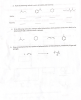 3. Rank the following radicals in order of stability and reactivity m o o uhi Stability Reactivity 4. If the following molecules undergo radical chlorination, which position will be more likely to be chlorinated? Add a chlorine where it belongs. tond 5. Draw a mechanism for the reaction of polymerization of chloroethylene, initiated by Ch gas and UV light. n ci
1. Rank the following carbocations in order of increasing stability. “1” is the least stable, “4”...
 1. Rank the following carbocations in order of increasing stability. “1” is the least stable, “4” is the most stable. (2 pts) CH3 2. Predict the major organic products formed in the following reactions. Be certain to indicate stereochemistry in your products if it is important. (12 pts) H2 Pd/C НСІ.
Draw all of the products for the E2 reaction shown below. Then, rank the products in...
 Draw all of the products for the E2 reaction shown below. Then,
rank the products in order of stability. Identify each Zaitsev and
Hoffman products.
(2) Draw all of the products for the E2 reaction shown below. Then, rank the products in order of stability. Identify each of the Zaitsev and Hoffman products.
Draw all of the products for the E2 reaction shown below. Then,
rank the products in order of stability. Identify each Zaitsev and
Hoffman products.
(2) Draw all of the products for the E2 reaction shown below. Then, rank the products in order of stability. Identify each of the Zaitsev and Hoffman products.
 1. Classify each halogen in every molecule below as: 1º, 2º, 3º, allylic, benzylic, vinyl, or aryl. od five 2. Numerically rank the radical species below in order of increasing stability. ki im. ^. its 3. Draw all relevant resonance structure for each of the radical species shown below. oder 4. Predict the major product for the radical chlorination reactions shown below.
 1. Rank the following carbocation intermediates in order of incrasing stability and draw important resonance forms when applicable. Classify each as primary, secondary, tertiary, allylic, or benzylic. 2. Rank the following free radical intermediates in order of increasing stability and draw important resonance forms when applicable. Classify each as primary, secondary, tertiary, allylic, or benzylic. CH2 bro ledo IV b III 10 112TV ] 21 3. 2,3-Dimethylbutane reacts with bromine in the presence of light to give a monobrominated product....
 Rank the following alkenes in order to increasing
stability.
Lolype of alcohol 3° 2° >> 10 conditions requires relatively harsh conditions Et de v It-Bude * bulky basé 3. Rank the following alkenes in order to increasing stability. 4. Draw the mechanism for the following E2 reactions, HA - Br I ( + CH3ONa "ph Ph E
Rank the following alkenes in order to increasing
stability.
Lolype of alcohol 3° 2° >> 10 conditions requires relatively harsh conditions Et de v It-Bude * bulky basé 3. Rank the following alkenes in order to increasing stability. 4. Draw the mechanism for the following E2 reactions, HA - Br I ( + CH3ONa "ph Ph E
 3. Rank the following alkenes in order to increasing stability 4. Draw the mechanism for the following E2 reactions. Br Br pt + CH, ONa CH, ONA —-
 3. Rank the following alkenes in order to increasing stability. 4. Draw the mechanism for the following E2 reactions a) - Br Br ΕΙ WE + CH, ONa -ONa
 3. Rank the following alkenes in order to increasing stability. 4. Draw the mechanism for the following E2 reactions a) - Br Br ΕΙ WE + CH, ONa -ONa
 help with this worksheet please!
1. Determine the radical stability with 1 the most stable and 4 the least stable 2. What is the major product of 2-methylpropane mono-chlorination? Cl2 light 3. Calclate AH for chlorination of methane (DHe for CHa-H is 440 kJ/mol; DH° for Cl-Cl is 243 kJ/mol; DH° for CH3-Cl is 432 kJ/mol; and DH° for H-Cl is 353 kJ/mol 4. Draw structure of the most stable radical formed by hydrogen radical abstraction from 3- methylcyclohexene 5....
help with this worksheet please!
1. Determine the radical stability with 1 the most stable and 4 the least stable 2. What is the major product of 2-methylpropane mono-chlorination? Cl2 light 3. Calclate AH for chlorination of methane (DHe for CHa-H is 440 kJ/mol; DH° for Cl-Cl is 243 kJ/mol; DH° for CH3-Cl is 432 kJ/mol; and DH° for H-Cl is 353 kJ/mol 4. Draw structure of the most stable radical formed by hydrogen radical abstraction from 3- methylcyclohexene 5....
 3. Rank the following radicals in order of stability and reactivity m o o uhi Stability Reactivity 4. If the following molecules undergo radical chlorination, which position will be more likely to be chlorinated? Add a chlorine where it belongs. tond 5. Draw a mechanism for the reaction of polymerization of chloroethylene, initiated by Ch gas and UV light. n ci
 1. Rank the following carbocations in order of increasing stability. “1” is the least stable, “4” is the most stable. (2 pts) CH3 2. Predict the major organic products formed in the following reactions. Be certain to indicate stereochemistry in your products if it is important. (12 pts) H2 Pd/C НСІ.
 Draw all of the products for the E2 reaction shown below. Then,
rank the products in order of stability. Identify each Zaitsev and
Hoffman products.
(2) Draw all of the products for the E2 reaction shown below. Then, rank the products in order of stability. Identify each of the Zaitsev and Hoffman products.
Draw all of the products for the E2 reaction shown below. Then,
rank the products in order of stability. Identify each Zaitsev and
Hoffman products.
(2) Draw all of the products for the E2 reaction shown below. Then, rank the products in order of stability. Identify each of the Zaitsev and Hoffman products.
Most questions answered within 3 hours.
-
Where is the error in this code sequence?
String s1 = "Hello";
String s2 = "ello";...
asked 10 months ago -
Financial data for Joel de Paris, Inc., for last year
follow:
Joel de Paris, Inc.
Balance...
asked 10 months ago -
Consider this reaction:
Al2(SO4)3 (aq)+ BaCl3
(aq) Al2Cl6 (aq)- +
3BaSO4(s) . What is the...
asked 10 months ago -
Suppose that Savneet is considering increasing her
recent random sample from 20 car rentals to 40...
asked 10 months ago -
Trucks arrive at an unloading terminal at an average rate of 120
per hour.
Trucks arrive...
asked 10 months ago -
Why are methanol and ethanol completely soluble in water while
octanol is not very little soluble....
asked 10 months ago -
A facilities manager at a university reads in a research report
that the mean amount of...
asked 10 months ago -
When the CuSO4 is rehydrated by adding water to the anhydrous
compound, is this an endothermic...
asked 10 months ago -
A ray of sunlight is passing from diamond into crown glass; the
angle of incidence is...
asked 10 months ago -
A block of mass 0.249 kg is placed on top of a light, vertical
spring of...
asked 10 months ago -
how do the kidneys compensate in the presences of acidosis
a) trigger hyperventilate
b) reserve acid...
asked 10 months ago -
Question 501 pts
The rental rate of capital to the firm increases. Which of the
following...
asked 10 months ago