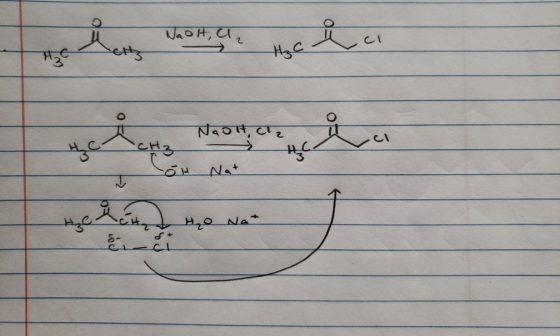
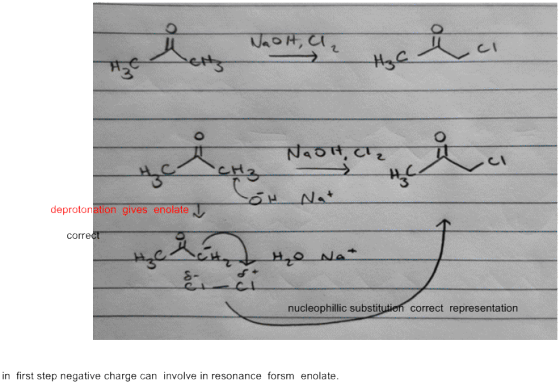
Is this the right mechanism for the following reaction?
Homework Answers
Add Answer to:
Is this the right mechanism for the following
reaction?
NaOH, CI a Naot, la le lo...
Identify the product of the reaction shown below. Identifiez le produit de la réaction indiquée ci-dessous....
 Identify the product of the reaction shown below.
Identifiez le produit de la réaction indiquée ci-dessous. H2SO4 (cat.) + HO OH avo
Identify the product of the reaction shown below.
Identifiez le produit de la réaction indiquée ci-dessous. H2SO4 (cat.) + HO OH avo
5. Which of the following is the correct mechanism for the elimination reaction of 2-bromo-2,3- dimethylbutane...
 5. Which of the following is the correct mechanism for the elimination reaction of 2-bromo-2,3- dimethylbutane with methoxide? བ 1: དུས - དཔལག ཨ— ད༌ ། བ བ — 6. Which of the following compounds will undergo rearrangement in an Syl reaction?
(2) Mechanism. Provide the mechanism for the following reaction. 0 NO2 NaOH
 (2) Mechanism. Provide the mechanism for the following reaction. 0 NO2 NaOH
Which is the major product of the following reaction? Quel est le produit majeur de la...
 Which is the major product of the following reaction?
Quel est le produit majeur de la réaction suivante? H2SO4 OH OH o7 он
Which is the major product of the following reaction?
Quel est le produit majeur de la réaction suivante? H2SO4 OH OH o7 он
82. Draw a stepwise mechanism for the following reaction. CI AICI + HCI
 82. Draw a stepwise mechanism for the following reaction. CI AICI + HCI
What is the product of the following reaction? Quel est le produit de la réaction suivante?...
 What is the product of the following reaction?
Quel est le produit de la réaction suivante? 1. LiAlH4,Et20 e o bolets 2. D20 OH OH -LI 0 ZO
What is the product of the following reaction?
Quel est le produit de la réaction suivante? 1. LiAlH4,Et20 e o bolets 2. D20 OH OH -LI 0 ZO
b. Propose a mechanism that accounts for the following reaction HCI CI OEt EtOH
 b. Propose a mechanism that accounts for the following reaction HCI CI OEt EtOH
Draw the organic product(s) for the following chemical reaction. Underneath each reaction, provide a detailed mechanism(using...
 Draw the organic product(s) for the following chemical reaction.
Underneath each reaction, provide a detailed mechanism(using
arrows) of how the product is produced when required.
FeCl3 n o + ch Fello Cl2 No Mechanism Polymerization Initiator *Since this is a polymerization, show the polymer using appropriate brackets. No Mechanism. H2O* Mechanism: "The above molecule polymerizes with itself. Show the polymer that is formed Mechanism: (show the formation of the trimer) 2) Draw the organic reactant(s) for the following chemical reaction....
Draw the organic product(s) for the following chemical reaction.
Underneath each reaction, provide a detailed mechanism(using
arrows) of how the product is produced when required.
FeCl3 n o + ch Fello Cl2 No Mechanism Polymerization Initiator *Since this is a polymerization, show the polymer using appropriate brackets. No Mechanism. H2O* Mechanism: "The above molecule polymerizes with itself. Show the polymer that is formed Mechanism: (show the formation of the trimer) 2) Draw the organic reactant(s) for the following chemical reaction....
Draw the mechanism for the following EAS reaction CI CL, AIC13 Show transcribed image text
 Draw the mechanism for the following EAS reaction
CI CL, AIC13
Draw the mechanism for the following EAS reaction
CI CL, AIC13
6. Identify the most likely mechanism and identify the products aromatic substitution reactions. of the following nueleophilic Ci 1) NaOH, 350°C 2) HCl, H20 1) NaNH2 1) NaOH, 350 °C 2) HCI, H20...
 6. Identify the most likely mechanism and identify the products aromatic substitution reactions. of the following nueleophilic Ci 1) NaOH, 350°C 2) HCl, H20 1) NaNH2 1) NaOH, 350 °C 2) HCI, H20 ︿Br Cl O2N
6. Identify the most likely mechanism and identify the products aromatic substitution reactions. of the following nueleophilic Ci 1) NaOH, 350°C 2) HCl, H20 1) NaNH2 1) NaOH, 350 °C 2) HCI, H20 ︿Br Cl O2N
6. Identify the most likely mechanism and identify the products aromatic substitution reactions. of the following nueleophilic Ci 1) NaOH, 350°C 2) HCl, H20 1) NaNH2 1) NaOH, 350 °C 2) HCI, H20 ︿Br Cl O2N
 Identify the product of the reaction shown below.
Identifiez le produit de la réaction indiquée ci-dessous. H2SO4 (cat.) + HO OH avo
Identify the product of the reaction shown below.
Identifiez le produit de la réaction indiquée ci-dessous. H2SO4 (cat.) + HO OH avo
 5. Which of the following is the correct mechanism for the elimination reaction of 2-bromo-2,3- dimethylbutane with methoxide? བ 1: དུས - དཔལག ཨ— ད༌ ། བ བ — 6. Which of the following compounds will undergo rearrangement in an Syl reaction?
 (2) Mechanism. Provide the mechanism for the following reaction. 0 NO2 NaOH
 Which is the major product of the following reaction?
Quel est le produit majeur de la réaction suivante? H2SO4 OH OH o7 он
Which is the major product of the following reaction?
Quel est le produit majeur de la réaction suivante? H2SO4 OH OH o7 он
 82. Draw a stepwise mechanism for the following reaction. CI AICI + HCI
 What is the product of the following reaction?
Quel est le produit de la réaction suivante? 1. LiAlH4,Et20 e o bolets 2. D20 OH OH -LI 0 ZO
What is the product of the following reaction?
Quel est le produit de la réaction suivante? 1. LiAlH4,Et20 e o bolets 2. D20 OH OH -LI 0 ZO
 b. Propose a mechanism that accounts for the following reaction HCI CI OEt EtOH
 Draw the organic product(s) for the following chemical reaction.
Underneath each reaction, provide a detailed mechanism(using
arrows) of how the product is produced when required.
FeCl3 n o + ch Fello Cl2 No Mechanism Polymerization Initiator *Since this is a polymerization, show the polymer using appropriate brackets. No Mechanism. H2O* Mechanism: "The above molecule polymerizes with itself. Show the polymer that is formed Mechanism: (show the formation of the trimer) 2) Draw the organic reactant(s) for the following chemical reaction....
Draw the organic product(s) for the following chemical reaction.
Underneath each reaction, provide a detailed mechanism(using
arrows) of how the product is produced when required.
FeCl3 n o + ch Fello Cl2 No Mechanism Polymerization Initiator *Since this is a polymerization, show the polymer using appropriate brackets. No Mechanism. H2O* Mechanism: "The above molecule polymerizes with itself. Show the polymer that is formed Mechanism: (show the formation of the trimer) 2) Draw the organic reactant(s) for the following chemical reaction....
 Draw the mechanism for the following EAS reaction
CI CL, AIC13
Draw the mechanism for the following EAS reaction
CI CL, AIC13
 6. Identify the most likely mechanism and identify the products aromatic substitution reactions. of the following nueleophilic Ci 1) NaOH, 350°C 2) HCl, H20 1) NaNH2 1) NaOH, 350 °C 2) HCI, H20 ︿Br Cl O2N
6. Identify the most likely mechanism and identify the products aromatic substitution reactions. of the following nueleophilic Ci 1) NaOH, 350°C 2) HCl, H20 1) NaNH2 1) NaOH, 350 °C 2) HCI, H20 ︿Br Cl O2N
6. Identify the most likely mechanism and identify the products aromatic substitution reactions. of the following nueleophilic Ci 1) NaOH, 350°C 2) HCl, H20 1) NaNH2 1) NaOH, 350 °C 2) HCI, H20 ︿Br Cl O2N
Most questions answered within 3 hours.
-
Where is the error in this code sequence?
String s1 = "Hello";
String s2 = "ello";...
asked 11 months ago -
Financial data for Joel de Paris, Inc., for last year
follow:
Joel de Paris, Inc.
Balance...
asked 11 months ago -
Consider this reaction:
Al2(SO4)3 (aq)+ BaCl3
(aq) Al2Cl6 (aq)- +
3BaSO4(s) . What is the...
asked 11 months ago -
Suppose that Savneet is considering increasing her
recent random sample from 20 car rentals to 40...
asked 11 months ago -
Trucks arrive at an unloading terminal at an average rate of 120
per hour.
Trucks arrive...
asked 11 months ago -
Why are methanol and ethanol completely soluble in water while
octanol is not very little soluble....
asked 11 months ago -
A facilities manager at a university reads in a research report
that the mean amount of...
asked 11 months ago -
When the CuSO4 is rehydrated by adding water to the anhydrous
compound, is this an endothermic...
asked 11 months ago -
A ray of sunlight is passing from diamond into crown glass; the
angle of incidence is...
asked 11 months ago -
A block of mass 0.249 kg is placed on top of a light, vertical
spring of...
asked 11 months ago -
how do the kidneys compensate in the presences of acidosis
a) trigger hyperventilate
b) reserve acid...
asked 11 months ago -
Question 501 pts
The rental rate of capital to the firm increases. Which of the
following...
asked 11 months ago