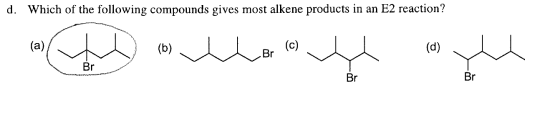
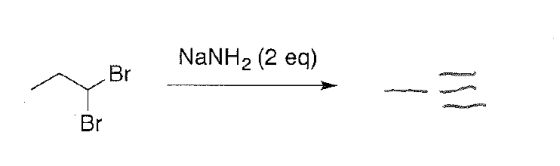
 please explain 1 and 2
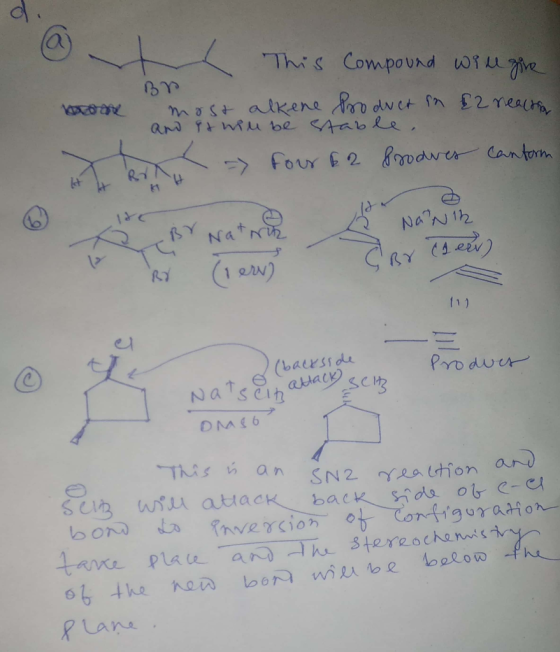
for 3 why the shch3 bond changed ?
Homework Answers
Add Answer to:
please explain 1 and 2
for 3 why the shch3 bond changed ?
Which of the...
please explain why 17. Which of the following compounds will undergo an SN2 reaction most readily?...
 please explain why
17. Which of the following compounds will undergo an SN2 reaction most readily? (CH3)3CBr, (CH3)2CHI, (CH3)2CHCH2CH2CH2Cl, (CH3)2CHCH2CH-CH21 メー 1 E2 18. Provide the structure of the major organic product which results when (S)-2-iodopent treated with NaCN in DMSO.
please explain why
17. Which of the following compounds will undergo an SN2 reaction most readily? (CH3)3CBr, (CH3)2CHI, (CH3)2CHCH2CH2CH2Cl, (CH3)2CHCH2CH-CH21 メー 1 E2 18. Provide the structure of the major organic product which results when (S)-2-iodopent treated with NaCN in DMSO.
can questions 1-9 please be answered and why are they the answer 1. How many sp...
 can questions 1-9 please be answered and why are they the
answer
1. How many sp hybridized carbon atoms are present in the following molecule? (A) 3 (B) 4 5 н.с (D). 6 2. Which bond is the longest in the following molecule? (A) (B) CECH (C) (D) 3. Which of the following molecules is chiral at room tempernture (25 C)? (A) 1,1-dimethylcyclohexane (B) cis-1,2-dimethyleyelohexanc (C) trans-,3-dimethyleyclohexane (D) trans-1,4-dimethylcyclohexane 4. Which group is an aldehyde? н н (C) (D) (A)...
can questions 1-9 please be answered and why are they the
answer
1. How many sp hybridized carbon atoms are present in the following molecule? (A) 3 (B) 4 5 н.с (D). 6 2. Which bond is the longest in the following molecule? (A) (B) CECH (C) (D) 3. Which of the following molecules is chiral at room tempernture (25 C)? (A) 1,1-dimethylcyclohexane (B) cis-1,2-dimethyleyelohexanc (C) trans-,3-dimethyleyclohexane (D) trans-1,4-dimethylcyclohexane 4. Which group is an aldehyde? н н (C) (D) (A)...
2. Predict whether the reaction willl go by SN1, SN2, E1, or E2, or some combination of these. Explain. Also give the p...
 2. Predict whether the reaction willl go by SN1, SN2, E1, or E2, or some combination of these. Explain. Also give the products with correct stereochemistry if applicable. SoI Na CN Br dimethyl sulfoxide (DMSO) CI CH,онн,0 Br CH3S Na* + acetone
1. Determine the mechanism of each nucleophilic substitution reaction and explain why? Draw the products including...
 1. Determine the mechanism of each nucleophilic substitution reaction and explain why? Draw the products including the stereochemistry. (6 points) Br + CN acetone d. ~ + CH,CO2H - Y Y + POCHE UCH DMSO + TOCH.CH DMF b. + B + OCH + CH4OH DMSO – w ! ho + OCHCH , CH,CH,OH DM . Br + CH3OH + CH3CH,OH
My teacher is that A is not the major product. please explain why and what would...
 My teacher is that A is not the major product. please explain
why and what would be the major
22) (9 points) For the following reaction: a. (5 points) Draw a complete and detailed mechanism for the process shown below to form compounds A and B. mention whether it is initiation, propagation or termination. b/ (2 points) Explain why this reaction gives a mixture of compounds A and B and does not give compound C c. (2 points) Which product...
My teacher is that A is not the major product. please explain
why and what would be the major
22) (9 points) For the following reaction: a. (5 points) Draw a complete and detailed mechanism for the process shown below to form compounds A and B. mention whether it is initiation, propagation or termination. b/ (2 points) Explain why this reaction gives a mixture of compounds A and B and does not give compound C c. (2 points) Which product...
(5 pts) Which of the following reactions is expected to produce 1-propanol (CH3CH2CH2OH) at the faster...
 (5 pts) Which of the following reactions is expected to produce 1-propanol (CH3CH2CH2OH) at the faster rate? Explain. NaOH, HEO CI- CI OH NaOH, acetone OH CI- (9pts) Consider the following substitution reaction. Br NaCN w DMSO Determine if the reaction is Sn1 or Sn2. Explain your choice. Write the rate equation for the reaction. Clearly include the structures of compounds in the formula. Would the process occur at a faster rate if the concentration of NaCN was doubled?
please answer all of the following questions. 02 pts.] Briefly explain why the following reaction yields...
 please answer all of the following questions.
02 pts.] Briefly explain why the following reaction yields the Hofmann product exclusively even though the base is not sterically hindered: This is breause Br is a jood Ieavng Br CH,CH2ONa oup on q dcarloon. CH,CH,он [02 pts.] Draw the structure of alkyl that will undergo an E2 elimination to yield only the indicated alkene. CHyCHONa CHсH,он [04 pts.] Draw only the major product for each of the following elimination reactions. сн-сH,ON CнH-CHон...
please answer all of the following questions.
02 pts.] Briefly explain why the following reaction yields the Hofmann product exclusively even though the base is not sterically hindered: This is breause Br is a jood Ieavng Br CH,CH2ONa oup on q dcarloon. CH,CH,он [02 pts.] Draw the structure of alkyl that will undergo an E2 elimination to yield only the indicated alkene. CHyCHONa CHсH,он [04 pts.] Draw only the major product for each of the following elimination reactions. сн-сH,ON CнH-CHон...
For letters h & i : For each of the following reactions, predict the major mechanistic pathway (SN1/SN2/E1/E2...
 For
letters h & i :
For each of the following reactions, predict the major
mechanistic pathway (SN1/SN2/E1/E2) and the major organic
products
1. (cont.) (h) НСОН CHB -CHBr HCOH - (0) CH,CH,CH,CH,Br- NH 2. For each of the following indicate which reaction will occur faster. Explain your reasoning. (No credit will be given for guesses) (a) The reaction of (CH),CBr with 0.001M aqueous NaOH or 0.10M aqueous NaOH (b) The reaction of 2-bromobutane with NaOH in DMSO or NaSH...
For
letters h & i :
For each of the following reactions, predict the major
mechanistic pathway (SN1/SN2/E1/E2) and the major organic
products
1. (cont.) (h) НСОН CHB -CHBr HCOH - (0) CH,CH,CH,CH,Br- NH 2. For each of the following indicate which reaction will occur faster. Explain your reasoning. (No credit will be given for guesses) (a) The reaction of (CH),CBr with 0.001M aqueous NaOH or 0.10M aqueous NaOH (b) The reaction of 2-bromobutane with NaOH in DMSO or NaSH...
1. Which of the following alkyl halides (a-e) will only produce the alkene below when undergoing...
 1. Which of the following alkyl halides (a-e) will only produce the alkene below when undergoing an E2 reaction? Br (a) (b) (c) O (d) (e) 2. Complete the following reactions by determining the major product (formed in the highest yield) that would be formed. NaSH DMF Br t-BuOK DMSO
please explain why and how they are E2/SN2/SN1/E1 3. Draw a structural formula for the major organic product(s) of e...
 please explain why and how they are E2/SN2/SN1/E1
3. Draw a structural formula for the major organic product(s) of each reaction and specify the mechanism by which each product is formed (SNI, S2, El, or E2). • NaOH H20 CH,CH ON CH,CH OH CH ON CH,OH CH OH Na DMSO
please explain why and how they are E2/SN2/SN1/E1
3. Draw a structural formula for the major organic product(s) of each reaction and specify the mechanism by which each product is formed (SNI, S2, El, or E2). • NaOH H20 CH,CH ON CH,CH OH CH ON CH,OH CH OH Na DMSO
 please explain why
17. Which of the following compounds will undergo an SN2 reaction most readily? (CH3)3CBr, (CH3)2CHI, (CH3)2CHCH2CH2CH2Cl, (CH3)2CHCH2CH-CH21 メー 1 E2 18. Provide the structure of the major organic product which results when (S)-2-iodopent treated with NaCN in DMSO.
please explain why
17. Which of the following compounds will undergo an SN2 reaction most readily? (CH3)3CBr, (CH3)2CHI, (CH3)2CHCH2CH2CH2Cl, (CH3)2CHCH2CH-CH21 メー 1 E2 18. Provide the structure of the major organic product which results when (S)-2-iodopent treated with NaCN in DMSO.
 can questions 1-9 please be answered and why are they the
answer
1. How many sp hybridized carbon atoms are present in the following molecule? (A) 3 (B) 4 5 н.с (D). 6 2. Which bond is the longest in the following molecule? (A) (B) CECH (C) (D) 3. Which of the following molecules is chiral at room tempernture (25 C)? (A) 1,1-dimethylcyclohexane (B) cis-1,2-dimethyleyelohexanc (C) trans-,3-dimethyleyclohexane (D) trans-1,4-dimethylcyclohexane 4. Which group is an aldehyde? н н (C) (D) (A)...
can questions 1-9 please be answered and why are they the
answer
1. How many sp hybridized carbon atoms are present in the following molecule? (A) 3 (B) 4 5 н.с (D). 6 2. Which bond is the longest in the following molecule? (A) (B) CECH (C) (D) 3. Which of the following molecules is chiral at room tempernture (25 C)? (A) 1,1-dimethylcyclohexane (B) cis-1,2-dimethyleyelohexanc (C) trans-,3-dimethyleyclohexane (D) trans-1,4-dimethylcyclohexane 4. Which group is an aldehyde? н н (C) (D) (A)...
 2. Predict whether the reaction willl go by SN1, SN2, E1, or E2, or some combination of these. Explain. Also give the products with correct stereochemistry if applicable. SoI Na CN Br dimethyl sulfoxide (DMSO) CI CH,онн,0 Br CH3S Na* + acetone
 1. Determine the mechanism of each nucleophilic substitution reaction and explain why? Draw the products including the stereochemistry. (6 points) Br + CN acetone d. ~ + CH,CO2H - Y Y + POCHE UCH DMSO + TOCH.CH DMF b. + B + OCH + CH4OH DMSO – w ! ho + OCHCH , CH,CH,OH DM . Br + CH3OH + CH3CH,OH
 My teacher is that A is not the major product. please explain
why and what would be the major
22) (9 points) For the following reaction: a. (5 points) Draw a complete and detailed mechanism for the process shown below to form compounds A and B. mention whether it is initiation, propagation or termination. b/ (2 points) Explain why this reaction gives a mixture of compounds A and B and does not give compound C c. (2 points) Which product...
My teacher is that A is not the major product. please explain
why and what would be the major
22) (9 points) For the following reaction: a. (5 points) Draw a complete and detailed mechanism for the process shown below to form compounds A and B. mention whether it is initiation, propagation or termination. b/ (2 points) Explain why this reaction gives a mixture of compounds A and B and does not give compound C c. (2 points) Which product...
 (5 pts) Which of the following reactions is expected to produce 1-propanol (CH3CH2CH2OH) at the faster rate? Explain. NaOH, HEO CI- CI OH NaOH, acetone OH CI- (9pts) Consider the following substitution reaction. Br NaCN w DMSO Determine if the reaction is Sn1 or Sn2. Explain your choice. Write the rate equation for the reaction. Clearly include the structures of compounds in the formula. Would the process occur at a faster rate if the concentration of NaCN was doubled?
 please answer all of the following questions.
02 pts.] Briefly explain why the following reaction yields the Hofmann product exclusively even though the base is not sterically hindered: This is breause Br is a jood Ieavng Br CH,CH2ONa oup on q dcarloon. CH,CH,он [02 pts.] Draw the structure of alkyl that will undergo an E2 elimination to yield only the indicated alkene. CHyCHONa CHсH,он [04 pts.] Draw only the major product for each of the following elimination reactions. сн-сH,ON CнH-CHон...
please answer all of the following questions.
02 pts.] Briefly explain why the following reaction yields the Hofmann product exclusively even though the base is not sterically hindered: This is breause Br is a jood Ieavng Br CH,CH2ONa oup on q dcarloon. CH,CH,он [02 pts.] Draw the structure of alkyl that will undergo an E2 elimination to yield only the indicated alkene. CHyCHONa CHсH,он [04 pts.] Draw only the major product for each of the following elimination reactions. сн-сH,ON CнH-CHон...
 For
letters h & i :
For each of the following reactions, predict the major
mechanistic pathway (SN1/SN2/E1/E2) and the major organic
products
1. (cont.) (h) НСОН CHB -CHBr HCOH - (0) CH,CH,CH,CH,Br- NH 2. For each of the following indicate which reaction will occur faster. Explain your reasoning. (No credit will be given for guesses) (a) The reaction of (CH),CBr with 0.001M aqueous NaOH or 0.10M aqueous NaOH (b) The reaction of 2-bromobutane with NaOH in DMSO or NaSH...
For
letters h & i :
For each of the following reactions, predict the major
mechanistic pathway (SN1/SN2/E1/E2) and the major organic
products
1. (cont.) (h) НСОН CHB -CHBr HCOH - (0) CH,CH,CH,CH,Br- NH 2. For each of the following indicate which reaction will occur faster. Explain your reasoning. (No credit will be given for guesses) (a) The reaction of (CH),CBr with 0.001M aqueous NaOH or 0.10M aqueous NaOH (b) The reaction of 2-bromobutane with NaOH in DMSO or NaSH...
 1. Which of the following alkyl halides (a-e) will only produce the alkene below when undergoing an E2 reaction? Br (a) (b) (c) O (d) (e) 2. Complete the following reactions by determining the major product (formed in the highest yield) that would be formed. NaSH DMF Br t-BuOK DMSO
 please explain why and how they are E2/SN2/SN1/E1
3. Draw a structural formula for the major organic product(s) of each reaction and specify the mechanism by which each product is formed (SNI, S2, El, or E2). • NaOH H20 CH,CH ON CH,CH OH CH ON CH,OH CH OH Na DMSO
please explain why and how they are E2/SN2/SN1/E1
3. Draw a structural formula for the major organic product(s) of each reaction and specify the mechanism by which each product is formed (SNI, S2, El, or E2). • NaOH H20 CH,CH ON CH,CH OH CH ON CH,OH CH OH Na DMSO
Most questions answered within 3 hours.
-
Where is the error in this code sequence?
String s1 = "Hello";
String s2 = "ello";...
asked 11 months ago -
Financial data for Joel de Paris, Inc., for last year
follow:
Joel de Paris, Inc.
Balance...
asked 11 months ago -
Consider this reaction:
Al2(SO4)3 (aq)+ BaCl3
(aq) Al2Cl6 (aq)- +
3BaSO4(s) . What is the...
asked 11 months ago -
Suppose that Savneet is considering increasing her
recent random sample from 20 car rentals to 40...
asked 11 months ago -
Trucks arrive at an unloading terminal at an average rate of 120
per hour.
Trucks arrive...
asked 11 months ago -
Why are methanol and ethanol completely soluble in water while
octanol is not very little soluble....
asked 11 months ago -
A facilities manager at a university reads in a research report
that the mean amount of...
asked 11 months ago -
When the CuSO4 is rehydrated by adding water to the anhydrous
compound, is this an endothermic...
asked 11 months ago -
A ray of sunlight is passing from diamond into crown glass; the
angle of incidence is...
asked 11 months ago -
A block of mass 0.249 kg is placed on top of a light, vertical
spring of...
asked 11 months ago -
how do the kidneys compensate in the presences of acidosis
a) trigger hyperventilate
b) reserve acid...
asked 11 months ago -
Question 501 pts
The rental rate of capital to the firm increases. Which of the
following...
asked 11 months ago