
Homework Answers
1. Pulmonary fibrosis patients O₂ cannot diffuse into blood as efficiently b/c diffusion pathway considerably lengthened + vol. of air that lungs can contain, been reduced
It also causes :-
- Reduces elasticity of lungs
- Expulsion of air when breathing out is due to lungs springing back in same way as deflating balloon, so lungs need to be elastic
- Fibrosis makes difficult to breather t/f ventilate the lungs
- Shortness of breath, especially when exercising
- Chronic, dry cough
- Pain + discomfort in the chest
- Weakness + fatigue
- Due to considerable vol. of air space w/in lungs being occupied by fibrous tissue, means less air (hence O₂) taken in at each breath
- Thickened epithelium of alveoli, diffusion pathway increased so dif. of O₂ into blood extremely slow
- Loss of elasticity makes ventilating lungs v. difficult, hard to maintain dif. grad
Add Answer to:
1. Relate the efficiency and work of breathing to changes in the tidal volume and respiratory...
6. If a subject has a breathing frequency of 20 breaths/minute and a tidal volume of...
 6. If a subject has a breathing frequency of 20 breaths/minute and a tidal volume of 1200 mL, what is the person's minute volume? 7. Calculate the alveolar ventilation rate () for a subject with a breathing frequency of 16 breaths per minute, a tidal volume of 450 ml, and a dead space volume of 160 ml.
A patient is admitted to your hospital clinic with a reduced respiratory rate and tidal volume...
A patient is admitted to your hospital clinic with a reduced respiratory rate and tidal volume (breath size). You order an “arterial blood gas”, a test where arterial blood is drawn and the levels of oxygen, CO2, bicarbonate, as well as the pH are measured. The results come back and reveal that the patient’s blood pH is not as low as expected given her arterial pCO2 values. Of what might this be an indication? (select two answers) decreased excretion of...
How and why would vigorous exercise cause changes in: tidal volume, total lung volume, residual volume,...
How and why would vigorous exercise cause changes in: tidal volume, total lung volume, residual volume, IRV, ERV and vital capacity? When answering this question use the knowledge from the lectures and your own thought process. Don’t get caught up trying to search web sites for answers and led astray into obscure scenarios. This is a straightforward question and marks will not be given for answers that do not follow the directions above
1. What is the roles of cilia and mucus in the respiratory system? 2. When is...
 1. What is the roles of cilia and mucus in the respiratory system? 2. When is surfactant produced? 3. What's the difference between a restrictive and obstructive lung disease? 4. What blood vessels care blood to and from the heart? 5. What are the signs and symptoms or pleurisy? Pleural effusion? Pneumothorax? In which would the patient compl of pain? 6. What would the breath sounds in a patient with markedly decreased lung compliance? 7. How does age affect your...
Respiratory System (Chapter 23) 2pts each Section of Pharynx Why is this tissue type best? Made...
 Respiratory System (Chapter 23) 2pts each Section of Pharynx Why is this tissue type best? Made of which type of tissue? Normally Carries? (Food(liquids) and/or air) Nasopharynx Oropharynx Laryngopharynx Use the following data to answer the following questions WORTH SPTS EACH TIDAL VOLUME: 450ML INSPIRATORY RESERVE VOLUME: 3000ML EXPIRATORY RESERVE VOLUME: 1100ML TOTAL LUNG CAPACITY 5800 ML Is this person's total lung capacity within the normal range? Yes or No? What is the normal TLC? 1. 2. Give 2 reasons...
Question 37 Which of the following increases oxygen unloading? decreased BPG e decreased pCO2 in the...
 Question 37 Which of the following increases oxygen unloading? decreased BPG e decreased pCO2 in the plasma All of these answers are correct. increased blood pH increased body temperature Question 38 What is a classic scenario, as described in class, where oxygen unloading would be increased? while eating food during exercise during tidal volume breathing while drinking water divas → XCIO D Question 39 Which of the following is FALSE regarding breathing? It requires skeletal muscles for normal, quiet exhalation....
Which of the following best describes tidal volume? options: 1.The amount of oxygen in the air...
Which of the following best describes tidal volume? options: 1.The amount of oxygen in the air at sea level. 2.The maximum volume of air that can be moved in and out of the lungs with forced breathing. 3.The volume of air moved in and out of the lungs with each breath while at rest. 4.The amount of oxygen picked up by the blood with every breath.
Breathing is cyclic and a full respiratory cycle from the beginning of inhalation to the end...
Breathing is cyclic and a full respiratory cycle from the beginning of inhalation to the end of exhalation takes about 5 seconds. The maximum rate of air flow into the lungs is about 0.5 L/s. This explains, in part, why the function f(t)=1/2sin(2πt/5) has often been used to model the rate of air flow into the lungs. This can then be used to show that the volume of inhaled air in the lungs at time t is given by V(t)=5/4π[1−cos(2/5...
Volume (ml/kg) UT Match each letter to the term that matches 1. The letter A represents...
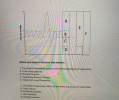 Volume (ml/kg) UT Match each letter to the term that matches 1. The letter A represents which of the following phases of respiration A. Total Lung Capacity B. Residual Volume C. Inspiratory Reserve Volume D. Maximum Lung Occupancy 2. The letter B represents which of the following phases of respiration A. Tidal Volume B. Breathing Capacity C. Vital Capacity D. Residual volume
Tidal volume is _____ The amount of air remaining in the lung after expiration The volume...
Tidal volume is _____ The amount of air remaining in the lung after expiration The volume of air that moves in (and out) of the lungs in a single breath The amount of air that remains in the airways after expiration The volume of air that the lungs can hold when maximally inflated Atmospheric pressure The exchange of oxygen and carbon dioxide between the lungs and the blood is called ____ Pulmonary ventilation External respiration Internal respiration Cellular respiration expiration...
 6. If a subject has a breathing frequency of 20 breaths/minute and a tidal volume of 1200 mL, what is the person's minute volume? 7. Calculate the alveolar ventilation rate () for a subject with a breathing frequency of 16 breaths per minute, a tidal volume of 450 ml, and a dead space volume of 160 ml.
 1. What is the roles of cilia and mucus in the respiratory system? 2. When is surfactant produced? 3. What's the difference between a restrictive and obstructive lung disease? 4. What blood vessels care blood to and from the heart? 5. What are the signs and symptoms or pleurisy? Pleural effusion? Pneumothorax? In which would the patient compl of pain? 6. What would the breath sounds in a patient with markedly decreased lung compliance? 7. How does age affect your...
 Respiratory System (Chapter 23) 2pts each Section of Pharynx Why is this tissue type best? Made of which type of tissue? Normally Carries? (Food(liquids) and/or air) Nasopharynx Oropharynx Laryngopharynx Use the following data to answer the following questions WORTH SPTS EACH TIDAL VOLUME: 450ML INSPIRATORY RESERVE VOLUME: 3000ML EXPIRATORY RESERVE VOLUME: 1100ML TOTAL LUNG CAPACITY 5800 ML Is this person's total lung capacity within the normal range? Yes or No? What is the normal TLC? 1. 2. Give 2 reasons...
 Question 37 Which of the following increases oxygen unloading? decreased BPG e decreased pCO2 in the plasma All of these answers are correct. increased blood pH increased body temperature Question 38 What is a classic scenario, as described in class, where oxygen unloading would be increased? while eating food during exercise during tidal volume breathing while drinking water divas → XCIO D Question 39 Which of the following is FALSE regarding breathing? It requires skeletal muscles for normal, quiet exhalation....
 Volume (ml/kg) UT Match each letter to the term that matches 1. The letter A represents which of the following phases of respiration A. Total Lung Capacity B. Residual Volume C. Inspiratory Reserve Volume D. Maximum Lung Occupancy 2. The letter B represents which of the following phases of respiration A. Tidal Volume B. Breathing Capacity C. Vital Capacity D. Residual volume
Most questions answered within 3 hours.
-
Where is the error in this code sequence?
String s1 = "Hello";
String s2 = "ello";...
asked 11 months ago -
Financial data for Joel de Paris, Inc., for last year
follow:
Joel de Paris, Inc.
Balance...
asked 11 months ago -
Consider this reaction:
Al2(SO4)3 (aq)+ BaCl3
(aq) Al2Cl6 (aq)- +
3BaSO4(s) . What is the...
asked 11 months ago -
Suppose that Savneet is considering increasing her
recent random sample from 20 car rentals to 40...
asked 11 months ago -
Trucks arrive at an unloading terminal at an average rate of 120
per hour.
Trucks arrive...
asked 11 months ago -
Why are methanol and ethanol completely soluble in water while
octanol is not very little soluble....
asked 11 months ago -
A facilities manager at a university reads in a research report
that the mean amount of...
asked 11 months ago -
When the CuSO4 is rehydrated by adding water to the anhydrous
compound, is this an endothermic...
asked 11 months ago -
A ray of sunlight is passing from diamond into crown glass; the
angle of incidence is...
asked 11 months ago -
A block of mass 0.249 kg is placed on top of a light, vertical
spring of...
asked 11 months ago -
how do the kidneys compensate in the presences of acidosis
a) trigger hyperventilate
b) reserve acid...
asked 11 months ago -
Question 501 pts
The rental rate of capital to the firm increases. Which of the
following...
asked 11 months ago