
Homework Answers
Add Answer to:
I
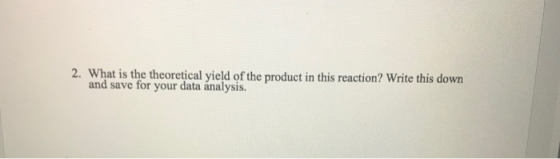
need help with question 2! thanks
------ UU UU LUU JUUSULULULILULUULIS di laucicu 15 Syl...
1. Write the OVERALL reaction for this lab. 2. Show the mechanism's steps for this reaction....
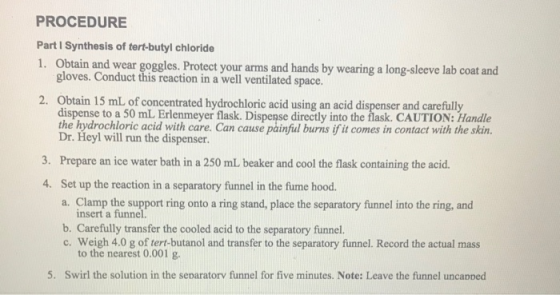
 1. Write the OVERALL reaction for this lab. 2. Show the mechanism's steps for this reaction. Be sure to include the arrows showing where the electrons are being transferred. 3. What is(are) the intermediates in this mechanism? 4. Which step is the rate determining step? 13 SN1: Synthesis of tert-Butyl Chloride Alkyl halides can be prepared from their corresponding alcohols via an acid catalyzed substitution reaction. The mechanism of these acid catalyzed substitution reactions are labeled as Syl (substitution, nucleophilic,...
13 SN1: Synthesis of tert-Butyl Chloride Alkyl halides can be prepared from their corresponding alcohols via...
 13 SN1: Synthesis of tert-Butyl Chloride Alkyl halides can be prepared from their corresponding alcohols via an acid catalyzed substitution reaction. The mechanism of these acid catalyzed substitution reactions are labeled as Syl (substitution, nucleophilic, unimolecular) and S2 (substitution, nucleophilic, bimolecular). Tertiary alcohols follow the Snl route, primary alcohols follow the S2 route, and secondary alcohols can follow either path. Under acidic conditions, the mechanism (Figure 1) of the Sul reaction involves rapid protonation of the alcohol, followed by the...
13 SN1: Synthesis of tert-Butyl Chloride Alkyl halides can be prepared from their corresponding alcohols via...
 13 SN1: Synthesis of tert-Butyl Chloride Alkyl halides can be prepared from their corresponding alcohols via an acid catalyzed substitution reaction. The mechanism of these acid catalyzed substitution reactions are labeled as Syl (substitution, nucleophilic, unimolecular) and S2 (substitution, nucleophilic, bimolecular). Tertiary alcohols follow the Snl route, primary alcohols follow the S2 route, and secondary alcohols can follow either path. Under acidic conditions, the mechanism (Figure 1) of the Sul reaction involves rapid protonation of the alcohol, followed by the...
13 SN1: Synthesis of tert-Butyl Chloride Alkyl halides can be prepared from their corresponding alcohols via...
 13 SN1: Synthesis of tert-Butyl Chloride Alkyl halides can be prepared from their corresponding alcohols via an acid catalyzed substitution reaction. The mechanism of these acid catalyzed substitution reactions are labeled as SNI (substitution, nucleophilic, unimolecular) and S 2 (substitution, nucleophilic, bimolecular). Tertiary alcohols follow the Syl route, primary alcohols follow the Sy2 route, and secondary alcohols can follow either path. Under acidic conditions, the mechanism (Figure 1) of the Syl reaction involves rapid protonation of the alcohol, followed by...
Experiment 14 SN2: Synthesis of 1-Bromobutane Alkyl halides can be prepared from their corresponding alcohols via...
 Experiment 14 SN2: Synthesis of 1-Bromobutane Alkyl halides can be prepared from their corresponding alcohols via an acid catalyzed substitution reaction. The mechanism of these acid catalyzed substitution reactions are labeled as SNI (substitution, nucleophilie, unimolecular) and S2 (substitution, nucleophilie, bimolecular). Tertiary alcohols follow the Syl route, primary alcohols follow the S2, route and secondary alcohols can follow either path. Sth CyHe 81 CH? Br-CH e-OH- -C-OH OH Figure / Conversion of 1-butanol into 1-bromobutane by an Sp2 mechanism The...
need help with the boxed bullet point. writing the chemical reaction scheme for the experiment. Synthesis of an A...
 need help with the boxed bullet point. writing the chemical
reaction scheme for the experiment.
Synthesis of an Alkyl Halide: A Nucleophilic Substitution Reaction, Part I Pre-lab Assignment for Synthesis of an Alkyl Halide: A Nucleophilic Substitution Reaction, Part 1 1. From The Organic Chem Lab Survival Manual ( edition) by Zubrick • Review pages 201-204: Standard Reflux. • Review pages 127-140: Extraction • Review pages 164-189: Distillation, Simple Distillation. The Distillation Example, and The Distillation Mistake. 2. Read this...
need help with the boxed bullet point. writing the chemical
reaction scheme for the experiment.
Synthesis of an Alkyl Halide: A Nucleophilic Substitution Reaction, Part I Pre-lab Assignment for Synthesis of an Alkyl Halide: A Nucleophilic Substitution Reaction, Part 1 1. From The Organic Chem Lab Survival Manual ( edition) by Zubrick • Review pages 201-204: Standard Reflux. • Review pages 127-140: Extraction • Review pages 164-189: Distillation, Simple Distillation. The Distillation Example, and The Distillation Mistake. 2. Read this...
 1. Write the OVERALL reaction for this lab. 2. Show the mechanism's steps for this reaction. Be sure to include the arrows showing where the electrons are being transferred. 3. What is(are) the intermediates in this mechanism? 4. Which step is the rate determining step? 13 SN1: Synthesis of tert-Butyl Chloride Alkyl halides can be prepared from their corresponding alcohols via an acid catalyzed substitution reaction. The mechanism of these acid catalyzed substitution reactions are labeled as Syl (substitution, nucleophilic,...
 13 SN1: Synthesis of tert-Butyl Chloride Alkyl halides can be prepared from their corresponding alcohols via an acid catalyzed substitution reaction. The mechanism of these acid catalyzed substitution reactions are labeled as Syl (substitution, nucleophilic, unimolecular) and S2 (substitution, nucleophilic, bimolecular). Tertiary alcohols follow the Snl route, primary alcohols follow the S2 route, and secondary alcohols can follow either path. Under acidic conditions, the mechanism (Figure 1) of the Sul reaction involves rapid protonation of the alcohol, followed by the...
 13 SN1: Synthesis of tert-Butyl Chloride Alkyl halides can be prepared from their corresponding alcohols via an acid catalyzed substitution reaction. The mechanism of these acid catalyzed substitution reactions are labeled as Syl (substitution, nucleophilic, unimolecular) and S2 (substitution, nucleophilic, bimolecular). Tertiary alcohols follow the Snl route, primary alcohols follow the S2 route, and secondary alcohols can follow either path. Under acidic conditions, the mechanism (Figure 1) of the Sul reaction involves rapid protonation of the alcohol, followed by the...
 13 SN1: Synthesis of tert-Butyl Chloride Alkyl halides can be prepared from their corresponding alcohols via an acid catalyzed substitution reaction. The mechanism of these acid catalyzed substitution reactions are labeled as SNI (substitution, nucleophilic, unimolecular) and S 2 (substitution, nucleophilic, bimolecular). Tertiary alcohols follow the Syl route, primary alcohols follow the Sy2 route, and secondary alcohols can follow either path. Under acidic conditions, the mechanism (Figure 1) of the Syl reaction involves rapid protonation of the alcohol, followed by...
 Experiment 14 SN2: Synthesis of 1-Bromobutane Alkyl halides can be prepared from their corresponding alcohols via an acid catalyzed substitution reaction. The mechanism of these acid catalyzed substitution reactions are labeled as SNI (substitution, nucleophilie, unimolecular) and S2 (substitution, nucleophilie, bimolecular). Tertiary alcohols follow the Syl route, primary alcohols follow the S2, route and secondary alcohols can follow either path. Sth CyHe 81 CH? Br-CH e-OH- -C-OH OH Figure / Conversion of 1-butanol into 1-bromobutane by an Sp2 mechanism The...
 need help with the boxed bullet point. writing the chemical
reaction scheme for the experiment.
Synthesis of an Alkyl Halide: A Nucleophilic Substitution Reaction, Part I Pre-lab Assignment for Synthesis of an Alkyl Halide: A Nucleophilic Substitution Reaction, Part 1 1. From The Organic Chem Lab Survival Manual ( edition) by Zubrick • Review pages 201-204: Standard Reflux. • Review pages 127-140: Extraction • Review pages 164-189: Distillation, Simple Distillation. The Distillation Example, and The Distillation Mistake. 2. Read this...
need help with the boxed bullet point. writing the chemical
reaction scheme for the experiment.
Synthesis of an Alkyl Halide: A Nucleophilic Substitution Reaction, Part I Pre-lab Assignment for Synthesis of an Alkyl Halide: A Nucleophilic Substitution Reaction, Part 1 1. From The Organic Chem Lab Survival Manual ( edition) by Zubrick • Review pages 201-204: Standard Reflux. • Review pages 127-140: Extraction • Review pages 164-189: Distillation, Simple Distillation. The Distillation Example, and The Distillation Mistake. 2. Read this...
Most questions answered within 3 hours.
-
Where is the error in this code sequence?
String s1 = "Hello";
String s2 = "ello";...
asked 10 months ago -
Financial data for Joel de Paris, Inc., for last year
follow:
Joel de Paris, Inc.
Balance...
asked 10 months ago -
Consider this reaction:
Al2(SO4)3 (aq)+ BaCl3
(aq) Al2Cl6 (aq)- +
3BaSO4(s) . What is the...
asked 10 months ago -
Suppose that Savneet is considering increasing her
recent random sample from 20 car rentals to 40...
asked 10 months ago -
Trucks arrive at an unloading terminal at an average rate of 120
per hour.
Trucks arrive...
asked 10 months ago -
Why are methanol and ethanol completely soluble in water while
octanol is not very little soluble....
asked 10 months ago -
A facilities manager at a university reads in a research report
that the mean amount of...
asked 10 months ago -
When the CuSO4 is rehydrated by adding water to the anhydrous
compound, is this an endothermic...
asked 10 months ago -
A ray of sunlight is passing from diamond into crown glass; the
angle of incidence is...
asked 10 months ago -
A block of mass 0.249 kg is placed on top of a light, vertical
spring of...
asked 10 months ago -
how do the kidneys compensate in the presences of acidosis
a) trigger hyperventilate
b) reserve acid...
asked 10 months ago -
Question 501 pts
The rental rate of capital to the firm increases. Which of the
following...
asked 10 months ago