A civil service exam yields scores with a mean of 81 and a standard deviation of...
A civil service exam yields scores with a mean of 81 and a standard deviation of 5.5. Using Chebyshev's Theorem what can we say about the percentage of scores that are above 92?
Select one:
A. At most 12.5% of the scores are above 92.
B. At most 25% of the scores are above 92.
C. At least 75% of the scores are above 92.
D. At least 25% of the scores are above 92.
E. None of the above
Homework Answers
Solution:
Given: A civil service exam yields scores with a mean of 81 and a standard deviation of 5.5.
Thus mean =  and standard deviation =
We have to find the percentage of scores that are above 92 using Chebyshev's Theorem.
According to Chebyshev’s inequality, at most  of the data fall outside k standard deviation from mean.
Thus find k:
92 is above 81 so use:




Thus 92 is 2 standard deviation above mean.
Thus find: 
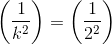
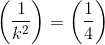
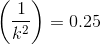

At most 25% data fall outside 2 standard deviation , that is : below 2 standard deviation and above 2 standard deviation, but we have to find only % of data above 2 standard deviation, thus half of 25% = 12.5%
Thus correct option is:
A. At most 12.5% of the scores are above 92.
Add Answer to:
A civil service exam yields scores with a mean of 81 and a
standard deviation of...
A civil service exam yields scores which are normally distributed with a mean of 81 and...
A civil service exam yields scores which are normally distributed with a mean of 81 and a standard deviation of 5.5. If the civil service wishes to set a cut-off score on the exam so that 15% of the test takers fail the exam, what should the cut-off score be? Remember to round your z-value to 2 decimal places. Select one: A. 75.28 B. 86.72 C. 60.24 D. 64.56 E. None of the above
if statistics test scores were normally distributed with a mean of 81 and a standard deviation...
if statistics test scores were normally distributed with a mean of 81 and a standard deviation of 4, a) what is the probability that a randomly selected student scored less than 70? b) what percentage of students had a B on the exam? c) the top 10% of the class had what grades?
Given that exam scores have a mean of 70 and standard deviation of 12. Find the...
Given that exam scores have a mean of 70 and standard deviation of 12. Find the probability that the mean of 38 exam scores is at least 62.
Consider a sample with a mean of 50 and a standard deviation of 6. Use Chebyshev's...
 Consider a sample with a mean of 50 and a standard deviation of 6. Use Chebyshev's theorem to determine the percentage of the data within each of the following ranges (to the nearest whole number) a. 40 to 60, at least %o b. 25 to 75, at least %o С. 41 to 59, at least %o d. 37 to 63, at least %o e. 32 to 68, at least
4. Scores on an exam are normally distributed with a population standard deviation of 5.5. A...
 4. Scores on an exam are normally distributed with a population standard deviation of 5.5. A random sample of 50 scores on the exam has a mean of 28. (a) (5 pts.) Construct 80% confidence interval. (b) (5 pts.) Construct 85% confidence interval. (c) (5 pts.) Construct 92% confidence interval. (d) (5 pts.) When confidence level increases what will happen to the confidence interval.
Suppose that the mean and standard deviation of the scores on a statistics exam are 78...
Suppose that the mean and standard deviation of the scores on a statistics exam are 78 and 6.11, respectively, and are approximately normally distributed. Calculate the proportion of scores above 74. Question 10 options: 1) 0.1920 2) 0.8080 3) 0.7437 4) We do not have enough information to calculate the value. 5) 0.2563
If the mean exam score of a class was 75%, with a standard deviation of 15%,...
If the mean exam score of a class was 75%, with a standard deviation of 15%, what percent of students would be expected score at or higher than 92%? Assume that the distribution of the scores is normal and the variable is random.
Scores on an exam are normally distributed with a mean of 65 and a standard deviation...
Scores on an exam are normally distributed with a mean of 65 and a standard deviation of 9. Find the percent of the scores that satisfies the following: (a) Less than 54 (b) At least 80 (c) Between 70 and 86
Scores on the quantitative portion of an exam have a mean of 586 and a standard...
Scores on the quantitative portion of an exam have a mean of 586 and a standard deviation of 140. Assume the scores are normally distributed. What percentage of students taking the quantitative exam score above 621? What percentage of students taking the quantitative exam score above 621? (Round to the nearest whole number as needed.)
The scores on a psychology exam were normally distributed with a mean of 52 and a...
The scores on a psychology exam were normally distributed with a mean of 52 and a standard deviation of 9. About what percentage of scores were less than 25% The percentage of scores that were less than 25%. ____
 Consider a sample with a mean of 50 and a standard deviation of 6. Use Chebyshev's theorem to determine the percentage of the data within each of the following ranges (to the nearest whole number) a. 40 to 60, at least %o b. 25 to 75, at least %o С. 41 to 59, at least %o d. 37 to 63, at least %o e. 32 to 68, at least
 4. Scores on an exam are normally distributed with a population standard deviation of 5.5. A random sample of 50 scores on the exam has a mean of 28. (a) (5 pts.) Construct 80% confidence interval. (b) (5 pts.) Construct 85% confidence interval. (c) (5 pts.) Construct 92% confidence interval. (d) (5 pts.) When confidence level increases what will happen to the confidence interval.
Most questions answered within 3 hours.
-
Where is the error in this code sequence?
String s1 = "Hello";
String s2 = "ello";...
asked 11 months ago -
Financial data for Joel de Paris, Inc., for last year
follow:
Joel de Paris, Inc.
Balance...
asked 11 months ago -
Consider this reaction:
Al2(SO4)3 (aq)+ BaCl3
(aq) Al2Cl6 (aq)- +
3BaSO4(s) . What is the...
asked 11 months ago -
Suppose that Savneet is considering increasing her
recent random sample from 20 car rentals to 40...
asked 11 months ago -
Trucks arrive at an unloading terminal at an average rate of 120
per hour.
Trucks arrive...
asked 11 months ago -
Why are methanol and ethanol completely soluble in water while
octanol is not very little soluble....
asked 11 months ago -
A facilities manager at a university reads in a research report
that the mean amount of...
asked 11 months ago -
When the CuSO4 is rehydrated by adding water to the anhydrous
compound, is this an endothermic...
asked 11 months ago -
A ray of sunlight is passing from diamond into crown glass; the
angle of incidence is...
asked 11 months ago -
A block of mass 0.249 kg is placed on top of a light, vertical
spring of...
asked 11 months ago -
how do the kidneys compensate in the presences of acidosis
a) trigger hyperventilate
b) reserve acid...
asked 11 months ago -
Question 501 pts
The rental rate of capital to the firm increases. Which of the
following...
asked 11 months ago