Since the average monthly costs are lower for those with poor health status after the ACA,...
Since the average monthly costs are lower for those with poor health status after the ACA, how did the morbidity of the Medicaid group change after ACA?
Homework Answers
Three main ACA changes lead to Medicaid enrollment gains.The ACA expands Medicaid eligibility to adults with incomes at or below 138 percent of the poverty line, which is just over $16,000 per year for an individual today .ACA implementation was associated with large coverage gains in targeted expansion groups, including cancer survivors, but additional progress is needed. Lack of health insurance is associated with a variety of adverse health outcomes.A cancer diagnosis may compound these challenges as cancer survivors may face increased need for diagnostic, therapeutic, and supportive care services across multiple settings. Lack of insurance among cancer survivors has been associated with worse access to guideline-consistent therapy, high out-of-pocket burdens,reduced access to surveillance, and increased morbidity and mortality. Ensuring access to insurance coverage for cancer survivors is of critical importance to improve cancer-related outcomes. Before the enactment of the Affordable Care Act (ACA), an estimated 14.7% of cancer survivors aged below 65 years (1.4 million) lacked insurance. This situation is largely due to loss of employment-based insurance and/or because of unavailable or unaffordable health insurance in the individual market due to history of cancer.8,9 Most state Medicaid programs provided coverage only for adults with dependent children, low-income seniors, pregnant women, and the disabled,10 and because most cancer survivors are not of child bearing age11 relatively few qualified on this basis.
Add Answer to:
Since the average monthly costs are lower for those with poor
health status after the ACA,...
Exhibit G.9 summarizes the modeled changes in enrollment and average monthly costs for individuals with non-group...
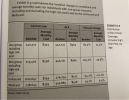 Exhibit G.9 summarizes the modeled changes in enrollment and average monthly costs for individuals with non-group insurance (including and excluding the high-risk pool) and for the uninsured and Medicaid. EXHIBIT G.9 Current Law ACA Percent Change Distribution Average Monthly Average Monthly Cost of Non-Group Average Monthly Cost Coverage Includes High Risk Pool, by Number Cost Number Number $353 $464 83.9% Non-group 240,317 including high-risk pool 31.4% 442,021 Age 79.8% $464 105.2% $258 442,021 Non-group 215,407 excluding high-risk pool -22.1% $120...
The remaining uninsured after the ACA are modeled to have 30 percent lower average monthly cost...
The remaining uninsured after the ACA are modeled to have 30 percent lower average monthly cost than the uninsured before the ACA. Did the uninsured who obtained coverage after the ACA have, on average, more or less morbidity than those who remained uninsured?
Are the individuals covered by non-group insurance after the ACA Modeled to hae, on average, more...
Are the individuals covered by non-group insurance after the ACA Modeled to hae, on average, more morbidity than those in non-group (excluding the high risk pool) before ACA?
Non-Group Under Current Law EXHIBIT G.4 Non-Group Under ACA Distribution of Non-Group Coverage Excluding High Risk...
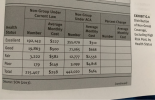 Non-Group Under Current Law EXHIBIT G.4 Non-Group Under ACA Distribution of Non-Group Coverage Excluding High Risk Pool, by Percent Change Average Monthly Cost Average Monthly Cost Average Monthly Cost Health Number Number Status Number $227 $310 Health Status Excellent 192,143 355,079 $668 71,065 $500 Good 19,863 $2,556 $582 12,777 Fair 3,222 $4,818 3,099 $149 Poor 179 $464 442,020 $258 Total 215,407 (continued) Source: SOA (2013). 13. Calculate the modeled percentage change in covered lives for each self-reported health status group...
The US has had the Affordable care act (ACA) since 2010 and health care is not improving. Why does the US still have poo...
The US has had the Affordable care act (ACA) since 2010 and health care is not improving. Why does the US still have poor outcomes for those with insurance? Why US has some worst health care outcomes? Please l need an explanation (50-100) words 2 references with citations (APA) style
True or False 29. While the Supreme Court did uphold the individual mandate of the ACA,...
True or False 29. While the Supreme Court did uphold the individual mandate of the ACA, it also ruled, in a separate case, that states had the right to opt out of the Medicaid expansion, since the cost to extend Medicaid coverage would fall upon the states to pay. T F 30. A 2012 survey by NAHCH found that the majority of home health agencies were based in a hospital, rather than freestanding, independent facilities. T F 31. While the...
A 1 B C D E F G 2. After seeing your analysis, Cal decides to...
 A 1 B C D E F G 2. After seeing your analysis, Cal decides to lower the price of gas to $2.739 per gallon. After this change, the volume sold increased to 4,400 gallons per day. He asks you to measure his business gains or losses as a result of this price change. Fixed costs are $250 per day 2 3 Quantity 4400 4000 Average Price 2.739 2 749 Average What is the price elasticity of demand? Can the...
What percentage of the US federal budget is devoted to health care services, and is that...
What percentage of the US federal budget is devoted to health care services, and is that percentage similar to that of other OECD countries? Approximately 10% which is about the same as other OECD countries. Approximately 50% which is 5 times that of other OECD countries. Approximately 18% which is twice that of most OECD countries. Approximately 40% which is three times the percentage of other OECD countries. QUESTION 19 How is the Medicaid budget approximately divided between federal and...
please help with question 2. thanks 39 40 41 2. After seeing your analysis, Cal decides...
 please help with question 2. thanks
39 40 41 2. After seeing your analysis, Cal decides to lower the price of gas to $2.739 per gallon. After this change, 42 the volume sold increased to 4,400 gallons per day. He asks you to measure his business gains or losses as 43 a result of this price change. Fixed costs are $250 per day. 44 45 What is the price elasticity of demand? 46 Can the demand be characterized as price...
please help with question 2. thanks
39 40 41 2. After seeing your analysis, Cal decides to lower the price of gas to $2.739 per gallon. After this change, 42 the volume sold increased to 4,400 gallons per day. He asks you to measure his business gains or losses as 43 a result of this price change. Fixed costs are $250 per day. 44 45 What is the price elasticity of demand? 46 Can the demand be characterized as price...
23. NAMI (National alliance for the mentally II) is a d professional organization for the mental...
 23. NAMI (National alliance for the mentally II) is a d professional organization for the mental health professionals b. advocacy group for the mentally ill factor that contributed siknificantly to deinstitutionalization of mentallyill atients was: a. The development of effective pharmacologic treatments b. Rising concern over the costs of inpatient care c. The Quaker movement for "moral treatment" 24. One reason why only a small percentage of those in need of mental health services actually receives them is: Mental health...
 Exhibit G.9 summarizes the modeled changes in enrollment and average monthly costs for individuals with non-group insurance (including and excluding the high-risk pool) and for the uninsured and Medicaid. EXHIBIT G.9 Current Law ACA Percent Change Distribution Average Monthly Average Monthly Cost of Non-Group Average Monthly Cost Coverage Includes High Risk Pool, by Number Cost Number Number $353 $464 83.9% Non-group 240,317 including high-risk pool 31.4% 442,021 Age 79.8% $464 105.2% $258 442,021 Non-group 215,407 excluding high-risk pool -22.1% $120...
 Non-Group Under Current Law EXHIBIT G.4 Non-Group Under ACA Distribution of Non-Group Coverage Excluding High Risk Pool, by Percent Change Average Monthly Cost Average Monthly Cost Average Monthly Cost Health Number Number Status Number $227 $310 Health Status Excellent 192,143 355,079 $668 71,065 $500 Good 19,863 $2,556 $582 12,777 Fair 3,222 $4,818 3,099 $149 Poor 179 $464 442,020 $258 Total 215,407 (continued) Source: SOA (2013). 13. Calculate the modeled percentage change in covered lives for each self-reported health status group...
 A 1 B C D E F G 2. After seeing your analysis, Cal decides to lower the price of gas to $2.739 per gallon. After this change, the volume sold increased to 4,400 gallons per day. He asks you to measure his business gains or losses as a result of this price change. Fixed costs are $250 per day 2 3 Quantity 4400 4000 Average Price 2.739 2 749 Average What is the price elasticity of demand? Can the...
 please help with question 2. thanks
39 40 41 2. After seeing your analysis, Cal decides to lower the price of gas to $2.739 per gallon. After this change, 42 the volume sold increased to 4,400 gallons per day. He asks you to measure his business gains or losses as 43 a result of this price change. Fixed costs are $250 per day. 44 45 What is the price elasticity of demand? 46 Can the demand be characterized as price...
please help with question 2. thanks
39 40 41 2. After seeing your analysis, Cal decides to lower the price of gas to $2.739 per gallon. After this change, 42 the volume sold increased to 4,400 gallons per day. He asks you to measure his business gains or losses as 43 a result of this price change. Fixed costs are $250 per day. 44 45 What is the price elasticity of demand? 46 Can the demand be characterized as price...
 23. NAMI (National alliance for the mentally II) is a d professional organization for the mental health professionals b. advocacy group for the mentally ill factor that contributed siknificantly to deinstitutionalization of mentallyill atients was: a. The development of effective pharmacologic treatments b. Rising concern over the costs of inpatient care c. The Quaker movement for "moral treatment" 24. One reason why only a small percentage of those in need of mental health services actually receives them is: Mental health...
Most questions answered within 3 hours.
-
Where is the error in this code sequence?
String s1 = "Hello";
String s2 = "ello";...
asked 10 months ago -
Financial data for Joel de Paris, Inc., for last year
follow:
Joel de Paris, Inc.
Balance...
asked 10 months ago -
Consider this reaction:
Al2(SO4)3 (aq)+ BaCl3
(aq) Al2Cl6 (aq)- +
3BaSO4(s) . What is the...
asked 10 months ago -
Suppose that Savneet is considering increasing her
recent random sample from 20 car rentals to 40...
asked 10 months ago -
Trucks arrive at an unloading terminal at an average rate of 120
per hour.
Trucks arrive...
asked 10 months ago -
Why are methanol and ethanol completely soluble in water while
octanol is not very little soluble....
asked 10 months ago -
A facilities manager at a university reads in a research report
that the mean amount of...
asked 10 months ago -
When the CuSO4 is rehydrated by adding water to the anhydrous
compound, is this an endothermic...
asked 10 months ago -
A ray of sunlight is passing from diamond into crown glass; the
angle of incidence is...
asked 10 months ago -
A block of mass 0.249 kg is placed on top of a light, vertical
spring of...
asked 10 months ago -
how do the kidneys compensate in the presences of acidosis
a) trigger hyperventilate
b) reserve acid...
asked 10 months ago -
Question 501 pts
The rental rate of capital to the firm increases. Which of the
following...
asked 10 months ago