
Homework Answers
Add Answer to:
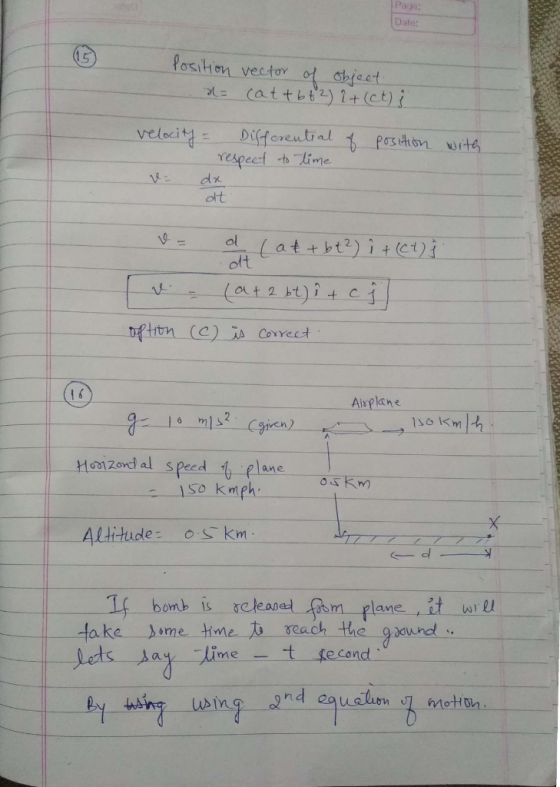
15. The position of an object as a function of time is given in meters by...
A particle's position ?⃗ as a function of time ? is given by ?⃗ (?)=??^3?̂ +(??−??4)?̂...
A particle's position ?⃗ as a function of time ? is given by ?⃗ (?)=??^3?̂ +(??−??4)?̂ . where a=5.00 m/s^3, b=3.00 m/s, and c=6.00 m/s^4. At t=2.45 s find: (e)The x-component of velocity. (f)The y-component of velocity. (g)The magnitude of the velocity vector. (h)The direction of the velocity vector. Your answer for this part should be in the range of -180 to 180 degrees. (i)The x-component of the acceleration. (j)The y-component of the acceleration. (k)The magnitude of the acceleration vector....
.- The position of a body in one-dimensional movement as a function of time is represented...
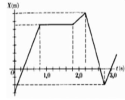 .- The position of a body in one-dimensional movement as a
function of time is represented in the figure. a) Where the
movement is in the positive or negative direction of the x's b)
When the movement is accelerated or delayed (c) When the speed is
zero d) Approximate value of speed up to t= 0.8s e) When the
acceleration is different from zero
X(m) 1 - - - 0'1 2,0
.- The position of a body in one-dimensional movement as a
function of time is represented in the figure. a) Where the
movement is in the positive or negative direction of the x's b)
When the movement is accelerated or delayed (c) When the speed is
zero d) Approximate value of speed up to t= 0.8s e) When the
acceleration is different from zero
X(m) 1 - - - 0'1 2,0
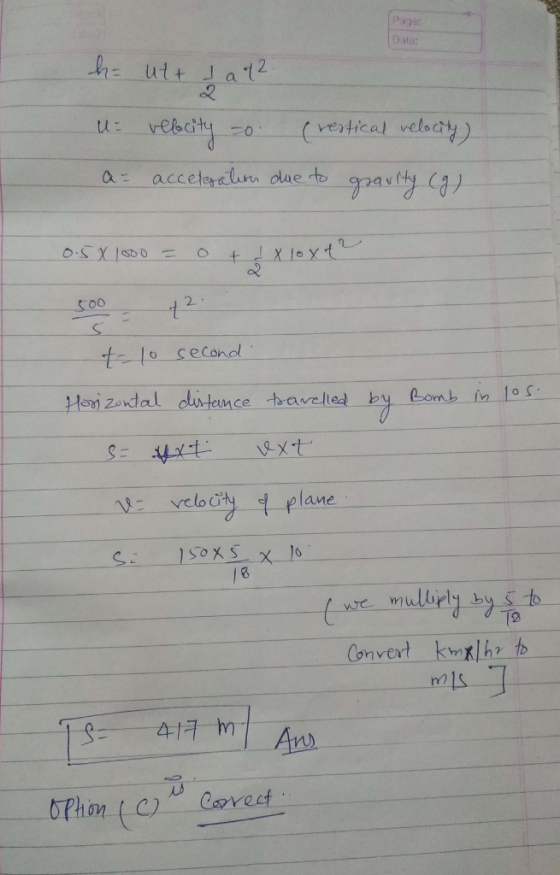
An airplane is flying at a height h, above the ground when it shoots a projectile...
 An airplane is flying at a height h, above the ground when it shoots a projectile with v. = 80 m/s at 24° below the horizontal as shown in the figure. Please assume that the projectile is in free fall while it is in the air. a) How long would it take for the projectile to accelerate to a speed of 110 m/s? b)lf the package lands 1 km from where it was shot, at what height is the plane...
1.- The position of a body in one-dimensional movement as a function of time is represented...
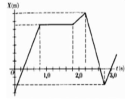 1.- The position of a body in one-dimensional movement as a
function of time is represented in the figure.
a) Where the movement is in the positive or negative direction of
the x's
b) When the movement is accelerated or delayed
(c) When the speed is zero
d) Approximate value of speed up to t= 0.8s
e) When the acceleration is different from zero
X(m) 1 - - - 0'1 2,0
1.- The position of a body in one-dimensional movement as a
function of time is represented in the figure.
a) Where the movement is in the positive or negative direction of
the x's
b) When the movement is accelerated or delayed
(c) When the speed is zero
d) Approximate value of speed up to t= 0.8s
e) When the acceleration is different from zero
X(m) 1 - - - 0'1 2,0
7. Do the projectile motion General Motion with Unit Vectors and Components An object undergoes the...
 7. Do the projectile motion
General Motion with Unit Vectors and Components An object undergoes the following consecutive displacements: s (2i +3j +5k)m,s2 (6i- 9j + 2k)m, and s3 (10i 8j -k)m. a) Find the resultant displacement in terms of unit vectors and components. b) State the magnitude of the resultant displacement. 2. Suppose a hiker travels 5 km southwest from their camp. Then, the hiker travels 2 km 75° north of east. a) Find the displacement of the hiker...
7. Do the projectile motion
General Motion with Unit Vectors and Components An object undergoes the following consecutive displacements: s (2i +3j +5k)m,s2 (6i- 9j + 2k)m, and s3 (10i 8j -k)m. a) Find the resultant displacement in terms of unit vectors and components. b) State the magnitude of the resultant displacement. 2. Suppose a hiker travels 5 km southwest from their camp. Then, the hiker travels 2 km 75° north of east. a) Find the displacement of the hiker...
Problem #1: (Projectile Motion) A drone carrying a package to be delivered to customers. The package...
 Problem #1: (Projectile Motion) A drone carrying a package to be delivered to customers. The package is to be release at the right moment to hit at specific location on the customers property, A. The drone is flying horizontally at an altitude of 100 m and velocity of 120 km/h A) At what angle 0 with the horizontal should the package be released to hit A? (hint find the horizontal distance between the drone and point A) B) What is...
1. The position of an object is given by the function: F(t) = cos(0.25mt + 0.57...
 1. The position of an object is given by the function: F(t) = cos(0.25mt + 0.57 (a) What is the amplitude, frequency, and period of the motion? (b) What is the position of the object at t 0s and t0.2s? (c) Plot F(t) as a function of t, for 0 St 4 2. The position of the motion of the bob in a simple pendulum in radians is given by θ(t)--3 cos(nt + π) What is the amplitude, frequency, and...
Suppose that the position vector for a particle is given as a function of time by...
 Suppose that the position vector for a particle is given as a function of time by r(t) = x(t)1 + y(t)j, with x(t)-at + b and y(t)-ct2 + d, where a-1.90 m/s, b-1.40 m, c 0.130 m/s2, and d 1.08 m. (a) Calculate the average velocity during the time interval from t2.20 s to t3.85s m/s (b) Determine the velocity at t- 2.20 s. m/s Determine the speed at t2.20 s. m/s
7. General Motion with Unit Vectors and Components An object undergoes the following consecutive displacements: s...
 7.
General Motion with Unit Vectors and Components An object undergoes the following consecutive displacements: s (2i +3j +5k)m,s2 (6i- 9j + 2k)m, and s3 (10i 8j -k)m. a) Find the resultant displacement in terms of unit vectors and components. b) State the magnitude of the resultant displacement. 2. Suppose a hiker travels 5 km southwest from their camp. Then, the hiker travels 2 km 75° north of east. a) Find the displacement of the hiker form their camp. b)...
7.
General Motion with Unit Vectors and Components An object undergoes the following consecutive displacements: s (2i +3j +5k)m,s2 (6i- 9j + 2k)m, and s3 (10i 8j -k)m. a) Find the resultant displacement in terms of unit vectors and components. b) State the magnitude of the resultant displacement. 2. Suppose a hiker travels 5 km southwest from their camp. Then, the hiker travels 2 km 75° north of east. a) Find the displacement of the hiker form their camp. b)...
6. General Motion with Unit Vectors and Components An object undergoes the following consecutive displacements: s...
 6.
General Motion with Unit Vectors and Components An object undergoes the following consecutive displacements: s (2i +3j +5k)m,s2 (6i- 9j + 2k)m, and s3 (10i 8j -k)m. a) Find the resultant displacement in terms of unit vectors and components. b) State the magnitude of the resultant displacement. 2. Suppose a hiker travels 5 km southwest from their camp. Then, the hiker travels 2 km 75° north of east. a) Find the displacement of the hiker form their camp. b)...
6.
General Motion with Unit Vectors and Components An object undergoes the following consecutive displacements: s (2i +3j +5k)m,s2 (6i- 9j + 2k)m, and s3 (10i 8j -k)m. a) Find the resultant displacement in terms of unit vectors and components. b) State the magnitude of the resultant displacement. 2. Suppose a hiker travels 5 km southwest from their camp. Then, the hiker travels 2 km 75° north of east. a) Find the displacement of the hiker form their camp. b)...
 .- The position of a body in one-dimensional movement as a
function of time is represented in the figure. a) Where the
movement is in the positive or negative direction of the x's b)
When the movement is accelerated or delayed (c) When the speed is
zero d) Approximate value of speed up to t= 0.8s e) When the
acceleration is different from zero
X(m) 1 - - - 0'1 2,0
.- The position of a body in one-dimensional movement as a
function of time is represented in the figure. a) Where the
movement is in the positive or negative direction of the x's b)
When the movement is accelerated or delayed (c) When the speed is
zero d) Approximate value of speed up to t= 0.8s e) When the
acceleration is different from zero
X(m) 1 - - - 0'1 2,0
 An airplane is flying at a height h, above the ground when it shoots a projectile with v. = 80 m/s at 24° below the horizontal as shown in the figure. Please assume that the projectile is in free fall while it is in the air. a) How long would it take for the projectile to accelerate to a speed of 110 m/s? b)lf the package lands 1 km from where it was shot, at what height is the plane...
 1.- The position of a body in one-dimensional movement as a
function of time is represented in the figure.
a) Where the movement is in the positive or negative direction of
the x's
b) When the movement is accelerated or delayed
(c) When the speed is zero
d) Approximate value of speed up to t= 0.8s
e) When the acceleration is different from zero
X(m) 1 - - - 0'1 2,0
1.- The position of a body in one-dimensional movement as a
function of time is represented in the figure.
a) Where the movement is in the positive or negative direction of
the x's
b) When the movement is accelerated or delayed
(c) When the speed is zero
d) Approximate value of speed up to t= 0.8s
e) When the acceleration is different from zero
X(m) 1 - - - 0'1 2,0
 7. Do the projectile motion
General Motion with Unit Vectors and Components An object undergoes the following consecutive displacements: s (2i +3j +5k)m,s2 (6i- 9j + 2k)m, and s3 (10i 8j -k)m. a) Find the resultant displacement in terms of unit vectors and components. b) State the magnitude of the resultant displacement. 2. Suppose a hiker travels 5 km southwest from their camp. Then, the hiker travels 2 km 75° north of east. a) Find the displacement of the hiker...
7. Do the projectile motion
General Motion with Unit Vectors and Components An object undergoes the following consecutive displacements: s (2i +3j +5k)m,s2 (6i- 9j + 2k)m, and s3 (10i 8j -k)m. a) Find the resultant displacement in terms of unit vectors and components. b) State the magnitude of the resultant displacement. 2. Suppose a hiker travels 5 km southwest from their camp. Then, the hiker travels 2 km 75° north of east. a) Find the displacement of the hiker...
 Problem #1: (Projectile Motion) A drone carrying a package to be delivered to customers. The package is to be release at the right moment to hit at specific location on the customers property, A. The drone is flying horizontally at an altitude of 100 m and velocity of 120 km/h A) At what angle 0 with the horizontal should the package be released to hit A? (hint find the horizontal distance between the drone and point A) B) What is...
 1. The position of an object is given by the function: F(t) = cos(0.25mt + 0.57 (a) What is the amplitude, frequency, and period of the motion? (b) What is the position of the object at t 0s and t0.2s? (c) Plot F(t) as a function of t, for 0 St 4 2. The position of the motion of the bob in a simple pendulum in radians is given by θ(t)--3 cos(nt + π) What is the amplitude, frequency, and...
 Suppose that the position vector for a particle is given as a function of time by r(t) = x(t)1 + y(t)j, with x(t)-at + b and y(t)-ct2 + d, where a-1.90 m/s, b-1.40 m, c 0.130 m/s2, and d 1.08 m. (a) Calculate the average velocity during the time interval from t2.20 s to t3.85s m/s (b) Determine the velocity at t- 2.20 s. m/s Determine the speed at t2.20 s. m/s
 7.
General Motion with Unit Vectors and Components An object undergoes the following consecutive displacements: s (2i +3j +5k)m,s2 (6i- 9j + 2k)m, and s3 (10i 8j -k)m. a) Find the resultant displacement in terms of unit vectors and components. b) State the magnitude of the resultant displacement. 2. Suppose a hiker travels 5 km southwest from their camp. Then, the hiker travels 2 km 75° north of east. a) Find the displacement of the hiker form their camp. b)...
7.
General Motion with Unit Vectors and Components An object undergoes the following consecutive displacements: s (2i +3j +5k)m,s2 (6i- 9j + 2k)m, and s3 (10i 8j -k)m. a) Find the resultant displacement in terms of unit vectors and components. b) State the magnitude of the resultant displacement. 2. Suppose a hiker travels 5 km southwest from their camp. Then, the hiker travels 2 km 75° north of east. a) Find the displacement of the hiker form their camp. b)...
 6.
General Motion with Unit Vectors and Components An object undergoes the following consecutive displacements: s (2i +3j +5k)m,s2 (6i- 9j + 2k)m, and s3 (10i 8j -k)m. a) Find the resultant displacement in terms of unit vectors and components. b) State the magnitude of the resultant displacement. 2. Suppose a hiker travels 5 km southwest from their camp. Then, the hiker travels 2 km 75° north of east. a) Find the displacement of the hiker form their camp. b)...
6.
General Motion with Unit Vectors and Components An object undergoes the following consecutive displacements: s (2i +3j +5k)m,s2 (6i- 9j + 2k)m, and s3 (10i 8j -k)m. a) Find the resultant displacement in terms of unit vectors and components. b) State the magnitude of the resultant displacement. 2. Suppose a hiker travels 5 km southwest from their camp. Then, the hiker travels 2 km 75° north of east. a) Find the displacement of the hiker form their camp. b)...
Most questions answered within 3 hours.
-
Where is the error in this code sequence?
String s1 = "Hello";
String s2 = "ello";...
asked 10 months ago -
Financial data for Joel de Paris, Inc., for last year
follow:
Joel de Paris, Inc.
Balance...
asked 10 months ago -
Consider this reaction:
Al2(SO4)3 (aq)+ BaCl3
(aq) Al2Cl6 (aq)- +
3BaSO4(s) . What is the...
asked 10 months ago -
Suppose that Savneet is considering increasing her
recent random sample from 20 car rentals to 40...
asked 10 months ago -
Trucks arrive at an unloading terminal at an average rate of 120
per hour.
Trucks arrive...
asked 10 months ago -
Why are methanol and ethanol completely soluble in water while
octanol is not very little soluble....
asked 10 months ago -
A facilities manager at a university reads in a research report
that the mean amount of...
asked 10 months ago -
When the CuSO4 is rehydrated by adding water to the anhydrous
compound, is this an endothermic...
asked 10 months ago -
A ray of sunlight is passing from diamond into crown glass; the
angle of incidence is...
asked 10 months ago -
A block of mass 0.249 kg is placed on top of a light, vertical
spring of...
asked 10 months ago -
how do the kidneys compensate in the presences of acidosis
a) trigger hyperventilate
b) reserve acid...
asked 10 months ago -
Question 501 pts
The rental rate of capital to the firm increases. Which of the
following...
asked 10 months ago