what type of atoms can hold less than eight electrons and why?
Homework Answers
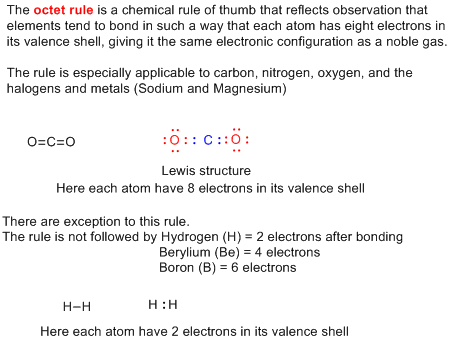
what type of atoms can hold more than eight electrons and why?
what type of atoms can hold more than eight electrons and why?
why can hypovalent atoms hold less than eight electrons?
why can hypovalent atoms hold less than eight electrons?
Which of the elements below has a valence shell that can hold more than eight electrons?...
Which of the elements below has a valence shell that can hold more than eight electrons? S F B He
Why is the effective nuclear charge seen by valence electrons much less than Zq? A. Filled...
Why is the effective nuclear charge seen by valence electrons much less than Zq? A. Filled shells below valence electrons neutralize some of the proton charge. B. The valence electrons are further away from the nucleus. C. There are fewer valence electrons than nuclear protons. D. The valence electrons have less charge themselves.
30) Why don't we draw double bonds between the Be atom and the CI atoms in...
 30) Why don't we draw double bonds between the Be atom and the CI atoms in BeCl2? A) That would give positive formal charges to the chlorine atoms and a negative formal charge to the beryllium atom. B) There aren't enough electrons. C) That would result in more than eight electrons around beryllium. D) That would result in more than eight electrons around each chlorine atom. E) That would result in the formal charges not adding up to zero.
Can an Rf value be less than 0? Can it be greater than 1? Why or...
Can an Rf value be less than 0? Can it be greater than 1? Why or why not?
What is the name of the type of bond where atoms share electrons? Ionic Covalent Hyrdogen...
What is the name of the type of bond where atoms share electrons? Ionic Covalent Hyrdogen None of the above The active site of an enzyme is where substrates bind. True False
When are multiple bonds formed between atoms and why? Multiple bonds between atoms form in order that each atom can ach...
 When are multiple bonds formed between atoms and why? Multiple bonds between atoms form in order that each atom can achieve an inner-shell electron octet. Multiple bonds between atoms form norder that each atom has more than 4 electrons and in the result this bond will be stronger than single. Multiple bonds form only between large atoms and it leads to the decreasing of electron density at these atoms. Multiple bonds between atoms form in order that each atom can...
4. (2) The 3rd main energy level (n=3) of atoms has 3 sublevel types designated by...
 4. (2) The 3rd main energy level (n=3) of atoms has 3 sublevel types designated by the letters: s,p and d. Each type of sublevel can hold a different maximum number of electrons. The S-type sublevel can hold a maximum of electrons, the p-type sublevel can hold a maximum of electrons and d-type can hold a maximum of electrons. Because of this, the entire n=3 level when filled to capacity can hold a total of electrons.
1. a. What is the maximum number of electrons that the third shell can hold? a....
1. a. What is the maximum number of electrons that the third shell can hold? a. 1 b. 8 c. 14 d. 18 e. 32 b. What is the number orbitals in a “d” subshell? a. 1 b. 2 c. 3 d. 5 e. 7 c. The maximum number of electrons in each orbital of the “d” subshell in the 4th shell is: a. 2 b. 3 c. 5 d. 6 e. 10
 30) Why don't we draw double bonds between the Be atom and the CI atoms in BeCl2? A) That would give positive formal charges to the chlorine atoms and a negative formal charge to the beryllium atom. B) There aren't enough electrons. C) That would result in more than eight electrons around beryllium. D) That would result in more than eight electrons around each chlorine atom. E) That would result in the formal charges not adding up to zero.
 When are multiple bonds formed between atoms and why? Multiple bonds between atoms form in order that each atom can achieve an inner-shell electron octet. Multiple bonds between atoms form norder that each atom has more than 4 electrons and in the result this bond will be stronger than single. Multiple bonds form only between large atoms and it leads to the decreasing of electron density at these atoms. Multiple bonds between atoms form in order that each atom can...
 4. (2) The 3rd main energy level (n=3) of atoms has 3 sublevel types designated by the letters: s,p and d. Each type of sublevel can hold a different maximum number of electrons. The S-type sublevel can hold a maximum of electrons, the p-type sublevel can hold a maximum of electrons and d-type can hold a maximum of electrons. Because of this, the entire n=3 level when filled to capacity can hold a total of electrons.
Most questions answered within 3 hours.
-
Where is the error in this code sequence?
String s1 = "Hello";
String s2 = "ello";...
asked 11 months ago -
Financial data for Joel de Paris, Inc., for last year
follow:
Joel de Paris, Inc.
Balance...
asked 11 months ago -
Consider this reaction:
Al2(SO4)3 (aq)+ BaCl3
(aq) Al2Cl6 (aq)- +
3BaSO4(s) . What is the...
asked 11 months ago -
Suppose that Savneet is considering increasing her
recent random sample from 20 car rentals to 40...
asked 11 months ago -
Trucks arrive at an unloading terminal at an average rate of 120
per hour.
Trucks arrive...
asked 11 months ago -
Why are methanol and ethanol completely soluble in water while
octanol is not very little soluble....
asked 11 months ago -
A facilities manager at a university reads in a research report
that the mean amount of...
asked 11 months ago -
When the CuSO4 is rehydrated by adding water to the anhydrous
compound, is this an endothermic...
asked 11 months ago -
A ray of sunlight is passing from diamond into crown glass; the
angle of incidence is...
asked 11 months ago -
A block of mass 0.249 kg is placed on top of a light, vertical
spring of...
asked 11 months ago -
how do the kidneys compensate in the presences of acidosis
a) trigger hyperventilate
b) reserve acid...
asked 11 months ago -
Question 501 pts
The rental rate of capital to the firm increases. Which of the
following...
asked 11 months ago