
Homework Answers
Add Answer to:
of acid ca +HCI 6. Show the complete mechanism of formation of the product below. Br...
organic chemistry homework problem. 5 and 6 5. Show the complete mechanism of formation of acid...
 organic chemistry homework problem. 5 and 6
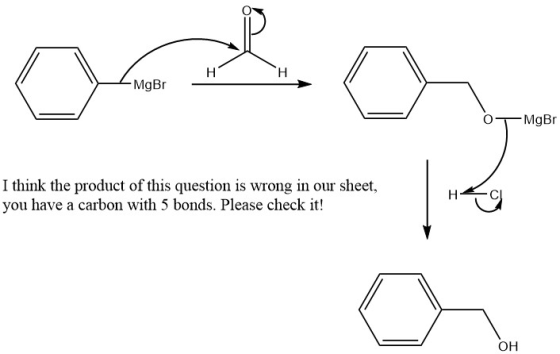
5. Show the complete mechanism of formation of acid catalyzed product below: Cн, OH CH3 OH Нас + HCI - the foliowing NMR pectrum for a molecule with the o ANALVSIS FOR CREDIT An all po to corespanding dro snturation number tra credit C Coect 6. Show the complete mechanism of formation of the product below. Br OH Mg H 2. HCI Et O H +1.
organic chemistry homework problem. 5 and 6
5. Show the complete mechanism of formation of acid catalyzed product below: Cн, OH CH3 OH Нас + HCI - the foliowing NMR pectrum for a molecule with the o ANALVSIS FOR CREDIT An all po to corespanding dro snturation number tra credit C Coect 6. Show the complete mechanism of formation of the product below. Br OH Mg H 2. HCI Et O H +1.
the complete resion below, and provide a mechanism to the formation of Product 1. Complete the...
 the complete resion below, and provide a mechanism to the formation of Product 1. Complete the reaction below, and provide a mechanism for the formation of Product A and B (3 points) OH H3PO4 0.5 M bromine in water (60 % Yield)
Predict the product or provide the mechanism Predict the Product. Provide the stable organic product(s) for...
 Predict the product or provide the mechanism
Predict the Product. Provide the stable organic product(s) for the reactions below. 1. Mgº, CH3CH,OCH CH3 2. CO2 (g) 3. H2O, HCI W MgBr (xs) 2. H2O, HCI 1. K Cr2O7, H2SO4, H2O 2. CH3MgBr (1 eq.) OH 3. H2O, HCI 1. Mgº, CH3CH2OCH2CH3 2. H2O, HCI Mechanism. The following Grignard reaction has been observed to yield products A and B. 1. Me Me MCI THF, -70 °C SOH OH ole er periodo...
Predict the product or provide the mechanism
Predict the Product. Provide the stable organic product(s) for the reactions below. 1. Mgº, CH3CH,OCH CH3 2. CO2 (g) 3. H2O, HCI W MgBr (xs) 2. H2O, HCI 1. K Cr2O7, H2SO4, H2O 2. CH3MgBr (1 eq.) OH 3. H2O, HCI 1. Mgº, CH3CH2OCH2CH3 2. H2O, HCI Mechanism. The following Grignard reaction has been observed to yield products A and B. 1. Me Me MCI THF, -70 °C SOH OH ole er periodo...
Br 3. Show complete mechanism and intermediates formed in the following Sel process. OH + H...
 Br 3. Show complete mechanism and intermediates formed in the following Sel process. OH + H ő heat ОН minor major 4. Determine if Sylor Sw2 mechanism is likely to take place based on conditions and show products for the following reactions. 1. 1-bromohexane reacting with sodium cyanide in acetonitrile (CH3CN) 2. tert-butyl iodide reacting with sodium acetate (CH3CO,Na) in acetic acid (CH,CO,H) 3. (S)-2-iodobutane reacting with potassium acetylide (NaC,H) in tetrahydrofuran 4. 1-bromo-1-methyl-cyclohexane reacting with water at 95°C.
Bonus: Draw a mechanism for the formation of the product in the acid-catalyzed reaction below. (0-5...
 Bonus: Draw a mechanism for the formation of the product in the acid-catalyzed reaction below. (0-5 pts) H-CI OH
For the reaction below: Draw the complete electron pushing arrow mechanism to show the formation of...
 For the reaction below: Draw the complete electron pushing arrow mechanism to show the formation of the final product shown. Explain every step of your mechanism. Explain why this is a product favored reaction. ii. H30* H20 OH A
Predict the Product. Provide the stable organic product(s) for the reactions below. Br 1. Mgº, CH3CH2OCH2CH3...
 Predict the Product. Provide the stable organic product(s) for the reactions below. Br 1. Mgº, CH3CH2OCH2CH3 2. CO2 (g) 3. H2O, HCI MgBr (1 eq.) ro 2. H2O, HCI Mechanism.! provide the complete mechanism for the following transformation. You must include appropriate arrows, intermediates, and formal charges. MgCI or h ox HS 2. H20, HCI
show the mechanism for these reactions Br Br Pd/C Br2 Br ?? Br, H20 HCI CI...
 show the mechanism for these reactions
Br Br Pd/C Br2 Br ?? Br, H20 HCI CI Br ?? H2O+
show the mechanism for these reactions
Br Br Pd/C Br2 Br ?? Br, H20 HCI CI Br ?? H2O+
Jame: . Complete this mechanism for the following substitution reaction. Note: this reaction is balanced. H-Br...
 Jame: . Complete this mechanism for the following substitution reaction. Note: this reaction is balanced. H-Br Н,0 OH -CH3 H20 Step 1: proton transfer Step 2: lose water Step 3: attack the carbocation Br -CH3 . Each reaction above is reversible. In question 1, what effect would adding more HBr have on the equilibrium? Would there be more or less alkyl bromide product present at equilibrium? . Two dehydrations can occur on glycerol, the principle carrier molecule in vaping devices....
8. Provide a complete mechanism to account for the formation of the following product. & det...
 8. Provide a complete mechanism to account for the formation of the following product. & det NaOH, A 7. Provide a complete mechanism to account for the formation of the following product (only need to show ester hydrolysis and decarboxylation once). 1. NaOEt olyan emos OET 2 Eto 2. H30+, A
 organic chemistry homework problem. 5 and 6
5. Show the complete mechanism of formation of acid catalyzed product below: Cн, OH CH3 OH Нас + HCI - the foliowing NMR pectrum for a molecule with the o ANALVSIS FOR CREDIT An all po to corespanding dro snturation number tra credit C Coect 6. Show the complete mechanism of formation of the product below. Br OH Mg H 2. HCI Et O H +1.
organic chemistry homework problem. 5 and 6
5. Show the complete mechanism of formation of acid catalyzed product below: Cн, OH CH3 OH Нас + HCI - the foliowing NMR pectrum for a molecule with the o ANALVSIS FOR CREDIT An all po to corespanding dro snturation number tra credit C Coect 6. Show the complete mechanism of formation of the product below. Br OH Mg H 2. HCI Et O H +1.
 the complete resion below, and provide a mechanism to the formation of Product 1. Complete the reaction below, and provide a mechanism for the formation of Product A and B (3 points) OH H3PO4 0.5 M bromine in water (60 % Yield)
 Predict the product or provide the mechanism
Predict the Product. Provide the stable organic product(s) for the reactions below. 1. Mgº, CH3CH,OCH CH3 2. CO2 (g) 3. H2O, HCI W MgBr (xs) 2. H2O, HCI 1. K Cr2O7, H2SO4, H2O 2. CH3MgBr (1 eq.) OH 3. H2O, HCI 1. Mgº, CH3CH2OCH2CH3 2. H2O, HCI Mechanism. The following Grignard reaction has been observed to yield products A and B. 1. Me Me MCI THF, -70 °C SOH OH ole er periodo...
Predict the product or provide the mechanism
Predict the Product. Provide the stable organic product(s) for the reactions below. 1. Mgº, CH3CH,OCH CH3 2. CO2 (g) 3. H2O, HCI W MgBr (xs) 2. H2O, HCI 1. K Cr2O7, H2SO4, H2O 2. CH3MgBr (1 eq.) OH 3. H2O, HCI 1. Mgº, CH3CH2OCH2CH3 2. H2O, HCI Mechanism. The following Grignard reaction has been observed to yield products A and B. 1. Me Me MCI THF, -70 °C SOH OH ole er periodo...
 Br 3. Show complete mechanism and intermediates formed in the following Sel process. OH + H ő heat ОН minor major 4. Determine if Sylor Sw2 mechanism is likely to take place based on conditions and show products for the following reactions. 1. 1-bromohexane reacting with sodium cyanide in acetonitrile (CH3CN) 2. tert-butyl iodide reacting with sodium acetate (CH3CO,Na) in acetic acid (CH,CO,H) 3. (S)-2-iodobutane reacting with potassium acetylide (NaC,H) in tetrahydrofuran 4. 1-bromo-1-methyl-cyclohexane reacting with water at 95°C.
 Bonus: Draw a mechanism for the formation of the product in the acid-catalyzed reaction below. (0-5 pts) H-CI OH
 For the reaction below: Draw the complete electron pushing arrow mechanism to show the formation of the final product shown. Explain every step of your mechanism. Explain why this is a product favored reaction. ii. H30* H20 OH A
 Predict the Product. Provide the stable organic product(s) for the reactions below. Br 1. Mgº, CH3CH2OCH2CH3 2. CO2 (g) 3. H2O, HCI MgBr (1 eq.) ro 2. H2O, HCI Mechanism.! provide the complete mechanism for the following transformation. You must include appropriate arrows, intermediates, and formal charges. MgCI or h ox HS 2. H20, HCI
 show the mechanism for these reactions
Br Br Pd/C Br2 Br ?? Br, H20 HCI CI Br ?? H2O+
show the mechanism for these reactions
Br Br Pd/C Br2 Br ?? Br, H20 HCI CI Br ?? H2O+
 Jame: . Complete this mechanism for the following substitution reaction. Note: this reaction is balanced. H-Br Н,0 OH -CH3 H20 Step 1: proton transfer Step 2: lose water Step 3: attack the carbocation Br -CH3 . Each reaction above is reversible. In question 1, what effect would adding more HBr have on the equilibrium? Would there be more or less alkyl bromide product present at equilibrium? . Two dehydrations can occur on glycerol, the principle carrier molecule in vaping devices....
 8. Provide a complete mechanism to account for the formation of the following product. & det NaOH, A 7. Provide a complete mechanism to account for the formation of the following product (only need to show ester hydrolysis and decarboxylation once). 1. NaOEt olyan emos OET 2 Eto 2. H30+, A
Most questions answered within 3 hours.
-
Where is the error in this code sequence?
String s1 = "Hello";
String s2 = "ello";...
asked 11 months ago -
Financial data for Joel de Paris, Inc., for last year
follow:
Joel de Paris, Inc.
Balance...
asked 11 months ago -
Consider this reaction:
Al2(SO4)3 (aq)+ BaCl3
(aq) Al2Cl6 (aq)- +
3BaSO4(s) . What is the...
asked 11 months ago -
Suppose that Savneet is considering increasing her
recent random sample from 20 car rentals to 40...
asked 11 months ago -
Trucks arrive at an unloading terminal at an average rate of 120
per hour.
Trucks arrive...
asked 11 months ago -
Why are methanol and ethanol completely soluble in water while
octanol is not very little soluble....
asked 11 months ago -
A facilities manager at a university reads in a research report
that the mean amount of...
asked 11 months ago -
When the CuSO4 is rehydrated by adding water to the anhydrous
compound, is this an endothermic...
asked 11 months ago -
A ray of sunlight is passing from diamond into crown glass; the
angle of incidence is...
asked 11 months ago -
A block of mass 0.249 kg is placed on top of a light, vertical
spring of...
asked 11 months ago -
how do the kidneys compensate in the presences of acidosis
a) trigger hyperventilate
b) reserve acid...
asked 11 months ago -
Question 501 pts
The rental rate of capital to the firm increases. Which of the
following...
asked 11 months ago