
Homework Answers
Add Answer to:
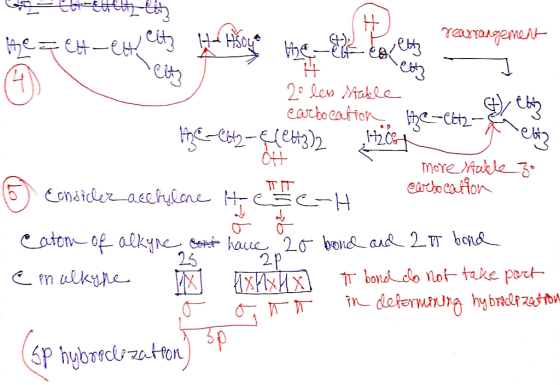
4. Write the mechanism for the following chemical reaction: CH2=CH-CHCH3 -CH3 + H2O in H2SO4(aq) ----->...
write mechanism for following rxn. CH3-CH ₂ -CH2-C=CH + excess HCl -> @ write final product...
 write mechanism for following rxn. CH3-CH ₂ -CH2-C=CH + excess HCl -> @ write final product for following cham rexn. CH₂ - CH₂ - C = 6-CH3 + 1 mole H₂ ->
I need the mechanism for this Fischer Esterification CH3 Reaction CH3 H+ CH3-C-OH HO-CH2-CH2-CH-CHCHz-C-O-CH2-CH2-CH-CHaH20 Name Acetic...
 I
need the mechanism for this Fischer Esterification
CH3 Reaction CH3 H+ CH3-C-OH HO-CH2-CH2-CH-CHCHz-C-O-CH2-CH2-CH-CHaH20 Name Acetic acid Isopentyl alcoho H2SO Isopentyl acetatewater
I
need the mechanism for this Fischer Esterification
CH3 Reaction CH3 H+ CH3-C-OH HO-CH2-CH2-CH-CHCHz-C-O-CH2-CH2-CH-CHaH20 Name Acetic acid Isopentyl alcoho H2SO Isopentyl acetatewater
e. 4-HC-C6H4-NH-C(O)-CH3 + Cl2/H4C-COH ------> H30* f. 4-nitro-1-chlorobenzene + NaOH H2O g. Ph-CH2-CH2-CH2-CO2H + AICI: ------->...
 e. 4-HC-C6H4-NH-C(O)-CH3 + Cl2/H4C-COH ------> H30* f. 4-nitro-1-chlorobenzene + NaOH H2O g. Ph-CH2-CH2-CH2-CO2H + AICI: -------> h. All trans-H2C=CH-CH=CH-OCH3 + H2C=CH-C(O)-H i. 1-bromo-3-chlorobenzene + HNO3/H2SO4 j. CsH5-CH=CH-CH3 + HBr/peroxides --------> H30* k. Ph-CH2-CH3 + KMnO./NaOH/A ----------> L. CoHs-CCl3 + Bry/FeBr ---------- H30* m. Ph-Br + KNH/-33 °C --------
37. H0+ (CH3), C CH OH alkene + H2O Draw the structure of the major alkene...
 37. H0+ (CH3), C CH OH alkene + H2O Draw the structure of the major alkene product of this acid-catalyzed dehydration. (Hint: rearrangement.) 38. alkenes Three alkenes produce butane when treated with hydrogen and platinum. Draw their structures. + H-Br - 39. CH2=CH CH3 CH2-CH-CH, H Br The first step of the mechanism of this reaction produces two carbocations. Draw both and circle the one that is more stable. ODHO Br 11 =C + Br - Br - - Br...
15. Determine the net ionic equation for the following chemical reaction: NaOH(aq) + HCl(aq) ----------> NaCl(aq)...
 15. Determine the net ionic equation for the following chemical reaction: NaOH(aq) + HCl(aq) ----------> NaCl(aq) + H20 hint: NaOH(aq) is strong base HCl(aq) is a strong acid OH-(aq) + H+ (aq) ----> H2O(1) 20H-(aq) + 2C1-(aq) -----> H2O(l) + C12(8) NaOH(aq) + CIO-(aq) -----> C12(g) + O2(g) + H2(g) + Na(s) H+(aq) + NaOH(aq)- H2O(1)+ Na(s) 13. A compound contains 20.24% Al and 79.76% Cl. Calculate the empirical formula. molar masses: Al = 26.98 g/mole and Cl = 35.45...
5. For the following reaction: H9 CH H,Sow, heat to Han> 0 a. Suggest a plausible...
 5. For the following reaction: H9 CH H,Sow, heat to Han> 0 a. Suggest a plausible mechanism for this process; b. What role might the strong acid H2SO4 play? why this reaction use heating? c. Draw the whole energy diagram for this process.
2 pts Question 4 Identify all conjugate acid-base pairs in the reaction shown. N(CH3)H2(aq) + H2O(l)...
 2 pts Question 4 Identify all conjugate acid-base pairs in the reaction shown. N(CH3)H2(aq) + H2O(l) <= N(CH3)H3(aq) + OH"(aq) ON(CH3)H3/OH N(CH3)H3/H20 ' N(CH3)H/OH H30/OH N(CH3)H/N(CH3)H3 H2O/H30 H2O/OH-
#3 Write the formula(s) for the product(s) of the following reaction. CH3-CH2-CH2-CO-OH + CH3-OH ...
#3 Write the formula(s) for the product(s) of the following reaction. CH3-CH2-CH2-CO-OH + CH3-OH PLUS H1+ & HEAT #4 Write the formula(s) for the product(s) of the following reaction. HCO-O-CH2-CH2-CH2-CH3 + H2O PLUS H1+ & HEAT #5 Write the formula(s) for the product(s) of the following reaction. CH3-CH2-CO-OH + NaOH #6 Write the formula(s) for the product(s) of the following reaction. HCO-O-CH2-CH3 + NaOH PLUS HEAT
Consider the following reaction: CH COOH(aOH (aq) > CH COo (aq)+H2O(I) 1st attempt m# See Periodic...
 Consider the following reaction: CH COOH(aOH (aq) > CH COo (aq)+H2O(I) 1st attempt m# See Periodic Table See Hint How much 6.01 M NaOH must be added to 410.0 mL of a buffer that is 0.0205 M acetic acid and O.0230 M sodium acetate to raise the pH to 5.75? mL
Write balanced net ionic equation for the following reaction: Fe(OH)3(s)+H2SO4(aq)→? Express your answer as a chemical...
Write balanced net ionic equation for the following reaction: Fe(OH)3(s)+H2SO4(aq)→? Express your answer as a chemical equation. Identify all of the phases in your answer. Write balanced net ionic equation for the following reaction: HClO3(aq)+NaOH(aq)→? Note that HClO3 is a strong acid. Express your answer as a chemical equation. Identify all of the phases in your answer.
 write mechanism for following rxn. CH3-CH ₂ -CH2-C=CH + excess HCl -> @ write final product for following cham rexn. CH₂ - CH₂ - C = 6-CH3 + 1 mole H₂ ->
 I
need the mechanism for this Fischer Esterification
CH3 Reaction CH3 H+ CH3-C-OH HO-CH2-CH2-CH-CHCHz-C-O-CH2-CH2-CH-CHaH20 Name Acetic acid Isopentyl alcoho H2SO Isopentyl acetatewater
I
need the mechanism for this Fischer Esterification
CH3 Reaction CH3 H+ CH3-C-OH HO-CH2-CH2-CH-CHCHz-C-O-CH2-CH2-CH-CHaH20 Name Acetic acid Isopentyl alcoho H2SO Isopentyl acetatewater
 e. 4-HC-C6H4-NH-C(O)-CH3 + Cl2/H4C-COH ------> H30* f. 4-nitro-1-chlorobenzene + NaOH H2O g. Ph-CH2-CH2-CH2-CO2H + AICI: -------> h. All trans-H2C=CH-CH=CH-OCH3 + H2C=CH-C(O)-H i. 1-bromo-3-chlorobenzene + HNO3/H2SO4 j. CsH5-CH=CH-CH3 + HBr/peroxides --------> H30* k. Ph-CH2-CH3 + KMnO./NaOH/A ----------> L. CoHs-CCl3 + Bry/FeBr ---------- H30* m. Ph-Br + KNH/-33 °C --------
 37. H0+ (CH3), C CH OH alkene + H2O Draw the structure of the major alkene product of this acid-catalyzed dehydration. (Hint: rearrangement.) 38. alkenes Three alkenes produce butane when treated with hydrogen and platinum. Draw their structures. + H-Br - 39. CH2=CH CH3 CH2-CH-CH, H Br The first step of the mechanism of this reaction produces two carbocations. Draw both and circle the one that is more stable. ODHO Br 11 =C + Br - Br - - Br...
 15. Determine the net ionic equation for the following chemical reaction: NaOH(aq) + HCl(aq) ----------> NaCl(aq) + H20 hint: NaOH(aq) is strong base HCl(aq) is a strong acid OH-(aq) + H+ (aq) ----> H2O(1) 20H-(aq) + 2C1-(aq) -----> H2O(l) + C12(8) NaOH(aq) + CIO-(aq) -----> C12(g) + O2(g) + H2(g) + Na(s) H+(aq) + NaOH(aq)- H2O(1)+ Na(s) 13. A compound contains 20.24% Al and 79.76% Cl. Calculate the empirical formula. molar masses: Al = 26.98 g/mole and Cl = 35.45...
 5. For the following reaction: H9 CH H,Sow, heat to Han> 0 a. Suggest a plausible mechanism for this process; b. What role might the strong acid H2SO4 play? why this reaction use heating? c. Draw the whole energy diagram for this process.
 2 pts Question 4 Identify all conjugate acid-base pairs in the reaction shown. N(CH3)H2(aq) + H2O(l) <= N(CH3)H3(aq) + OH"(aq) ON(CH3)H3/OH N(CH3)H3/H20 ' N(CH3)H/OH H30/OH N(CH3)H/N(CH3)H3 H2O/H30 H2O/OH-
 Consider the following reaction: CH COOH(aOH (aq) > CH COo (aq)+H2O(I) 1st attempt m# See Periodic Table See Hint How much 6.01 M NaOH must be added to 410.0 mL of a buffer that is 0.0205 M acetic acid and O.0230 M sodium acetate to raise the pH to 5.75? mL
Most questions answered within 3 hours.
-
Where is the error in this code sequence?
String s1 = "Hello";
String s2 = "ello";...
asked 11 months ago -
Financial data for Joel de Paris, Inc., for last year
follow:
Joel de Paris, Inc.
Balance...
asked 11 months ago -
Consider this reaction:
Al2(SO4)3 (aq)+ BaCl3
(aq) Al2Cl6 (aq)- +
3BaSO4(s) . What is the...
asked 11 months ago -
Suppose that Savneet is considering increasing her
recent random sample from 20 car rentals to 40...
asked 11 months ago -
Trucks arrive at an unloading terminal at an average rate of 120
per hour.
Trucks arrive...
asked 11 months ago -
Why are methanol and ethanol completely soluble in water while
octanol is not very little soluble....
asked 11 months ago -
A facilities manager at a university reads in a research report
that the mean amount of...
asked 11 months ago -
When the CuSO4 is rehydrated by adding water to the anhydrous
compound, is this an endothermic...
asked 11 months ago -
A ray of sunlight is passing from diamond into crown glass; the
angle of incidence is...
asked 11 months ago -
A block of mass 0.249 kg is placed on top of a light, vertical
spring of...
asked 11 months ago -
how do the kidneys compensate in the presences of acidosis
a) trigger hyperventilate
b) reserve acid...
asked 11 months ago -
Question 501 pts
The rental rate of capital to the firm increases. Which of the
following...
asked 11 months ago